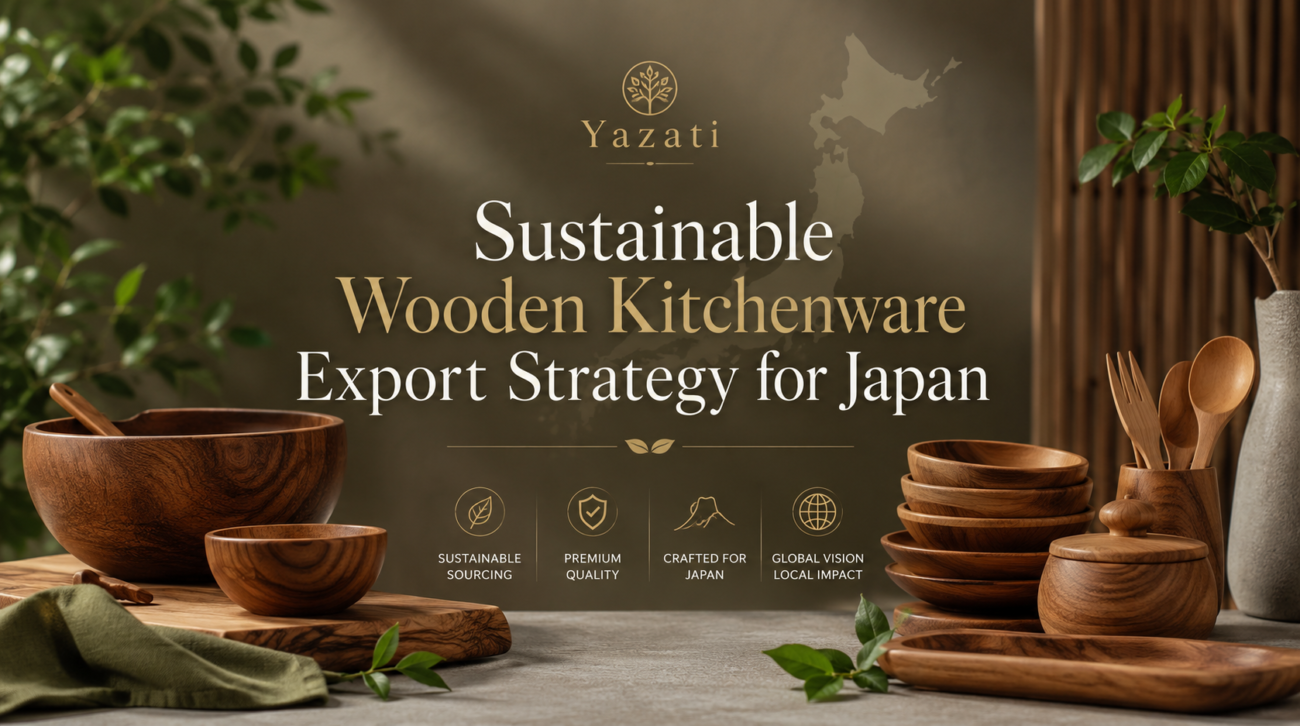
Japan represents one of the world’s most attractive markets for eco-friendly household products. A well-planned Sustainable Wooden Kitchenware Export Strategy for Japan can help exporters access a sophisticated consumer base that values quality, craftsmanship, sustainability, and functionality.
Japanese consumers increasingly seek environmentally responsible alternatives to plastic kitchen products. This trend creates a significant opportunity for exporters offering high-quality wooden kitchenware sourced from sustainably managed forests.
This guide explains how businesses can successfully enter and grow within Japan’s wooden kitchenware market while building long-term profitability.
Understanding the Japanese Kitchenware Market
Japan has a mature homeware industry characterized by high consumer expectations and strong appreciation for design and craftsmanship.
Consumer Preferences in Japan
Japanese buyers typically prioritize:
- Product quality
- Durability
- Aesthetic appeal
- Functionality
- Environmental responsibility
- Brand credibility
Unlike many mass markets, Japanese consumers often pay premium prices for products that demonstrate superior craftsmanship and sustainability.
Growing Demand for Sustainable Products
Environmental awareness has increased significantly in recent years. Consumers are actively seeking products that:
- Reduce plastic consumption
- Support responsible forestry
- Have minimal environmental impact
- Use recyclable packaging
This shift benefits exporters of sustainable wooden kitchenware.
Why Sustainable Wooden Kitchenware Appeals to Japanese Buyers
Environmental Awareness Trends
Many Japanese households support sustainable living practices. Products manufactured using responsibly sourced timber align with these values.
Wooden kitchenware often generates less environmental impact than plastic alternatives, making it attractive to eco-conscious consumers.
Preference for Natural Materials
Traditional Japanese culture values natural materials such as:
- Wood
- Bamboo
- Clay
- Paper
Wooden kitchenware naturally complements this cultural preference and integrates well into Japanese homes.
Market Research and Opportunity Assessment
A successful export strategy begins with detailed market analysis.
Identifying Target Customer Segments
Potential customer groups include:
- Eco-conscious consumers
- Premium homeware shoppers
- Specialty kitchen stores
- Boutique lifestyle retailers
- Hospitality businesses
- Gift buyers
Each segment requires customized marketing and distribution approaches.
Competitor Analysis
Analyze:
- Domestic Japanese brands
- Scandinavian kitchenware companies
- Premium artisan producers
- Online marketplace sellers
Understanding competitor strengths helps position your products more effectively.
Product Selection Strategy
Not every product category performs equally well in Japan.
Best-Selling Wooden Kitchenware Categories
Cutting Boards
Japanese consumers appreciate:
- Compact sizes
- Premium hardwood materials
- Elegant finishes
- Easy maintenance
Wooden Spoons and Utensils
Popular items include:
- Cooking spoons
- Salad servers
- Rice paddles
- Chopstick rests
These products fit well with everyday Japanese cooking practices.
Serving Trays and Bowls
Serving products perform particularly well because they combine:
- Functionality
- Decoration
- Gift appeal
Minimalist wooden trays often attract strong demand.
Sustainability Certifications and Standards
Certification significantly improves credibility.
FSC Certification
The Forest Stewardship Council certification is among the most recognized sustainability standards worldwide.
Benefits include:
- Increased buyer confidence
- Easier distributor acceptance
- Stronger environmental positioning
Sustainable Forestry Verification
Additional documentation demonstrating legal and responsible sourcing can strengthen your market position.
Exporters should maintain transparent supply-chain records.
Japanese Import Regulations and Compliance
Regulatory compliance is essential.
Product Safety Requirements
Kitchenware products should:
- Use food-safe finishes
- Avoid harmful chemicals
- Meet applicable Japanese standards
Importers typically request supporting compliance documentation.
Packaging and Labeling Standards
Packaging should include:
- Material information
- Country of origin
- Product care instructions
- Importer details when required
Japanese-language labeling often improves market acceptance.
Product Design Adaptation for Japan
Minimalist Design Preferences
Japanese consumers often favor:
- Clean lines
- Neutral colors
- Elegant simplicity
- Space-efficient designs
Avoid excessive decoration unless targeting niche artisan segments.
Functional and Compact Products
Urban living spaces are frequently smaller than those in many export markets.
Successful products tend to be:
- Compact
- Multi-functional
- Easy to store
- Lightweight
Pricing Strategy for Japanese Markets
Premium Positioning
Competing solely on price can be difficult.
Instead, emphasize:
- Sustainability
- Craftsmanship
- Product longevity
- Ethical sourcing
Premium positioning often generates stronger margins.
Cost Optimization
Focus on:
- Efficient manufacturing
- Packaging optimization
- Consolidated shipments
- Inventory planning
These measures improve competitiveness while maintaining quality.
Distribution Channel Development
Selecting the right channels is critical.
Importers and Distributors
Working with established Japanese distributors can provide:
- Market access
- Regulatory guidance
- Retail relationships
- Customer support
This is often the fastest route to market entry.
Retail Partnerships
Potential retail channels include:
- Specialty kitchen stores
- Eco-lifestyle shops
- Department stores
- Home décor retailers
Retail partnerships help establish credibility.
E-Commerce Opportunities
Popular platforms include:
- Rakuten
- Amazon Japan
- Yahoo Shopping Japan
Online channels enable market testing before large-scale expansion.
Branding Strategy
Storytelling and Sustainability
Japanese consumers often respond positively to authentic brand stories.
Communicate:
- Sustainable sourcing practices
- Craftsmanship traditions
- Community impact
- Environmental commitments
Authenticity is crucial.
Cultural Alignment
Brand messaging should emphasize:
- Respect for nature
- Quality over quantity
- Long product life cycles
- Thoughtful consumption
These themes resonate strongly within Japanese culture.
Marketing and Promotion
Digital Marketing
Effective strategies include:
- Search engine optimization
- Social media marketing
- Influencer partnerships
- Content marketing
A localized Japanese website can significantly improve conversion rates.
For additional export guidance, businesses may explore resources from the Japan External Trade Organization and visit their official website: https://www.jetro.go.jp/
Trade Shows and Exhibitions
Participation in industry events provides:
- Buyer meetings
- Distributor connections
- Brand visibility
- Market intelligence
Trade shows remain highly influential in Japan’s business culture.
Logistics and Supply Chain Management
Shipping Considerations
Important factors include:
- Transit times
- Customs clearance
- Packaging protection
- Freight costs
Wood products require careful packaging to prevent moisture damage.
Inventory Planning
Maintain sufficient inventory to:
- Avoid stockouts
- Support seasonal demand
- Reduce emergency shipping costs
Reliable supply is highly valued by Japanese buyers.
Risk Management
Currency Fluctuation Risks
Exchange rate movements can affect profitability.
Risk mitigation options include:
- Forward contracts
- Currency hedging
- Multi-currency pricing
Supply Chain Disruptions
Develop contingency plans for:
- Raw material shortages
- Shipping delays
- Supplier disruptions
- Regulatory changes
Diversified sourcing strengthens resilience.
Long-Term Growth Strategy
Product Diversification
Expansion opportunities may include:
- Wooden tableware
- Sustainable gift products
- Bamboo kitchen accessories
- Eco-friendly home décor
Diversification reduces dependence on a single category.
Strategic Partnerships
Long-term success often comes from:
- Distributor alliances
- Retail collaborations
- Co-branding initiatives
- Hospitality partnerships
Strong relationships are fundamental to Japanese business culture.
Frequently Asked Questions
1. Why is Japan attractive for sustainable wooden kitchenware exports?
Japan has environmentally conscious consumers who value quality, craftsmanship, and sustainable materials, making it an ideal market.
2. Which wooden kitchenware products sell best in Japan?
Cutting boards, wooden spoons, serving trays, bowls, and rice paddles are among the strongest-performing categories.
3. Is FSC certification important?
Yes. FSC certification significantly improves buyer confidence and supports premium market positioning.
4. Should products be redesigned for Japanese consumers?
Often yes. Compact dimensions, minimalist aesthetics, and functional designs generally perform better.
5. What are the most effective distribution channels?
Importers, distributors, specialty retailers, department stores, and e-commerce platforms are common entry routes.
6. How can exporters differentiate themselves?
By emphasizing sustainability, craftsmanship, traceable sourcing, product quality, and authentic brand storytelling.
Conclusion
A successful Sustainable Wooden Kitchenware Export Strategy for Japan requires more than simply exporting products. Businesses must understand consumer preferences, comply with regulations, adapt designs, secure sustainability certifications, and build trusted distribution partnerships.
Companies that combine environmental responsibility with exceptional quality and thoughtful branding are well positioned to succeed in Japan’s premium kitchenware market. By focusing on long-term relationships, cultural alignment, and continuous innovation, exporters can build sustainable growth and establish a strong presence in one of Asia’s most sophisticated consumer markets.
✨ Discover Global Sourcing Excellence with Netyex ✨
Netyex is your trusted B2B sourcing partner, connecting international buyers with India’s finest manufacturers and curated product lines—from handicrafts and home décor to kitchenware, textiles, hospitality essentials, and more. With verified suppliers and end-to-end support, we make global procurement seamless, reliable, and efficient.
👉 Elevate your sourcing experience—explore Netyex today.
📦 Bulk orders & customisation | 🌍 Worldwide delivery | 🤝 Trusted by global buyers
Visit Netyex to source premium Indian products with confidence.