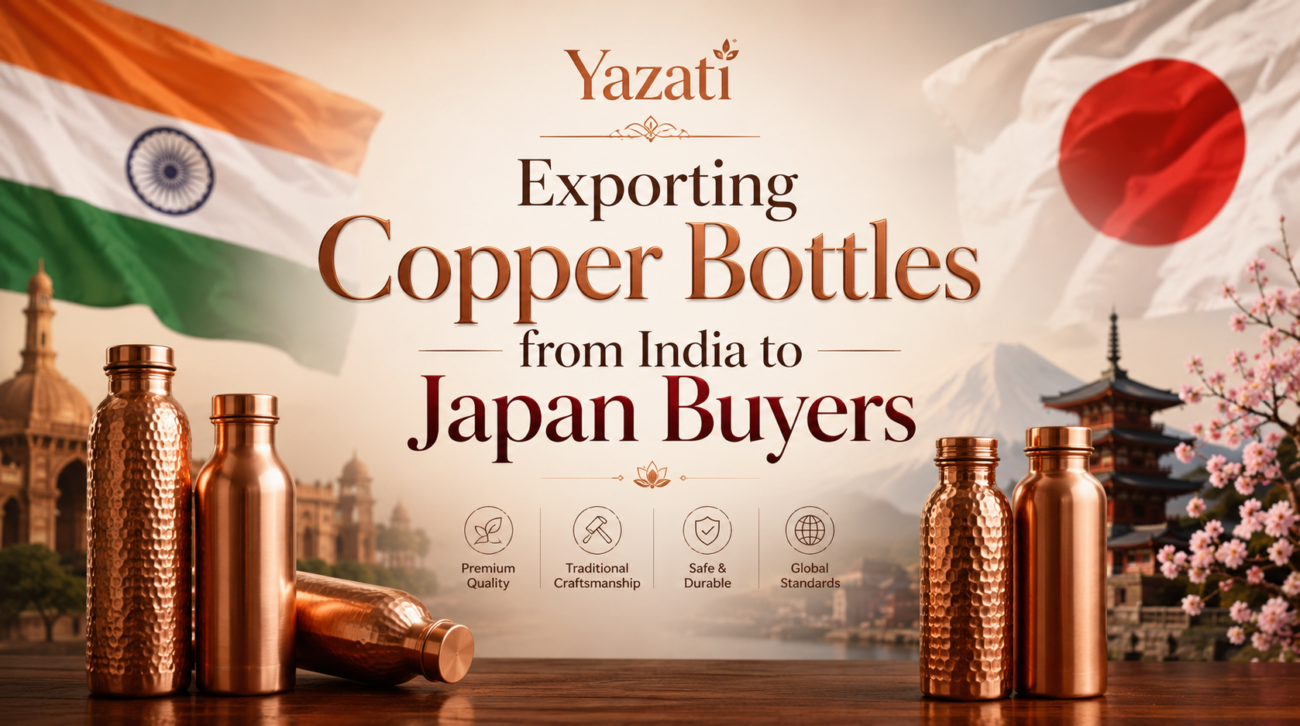
Introduction to the Copper Bottle Export Market
Exporting Copper Bottles from India to Japan Buyers has become an attractive business opportunity due to increasing global demand for eco-friendly and wellness-oriented products. India has a long tradition of manufacturing copper utensils and bottles, making it one of the leading suppliers in the international market.
Japanese consumers are known for valuing quality, craftsmanship, sustainability, and health-conscious products. These preferences align well with premium copper bottles manufactured in India. As environmental awareness continues to rise worldwide, reusable copper bottles are gaining popularity as an alternative to plastic containers.
For Indian exporters, Japan represents a high-value market with strong purchasing power and appreciation for premium imported goods.
Why Japan Is an Attractive Market for Indian Copper Bottles
Growing Demand for Sustainable Products
Japan has made significant efforts to reduce plastic waste. Consumers increasingly seek reusable and environmentally friendly alternatives. Copper bottles fit perfectly into this trend because they are:
- Reusable
- Durable
- Recyclable
- Premium in appearance
- Environmentally friendly
The Japanese retail market has shown growing interest in sustainable household and lifestyle products.
Health and Wellness Trends in Japan
Health-conscious consumers are actively searching for products that support healthy lifestyles. Copper bottles are often associated with traditional wellness practices, making them attractive to niche wellness markets.
Japanese buyers frequently look for products that combine functionality with health benefits, creating opportunities for Indian exporters.
Understanding Copper Bottles and Their Benefits
Traditional and Modern Uses
Copper has been used for centuries for storing drinking water. Today, copper bottles combine traditional practices with modern design aesthetics.
Applications include:
- Personal hydration
- Corporate gifting
- Premium retail products
- Wellness products
- Eco-friendly lifestyle accessories
Consumer Perception in International Markets
International consumers often perceive copper bottles as:
| Feature | Consumer Benefit |
|---|---|
| Premium Material | Luxury Appeal |
| Sustainable | Eco-Friendly Lifestyle |
| Reusable | Cost Savings |
| Durable | Long-Term Usage |
| Traditional Heritage | Unique Cultural Value |
Market Research Before Exporting
Identifying Target Customers
Potential Japanese buyers include:
- Importers
- Wholesalers
- Lifestyle product distributors
- Department stores
- Wellness retailers
- Online marketplace sellers
- Corporate gifting companies
Understanding buyer preferences can significantly improve export success rates.
Analyzing Competitors
Study competitors from:
- China
- Vietnam
- Thailand
- Local Japanese manufacturers
Evaluate:
- Pricing
- Packaging
- Product quality
- Certifications
- Delivery timelines
Competitive intelligence helps position your products effectively.
Export Regulations in India
IEC Registration Requirements
Before exporting, businesses must obtain an Import Export Code (IEC) from the Directorate General of Foreign Trade (DGFT).
The IEC is mandatory for:
- Customs clearance
- International transactions
- Export documentation
GST and Export Compliance
Indian exporters should ensure:
- GST registration
- LUT (Letter of Undertaking) where applicable
- Export invoice compliance
- Proper record maintenance
Compliance helps avoid delays and penalties.
Import Regulations for Japan
Product Standards and Safety Requirements
Japanese buyers may request:
- Material composition reports
- Food-contact safety verification
- Product testing certificates
- Manufacturing process details
Meeting these requirements improves buyer confidence.
Labeling and Packaging Compliance
Labels may include:
- Country of origin
- Product specifications
- Manufacturer details
- Usage instructions
- Care guidelines
Japanese consumers appreciate clear and professional labeling.
Product Customization for Japanese Buyers
Design Preferences
Japanese customers generally favor:
- Minimalist designs
- Elegant finishes
- High-quality craftsmanship
- Compact and functional products
Customization options may include:
- Matte finishes
- Engraving
- Bamboo lids
- Gift packaging
Branding Opportunities
Private-label manufacturing can increase export opportunities.
Services may include:
- Logo printing
- Custom packaging
- Corporate branding
- Exclusive designs
Many Japanese importers seek OEM and private-label solutions.
Finding Japan Buyers for Copper Bottles
B2B Marketplaces
Useful platforms include:
- Alibaba
- Global Sources
- TradeKey
- IndiaMART Export
- Made-in-China buyer directories
- JETRO business networks
You can also explore the official Japanese trade promotion organization: https://www.jetro.go.jp
Trade Fairs and Business Networks
Participating in trade fairs helps build direct buyer relationships.
Relevant events may include:
- Lifestyle product exhibitions
- Gift fairs
- Home and kitchen expos
- Sustainability-focused trade shows
Face-to-face interactions often lead to long-term partnerships.
Pricing Strategy for Export Markets
Cost Calculation
Export pricing should include:
- Manufacturing cost
- Packaging cost
- Inland transportation
- Customs charges
- Freight
- Insurance
- Marketing expenses
Profit Margin Planning
A typical pricing model should balance:
- Competitiveness
- Profitability
- Market positioning
Premium copper bottles can often command higher margins due to their perceived value.
Packaging and Shipping Considerations
Sea Freight vs Air Freight
| Shipping Method | Advantages | Disadvantages |
|---|---|---|
| Sea Freight | Lower Cost | Longer Transit Time |
| Air Freight | Faster Delivery | Higher Cost |
For large orders, sea freight is usually more economical.
Protective Export Packaging
Recommended packaging:
- Bubble wrapping
- Corrugated export cartons
- Moisture-resistant protection
- Retail-ready packaging
Proper packaging reduces damage during transit.
Documentation Required for Export
Commercial Invoice
Contains:
- Product description
- Quantity
- Unit price
- Total value
- Payment terms
Certificate of Origin
This document confirms Indian origin and may help buyers with customs procedures.
Other documents may include:
- Packing list
- Bill of lading
- Insurance certificate
- Inspection certificate
Payment Methods and Risk Management
Letter of Credit (LC)
Advantages:
- Reduced payment risk
- Bank-backed transaction
- Greater confidence for new buyers
Advance Payment Terms
For smaller orders, exporters may negotiate:
- 30% advance
- 70% before shipment
Always verify buyer credibility before extending credit.
Marketing Copper Bottles to Japanese Importers
Digital Marketing Techniques
Effective strategies include:
- SEO-focused websites
- LinkedIn outreach
- Email marketing
- B2B directories
- Product catalogs
Professional product photography significantly improves buyer engagement.
Distributor Partnerships
Working with Japanese distributors can provide:
- Local market access
- Retail connections
- Language support
- Faster market penetration
Many successful exporters begin with distributor partnerships before establishing direct sales channels.
Common Challenges and Solutions
| Challenge | Solution |
|---|---|
| Language Barriers | Hire translators or local agents |
| Quality Expectations | Implement strict quality control |
| Market Entry Costs | Start with small shipments |
| Competition | Focus on premium positioning |
| Regulatory Compliance | Work with export consultants |
Preparation and consistency are critical for long-term success.
Future Opportunities in the Japanese Market
Several factors suggest strong future growth:
- Rising sustainability awareness
- Premium gifting demand
- Wellness product expansion
- Growth of eco-conscious consumers
- Increased interest in traditional lifestyle products
Indian manufacturers that invest in quality, branding, and compliance can build strong positions in Japan’s premium lifestyle market.
Frequently Asked Questions (FAQs)
1. Is Japan a good market for Indian copper bottles?
Yes. Japan’s demand for sustainable, reusable, and premium lifestyle products creates strong opportunities for Indian copper bottle exporters.
2. What certifications may Japanese buyers request?
They may request food-contact safety reports, material testing certificates, and quality assurance documentation.
3. Do I need an IEC to export from India?
Yes. An Import Export Code (IEC) is generally required for export activities.
4. What is the best way to find Japanese buyers?
B2B marketplaces, trade fairs, LinkedIn outreach, and distributor networks are effective methods.
5. Are customized copper bottles popular in Japan?
Yes. Many buyers prefer customized branding, private-label products, and premium packaging.
6. Which shipping method is better for copper bottles?
Sea freight is usually preferred for bulk shipments, while air freight is suitable for urgent or smaller orders.
Conclusion
Exporting Copper Bottles from India to Japan Buyers presents a promising opportunity for Indian manufacturers and exporters. Japan’s emphasis on sustainability, quality, wellness, and premium products aligns perfectly with the strengths of Indian copper bottle production. By understanding Japanese buyer expectations, complying with regulations, implementing strong quality standards, and developing effective marketing strategies, exporters can establish profitable and long-lasting business relationships in this growing market.
✨ Discover Global Sourcing Excellence with Netyex ✨
Netyex is your trusted B2B sourcing partner, connecting international buyers with India’s finest manufacturers and curated product lines—from handicrafts and home décor to kitchenware, textiles, hospitality essentials, and more. With verified suppliers and end-to-end support, we make global procurement seamless, reliable, and efficient.
👉 Elevate your sourcing experience—explore Netyex today.
📦 Bulk orders & customisation | 🌍 Worldwide delivery | 🤝 Trusted by global buyers
Visit Netyex to source premium Indian products with confidence.