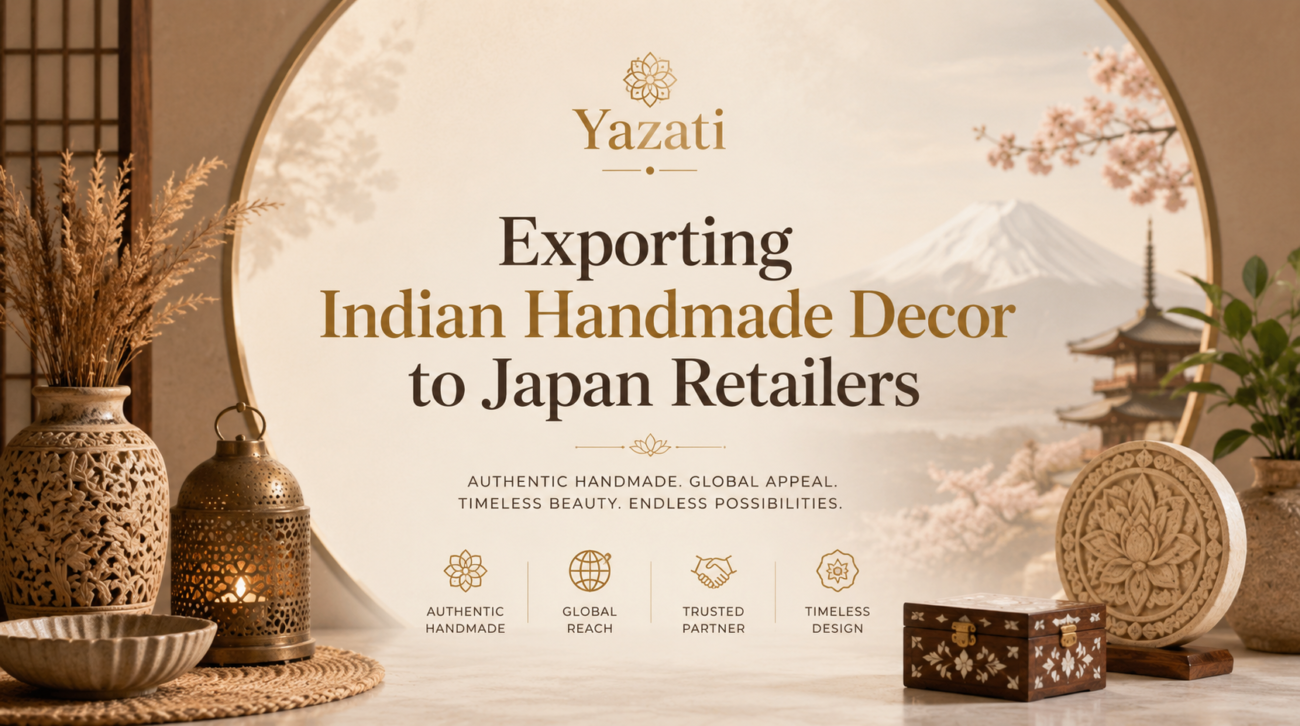
Introduction to Exporting Indian Handmade Decor to Japan Retailers
Exporting Indian Handmade Decor to Japan Retailers presents a significant opportunity for Indian artisans, manufacturers, exporters, and handicraft businesses. Japan is known for its appreciation of craftsmanship, quality, aesthetics, and cultural authenticity. These values align remarkably well with India’s rich tradition of handmade decor products.
From hand-carved wooden artifacts and brass decor to sustainable textiles and handcrafted ceramics, Indian products have the potential to capture the attention of Japanese buyers seeking unique and meaningful home decor solutions.
However, entering the Japanese market requires more than simply offering beautiful products. Japanese retailers demand exceptional quality, reliable delivery schedules, professional communication, and meticulous packaging. Understanding these requirements can significantly increase your chances of building long-term relationships with Japanese retail partners.
Why Japan Is a Promising Market for Indian Handmade Decor
Japan is one of the world’s largest consumer economies. The country has a mature retail sector and consumers who are willing to pay premium prices for products that offer authenticity and superior craftsmanship.
Consumer Preferences in Japan
Japanese consumers often value:
- Minimalist design
- High-quality craftsmanship
- Sustainability
- Cultural storytelling
- Functional beauty
- Attention to detail
Many Indian handmade decor items naturally embody these characteristics when properly positioned for the market.
Growing Demand for Artisanal and Sustainable Products
The global trend toward sustainability is strong in Japan. Handmade products created using traditional techniques and environmentally responsible materials are becoming increasingly attractive.
Popular sustainable materials include:
| Material | Japanese Market Appeal |
|---|---|
| Cotton | High |
| Jute | High |
| Bamboo | Very High |
| Recycled Wood | High |
| Natural Dyes | Growing Demand |
Understanding the Japanese Retail Landscape
Before approaching buyers, it is important to understand how Japanese retail channels operate.
Department Stores
Large department stores often seek premium imported products. They typically require:
- Consistent inventory
- High product quality
- Professional documentation
- Established export experience
Specialty Home Decor Retailers
These retailers focus on curated collections and unique products. They may be more receptive to handmade Indian decor with compelling stories behind the craftsmanship.
Boutique Lifestyle Stores
Boutique stores are excellent entry points for exporters because they often prioritize uniqueness over large-scale production.
E-Commerce and Online Marketplaces
Japanese consumers increasingly purchase decor products online. Retailers operating digital stores may offer opportunities for exclusive collections and limited-edition products.
Popular Indian Handmade Decor Categories in Japan
Several product categories perform particularly well in the Japanese market.
Handcrafted Textiles
Examples include:
- Cushion covers
- Table runners
- Wall hangings
- Handwoven throws
Japanese consumers appreciate fine craftsmanship and natural textures.
Wooden Decor and Furniture
Indian artisans produce exceptional:
- Carved wall panels
- Decorative trays
- Small furniture pieces
- Storage boxes
Simple and elegant designs often resonate most strongly with Japanese buyers.
Metal Art and Decorative Pieces
Popular products include:
- Brass figurines
- Candle holders
- Decorative bowls
- Traditional Indian metalwork
Ceramic and Pottery Products
Handcrafted ceramics fit naturally into Japanese home decor aesthetics due to Japan’s long-standing appreciation for pottery traditions.
Eco-Friendly Handmade Items
Eco-conscious decor products continue to gain momentum, especially among younger consumers.
Market Research Strategies for Japan
Market research is essential before making your first export shipment.
Identifying Target Retailers
Focus on retailers that already stock:
- Imported decor
- Handmade products
- Artisan collections
- Sustainable goods
Competitor Analysis
Study competitors from:
- Vietnam
- Thailand
- Indonesia
- Morocco
Analyze:
- Product styles
- Packaging
- Pricing
- Marketing methods
Pricing Expectations
Japanese buyers typically compare:
- Product quality
- Brand story
- Packaging presentation
- Reliability
Price alone rarely determines purchasing decisions.
Product Adaptation for Japanese Consumers
Design Preferences
Japanese aesthetics generally favor:
- Clean lines
- Subtle colors
- Natural materials
- Functional beauty
Adapting designs while preserving Indian authenticity can improve acceptance.
Packaging Standards
Packaging should be:
- Durable
- Elegant
- Minimalistic
- Environmentally friendly
Packaging quality directly influences perceived product value.
Quality Expectations
Japanese retailers often conduct detailed inspections. Ensure:
- Consistent dimensions
- Uniform finishing
- Strong quality control systems
Legal Requirements and Export Compliance
Export Documentation
Essential documents include:
- Commercial Invoice
- Packing List
- Bill of Lading
- Certificate of Origin
- Insurance Documents
Japanese Import Regulations
Requirements vary depending on product category. Always verify current regulations through official sources such as the Japan External Trade Organization and Japanese customs authorities.
Product Safety Standards
Products containing chemicals, paints, coatings, or electrical components may require additional certifications.
Building Relationships with Japanese Retailers
Business Culture and Etiquette
Japanese business culture values:
- Respect
- Punctuality
- Professionalism
- Consistency
Trust is built gradually and maintained through reliability.
Effective Communication Practices
Best practices include:
- Responding promptly
- Providing detailed product specifications
- Offering professional catalogs
- Maintaining clear communication
Long-Term Partnership Development
Japanese buyers often prioritize long-term suppliers over short-term opportunities.
Consistency in quality and delivery can create relationships that last for years.
Pricing and Profitability Strategies
Cost Calculation
Include:
- Production costs
- Packaging
- Inland transportation
- Freight charges
- Customs expenses
- Marketing costs
Wholesale Pricing Models
Common models include:
| Pricing Method | Advantages |
|---|---|
| Cost Plus | Simple |
| Tiered Pricing | Encourages larger orders |
| Distributor Pricing | Supports long-term growth |
Currency Exchange Considerations
Monitor fluctuations between the Indian Rupee and Japanese Yen to protect margins.
Logistics and Shipping Solutions
Freight Options
Options include:
- Sea freight
- Air freight
- Courier services
Sea freight is generally most economical for larger shipments.
Warehousing and Distribution
Some exporters partner with Japanese distributors who handle local warehousing and fulfillment.
Customs Clearance Process
Working with experienced freight forwarders can simplify customs procedures and reduce delays.
Marketing Indian Handmade Decor in Japan
Digital Marketing Approaches
Effective tactics include:
- Professional product photography
- Japanese-language catalogs
- Social media campaigns
- Retailer outreach
Trade Shows and Exhibitions
Participating in trade exhibitions can provide direct access to buyers.
Relevant events often include home decor, lifestyle, gift, and interior design exhibitions.
Collaborations with Retail Buyers
Exclusive collections designed specifically for Japanese retailers can create strong competitive advantages.
Common Challenges and How to Overcome Them
Cultural Differences
Invest in understanding Japanese business expectations and communication styles.
Quality Consistency
Implement documented quality control processes throughout production.
Supply Chain Management
Maintain backup suppliers and production capacity to meet retailer demands consistently.
Success Stories and Market Opportunities
Many Indian handicraft exporters have successfully entered Japan by focusing on:
- Superior craftsmanship
- Consistent quality
- Sustainable production
- Strong buyer relationships
Growing consumer interest in ethical sourcing and artisanal products suggests continued opportunities for Indian handmade decor businesses.
Frequently Asked Questions (FAQs)
1. Is Japan a good market for Indian handmade decor?
Yes. Japanese consumers value craftsmanship, authenticity, and quality, making Japan an attractive destination for Indian handmade decor exports.
2. Which Indian decor products sell best in Japan?
Handwoven textiles, wooden decor, brass handicrafts, ceramics, and eco-friendly products are among the most promising categories.
3. How can I find Japanese retailers?
You can use trade directories, trade shows, import-export databases, and organizations such as JETRO to identify potential buyers.
4. Do I need special certifications?
Requirements depend on the product category. Certain materials, coatings, or product types may require additional compliance documentation.
5. What packaging style works best in Japan?
Minimalist, premium-quality, environmentally friendly packaging is generally preferred.
6. What is the biggest challenge when exporting to Japan?
Maintaining consistent quality and meeting high retailer expectations are often the biggest challenges.
Conclusion
Exporting Indian Handmade Decor to Japan Retailers offers substantial growth potential for businesses willing to meet Japan’s exacting standards. Success depends on combining India’s exceptional craftsmanship with thorough market research, strong quality control, culturally appropriate communication, and reliable logistics.
Exporters who focus on building trust, adapting products to local preferences, and delivering consistently high-quality handmade decor can establish profitable, long-term partnerships in one of the world’s most sophisticated retail markets.
For further export guidance, consult resources from the Export Promotion Council for Handicrafts and the Japan External Trade Organization.
✨ Discover Global Sourcing Excellence with Netyex ✨
Netyex is your trusted B2B sourcing partner, connecting international buyers with India’s finest manufacturers and curated product lines—from handicrafts and home décor to kitchenware, textiles, hospitality essentials, and more. With verified suppliers and end-to-end support, we make global procurement seamless, reliable, and efficient.
👉 Elevate your sourcing experience—explore Netyex today.
📦 Bulk orders & customisation | 🌍 Worldwide delivery | 🤝 Trusted by global buyers
Visit Netyex to source premium Indian products with confidence.