Introduction to the Indian Handicrafts Export Industry
India has long been recognized as one of the world’s leading producers of handicrafts. From intricately carved wooden products to handwoven textiles and metal artifacts, Indian artisans create products that showcase centuries of cultural heritage and craftsmanship. The global demand for authentic handmade goods continues to rise, creating substantial opportunities for exporters.
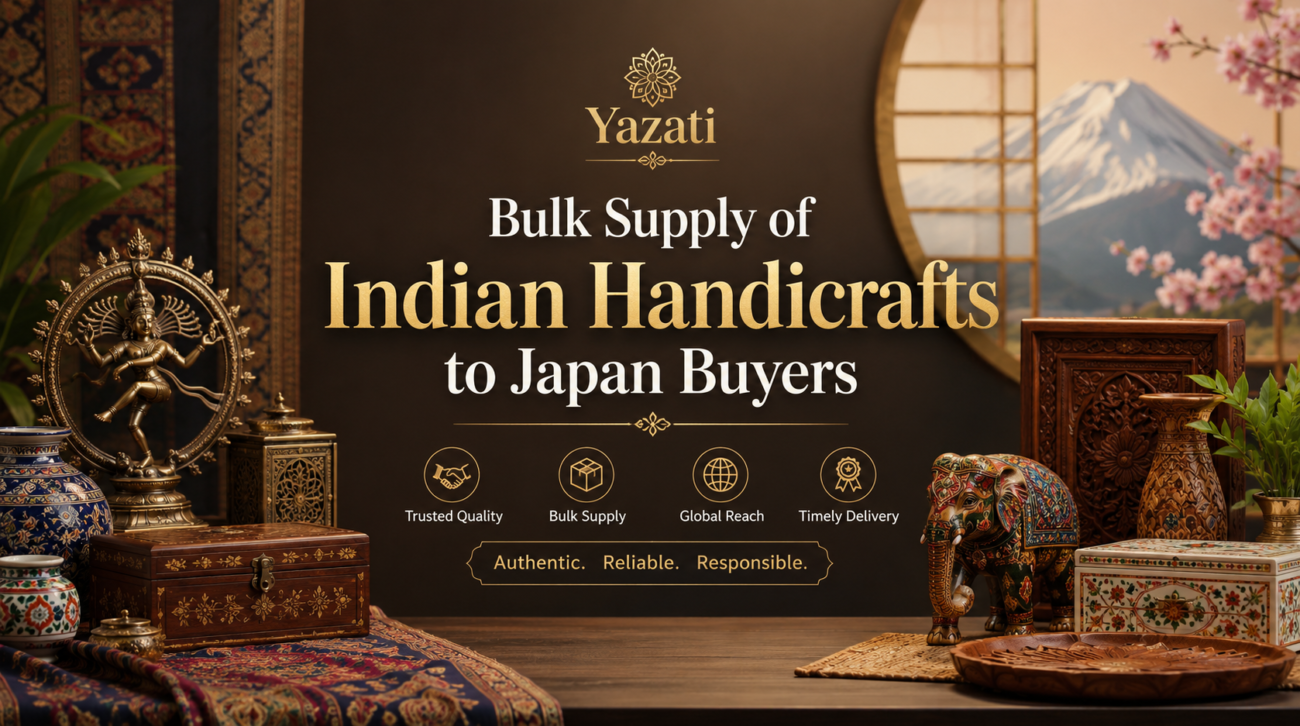
Among international markets, Japan stands out as a particularly attractive destination. Japanese consumers appreciate quality, attention to detail, sustainability, and traditional craftsmanship—values that align perfectly with Indian handicrafts. As a result, the Bulk Supply of Indian Handicrafts to Japan Buyers has become an increasingly profitable business opportunity for Indian exporters.
Why Japan Is a Lucrative Market for Indian Handicrafts
Japan is one of the world’s largest import markets for premium home décor, gift items, and handcrafted products. Consumers are willing to pay higher prices for products that demonstrate authenticity and exceptional workmanship.
Growing Demand for Handmade and Sustainable Products
Modern Japanese consumers increasingly seek eco-friendly and sustainable alternatives to mass-produced items. Handmade Indian handicrafts satisfy this demand by offering:
- Natural materials
- Traditional production methods
- Unique artistic designs
- Environmentally responsible manufacturing
Japanese Consumer Preferences
Japanese buyers typically value:
- Superior craftsmanship
- Minimalist aesthetics
- Durable products
- Elegant packaging
- Reliable suppliers
Understanding these preferences significantly improves export success rates.
Popular Indian Handicrafts Exported to Japan
Several product categories perform exceptionally well in the Japanese market.
Wooden Handicrafts
Hand-carved wooden items remain highly popular, including:
- Decorative boxes
- Wall art
- Furniture accents
- Wooden sculptures
- Traditional figurines
Metal Artifacts
Indian brass, copper, and aluminum handicrafts enjoy strong demand because of their intricate detailing and artistic appeal.
Examples include:
- Decorative bowls
- Candle holders
- Religious artifacts
- Table décor
- Gift items
Textile and Embroidered Products
Japan imports numerous handcrafted textile products such as:
- Cushion covers
- Table runners
- Scarves
- Handwoven fabrics
- Decorative wall hangings
Home Decor and Gift Items
Many Japanese retailers specialize in unique home décor products sourced from international suppliers. Indian handicraft exporters often supply:
- Handmade lamps
- Decorative mirrors
- Ceramic accents
- Artisan gift products
Understanding Japanese Buyer Expectations
Success in exporting depends heavily on understanding buyer expectations.
Quality Standards
Japanese importers maintain exceptionally high quality standards. Products must be:
- Defect-free
- Uniform in appearance
- Durable
- Professionally finished
Even minor inconsistencies may lead to rejection of shipments.
Packaging Requirements
Packaging plays a crucial role in Japan. Buyers expect:
- Attractive presentation
- Strong protective materials
- Eco-friendly packaging
- Clear labeling
Product Consistency
Consistency is especially important for bulk orders. Buyers expect every item to match approved samples.
Market Research Before Exporting
Before approaching buyers, exporters should conduct detailed market analysis.
Identifying Target Segments
Potential buyer categories include:
- Retail chains
- Home décor stores
- Gift shops
- Online marketplaces
- Specialty importers
Competitor Analysis
Analyze competing exporters from:
- Vietnam
- Thailand
- Indonesia
- China
Understanding competitor strengths helps position Indian handicrafts more effectively.
Export Regulations and Documentation
Proper documentation ensures smooth customs clearance.
Export Licenses
Indian exporters generally require:
- IEC (Import Export Code)
- GST registration
- Bank account for export transactions
Customs Procedures
Common export documents include:
| Document | Purpose |
|---|---|
| Commercial Invoice | Product and payment details |
| Packing List | Shipment contents |
| Bill of Lading | Shipping documentation |
| Certificate of Origin | Country verification |
| Insurance Certificate | Cargo protection |
Product Certifications
Depending on product type, buyers may request additional certifications related to safety, sustainability, or material compliance.
Pricing Strategy for Bulk Orders
Pricing must remain competitive while maintaining profitability.
Cost Calculation
Consider:
- Raw materials
- Labor costs
- Packaging
- Transportation
- Export documentation
- Marketing expenses
Wholesale Pricing Models
Common pricing methods include:
- Cost-plus pricing
- Market-based pricing
- Volume discount pricing
Many Japanese importers prefer long-term supply agreements with stable pricing structures.
Finding Japan Buyers for Indian Handicrafts
Identifying genuine buyers is one of the most important aspects of export success.
B2B Marketplaces
Useful platforms include:
- Alibaba
- IndiaMART
- TradeIndia
- Global Sources
- Made-in-China B2B portals
Trade Fairs and Exhibitions
Participation in international trade exhibitions can generate valuable leads.
Popular options include:
- Tokyo International Gift Show
- Lifestyle Expo Tokyo
- International Home & Housewares Events
Importers and Distributors
Working with established Japanese distributors often provides faster market access and lower entry risks.
Building Long-Term Relationships with Japanese Importers
Japanese business culture strongly values trust and consistency.
Business Communication Etiquette
Best practices include:
- Respond promptly
- Maintain professionalism
- Honor commitments
- Provide detailed documentation
Trust and Reliability
Long-term success often depends more on reliability than aggressive pricing.
Japanese buyers frequently continue purchasing from suppliers who consistently meet expectations.
Packaging and Logistics for Japan
Efficient logistics support successful exports.
Shipping Methods
Common options include:
- Sea Freight
- Air Freight
- Consolidated Cargo
Sea freight is generally preferred for bulk shipments due to lower costs.
Warehousing Solutions
Some exporters utilize:
- Third-party logistics providers
- Bonded warehouses
- Local distribution centers
These options can reduce delivery times and improve customer satisfaction.
Digital Marketing for Export Businesses
Modern exporters increasingly rely on digital channels.
SEO for Export Websites
An optimized website helps attract buyers searching online for:
- Indian handicraft suppliers
- Wholesale handicrafts
- Bulk handicraft exporters
- Handmade décor manufacturers
For additional export resources, visit the official Export Promotion Council for Handicrafts (EPCH): https://www.epch.in
LinkedIn and B2B Outreach
LinkedIn offers valuable opportunities to connect with:
- Import managers
- Procurement specialists
- Retail buyers
- Wholesale distributors
Common Challenges and Solutions
Currency Fluctuations
Managing foreign exchange risks may require:
- Forward contracts
- Hedging strategies
- Flexible pricing clauses
Quality Control Issues
Implementing strict quality assurance procedures minimizes returns and strengthens buyer confidence.
Future Trends in Japanese Handicraft Imports
Several trends are expected to drive growth:
- Sustainable products
- Eco-friendly packaging
- Handmade home décor
- Ethical sourcing
- Artisan storytelling
Indian exporters who align with these trends will likely gain competitive advantages in the coming years.
FAQs
1. Which Indian handicrafts are most popular in Japan?
Wooden handicrafts, metal artifacts, textile products, home décor items, and handmade gifts are among the most popular categories.
2. Do Japanese buyers place large bulk orders?
Yes. Established importers and retail chains often purchase substantial quantities through long-term contracts.
3. What quality standards should exporters meet?
Products should be consistent, durable, defect-free, and professionally packaged.
4. How can exporters find genuine Japanese buyers?
Through trade fairs, B2B marketplaces, import directories, and direct outreach to distributors.
5. Is eco-friendly packaging important in Japan?
Yes. Sustainable packaging is increasingly preferred by Japanese consumers and importers.
6. What shipping method is best for bulk handicraft exports?
Sea freight is usually the most economical option for large-volume shipments.
Conclusion
The Bulk Supply of Indian Handicrafts to Japan Buyers represents a significant growth opportunity for Indian exporters. Japan’s appreciation for craftsmanship, quality, sustainability, and cultural authenticity aligns perfectly with India’s rich handicraft heritage. By maintaining high standards, understanding Japanese buyer expectations, investing in effective marketing, and building long-term relationships, exporters can establish profitable and sustainable business operations in one of Asia’s most sophisticated markets.
✨ Discover Global Sourcing Excellence with Netyex ✨
Netyex is your trusted B2B sourcing partner, connecting international buyers with India’s finest manufacturers and curated product lines—from handicrafts and home décor to kitchenware, textiles, hospitality essentials, and more. With verified suppliers and end-to-end support, we make global procurement seamless, reliable, and efficient.
👉 Elevate your sourcing experience—explore Netyex today.
📦 Bulk orders & customisation | 🌍 Worldwide delivery | 🤝 Trusted by global buyers
Visit Netyex to source premium Indian products with confidence.