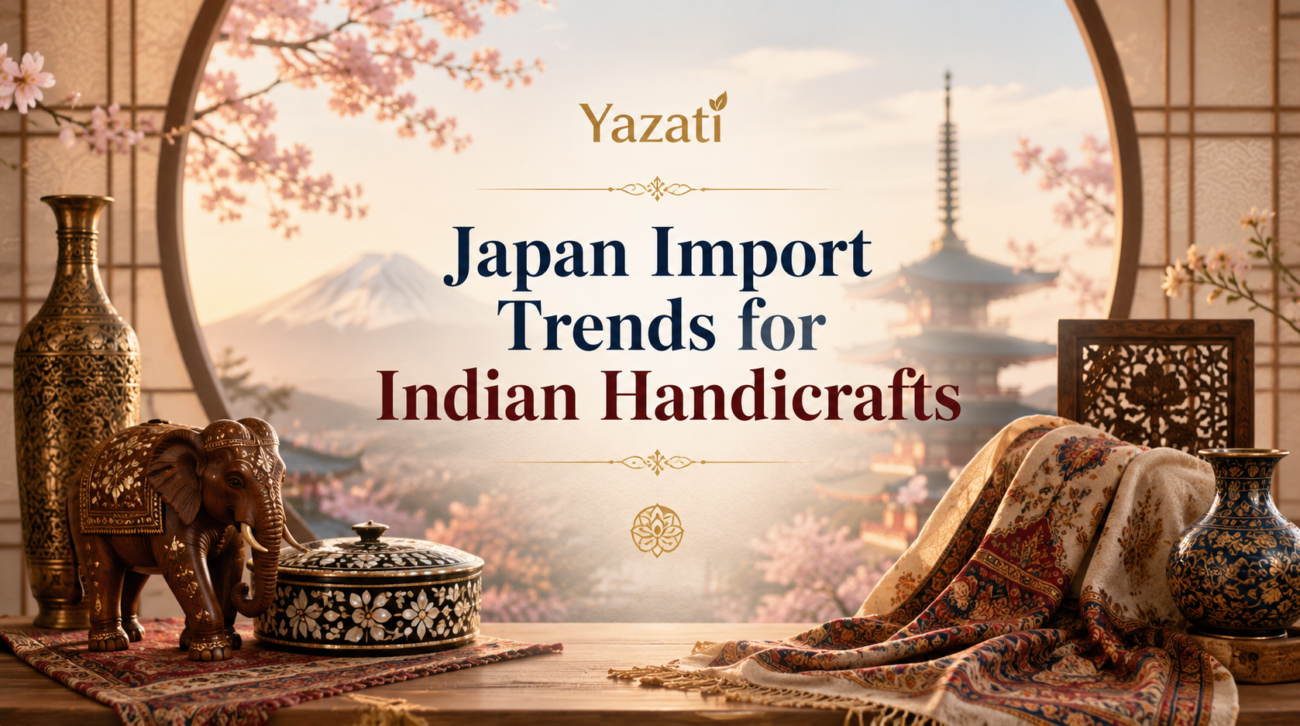
Introduction to Japan’s Handicrafts Import Market
Japan is one of Asia’s most sophisticated consumer markets. Known for its appreciation of craftsmanship, attention to detail, and preference for premium products, Japan presents attractive opportunities for Indian handicraft exporters. The country’s consumers value authenticity, artistic heritage, and sustainability—qualities that align closely with Indian handicrafts.
In recent years, Japanese buyers have shown increased interest in handmade products that offer uniqueness and cultural significance. As a result, Japan Import Trends for Indian Handicrafts indicate a steady rise in demand across multiple categories, including home décor, textiles, furniture accents, and artisan-made gifts.
Overview of Indian Handicraft Exports to Japan
India is globally recognized for its rich handicraft traditions. From Rajasthan’s carved wooden products to Moradabad’s metalware and Kashmir’s textile craftsmanship, Indian artisans produce products that appeal to discerning international buyers.
Japan has emerged as a promising destination because consumers increasingly seek products that combine functionality with aesthetic value. Indian handicrafts satisfy both requirements while offering a distinct cultural identity.
Historical Trade Relations Between India and Japan
India and Japan have enjoyed strong economic and cultural ties for decades. Trade agreements, diplomatic cooperation, and business partnerships have strengthened bilateral trade.
The handicraft sector benefits from these relations as Japanese importers continue exploring reliable Indian suppliers capable of delivering high-quality handmade products.
Evolution of Consumer Preferences
Japanese consumers traditionally favored domestic craftsmanship. However, globalization and growing cultural curiosity have expanded interest in imported artisanal goods.
Today’s buyers often look for:
- Handmade authenticity
- Sustainable production methods
- Cultural storytelling
- Premium materials
- Unique design elements
These trends have created favorable conditions for Indian handicraft exports.
Current Market Size and Growth Trends
The Japanese home décor and lifestyle products market continues to evolve. Consumers increasingly purchase products that reflect individuality rather than mass production.
Import Statistics and Key Indicators
Several indicators suggest growing demand for imported artisan products:
| Indicator | Trend |
|---|---|
| Handmade Home Décor | Growing |
| Sustainable Products | Rapid Growth |
| Artisan Gift Market | Expanding |
| Premium Lifestyle Goods | Strong Demand |
| E-commerce Sales | Increasing |
While exact figures fluctuate annually, the overall direction remains positive for suppliers offering authentic handcrafted products.
Fast-Growing Product Categories
Among all categories, the strongest growth appears in:
- Sustainable home décor
- Handmade textiles
- Artisan gift items
- Wooden decorative pieces
- Ethical lifestyle products
These segments align closely with India’s export strengths.
Most Popular Indian Handicrafts in Japan
Wooden Handicrafts
Wooden handicrafts remain among the most sought-after Indian exports.
Popular products include:
- Hand-carved boxes
- Decorative panels
- Wooden sculptures
- Sustainable furniture accents
- Traditional wall décor
Japanese consumers appreciate intricate craftsmanship and natural materials.
Metal Artifacts and Home Décor
India’s metal craftsmanship enjoys a strong reputation internationally.
High-demand products include:
- Brass lamps
- Decorative bowls
- Metal figurines
- Candle holders
- Traditional art pieces
The craftsmanship of cities such as Moradabad is particularly valued.
Handmade Textiles and Fabrics
Textiles continue to attract Japanese consumers seeking quality and uniqueness.
Examples include:
- Handwoven throws
- Cushion covers
- Table linens
- Embroidered fabrics
- Block-printed textiles
These products fit well with Japanese interior design aesthetics that emphasize simplicity and elegance.
Stone, Marble, and Ceramic Crafts
Premium stone and ceramic products appeal to luxury buyers and specialty retailers.
Popular categories include:
- Marble inlay products
- Decorative vases
- Handcrafted ceramic ware
- Artistic sculptures
Japanese Consumer Buying Behavior
Understanding consumer behavior is critical for exporters.
Preference for Quality and Authenticity
Japanese buyers place enormous importance on:
- Product quality
- Precision craftsmanship
- Durability
- Consistency
- Authenticity
Even minor defects can affect purchasing decisions. Therefore, strict quality control is essential.
Demand for Sustainable Products
Environmental awareness continues to grow in Japan.
Consumers increasingly prefer products that are:
- Eco-friendly
- Recyclable
- Ethically sourced
- Handmade using traditional methods
Indian handicrafts often naturally meet these expectations.
Key Drivers Behind Import Growth
Rising Interest in Cultural Products
Japanese consumers are becoming more interested in products that tell a story.
Indian handicrafts offer:
- Rich heritage
- Cultural significance
- Artistic uniqueness
- Traditional craftsmanship
This emotional connection often increases product value.
Growth of E-commerce and Specialty Retail
Online retail platforms have expanded access to international handicrafts.
Benefits include:
- Wider product visibility
- Easier market entry
- Direct-to-consumer opportunities
- Improved brand storytelling
Small Indian exporters can now reach Japanese customers more effectively than ever before.
Distribution Channels in Japan
Importers and Wholesalers
Many exporters enter Japan through established importers who understand local regulations and buyer expectations.
Advantages include:
- Market expertise
- Existing retail networks
- Reduced operational complexity
Department Stores and Boutique Retailers
Premium retailers often seek unique handcrafted products to differentiate themselves.
Indian handicrafts fit particularly well within:
- Lifestyle stores
- Interior décor boutiques
- Gift shops
- Cultural retail outlets
Online Marketplaces
Digital commerce continues expanding rapidly.
Popular channels include:
- Marketplace platforms
- Specialty craft websites
- Direct brand websites
- Social commerce platforms
Regulatory Requirements and Compliance
Product Standards and Labeling
Japanese authorities maintain strict standards regarding:
- Product safety
- Material composition
- Packaging information
- Country-of-origin labeling
Compliance is critical for successful market entry.
Customs Procedures
Exporters should ensure:
- Accurate documentation
- Proper tariff classification
- Correct valuation procedures
- Timely customs clearance
Working with experienced freight partners can simplify the process.
Challenges for Indian Exporters
Competition from Other Asian Markets
Indian exporters compete with suppliers from:
- Vietnam
- Thailand
- Indonesia
- China
Success depends on emphasizing craftsmanship, authenticity, and quality rather than competing solely on price.
Logistics and Packaging Expectations
Japanese buyers expect exceptional packaging standards.
Requirements often include:
- Protective packaging
- Attractive presentation
- Consistent branding
- Damage-free delivery
Investing in packaging can significantly improve customer satisfaction.
Opportunities for Future Growth
Eco-Friendly Handicrafts
Sustainability will likely remain a major growth driver.
Promising products include:
- Recycled-material crafts
- Natural fiber products
- Sustainable wooden décor
- Eco-conscious gift items
Luxury and Premium Segments
Japan’s premium market continues to offer strong potential.
Luxury consumers often seek:
- Limited-edition pieces
- Artisan craftsmanship
- Cultural authenticity
- High-quality materials
Indian handicrafts are well-positioned to serve this segment.
Export Strategies for Indian Businesses
To capitalize on Japan Import Trends for Indian Handicrafts, exporters should:
- Maintain strict quality standards.
- Invest in premium packaging.
- Highlight artisan stories and heritage.
- Obtain relevant certifications.
- Build relationships with local importers.
- Leverage digital marketing.
- Participate in international trade fairs.
- Focus on sustainability messaging.
- Customize products for Japanese preferences.
- Develop long-term partnerships rather than transactional sales.
Frequently Asked Questions
1. Which Indian handicrafts are most popular in Japan?
Wooden handicrafts, metal artifacts, handmade textiles, ceramic products, and eco-friendly home décor items are among the most popular.
2. Why do Japanese consumers buy Indian handicrafts?
They appreciate the authenticity, craftsmanship, cultural value, and uniqueness of handmade products.
3. Is sustainability important in the Japanese market?
Yes. Sustainable and ethically produced products are becoming increasingly attractive to Japanese buyers.
4. What are the biggest challenges for Indian exporters?
Quality consistency, packaging standards, logistics management, and competition from other Asian exporters.
5. Can small exporters enter the Japanese market?
Yes. E-commerce platforms and partnerships with importers make market entry easier for small businesses.
6. Which sales channels work best in Japan?
Importers, boutique retailers, department stores, and online marketplaces are among the most effective channels.
Conclusion
The outlook for Japan Import Trends for Indian Handicrafts remains highly promising in 2026 and beyond. Japanese consumers increasingly value authenticity, sustainability, and artistic craftsmanship—qualities deeply embedded in India’s handicraft sector. Exporters who focus on quality, cultural storytelling, premium packaging, and long-term market relationships can unlock substantial opportunities in one of Asia’s most sophisticated consumer markets.
For additional export guidance, businesses can explore resources from the Export Promotion Council for Handicrafts and the Japan External Trade Organization.
✨ Discover Global Sourcing Excellence with Netyex ✨
Netyex is your trusted B2B sourcing partner, connecting international buyers with India’s finest manufacturers and curated product lines—from handicrafts and home décor to kitchenware, textiles, hospitality essentials, and more. With verified suppliers and end-to-end support, we make global procurement seamless, reliable, and efficient.
👉 Elevate your sourcing experience—explore Netyex today.
📦 Bulk orders & customisation | 🌍 Worldwide delivery | 🤝 Trusted by global buyers
Visit Netyex to source premium Indian products with confidence.