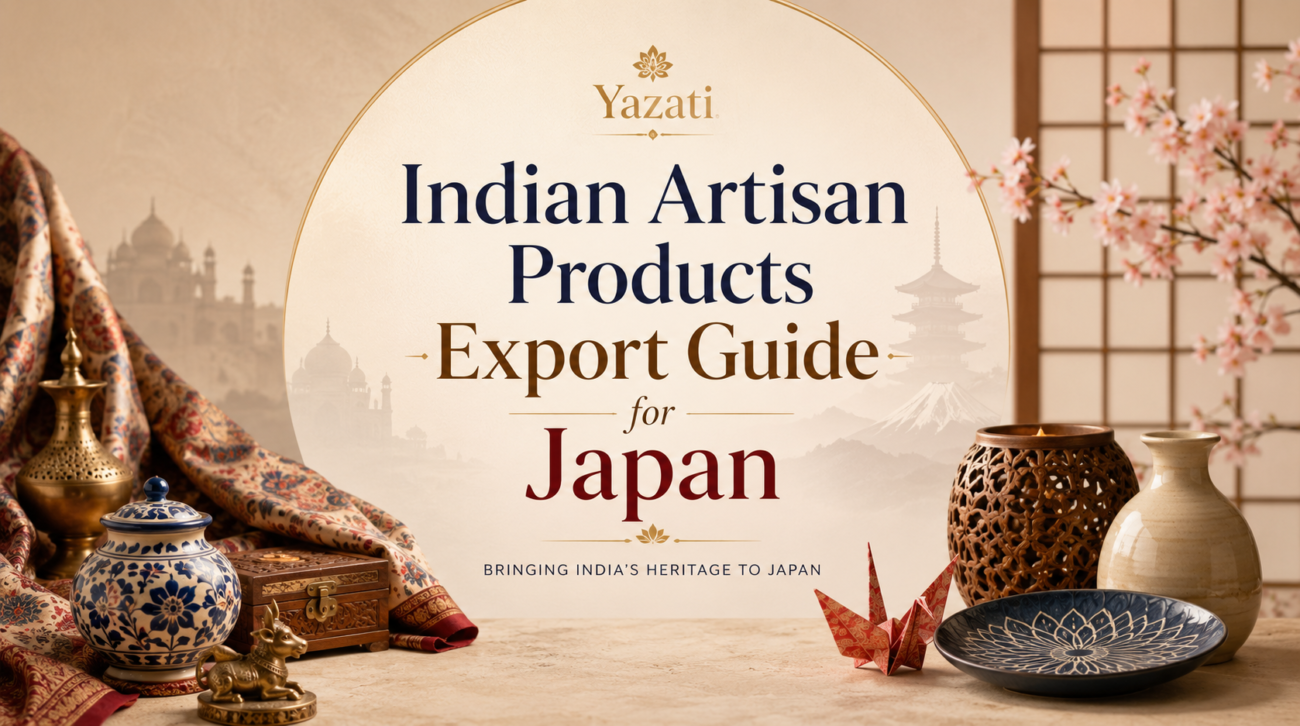
Introduction to Exporting Indian Artisan Products to Japan
The Indian Artisan Products Export Guide for Japan is an essential resource for businesses, cooperatives, artisans, and exporters seeking access to one of the world’s most sophisticated consumer markets. Japan has a strong appreciation for craftsmanship, quality, authenticity, and cultural heritage. These values align remarkably well with India’s rich tradition of handmade products.
From handwoven textiles and brassware to sustainable home décor and handcrafted furniture, Indian artisan products have significant potential in Japan. However, success requires more than simply shipping products overseas. Exporters must understand Japanese consumer behavior, quality expectations, documentation requirements, and market-entry strategies.
This guide provides a comprehensive roadmap to help Indian exporters build a sustainable and profitable presence in Japan.
Why Japan is a Promising Market for Indian Handicrafts
Japan is the world’s third-largest economy and has a mature retail sector that values premium handmade goods.
Consumer Preferences in the Japanese Market
Japanese consumers often prioritize:
- Exceptional craftsmanship
- Attention to detail
- Durability
- Minimalist aesthetics
- Sustainable production methods
- Cultural authenticity
Products that tell a story and reflect traditional skills are particularly attractive.
Demand for Authentic Handmade Products
In recent years, Japanese consumers have increasingly sought alternatives to mass-produced goods. Handmade products offer uniqueness and emotional value, making them highly appealing.
Popular sectors include:
| Category | Market Demand |
|---|---|
| Home décor | High |
| Handmade textiles | High |
| Sustainable products | Very High |
| Gift items | High |
| Traditional crafts | Moderate to High |
Understanding the Japanese Import Market
Understanding local preferences can dramatically improve export success rates.
Key Trends in Home Décor and Artisan Goods
Current trends include:
- Natural materials
- Sustainable sourcing
- Minimalist design
- Functional craftsmanship
- Handmade luxury products
Japanese buyers often prefer products that blend traditional craftsmanship with modern utility.
Popular Product Categories from India
Several Indian artisan sectors perform well internationally:
Handmade Textiles and Fabrics
Products include:
- Handloom cotton
- Silk scarves
- Block-printed textiles
- Table runners
- Cushion covers
Wooden Handicrafts and Furniture
Popular products include:
- Decorative boxes
- Wooden trays
- Sustainable furniture
- Hand-carved home accessories
Metal Crafts and Decorative Items
Examples include:
- Brass sculptures
- Copper décor
- Candle holders
- Traditional decorative artifacts
Ceramic and Pottery Products
Japanese consumers appreciate:
- Handmade ceramic bowls
- Decorative pottery
- Artisan kitchenware
Eco-Friendly and Sustainable Artisan Goods
Demand continues to rise for:
- Bamboo products
- Recycled-material crafts
- Organic textile products
- Sustainable packaging solutions
Export Regulations and Compliance Requirements
Compliance is critical when entering Japan.
Product Standards and Quality Expectations
Japanese buyers maintain extremely high standards regarding:
- Product consistency
- Finishing quality
- Material safety
- Packaging presentation
Minor defects that may be acceptable elsewhere can result in rejection.
Packaging and Labeling Rules
Packaging should be:
- Durable
- Clean
- Professional
- Environmentally responsible
Japanese Language Labeling Requirements
Many products require labels that include:
- Product name
- Country of origin
- Material information
- Manufacturer details
- Care instructions
Consult the official resources of the Japan External Trade Organization for updated requirements.
Documentation Needed for Export
Accurate documentation ensures smooth customs clearance.
Commercial Invoice
Must include:
- Product descriptions
- Quantity
- Unit price
- Total value
- Buyer information
Packing List
Provides shipment details, including:
- Carton dimensions
- Weight
- Product quantities
Certificate of Origin
This document verifies that products originate from India.
Shipping and Customs Documents
Commonly required documents include:
- Bill of Lading
- Air Waybill
- Insurance Certificate
- Export Declaration
Finding Buyers and Distributors in Japan
Securing reliable buyers is often the biggest challenge.
Trade Shows and Exhibitions
Participating in trade events provides direct access to Japanese buyers.
Relevant events include:
- Tokyo International Gift Show
- Lifestyle Week Tokyo
Benefits include:
- Buyer meetings
- Product demonstrations
- Market feedback
- Distributor recruitment
Online B2B Marketplaces
Useful platforms include:
- Alibaba
- Global Sources
- TradeIndia
- IndiaMART
Working with Import Agents
Japanese import agents can:
- Identify buyers
- Handle local negotiations
- Assist with regulatory compliance
- Support distribution activities
Pricing Strategy for the Japanese Market
Pricing requires careful planning.
Calculating Export Costs
Include:
- Manufacturing costs
- Packaging costs
- Inland transport
- Freight charges
- Customs duties
- Marketing expenses
A detailed cost analysis prevents margin erosion.
Competitive Positioning
Avoid competing solely on price.
Focus on:
- Authenticity
- Handmade quality
- Sustainability
- Cultural heritage
- Premium packaging
Japanese consumers often pay higher prices for superior craftsmanship.
Logistics and Shipping Solutions
Efficient logistics directly affect customer satisfaction.
Sea Freight vs Air Freight
| Method | Advantages | Disadvantages |
|---|---|---|
| Sea Freight | Lower cost | Longer transit |
| Air Freight | Faster delivery | Higher cost |
Most artisan exports use sea freight due to cost efficiency.
Warehousing and Distribution Options
Exporters can choose:
- Direct shipping
- Third-party logistics providers
- Japanese distributors
- Local warehouses
The best option depends on sales volume and customer expectations.
Marketing Indian Artisan Products in Japan
Marketing strategies should align with Japanese cultural preferences.
Storytelling and Cultural Branding
Successful brands communicate:
- Artisan heritage
- Handmade processes
- Regional traditions
- Social impact
Consumers appreciate the human stories behind products.
Digital Marketing Approaches
Effective channels include:
- Japanese-language websites
- Social media marketing
- Influencer partnerships
- E-commerce platforms
For market research and trade resources, exporters can explore the official JETRO website: https://www.jetro.go.jp/
Challenges and Risk Management
Cultural Differences in Business
Japanese business culture emphasizes:
- Respect
- Consistency
- Patience
- Long-term relationships
Building trust often takes time but yields lasting partnerships.
Currency and Payment Risks
Consider:
- Exchange-rate fluctuations
- Delayed payments
- Banking costs
Risk management tools include:
- Letters of Credit
- Export insurance
- Currency hedging
Government Support and Export Promotion Programs
India offers several support programs for exporters.
Export Incentives Available in India
Programs may include:
- Duty remission schemes
- Market access initiatives
- Export promotion subsidies
Check current guidelines from the Directorate General of Foreign Trade.
Assistance from Trade Organizations
Useful organizations include:
- Export Promotion Council for Handicrafts
- Federation of Indian Export Organisations
- Japan External Trade Organization
These organizations provide training, buyer connections, and export guidance.
Future Opportunities for Indian Artisan Exporters
The future looks promising for Indian artisans targeting Japan.
Growth drivers include:
- Rising demand for sustainability
- Appreciation of handmade craftsmanship
- Interest in cultural products
- Expansion of online retail
- Ethical consumer purchasing trends
Exporters who invest in quality, branding, and long-term relationships can establish a strong market presence.
Frequently Asked Questions (FAQs)
1. Which Indian artisan products sell best in Japan?
Handmade textiles, brassware, eco-friendly products, wooden crafts, ceramics, and home décor items generally perform well.
2. Do I need Japanese-language packaging?
Many products benefit from Japanese-language labeling, especially retail products sold directly to consumers.
3. Is Japan a difficult market for new exporters?
Japan has high standards, but businesses that prioritize quality and reliability can succeed.
4. How can I find Japanese buyers?
Trade shows, import agents, B2B marketplaces, and export promotion organizations are effective channels.
5. What payment methods are safest for exporters?
Letters of Credit, advance payments, and export credit insurance provide additional protection.
6. Are sustainable products popular in Japan?
Yes. Sustainability and environmentally friendly products are increasingly important to Japanese consumers.
Conclusion
The Indian Artisan Products Export Guide for Japan demonstrates that Japan offers significant opportunities for Indian handicraft exporters willing to meet its demanding standards. Success depends on delivering exceptional quality, understanding local preferences, complying with regulations, and building strong relationships with buyers.
By combining India’s extraordinary artisan heritage with strategic market planning, exporters can create a profitable and sustainable presence in Japan’s premium consumer market. The growing appreciation for authenticity, sustainability, and craftsmanship makes now an excellent time to expand Indian artisan exports into Japan.
✨ Discover Global Sourcing Excellence with Netyex ✨
Netyex is your trusted B2B sourcing partner, connecting international buyers with India’s finest manufacturers and curated product lines—from handicrafts and home décor to kitchenware, textiles, hospitality essentials, and more. With verified suppliers and end-to-end support, we make global procurement seamless, reliable, and efficient.
👉 Elevate your sourcing experience—explore Netyex today.
📦 Bulk orders & customisation | 🌍 Worldwide delivery | 🤝 Trusted by global buyers
Visit Netyex to source premium Indian products with confidence.