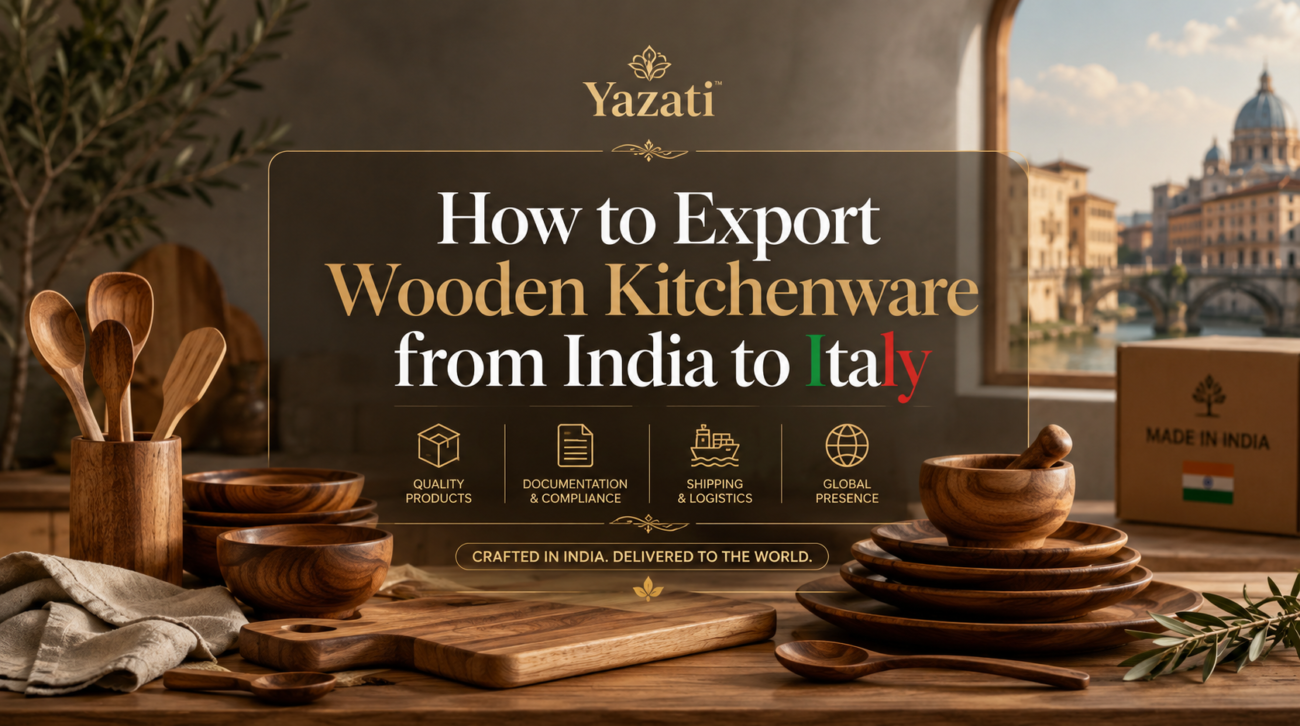
India has become a leading exporter of handcrafted and machine-made wooden kitchenware. With growing demand for sustainable and eco-friendly kitchen products across Europe, Italy presents an attractive market for Indian manufacturers and exporters. If you are planning to export wooden kitchenware from India to Italy, understanding regulations, documentation, quality standards, and buyer expectations is essential.
This guide explains the complete export process step by step.
Understanding the Italian Market for Wooden Kitchenware
Italy has a strong culture of cooking and dining. Consumers increasingly prefer eco-friendly kitchen products made from natural materials. Wooden kitchenware fits perfectly into this trend because it is:
- Sustainable
- Biodegradable
- Durable
- Attractive for home décor
- Safe for many food preparation applications
Italian retailers, wholesalers, and online sellers regularly source wooden kitchen products from international suppliers, including India.
Why Italy Imports Wooden Kitchenware from India
India offers several competitive advantages:
- Abundant availability of hardwoods such as acacia, mango wood, neem, and sheesham
- Skilled artisans and manufacturers
- Competitive production costs
- Strong export infrastructure
- Experience serving European markets
Many Italian importers appreciate Indian craftsmanship and unique product designs.
Types of Wooden Kitchenware Suitable for Export
Wooden Spoons and Spatulas
Popular products include:
- Cooking spoons
- Serving spoons
- Rice paddles
- Spatulas
- Ladles
These products enjoy steady demand among Italian households.
Chopping Boards
Common export varieties:
- Acacia wood boards
- Mango wood boards
- End-grain cutting boards
- Cheese serving boards
Serving Trays and Bowls
Restaurants and homeowners often purchase:
- Serving platters
- Decorative bowls
- Snack trays
- Fruit bowls
Salad Servers and Specialty Utensils
Premium wooden kitchen accessories can command higher margins in European markets.
Market Research and Buyer Identification
Before exporting, conduct detailed market research.
Focus on:
- Italian kitchenware distributors
- Home décor importers
- Retail chains
- E-commerce sellers
- Specialty kitchen stores
Useful sources include:
- Italian Chamber of Commerce
- Trade fairs
- B2B marketplaces
- Industry directories
You can also explore international trade portals such as https://www.europages.com to identify potential buyers.
Business Registration Requirements in India
Obtaining an IEC Code
An Import Export Code (IEC) issued by the Directorate General of Foreign Trade is mandatory.
Without an IEC, export activities cannot proceed.
GST Registration
GST registration is generally required for export businesses.
Benefits include:
- Input tax credit
- Export incentives
- Simplified compliance
Product Standards and Compliance Requirements
EU Food Contact Material Regulations
Since wooden kitchenware comes into contact with food, products must comply with relevant European food safety requirements.
Key considerations include:
- Safe coatings and finishes
- Non-toxic materials
- Absence of harmful chemical migration
Importers often request laboratory testing reports.
Wood Treatment Requirements
Wood products may need verification regarding:
- Pest control
- Moisture levels
- Sustainable sourcing
- Fumigation requirements (depending on packaging and shipping conditions)
Quality Control and Product Certification
Italian buyers generally expect consistent quality.
Recommended measures include:
- Moisture testing
- Crack inspection
- Surface smoothness checks
- Food-safe finish verification
- Batch inspections
Useful certifications may include:
- FSC certification for sustainable sourcing
- Quality management systems
- Third-party inspection reports
Strong quality control improves buyer confidence and repeat orders.
Packaging Requirements for Italy
Packaging should protect products during transit while appealing to European consumers.
Best practices:
- Use recyclable packaging materials
- Include barcode labels
- Prevent moisture exposure
- Protect corners and edges
- Ensure export-grade cartons
Many Italian buyers prefer eco-friendly packaging solutions.
Product Labeling and Documentation
Labels should typically include:
- Product description
- Country of origin (Made in India)
- Material information
- Importer details
- Usage instructions
- Care instructions
Clear labeling helps avoid customs delays.
Pricing Strategy and Cost Calculation
Your export pricing should consider:
| Cost Component | Example |
|---|---|
| Raw Material | Wood |
| Manufacturing | Labor and machining |
| Packaging | Boxes and labels |
| Inland Transport | Factory to port |
| Documentation | Export paperwork |
| Freight | Sea or air |
| Insurance | Cargo coverage |
| Commission | Agent fees |
Understanding Incoterms such as FOB, CIF, and DDP is crucial when negotiating with buyers.
Finding Italian Buyers and Distributors
Trade Shows
Participate in international exhibitions focused on:
- Home décor
- Kitchenware
- Hospitality products
- Sustainable consumer goods
Trade shows provide direct access to importers.
B2B Platforms
Popular platforms include:
- Alibaba
- Europages
- Global Sources
- IndiaMART Export Listings
Maintain a professional catalog with high-quality photographs.
Export Documentation Checklist
Prepare the following documents:
- Commercial Invoice
- Packing List
- Bill of Lading or Air Waybill
- Certificate of Origin
- IEC Certificate
- GST Documents
- Insurance Certificate
- Purchase Order
- Inspection Certificate (if required)
Proper documentation ensures smooth customs clearance.
Shipping and Logistics Process
Sea Freight
Sea freight is ideal for:
- Large volumes
- Lower shipping costs
- Container shipments
Advantages:
- Cost-effective
- Suitable for bulk exports
Air Freight
Air freight works best for:
- Sample shipments
- Urgent orders
- Premium products
Although faster, it is significantly more expensive.
Customs Clearance in Italy
Italian customs authorities may inspect shipments for:
- Documentation accuracy
- Product safety compliance
- Correct tariff classification
- Country-of-origin verification
Working with an experienced customs broker can reduce delays.
Payment Methods and Risk Management
Common international payment methods include:
- Advance Payment
- Letter of Credit (LC)
- Documents Against Payment (D/P)
- Open Account (for trusted buyers)
For new buyers, Letters of Credit often provide greater security.
Additional protection measures:
- Export credit insurance
- Buyer verification
- Trade references
- Clear contracts
Marketing Your Wooden Kitchenware Brand
Successful exporters invest in branding.
Effective strategies include:
- Professional website
- Product catalogs
- Social media marketing
- Sustainability messaging
- Certifications display
- Italian-language brochures
Highlight features such as:
- Handmade craftsmanship
- Sustainable wood sourcing
- Food-safe finishes
- Unique Indian designs
Common Challenges and Solutions
| Challenge | Solution |
|---|---|
| Finding buyers | Use B2B platforms and trade fairs |
| Compliance issues | Obtain testing and certifications |
| Shipping delays | Work with reliable freight forwarders |
| Quality complaints | Implement strict QC systems |
| Payment risk | Use secure payment methods |
Being proactive helps build long-term relationships with Italian importers.
Frequently Asked Questions
1. Do I need an IEC to export wooden kitchenware from India to Italy?
Yes. An IEC issued by the Directorate General of Foreign Trade is mandatory for export activities.
2. Is FSC certification mandatory?
Not always, but many European buyers strongly prefer FSC-certified products.
3. Which wood types are popular in Italy?
Acacia, mango wood, sheesham, and bamboo-based kitchenware are commonly requested.
4. What is the best shipping method?
Sea freight is generally most economical for commercial quantities.
5. Are food-safe coatings required?
Yes. Any finish applied to kitchenware should be suitable for food-contact applications and comply with EU requirements.
6. How can I find Italian importers?
Trade fairs, B2B marketplaces, chambers of commerce, and industry directories are excellent starting points.
Conclusion
Exporting wooden kitchenware from India to Italy can be a profitable business opportunity due to rising demand for sustainable and eco-friendly products. Success depends on understanding Italian market expectations, complying with European regulations, maintaining consistent quality, and developing strong buyer relationships.
By obtaining the necessary registrations, ensuring food-contact compliance, creating attractive packaging, and implementing a strategic marketing approach, Indian exporters can build a strong presence in the Italian kitchenware market and achieve long-term export growth.
✨ Discover Global Sourcing Excellence with Netyex ✨
Netyex is your trusted B2B sourcing partner, connecting international buyers with India’s finest manufacturers and curated product lines—from handicrafts and home décor to kitchenware, textiles, hospitality essentials, and more. With verified suppliers and end-to-end support, we make global procurement seamless, reliable, and efficient.
👉 Elevate your sourcing experience—explore Netyex today.
📦 Bulk orders & customisation | 🌍 Worldwide delivery | 🤝 Trusted by global buyers
Visit Netyex to source premium Indian products with confidence.