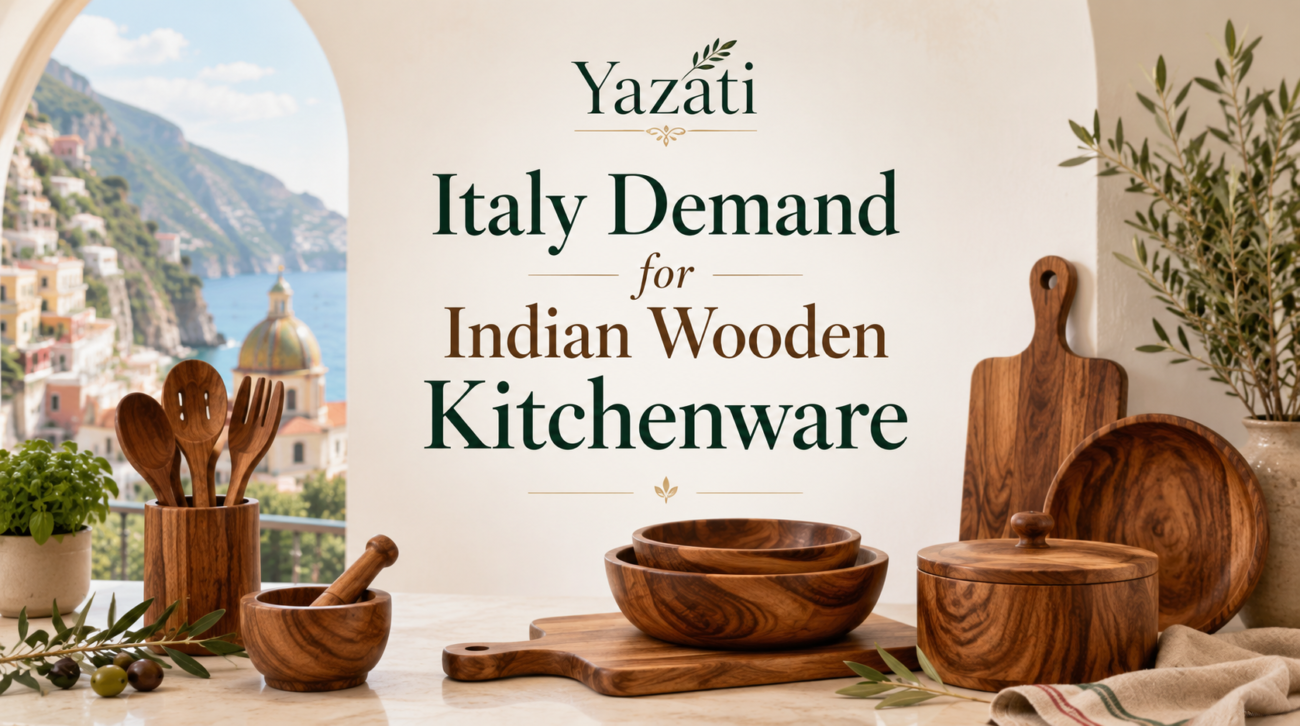
Introduction to Italy Demand for Indian Wooden Kitchenware
The Italy Demand for Indian Wooden Kitchenware has been steadily increasing as consumers seek sustainable, durable, and aesthetically pleasing kitchen products. Italian households are becoming more environmentally conscious, creating strong demand for natural materials such as wood. This trend presents a valuable opportunity for Indian manufacturers and exporters specializing in handcrafted wooden kitchenware.
India has long been recognized for its rich woodworking traditions, skilled artisans, and access to quality hardwoods like sheesham, acacia, and mango wood. These strengths position Indian exporters favorably within the Italian market.
Overview of the Italian Kitchenware Market
Italy has one of Europe’s most sophisticated home and kitchen products markets. Italian consumers appreciate quality, design, and sustainability when selecting kitchen accessories.
Consumer Preferences in Italy
Italian buyers often prioritize:
- Eco-friendly products
- Handmade craftsmanship
- Durable materials
- Modern and rustic designs
- Sustainable sourcing
Kitchenware products that combine functionality with aesthetic appeal tend to perform exceptionally well.
Growth of Sustainable Kitchen Products
Environmental awareness has significantly influenced purchasing decisions across Italy. Consumers increasingly prefer reusable and biodegradable kitchen tools over plastic alternatives.
Wooden kitchenware aligns perfectly with these preferences because it is:
- Renewable
- Biodegradable
- Durable
- Naturally attractive
- Food-safe when properly treated
Why Indian Wooden Kitchenware is Gaining Popularity
Several factors contribute to the increasing popularity of Indian wooden kitchenware in Italy.
Traditional Craftsmanship
Indian artisans possess generations of woodworking expertise. Handmade finishing, intricate detailing, and unique grain patterns make Indian products stand out from mass-produced alternatives.
Many Italian buyers value the authenticity and artisanal character found in Indian-made products.
Eco-Friendly Manufacturing Practices
Modern consumers want assurance that products are responsibly produced. Many Indian exporters have adopted sustainable forestry practices and environmentally friendly manufacturing techniques.
These practices appeal strongly to European buyers seeking ethical sourcing.
Competitive Pricing Advantages
Compared to manufacturers in some European countries, Indian producers often offer attractive pricing while maintaining high-quality standards.
This balance between affordability and craftsmanship gives Indian exporters a competitive advantage.
Types of Indian Wooden Kitchenware in Demand
Italian importers are showing strong interest in several wooden kitchenware categories.
Wooden Spoons and Spatulas
Wooden cooking utensils remain highly popular because they:
- Do not scratch cookware
- Are heat resistant
- Offer natural aesthetics
- Are environmentally friendly
Chopping Boards
Wooden cutting boards are widely used in Italian kitchens. Buyers prefer:
- Thick premium boards
- Natural wood finishes
- Long-lasting durability
- Attractive grain patterns
Serving Trays and Bowls
Serving products made from acacia, mango, and sheesham wood are increasingly popular for dining and entertaining.
Features attracting buyers include:
- Elegant design
- Handcrafted appearance
- Sustainability credentials
Mortar and Pestle Sets
Traditional food preparation methods continue to influence Italian cooking culture. Wooden mortar and pestle sets appeal to consumers seeking authentic culinary experiences.
Salad Servers and Utensils
Salad utensils represent another growing category due to Italy’s strong culinary traditions and preference for natural tableware.
Key Wood Materials Preferred by Italian Buyers
Sheesham Wood
Sheesham remains highly sought after because of its:
- Rich texture
- Strength
- Natural resistance to wear
- Attractive grain patterns
Acacia Wood
Acacia wood is appreciated for:
- Water resistance
- Durability
- Sustainability
- Premium appearance
Mango Wood
Mango wood has gained popularity due to:
- Eco-friendly sourcing
- Unique visual appeal
- Lightweight structure
- Cost-effectiveness
Major Import Trends in Italy
Rise of Sustainable Homeware
Italian consumers increasingly view sustainability as a primary purchasing factor rather than a secondary consideration.
This shift supports continued growth in wooden kitchenware imports.
Premium Handmade Products
Buyers are willing to pay higher prices for handcrafted products that offer uniqueness and authenticity.
Growth of Online Retail Channels
E-commerce has transformed how consumers purchase kitchenware.
Popular online channels include:
- Amazon Italy
- Specialty home décor websites
- Sustainable product marketplaces
- Direct-to-consumer stores
Import Regulations and Compliance Requirements
Exporters targeting Italy must understand regulatory requirements.
European Union Product Standards
Products must comply with EU regulations regarding:
- Food contact safety
- Product traceability
- Material safety standards
Packaging and Labeling Requirements
Labels should include:
- Product description
- Country of origin
- Material composition
- Care instructions
Sustainability Certifications
Certifications can improve buyer confidence, including:
- FSC Certification
- Sustainable sourcing documentation
- Ethical production certifications
For official guidance, exporters can consult the European Commission’s trade resources: https://trade.ec.europa.eu
Top Distribution Channels in Italy
Retail Chains
Large retailers remain important sales channels for imported kitchenware products.
Kitchen Specialty Stores
Specialized retailers often focus on premium and artisan products, making them ideal partners for Indian exporters.
E-commerce Platforms
Online marketplaces continue to expand market access and improve product visibility.
Challenges Faced by Indian Exporters
Competition from Other Countries
Indian suppliers compete with manufacturers from:
- China
- Vietnam
- Indonesia
- Turkey
Logistics and Shipping Costs
Freight costs can impact profitability and pricing competitiveness.
Quality Consistency
Maintaining consistent quality across large production volumes is essential for building trust with Italian buyers.
Strategies to Increase Exports to Italy
Product Customization
Italian consumers appreciate distinctive designs. Exporters should consider:
- Customized dimensions
- Premium finishes
- Italian-inspired designs
- Private labeling services
Building Long-Term Buyer Relationships
Successful exporters often focus on:
- Reliable communication
- Timely delivery
- Consistent quality
- Flexible production capabilities
Participation in Trade Fairs
Trade fairs provide valuable opportunities to connect with buyers and distributors.
Important benefits include:
- Market intelligence
- Networking opportunities
- Product demonstrations
- Brand exposure
Future Outlook of Italy Demand for Indian Wooden Kitchenware
The future of Italy Demand for Indian Wooden Kitchenware appears highly promising. Several factors support continued growth:
- Rising sustainability awareness
- Increased preference for handcrafted products
- Expansion of online retail
- Growing demand for natural materials
- Consumer interest in ethical sourcing
Indian exporters who invest in quality control, certification, and market-specific product development are likely to achieve strong growth in Italy over the coming years.
Frequently Asked Questions (FAQs)
1. Why is Italy importing more wooden kitchenware from India?
Italy imports more wooden kitchenware from India because of India’s craftsmanship, competitive pricing, sustainable materials, and product variety.
2. Which wooden kitchenware products are most popular in Italy?
Wooden spoons, spatulas, chopping boards, serving trays, bowls, and salad servers are among the most popular products.
3. What wood types are preferred by Italian buyers?
Sheesham, acacia, and mango wood are the most commonly preferred wood varieties.
4. Do Indian exporters need certifications to sell in Italy?
While not always mandatory, certifications such as FSC can significantly improve buyer confidence and market acceptance.
5. What are the main challenges in exporting wooden kitchenware to Italy?
Key challenges include competition, shipping costs, regulatory compliance, and maintaining consistent product quality.
6. Is demand expected to grow in the future?
Yes. Growing sustainability trends and increasing consumer preference for eco-friendly products are expected to drive future demand.
Conclusion
The Italy Demand for Indian Wooden Kitchenware continues to expand as Italian consumers prioritize sustainability, authenticity, and craftsmanship. Indian manufacturers possess several advantages, including skilled artisans, quality raw materials, and competitive production costs. By meeting European standards, obtaining relevant certifications, and focusing on market-specific product development, exporters can capitalize on substantial opportunities within Italy’s growing wooden kitchenware market.
✨ Discover Global Sourcing Excellence with Netyex ✨
Netyex is your trusted B2B sourcing partner, connecting international buyers with India’s finest manufacturers and curated product lines—from handicrafts and home décor to kitchenware, textiles, hospitality essentials, and more. With verified suppliers and end-to-end support, we make global procurement seamless, reliable, and efficient.
👉 Elevate your sourcing experience—explore Netyex today.
📦 Bulk orders & customisation | 🌍 Worldwide delivery | 🤝 Trusted by global buyers
Visit Netyex to source premium Indian products with confidence.