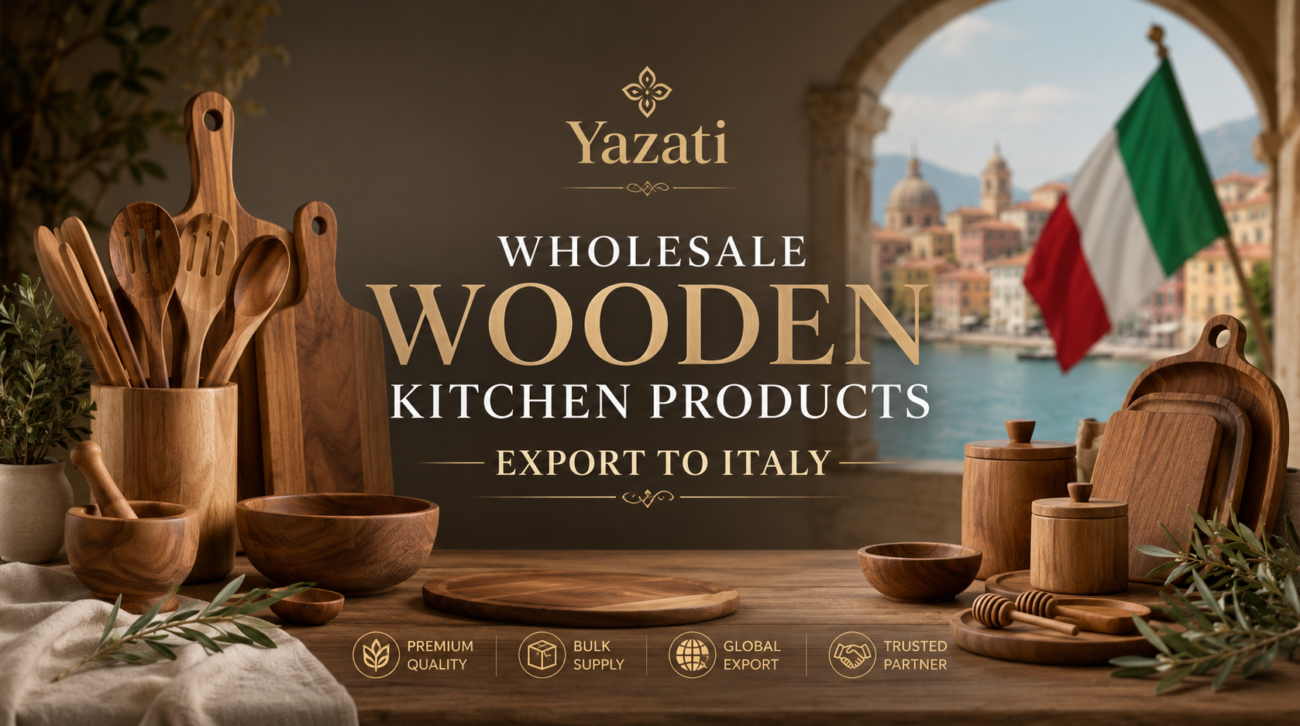
Introduction to Wholesale Wooden Kitchen Products Export to Italy
The Wholesale Wooden Kitchen Products Export to Italy market offers significant opportunities for manufacturers and exporters seeking to expand into Europe. Italy has a strong tradition of cooking, hospitality, and premium kitchenware, making it an attractive destination for wooden kitchen products such as cutting boards, serving trays, wooden spoons, bowls, and other utensils.
As consumers increasingly seek sustainable and eco-friendly alternatives to plastic products, wooden kitchenware continues to gain popularity across Italian households, restaurants, hotels, and retail stores. Exporters who understand Italian market requirements, quality standards, and buyer expectations can establish profitable long-term business relationships.
Understanding the Italian Market for Wooden Kitchen Products
Consumer Preferences in Italy
Italian consumers value quality, craftsmanship, aesthetics, and sustainability. Kitchen products are not merely functional items; they are often viewed as part of the dining experience.
Key preferences include:
- Natural wood finishes
- Premium craftsmanship
- Sustainable sourcing
- Food-safe materials
- Elegant designs
- Long-lasting durability
Products that combine traditional craftsmanship with modern functionality tend to perform exceptionally well in the Italian market.
Demand Trends for Sustainable Wooden Kitchenware
Environmental awareness has increased substantially throughout Europe. Italian consumers are increasingly replacing plastic kitchen tools with environmentally friendly alternatives.
Current trends include:
| Trend | Market Impact |
|---|---|
| Eco-friendly products | High demand |
| Sustainable packaging | Strong preference |
| Handmade products | Premium pricing |
| Natural materials | Growing popularity |
| Ethical sourcing | Important purchasing factor |
Popular Wooden Kitchen Products Exported to Italy
Wooden Cutting Boards
Cutting boards remain among the most sought-after wooden kitchen products. Italian consumers appreciate durable hardwood cutting boards made from acacia, teak, walnut, or olive wood.
Features buyers look for:
- Knife-friendly surfaces
- Easy maintenance
- Attractive grain patterns
- Food-safe finishes
Wooden Spoons and Spatulas
Wooden cooking utensils remain staples in Italian kitchens. Restaurants and home cooks prefer wooden spoons because they are gentle on cookware and provide excellent heat resistance.
Wooden Serving Trays
Serving trays are popular in both residential and commercial settings. Premium trays with modern designs command higher prices in specialty stores and gift markets.
Wooden Bowls and Salad Sets
Italian dining culture strongly supports products used for serving salads, fruits, and appetizers. Wooden bowls with natural finishes are particularly attractive.
Wooden Rolling Pins and Utensils
Bakeries and households frequently purchase wooden rolling pins and related accessories due to Italy’s strong baking and pastry traditions.
Why Italy Imports Wooden Kitchen Products
Growing Preference for Eco-Friendly Products
Many consumers are actively reducing plastic consumption. Wooden kitchenware aligns perfectly with sustainability goals while offering aesthetic appeal.
Benefits include:
- Biodegradable materials
- Renewable resources
- Reduced environmental impact
- Attractive appearance
- Long product lifespan
Demand from Restaurants and Hospitality Businesses
Italy’s extensive hospitality sector creates continuous demand for wooden kitchen accessories.
Major buyers include:
- Restaurants
- Hotels
- Cafés
- Catering companies
- Gourmet food retailers
- Kitchenware distributors
Quality Standards for Exporting Wooden Kitchen Products to Italy
Material Requirements
The wood used should be:
- Properly seasoned
- Pest-free
- Crack-resistant
- Food-safe
- Sustainably sourced
Food Safety Compliance
Kitchen products that come into contact with food must comply with European food safety requirements.
Important considerations include:
- Non-toxic finishes
- Safe adhesives
- Food-grade coatings
- Traceable raw materials
EU Regulations and Certifications
Although specific requirements vary by product category, exporters should ensure compliance with relevant European Union regulations regarding food-contact materials.
Useful resource:
https://trade.ec.europa.eu
Best Wood Types for Export Markets
Acacia Wood
Advantages:
- Durable
- Attractive grain
- Water resistant
- Competitive pricing
Teak Wood
Benefits include:
- Exceptional durability
- Premium appearance
- Moisture resistance
Bamboo Alternatives
Although technically a grass, bamboo products are frequently marketed alongside wooden kitchenware due to their eco-friendly characteristics.
Mango Wood
Mango wood offers:
- Sustainability
- Unique grain patterns
- Cost-effectiveness
Export Documentation Requirements
Successful export operations require accurate documentation.
Commercial Invoice
Contains:
- Product descriptions
- Quantity
- Unit price
- Total value
Packing List
Details:
- Package dimensions
- Weight
- Carton count
Certificate of Origin
May be requested by importers for customs purposes.
Bill of Lading
Serves as proof of shipment and ownership documentation.
Packaging and Labeling Requirements for Italy
Sustainable Packaging Practices
Italian buyers increasingly prefer:
- Recyclable materials
- Plastic-free packaging
- Environmentally responsible packaging solutions
Product Labeling Guidelines
Labels should generally include:
- Product name
- Material type
- Country of origin
- Care instructions
- Importer details where required
Shipping and Logistics for Wholesale Wooden Kitchen Products Export to Italy
Sea Freight Options
Sea freight is often the most economical solution for wholesale shipments.
Advantages:
- Lower transportation costs
- Suitable for large orders
- Better profit margins
Air Freight Considerations
Air freight may be appropriate for:
- Samples
- Urgent shipments
- Premium orders
Choosing Reliable Freight Forwarders
Look for providers with:
- EU experience
- Customs expertise
- Competitive rates
- Cargo insurance options
Pricing Strategy for Italian Buyers
Wholesale Pricing Models
Common approaches include:
- FOB pricing
- CIF pricing
- EXW pricing
- Distributor pricing
Cost Calculation and Profit Margins
Include:
- Raw material costs
- Manufacturing expenses
- Packaging costs
- Freight charges
- Insurance
- Duties and taxes
- Marketing expenses
Finding Italian Importers and Distributors
B2B Marketplaces
Popular channels include:
- Alibaba
- Europages
- Global Sources
- Made-in-China
- TradeKey
Trade Fairs and Exhibitions
Industry exhibitions help exporters meet serious buyers face-to-face.
Examples include major homeware and kitchenware trade shows held throughout Europe.
Direct Outreach Strategies
Effective methods include:
- LinkedIn networking
- Email campaigns
- Distributor partnerships
- Industry directories
Marketing Strategies for Wooden Kitchen Products in Italy
Digital Marketing for Exporters
Focus on:
- Professional websites
- Product catalogs
- Search engine optimization
- Social media marketing
- Buyer-focused content
Building Long-Term Buyer Relationships
Successful exporters prioritize:
- Consistent quality
- Fast communication
- Reliable delivery
- Competitive pricing
- Product innovation
Common Challenges and How to Overcome Them
Regulatory Compliance Issues
Solution:
- Work with export consultants
- Maintain certification records
- Stay updated on EU regulations
Shipping Delays and Customs Clearance
Best practices:
- Prepare accurate documents
- Use experienced freight partners
- Plan inventory in advance
Frequently Asked Questions (FAQs)
1. Which wooden kitchen products are most popular in Italy?
Cutting boards, serving trays, wooden bowls, spoons, spatulas, and salad-serving sets are among the most popular products.
2. Do wooden kitchen products require food safety compliance in Italy?
Yes. Products intended for food contact must comply with applicable European food safety regulations.
3. What is the best wood for exporting kitchen products?
Acacia, teak, mango wood, walnut, and olive wood are highly regarded for kitchenware applications.
4. Is Italy a good market for eco-friendly kitchen products?
Yes. Demand for sustainable and environmentally friendly kitchen products continues to grow throughout Italy.
5. What shipping method is most cost-effective for wholesale orders?
Sea freight is generally the most economical option for large wholesale shipments.
6. How can exporters find buyers in Italy?
Exporters can use B2B marketplaces, trade fairs, industry directories, distributor networks, and direct outreach campaigns.
Conclusion
The Wholesale Wooden Kitchen Products Export to Italy sector presents strong opportunities for exporters who prioritize quality, sustainability, compliance, and effective market positioning. Italian consumers appreciate well-crafted wooden kitchenware that combines functionality, durability, and environmental responsibility. By understanding buyer expectations, meeting regulatory requirements, and building reliable distribution channels, exporters can establish a profitable and sustainable presence in one of Europe’s most attractive kitchenware markets.
✨ Discover Global Sourcing Excellence with Netyex ✨
Netyex is your trusted B2B sourcing partner, connecting international buyers with India’s finest manufacturers and curated product lines—from handicrafts and home décor to kitchenware, textiles, hospitality essentials, and more. With verified suppliers and end-to-end support, we make global procurement seamless, reliable, and efficient.
👉 Elevate your sourcing experience—explore Netyex today.
📦 Bulk orders & customisation | 🌍 Worldwide delivery | 🤝 Trusted by global buyers
Visit Netyex to source premium Indian products with confidence.