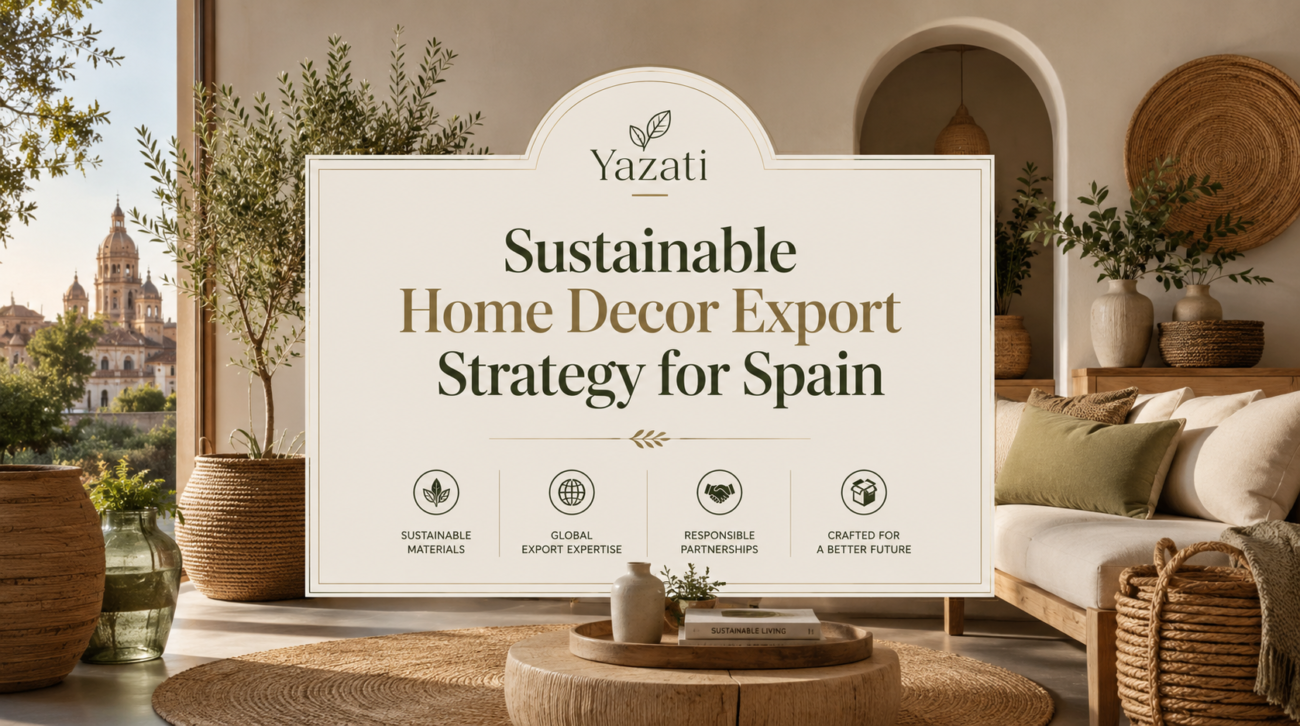
Introduction to Spain’s Sustainable Home Decor Market
Spain has become one of Europe’s most promising destinations for sustainable lifestyle products. As environmental awareness grows among Spanish consumers, demand for eco-friendly home furnishings, recycled decorative items, organic textiles, and ethically sourced products continues to increase.
A well-planned Sustainable Home Decor Export Strategy for Spain can help manufacturers and exporters capture opportunities in both residential and commercial segments. Spanish consumers increasingly prioritize sustainability, design aesthetics, and product transparency when making purchasing decisions.
Why Spain Is Attractive for Sustainable Home Decor Exporters
Economic Outlook
Spain is one of the largest economies in Europe, supported by a strong tourism industry, growing real estate investments, and rising household spending. Urban centers such as Madrid, Barcelona, and Valencia drive significant demand for modern home décor solutions.
Consumer Sustainability Trends
Spanish consumers are increasingly concerned about:
- Carbon footprint reduction
- Circular economy practices
- Ethical sourcing
- Plastic-free products
- Renewable materials
Products that clearly communicate environmental benefits often gain a competitive advantage.
Understanding Spanish Home Decor Consumers
Buying Preferences
Spanish buyers value products that combine:
- Functionality
- Design excellence
- Sustainability
- Durability
- Authentic craftsmanship
Many consumers are willing to pay premium prices for products with verified environmental credentials.
Popular Design Styles
Current trends include:
| Style | Characteristics |
|---|---|
| Mediterranean | Natural materials and light colors |
| Minimalist | Clean lines and simplicity |
| Scandinavian | Functionality and sustainability |
| Rustic Modern | Wood, stone, and recycled materials |
| Bohemian Eco | Handmade and artisanal products |
Market Size and Growth Opportunities
Green Living Movement
Spain’s growing environmental awareness is driving demand for:
- Bamboo products
- Recycled wood furniture
- Organic cotton textiles
- Natural fiber rugs
- Sustainable lighting solutions
Eco-Conscious Retail Expansion
Retailers are expanding sustainable product categories to meet growing consumer demand. Hospitality projects, vacation rentals, and eco-friendly hotels are also creating substantial B2B opportunities.
Product Categories with Highest Demand
Sustainable Furniture
Popular products include:
- Reclaimed wood tables
- FSC-certified furniture
- Modular furniture systems
- Sustainable shelving solutions
Natural Textiles
High-demand items include:
- Organic cotton bedding
- Linen curtains
- Hemp cushions
- Recycled fabric throws
Recycled Decorative Accessories
Growing categories include:
- Recycled glass vases
- Upcycled metal décor
- Handmade baskets
- Eco-friendly candles
Competitive Landscape in Spain
Local Competitors
Spanish brands increasingly emphasize sustainability and local production. Many focus on handcrafted designs and regional materials.
International Brands
Major international brands continue investing heavily in eco-friendly product lines, increasing competition but also educating consumers about sustainability.
Competitive Advantage Opportunities
Exporters can differentiate through:
- Unique craftsmanship
- Ethical sourcing
- Innovative materials
- Superior certifications
- Strong sustainability narratives
Regulatory and Compliance Requirements
EU Environmental Standards
Products entering Spain must comply with European Union regulations concerning:
- Product safety
- Material composition
- Chemical restrictions
- Environmental claims
Product Labeling Requirements
Labels should clearly communicate:
- Material composition
- Country of origin
- Sustainability certifications
- Usage instructions
Common certifications that improve credibility include:
- FSC
- GOTS
- OEKO-TEX
- Fair Trade
Pricing Strategy for Spain
Premium Market Positioning
Eco-conscious consumers often associate sustainability with quality. Premium pricing can be successful when supported by:
- Certifications
- Exceptional design
- Transparent sourcing
Value-Based Pricing
Rather than competing solely on price, emphasize:
- Longevity
- Environmental benefits
- Artisan craftsmanship
- Social impact
Distribution Channels
Retail Chains
Potential channels include:
- Home furnishing retailers
- Lifestyle boutiques
- Sustainable concept stores
- Department stores
E-commerce Platforms
Online channels continue growing rapidly. Exporters should consider:
- Dedicated Spanish websites
- Online marketplaces
- Sustainable product platforms
Interior Designers and Architects
Professionals involved in residential and hospitality projects frequently seek sustainable décor solutions for clients.
Building relationships with architects and interior designers can generate recurring orders.
Branding and Market Positioning
Sustainability Storytelling
Spanish consumers respond positively to authentic stories.
Highlight:
- Material sourcing
- Artisan communities
- Environmental impact reduction
- Circular production methods
Certifications and Trust Signals
Display sustainability credentials prominently across:
- Packaging
- Product labels
- Websites
- Marketing materials
Trust is a critical purchasing factor in the sustainable goods segment.
Digital Marketing Strategy
SEO and Content Marketing
Effective content topics include:
- Sustainable living
- Eco-friendly interior design
- Circular economy practices
- Green home improvement
Useful resources can also be shared through organizations such as the European Environment Agency.
Social Media Marketing
Platforms driving home décor discovery include:
- TikTok
- YouTube
Content formats should include:
- Before-and-after room transformations
- Sustainability education
- Product manufacturing stories
- Customer testimonials
Trade Shows and Networking Opportunities
Key Spanish Exhibitions
Participating in industry events can accelerate market entry.
Notable opportunities include:
- Hábitat Valencia
- Intergift
B2B Partnerships
Potential partners include:
- Importers
- Distributors
- Design studios
- Hotel procurement companies
- Retail chains
Logistics and Supply Chain Planning
Shipping Routes
Common entry points include:
- Port of Valencia
- Port of Barcelona
- Port of Algeciras
Warehousing Solutions
Options include:
- Third-party logistics providers
- Regional fulfillment centers
- Distributor-managed inventory
Local warehousing can reduce delivery times and improve customer satisfaction.
Risk Management and Challenges
Economic Risks
Exporters should monitor:
- Inflation trends
- Consumer spending patterns
- Exchange rate fluctuations
Regulatory Risks
Environmental regulations continue evolving throughout Europe. Companies should maintain compliance monitoring systems and regularly review certification requirements.
Future Trends in Sustainable Home Decor
Emerging trends likely to shape the Spanish market include:
- Circular economy products
- Carbon-neutral manufacturing
- Biodegradable materials
- Smart sustainable homes
- Traceable supply chains
- Regenerative sourcing
- Eco-luxury furnishings
Businesses that adapt early will be better positioned to capture market share.
Frequently Asked Questions
1. Is Spain a good market for sustainable home décor exports?
Yes. Spain’s growing environmental awareness and strong home improvement sector make it an attractive destination for sustainable décor products.
2. Which sustainable home décor products sell best in Spain?
Furniture made from reclaimed wood, organic textiles, recycled decorative accessories, natural fiber products, and eco-friendly lighting solutions are among the strongest categories.
3. What certifications are important for Spanish buyers?
FSC, GOTS, OEKO-TEX, and Fair Trade certifications significantly improve buyer confidence.
4. Which sales channels are most effective?
A combination of retail partnerships, e-commerce platforms, interior design professionals, and hospitality procurement networks typically delivers the best results.
5. Should exporters focus on premium or mass-market positioning?
Premium positioning generally performs better because Spanish consumers often associate sustainability with quality and long-term value.
6. What is the biggest challenge when entering the Spanish market?
Building brand awareness and differentiating products in a competitive marketplace while maintaining compliance with EU regulations.
Conclusion
A successful Sustainable Home Decor Export Strategy for Spain requires more than simply offering eco-friendly products. Exporters must understand Spanish consumer preferences, comply with EU regulations, build strong distribution partnerships, and communicate a compelling sustainability story.
Companies that combine authentic environmental credentials, attractive design, competitive pricing, and effective marketing can establish a strong position in Spain’s growing sustainable home décor market. With demand for eco-conscious living continuing to rise, now is an excellent time to develop a long-term export strategy focused on this promising European destination.
✨ Discover Global Sourcing Excellence with Netyex ✨
Netyex is your trusted B2B sourcing partner, connecting international buyers with India’s finest manufacturers and curated product lines—from handicrafts and home décor to kitchenware, textiles, hospitality essentials, and more. With verified suppliers and end-to-end support, we make global procurement seamless, reliable, and efficient.
👉 Elevate your sourcing experience—explore Netyex today.
📦 Bulk orders & customisation | 🌍 Worldwide delivery | 🤝 Trusted by global buyers
Visit Netyex to source premium Indian products with confidence.