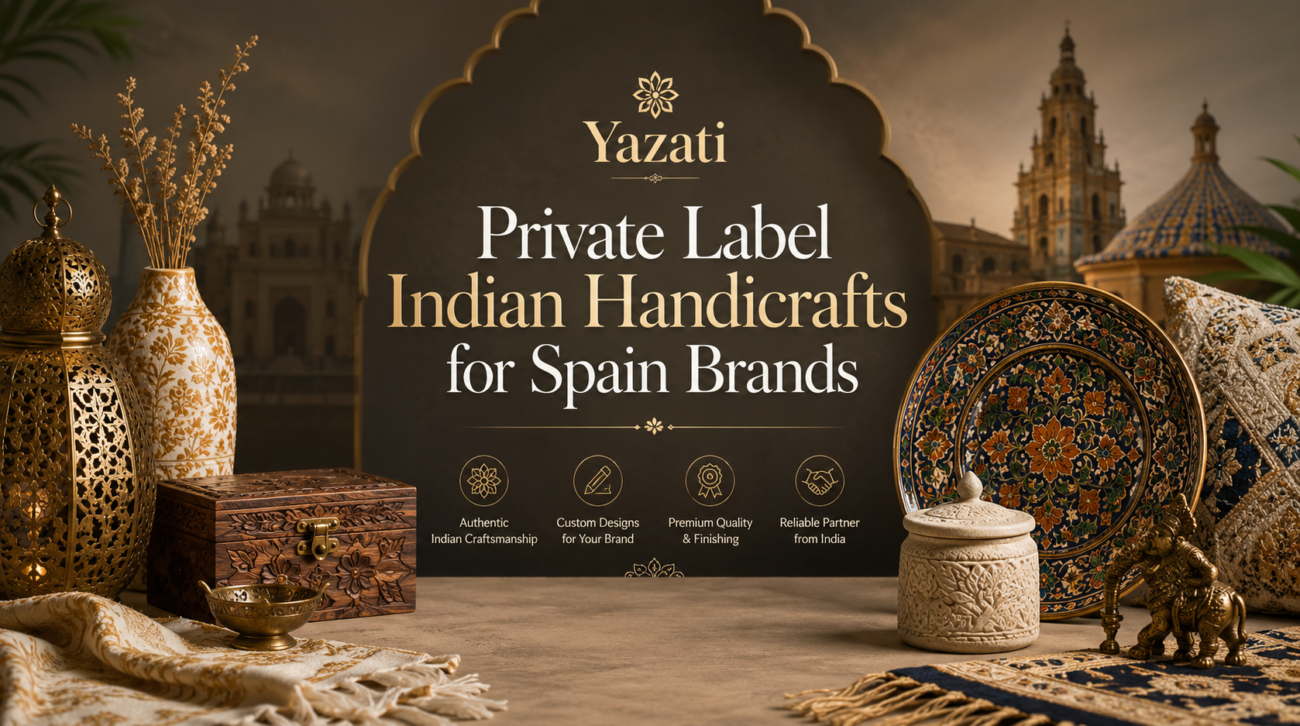
The market for Private Label Indian Handicrafts for Spain Brands is expanding rapidly as Spanish retailers and eCommerce businesses seek unique, sustainable, and culturally rich products. Indian handicrafts offer a combination of authenticity, craftsmanship, affordability, and customization that is difficult to find elsewhere.
As consumers across Spain increasingly value handmade and eco-conscious products, partnering with Indian handicraft manufacturers has become a strategic growth opportunity for brands looking to differentiate themselves in a competitive market.
Introduction to Private Label Handicrafts
Private labeling allows a company to sell products manufactured by another producer under its own brand name. In the handicraft sector, this means Spanish businesses can source artisan-made products from India and market them as exclusive collections under their own branding.
This business model provides flexibility, scalability, and strong profit potential without the need to establish manufacturing facilities.
Why Spain Brands Are Choosing Indian Handicrafts
Spanish consumers have become increasingly interested in products that tell a story. Handcrafted goods appeal to buyers who value authenticity and uniqueness.
Growing Demand for Handmade Products in Spain
Modern consumers are moving away from mass-produced items. Handmade products offer:
- Unique designs
- Superior craftsmanship
- Cultural authenticity
- Limited-production appeal
As a result, retailers are expanding their handmade product offerings.
Consumer Preferences for Sustainable Goods
Environmental awareness continues to influence purchasing decisions. Indian handicrafts often utilize:
- Recycled materials
- Natural fibers
- Sustainable wood
- Traditional low-energy production methods
These characteristics align perfectly with Spain’s growing sustainability movement.
Understanding Private Label Manufacturing
Private labeling creates opportunities for businesses to build strong brand identities while leveraging established manufacturing expertise.
What Is Private Labeling?
Private labeling involves:
- Selecting products from a manufacturer.
- Customizing designs or packaging.
- Applying your brand logo.
- Selling products under your own brand.
Customers see your brand rather than the manufacturer’s identity.
How Private Label Differs from Wholesale
| Private Label | Wholesale |
|---|---|
| Custom branding | Manufacturer branding |
| Product exclusivity | Generic products |
| Higher margins | Lower margins |
| Strong brand building | Limited brand differentiation |
For Spain brands seeking long-term growth, private labeling offers significantly greater value.
India’s Strength in Handicraft Production
India is one of the world’s largest producers of handmade products.
Rich Cultural Heritage
Indian artisans have preserved traditional craftsmanship techniques for centuries. These include:
- Wood carving
- Metal embossing
- Hand weaving
- Stone carving
- Pottery
- Textile printing
These skills create products with exceptional artistic value.
Skilled Artisan Communities
Millions of artisans work across regions such as:
- Rajasthan
- Uttar Pradesh
- Gujarat
- Kashmir
- West Bengal
- Tamil Nadu
Each region specializes in distinctive craft traditions that appeal to international buyers.
Popular Indian Handicraft Categories for Spain Brands
Home Decor Products
Home decor remains one of the strongest categories in Spain.
Popular products include:
- Decorative trays
- Wall hangings
- Candle holders
- Photo frames
- Handmade mirrors
These products fit well within modern and bohemian interior design trends.
Wooden Handicrafts
Wooden products continue to attract European buyers due to their durability and aesthetic appeal.
Examples include:
- Carved boxes
- Serving trays
- Furniture accents
- Decorative sculptures
Metal Art and Decorative Items
Indian metal handicrafts are renowned worldwide.
Popular options include:
- Brass decor
- Aluminum accessories
- Iron wall art
- Copper decorative pieces
Textiles and Handmade Fabrics
Textiles offer substantial opportunities for private labeling.
Examples include:
Eco-Friendly Craft Products
Eco-conscious categories are expanding rapidly.
Examples include:
- Jute bags
- Bamboo products
- Coconut shell crafts
- Recycled material decor
Benefits of Private Label Indian Handicrafts for Spain Brands
Brand Differentiation
Private labeling enables brands to create exclusive collections unavailable through competitors.
This uniqueness helps build customer loyalty and increase repeat purchases.
Higher Profit Margins
Direct sourcing from Indian manufacturers often reduces costs significantly.
Benefits include:
- Lower production costs
- Reduced intermediary expenses
- Improved pricing flexibility
- Increased profitability
Product Exclusivity
Exclusive designs help brands avoid direct price competition.
Customers focus on product value rather than comparing identical items across multiple retailers.
Market Trends in Spain
Sustainable Living Trends
Spanish consumers increasingly prioritize sustainability.
Trending categories include:
- Eco-friendly decor
- Ethical home accessories
- Handmade furniture accents
- Organic textiles
Indian handicrafts naturally fit these consumer preferences.
Ethical Consumer Purchasing
Modern buyers want transparency regarding product origins.
Artisan-made products often generate stronger emotional connections because customers appreciate the human craftsmanship behind each item.
How to Find Reliable Indian Manufacturers
Selecting the right supplier is critical.
Supplier Verification Process
Evaluate suppliers using:
- Export history
- Certifications
- Product samples
- Customer references
- Production capacity reviews
Thorough vetting reduces sourcing risks.
Quality Control Measures
Strong quality assurance should include:
- Pre-production inspections
- During-production checks
- Final inspections
- Packaging verification
Consistent quality supports long-term brand reputation.
Customization Options for Spain Brands
One of the biggest advantages of private labeling is customization.
Packaging Customization
Options include:
- Custom boxes
- Branded labels
- Eco-friendly packaging
- QR code integration
Premium packaging enhances perceived value.
Product Design Modifications
Manufacturers can often customize:
- Colors
- Dimensions
- Materials
- Finishes
- Patterns
This flexibility enables true product differentiation.
Importing Indian Handicrafts into Spain
Documentation Requirements
Typical documents include:
- Commercial invoice
- Packing list
- Bill of lading
- Certificate of origin
- Import declarations
Working with experienced freight partners simplifies compliance.
Shipping and Logistics
Common shipping methods include:
| Method | Best For |
|---|---|
| Air Freight | Small urgent orders |
| Sea Freight | Large-volume shipments |
| Courier Services | Samples and small batches |
Sea freight generally provides the most economical solution for commercial orders.
Pricing Strategy and Cost Factors
Several factors influence pricing:
- Raw material costs
- Labor expenses
- Packaging requirements
- Shipping costs
- Import duties
- Currency fluctuations
Successful Spain brands calculate total landed costs before setting retail prices.
A common pricing formula is:
Retail Price = Landed Cost × 3 to 5
This allows room for marketing expenses and profit margins.
Marketing Private Label Handicrafts in Spain
Marketing should emphasize:
Storytelling
Consumers love stories behind handmade products.
Highlight:
- Artisan backgrounds
- Traditional techniques
- Sustainable sourcing
- Cultural heritage
Digital Marketing
Effective channels include:
- TikTok
- Google Shopping
Visual platforms perform especially well for handicraft products.
Content Marketing
Publish:
- Home decor inspiration
- Artisan stories
- Sustainability articles
- Product care guides
This builds trust and organic traffic.
For additional market insights, visit the official export promotion resources available through the Export Promotion Council for Handicrafts (EPCH): https://www.epch.in
Common Challenges and Solutions
Challenge: Quality Consistency
Solution: Implement strict inspection procedures and supplier scorecards.
Challenge: Long Shipping Times
Solution: Forecast demand accurately and maintain safety stock.
Challenge: Communication Barriers
Solution: Work with export-focused suppliers experienced in European markets.
Challenge: Market Competition
Solution: Focus on exclusive designs and compelling brand storytelling.
Future of Private Label Indian Handicrafts for Spain Brands
The outlook remains highly positive.
Key growth drivers include:
- Rising demand for sustainable products
- Expansion of eCommerce
- Interest in artisan craftsmanship
- Ethical sourcing trends
- Increasing consumer preference for unique home decor
Brands that establish strong supplier relationships today can gain significant competitive advantages over the coming years.
Frequently Asked Questions (FAQs)
1. Why are Indian handicrafts popular in Spain?
Indian handicrafts offer unique designs, artisan craftsmanship, affordability, and sustainability, making them attractive to Spanish consumers.
2. Can Spanish brands customize Indian handicraft products?
Yes. Most manufacturers offer customization options including branding, packaging, colors, materials, and product dimensions.
3. What are the minimum order quantities for private label handicrafts?
Minimum order quantities vary by manufacturer and product type, typically ranging from 50 to 500 units.
4. Which handicraft categories sell best in Spain?
Home decor, textiles, wooden products, eco-friendly crafts, and decorative metal items are among the strongest categories.
5. How long does shipping from India to Spain take?
Sea freight generally takes 25–45 days, while air freight typically takes 5–10 days.
6. Are Indian handicrafts environmentally friendly?
Many Indian handicrafts use natural, recycled, and sustainable materials, making them attractive to environmentally conscious consumers.
7. How can Spain brands ensure product quality?
By conducting supplier audits, requesting samples, implementing inspections, and maintaining clear quality standards.
8. Is private labeling more profitable than wholesale purchasing?
In most cases, yes. Private labeling allows higher margins, stronger branding, and product exclusivity.
Conclusion
The opportunity for Private Label Indian Handicrafts for Spain Brands has never been stronger. Spanish consumers increasingly seek sustainable, authentic, and beautifully crafted products that stand apart from mass-produced alternatives. Indian artisans provide exactly this combination of quality, tradition, and customization.
By partnering with reliable manufacturers, implementing effective quality control systems, and building compelling brand stories, Spain-based retailers and eCommerce businesses can create profitable product lines with long-term growth potential. As sustainability and craftsmanship continue to shape purchasing decisions, private label Indian handicrafts are positioned to become a major success category for forward-thinking Spanish brands.
✨ Discover Global Sourcing Excellence with Netyex ✨
Netyex is your trusted B2B sourcing partner, connecting international buyers with India’s finest manufacturers and curated product lines—from handicrafts and home décor to kitchenware, textiles, hospitality essentials, and more. With verified suppliers and end-to-end support, we make global procurement seamless, reliable, and efficient.
👉 Elevate your sourcing experience—explore Netyex today.
📦 Bulk orders & customisation | 🌍 Worldwide delivery | 🤝 Trusted by global buyers
Visit Netyex to source premium Indian products with confidence.