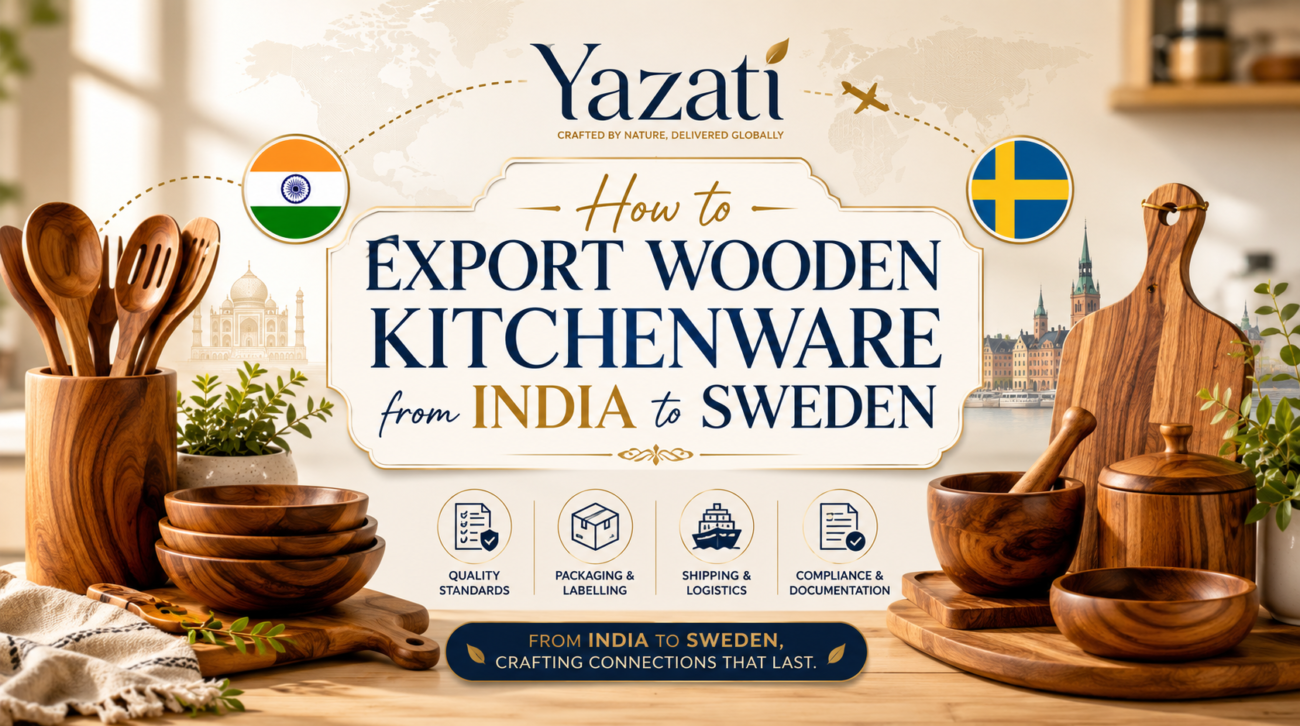
Sweden is one of Europe’s fastest-growing markets for sustainable home products. As Swedish consumers increasingly prefer eco-friendly, handcrafted, and biodegradable kitchen products, Indian manufacturers of wooden kitchenware have a significant opportunity to expand into this premium market.
India is globally recognized for manufacturing high-quality wooden kitchen products made from neem wood, mango wood, acacia wood, sheesham (Indian rosewood), teak, and bamboo. These products are appreciated for their durability, sustainability, and traditional craftsmanship.
This guide explains every step involved in exporting wooden kitchenware from India to Sweden—from market research and legal compliance to shipping, customs clearance, and finding buyers.
Why Export Wooden Kitchenware to Sweden?
Sweden has one of Europe’s strongest sustainability cultures. Consumers actively seek environmentally friendly alternatives to plastic kitchen products.
Major reasons include:
- High purchasing power
- Preference for handmade products
- Growing demand for sustainable kitchenware
- Strong online retail market
- Stable import regulations
- Increasing popularity of Scandinavian home décor
Indian wooden kitchenware aligns perfectly with these consumer preferences.
Understanding the Swedish Market
Swedish buyers typically look for products that are:
- Eco-friendly
- FSC-certified (preferred)
- Food-safe
- Durable
- Modern yet handcrafted
- Minimalist in design
- Sustainable packaging
Consumers are willing to pay premium prices for products that meet these expectations.
Popular Wooden Kitchenware Products
The following products have strong demand:
Cooking Utensils
- Wooden spoons
- Spatulas
- Ladles
- Turner sets
- Salad servers
Serving Products
- Serving trays
- Cheese boards
- Charcuterie boards
- Pizza boards
- Cake stands
Dining Accessories
- Bowls
- Plates
- Coasters
- Napkin holders
Storage
- Spice boxes
- Wooden jars
- Bread boxes
- Cutlery organizers
Register Your Export Business in India
Before exporting, complete the following registrations:
1. Company Registration
Register as:
- Sole Proprietorship
- Partnership
- LLP
- Private Limited Company
2. Obtain an IEC
Apply for an Import Export Code (IEC) through the Directorate General of Foreign Trade (DGFT).
3. GST Registration
Required for claiming export benefits and tax compliance.
4. Open a Current Account
Use an authorized bank for receiving international payments.
5. Register with Export Promotion Councils
Consider registration with relevant export promotion organizations to access trade support, exhibitions, and market intelligence.
Wood Standards and Quality Requirements
Swedish buyers expect:
- Smooth finishing
- No sharp edges
- Moisture-controlled wood
- Crack-free products
- Food-grade finishes
- Natural oils instead of harmful chemicals
Preferred wood species include:
- Acacia
- Mango wood
- Neem
- Bamboo
- Rubberwood
- Sheesham (subject to applicable regulations and buyer requirements)
Required Certifications
Important certifications include:
Food Contact Safety
Products that touch food should comply with applicable food-contact material requirements.
FSC Certification
While not always mandatory, FSC certification significantly improves buyer confidence by demonstrating responsible sourcing.
Phytosanitary Compliance
Solid wood packaging materials used for export generally need to comply with ISPM 15 requirements.
Quality Testing
Common tests include:
- Chemical migration
- Heavy metals
- Moisture content
- Finish safety
- Durability
Packaging Requirements
Proper packaging reduces transit damage.
Recommended packaging:
- Recycled cartons
- Kraft paper wrapping
- Bubble protection
- Moisture barriers
- Barcode labels
- Product care instructions
Eco-friendly packaging is especially attractive to Swedish customers.
Essential Export Documents
Typical documentation includes:
- Commercial Invoice
- Packing List
- Bill of Lading or Air Waybill
- Certificate of Origin
- Insurance Certificate
- Shipping Bill
- IEC details
- Purchase Order
- Letter of Credit (if applicable)
Always verify any additional documentation required by your Swedish importer.
Shipping from India to Sweden
Major Indian ports include:
- Nhava Sheva (Mumbai)
- Mundra
- Chennai
- Kochi
Destination ports may include:
- Gothenburg
- Stockholm
- Helsingborg
Shipping Options
Sea Freight
Best for:
- Bulk orders
- Lower shipping costs
- Large containers
Transit time:
Approximately 25–40 days depending on routing.
Air Freight
Best for:
- Samples
- Urgent shipments
- Small consignments
Transit time:
Approximately 3–7 days.
Swedish Customs Clearance
Upon arrival, the importer typically handles customs clearance.
Authorities may inspect:
- Product labeling
- Documentation
- Customs valuation
- Product compliance
- Packaging
Import duties and VAT depend on the product classification and applicable trade rules. Confirm the correct HS code and current tariff treatment before shipment.
How to Find Buyers in Sweden
Effective channels include:
B2B Marketplaces
- Alibaba
- Global Sources
- IndiaMART
- TradeIndia
Trade Fairs
Participate in:
- Home décor exhibitions
- Furniture expos
- Kitchenware trade shows
- Scandinavian design fairs
Connect with:
- Importers
- Retail chains
- Distributors
- Purchasing managers
Direct Outreach
Create a professional catalogue and email:
- Kitchen retailers
- Eco stores
- Gift shops
- Online marketplaces
- Interior designers
Pricing Strategy
When calculating export prices, include:
- Manufacturing cost
- Packaging
- Inland transport
- Export documentation
- Freight
- Insurance
- Customs-related expenses
- Profit margin
Offer pricing under internationally recognized Incoterms such as FOB, CIF, or DDP only after clearly defining responsibilities with the buyer.
Marketing Your Wooden Kitchenware
Highlight:
- Handmade craftsmanship
- Sustainable sourcing
- Food-safe materials
- Natural wood grains
- Eco-friendly packaging
- Custom branding
- Private label manufacturing
Professional product photography and storytelling can significantly improve conversion rates.
Common Mistakes to Avoid
Avoid these errors:
- Poor product finishing
- Incorrect HS classification
- Weak packaging
- Missing export documents
- Ignoring Swedish compliance requirements
- Underpricing products
- Inconsistent product quality
- Delayed communication with buyers
Frequently Asked Questions (FAQs)
1. Is Sweden a good market for Indian wooden kitchenware?
Yes. Swedish consumers value sustainable, eco-friendly, and handcrafted products, making India a competitive supplier.
2. Do I need an IEC to export from India?
Yes. An Import Export Code (IEC) is generally required for commercial exports from India.
3. Is FSC certification mandatory?
Not always, but many Swedish and European buyers strongly prefer FSC-certified products.
4. Which wood is most popular?
Acacia, mango wood, bamboo, neem, and rubberwood are among the most popular choices.
5. What is the best shipping method?
Sea freight is generally the most economical for bulk shipments, while air freight is suitable for samples and urgent orders.
6. How can I find Swedish importers?
Use B2B platforms, attend international trade fairs, network through LinkedIn, and conduct direct outreach to retailers and distributors.
Conclusion
Exporting wooden kitchenware from India to Sweden presents an excellent opportunity for manufacturers and exporters focused on quality, sustainability, and compliance. By obtaining the necessary registrations, meeting food-contact and packaging standards, preparing accurate documentation, and building relationships with Swedish buyers, Indian businesses can establish a profitable presence in this environmentally conscious market.
Success depends on maintaining consistent product quality, using sustainable materials, offering competitive pricing, and delivering reliable customer service. With careful planning and adherence to international trade requirements, Indian exporters can capitalize on Sweden’s growing demand for premium wooden kitchenware.
✨ Discover Global Sourcing Excellence with Netyex ✨
Netyex is your trusted B2B sourcing partner, connecting international buyers with India’s finest manufacturers and curated product lines—from handicrafts and home décor to kitchenware, textiles, hospitality essentials, and more. With verified suppliers and end-to-end support, we make global procurement seamless, reliable, and efficient.
👉 Elevate your sourcing experience—explore Netyex today.
📦 Bulk orders & customisation | 🌍 Worldwide delivery | 🤝 Trusted by global buyers
Visit Netyex to source premium Indian products with confidence.