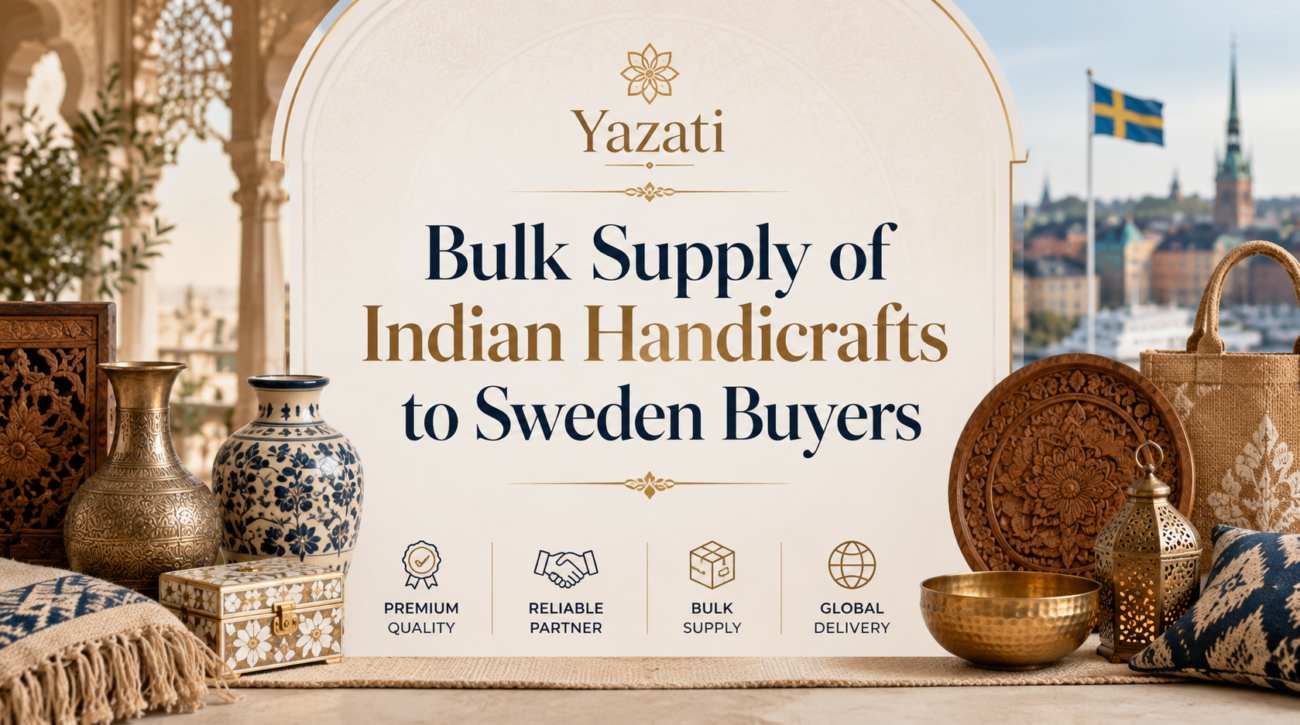
India has long been recognized as one of the world’s leading producers of handcrafted products. From beautifully carved wooden furniture to elegant brass décor and eco-friendly jute items, Indian artisans continue to attract international buyers seeking authentic craftsmanship.
Among European countries, Sweden has emerged as a promising destination for exporters. Swedish consumers appreciate sustainable living, natural materials, minimalistic interiors, and ethically produced goods. These preferences align perfectly with India’s handcrafted product portfolio.
If you are planning the Bulk Supply of Indian Handicrafts to Sweden Buyers, understanding Swedish market trends, export regulations, logistics, and buyer expectations can significantly improve your success.
Introduction to India’s Handicraft Export Industry
India’s handicraft sector supports millions of artisans across rural and urban regions. The industry produces thousands of unique products including:
- Wooden handicrafts
- Brass artifacts
- Marble inlay products
- Handmade textiles
- Ceramic décor
- Bamboo crafts
- Jute bags
- Home furnishings
- Decorative lighting
- Gift articles
Indian handicrafts are valued because they combine traditional craftsmanship with modern functionality.
The export industry contributes substantially to India’s economy while preserving centuries-old artistic traditions.
Why Sweden is an Attractive Market
Sweden is one of Europe’s most environmentally conscious countries.
Consumers increasingly prefer:
- Sustainable products
- Handmade décor
- Eco-friendly packaging
- Natural fibers
- Fair-trade goods
- Ethical sourcing
Indian handicrafts satisfy these preferences exceptionally well.
Swedish retailers frequently import:
- Wooden furniture
- Decorative bowls
- Brass candle holders
- Handmade rugs
- Cotton cushion covers
- Ceramic vases
- Wall décor
- Bamboo baskets
- Jute storage products
The country’s strong purchasing power also supports premium pricing for high-quality handcrafted products.
Market Trends in Swedish Home Décor
Sustainable Living
Sustainability is no longer optional in Sweden.
Consumers actively seek products made from:
- Recycled materials
- Natural wood
- Organic cotton
- Bamboo
- Jute
- Handmade textiles
Eco-friendly production methods increase buyer confidence.
Minimalist Design
Swedish interiors typically feature:
- Neutral colors
- Functional furniture
- Simple shapes
- Natural finishes
- Handmade accents
Indian exporters who adapt traditional products with contemporary Scandinavian aesthetics often experience stronger demand.
Popular Indian Handicrafts Exported to Sweden
Wooden Handicrafts
Wooden products remain among the highest-selling export categories.
Popular products include:
- Coffee tables
- Wall shelves
- Decorative trays
- Storage boxes
- Picture frames
- Serving boards
Sheesham and mango wood products are especially popular.
Brass and Metal Handicrafts
Indian brass products complement Scandinavian interiors.
Common exports include:
- Candle holders
- Lanterns
- Decorative bowls
- Wall art
- Sculptures
- Table accessories
Matte finishes often appeal more to Swedish buyers than highly polished designs.
Textile Handicrafts
India is famous for handcrafted textiles.
High-demand items include:
Organic cotton and natural dyes provide additional market advantages.
Marble and Stone Products
Premium stone handicrafts include:
- Coasters
- Decorative trays
- Tabletops
- Inlay boxes
- Candle holders
These products are particularly attractive in luxury home décor segments.
Jute and Eco-Friendly Products
Demand continues growing for:
- Shopping bags
- Storage baskets
- Planters
- Laundry baskets
- Decorative organizers
Jute products align perfectly with Sweden’s sustainability goals.
Benefits of Bulk Supply
Bulk exporting provides numerous advantages:
Lower Transportation Cost
Shipping larger quantities reduces freight costs per unit.
Better Manufacturing Efficiency
Large orders improve production planning and resource utilization.
Higher Profit Margins
Economies of scale help increase profitability.
Strong Buyer Relationships
Reliable bulk suppliers often receive repeat orders and long-term contracts.
Quality Standards for Swedish Buyers
Swedish importers prioritize:
- Consistent dimensions
- Uniform finishing
- Durable materials
- Safe paints
- Eco-friendly coatings
- Moisture-resistant packaging
Every shipment should undergo strict quality inspection before dispatch.
Packaging Requirements
Effective packaging protects products during international transit.
Recommended materials include:
- Corrugated cartons
- Bubble wrap
- Kraft paper
- Honeycomb paper
- Recyclable fillers
- Wooden pallets when required
Packaging should also include:
- Product labels
- Country of origin
- Quantity
- Carton markings
- Handling instructions
Export Documentation
Essential export documents include:
- Commercial Invoice
- Packing List
- Bill of Lading
- Certificate of Origin
- Shipping Bill
- Insurance Certificate
- Export Declaration
- Purchase Order
- Inspection Certificate (if required)
Maintaining accurate documentation reduces customs delays.
Shipping and Logistics
Sweden receives shipments through major ports such as:
- Gothenburg
- Stockholm
- Helsingborg
Exporters should choose logistics partners experienced in European shipping.
Sea freight remains the most economical option for bulk handicraft exports, while air freight suits urgent or high-value consignments.
Pricing Strategy
Pricing should account for:
- Manufacturing costs
- Packaging expenses
- Inland transportation
- Ocean freight
- Insurance
- Customs duties
- Distributor margins
- Currency fluctuations
Offering transparent quotations helps build trust with buyers.
Finding Sweden Buyers
Several methods can help exporters identify potential customers:
International Trade Fairs
Participating in global exhibitions enables direct interaction with importers.
B2B Marketplaces
Online platforms connect exporters with verified wholesale buyers.
Chamber of Commerce Networks
Business organizations often facilitate international trade partnerships.
LinkedIn Outreach
Professional networking helps establish direct relationships with purchasing managers.
Email Marketing
Personalized outreach showcasing catalogs and certifications can generate qualified leads.
Digital Marketing for Exporters
A strong online presence increases international visibility.
Recommended strategies include:
- Professional website
- Product catalog downloads
- SEO optimization
- Export-focused blogs
- Social media marketing
- Video demonstrations
- Customer testimonials
High-quality product photography significantly improves inquiry rates.
Common Challenges
Exporters may encounter:
- Currency volatility
- Freight cost fluctuations
- Delivery delays
- Product damage
- Certification requirements
- Communication barriers
Planning ahead and working with experienced logistics providers can mitigate these risks.
Tips for Long-Term Partnerships
Successful exporters focus on:
- Consistent quality
- Timely delivery
- Transparent pricing
- Prompt communication
- Flexible customization
- Sustainable sourcing
- Reliable after-sales support
Building trust often leads to repeat orders and referrals.
Frequently Asked Questions
1. Which Indian handicrafts are most popular in Sweden?
Wooden furniture, brass décor, handmade textiles, jute products, and marble accessories are among the most sought-after items.
2. Is Sweden a good market for eco-friendly handicrafts?
Yes. Swedish consumers highly value sustainability, making eco-friendly and ethically produced handicrafts particularly attractive.
3. What is the preferred shipping method for bulk orders?
Sea freight is generally the most cost-effective option for large consignments, while air freight is suitable for urgent deliveries.
4. Do Swedish buyers require sustainable packaging?
Increasingly, yes. Recyclable and environmentally friendly packaging is preferred and can enhance your brand’s appeal.
5. How can Indian exporters find reliable Swedish buyers?
Through international trade fairs, B2B marketplaces, industry associations, professional networking platforms, and targeted digital marketing campaigns.
6. What factors influence pricing for bulk handicraft exports?
Key factors include production costs, packaging, logistics, insurance, exchange rates, import duties, and the level of product customization.
Conclusion
The Bulk Supply of Indian Handicrafts to Sweden Buyers presents a significant opportunity for Indian exporters. Sweden’s demand for sustainable, handcrafted, and ethically sourced products aligns closely with India’s rich artisanal heritage. By maintaining high quality, adopting eco-friendly practices, ensuring reliable logistics, and building strong relationships with buyers, exporters can establish a lasting presence in this growing market.
Investing in digital marketing, understanding Swedish consumer preferences, and continuously innovating product designs will further strengthen competitiveness. With careful planning and a customer-focused approach, Indian handicraft businesses can successfully expand their exports and create enduring partnerships with Swedish importers.
External Resource: For official guidance on India’s handicraft exports, visit the Export Promotion Council for Handicrafts (EPCH): https://www.epch.in
✨ Discover Global Sourcing Excellence with Netyex ✨
Netyex is your trusted B2B sourcing partner, connecting international buyers with India’s finest manufacturers and curated product lines—from handicrafts and home décor to kitchenware, textiles, hospitality essentials, and more. With verified suppliers and end-to-end support, we make global procurement seamless, reliable, and efficient.
👉 Elevate your sourcing experience—explore Netyex today.
📦 Bulk orders & customisation | 🌍 Worldwide delivery | 🤝 Trusted by global buyers
Visit Netyex to source premium Indian products with confidence.