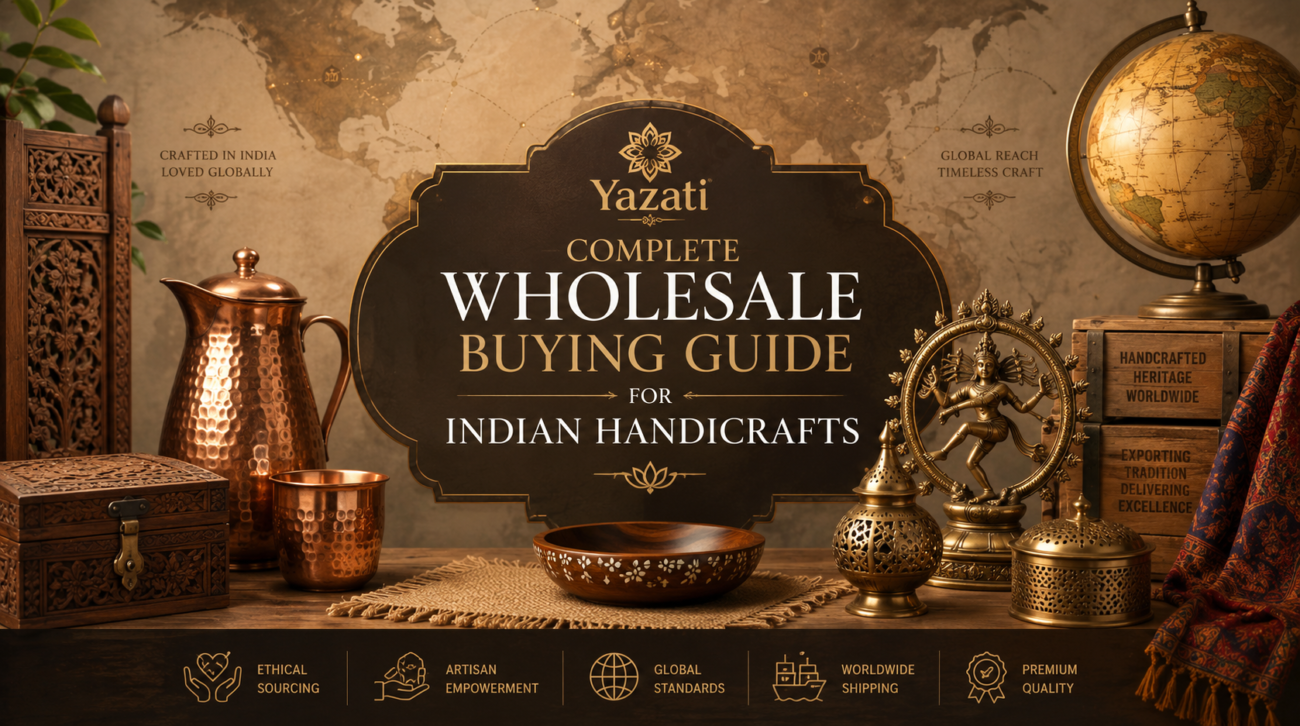
India has been a global center for handcrafted products for centuries. From intricate wooden carvings and handwoven textiles to brass décor and gemstone jewelry, Indian handicrafts showcase exceptional craftsmanship passed down through generations. Today, retailers, importers, gift stores, interior designers, and eCommerce businesses worldwide purchase these products in bulk because of their quality, affordability, and artistic value.
This Complete Wholesale Buying Guide for Indian Handicrafts will help you understand every step involved in sourcing authentic products directly from India. Whether you are a beginner or an experienced buyer, this guide covers supplier selection, pricing, quality inspection, logistics, documentation, and best practices for successful wholesale purchasing.
Why Buy Indian Handicrafts Wholesale?
Wholesale purchasing offers numerous advantages for businesses seeking unique, handcrafted products.
Competitive Pricing
Buying directly from manufacturers eliminates multiple intermediaries. As a result, businesses receive better pricing and higher profit margins.
Benefits include:
- Lower unit costs
- Better negotiation opportunities
- Higher resale margins
- Bulk order discounts
Authentic Handmade Products
Indian artisans create products using traditional techniques that have existed for hundreds of years.
Unlike mass-produced goods, handmade products offer:
- Unique craftsmanship
- Cultural value
- Premium appearance
- Better customer appeal
Consumers increasingly prefer authentic handmade décor over factory-produced alternatives.
Wide Product Selection
India produces thousands of handicraft categories.
Some of the most popular include:
| Category | Popular Products |
|---|---|
| Wooden Crafts | Furniture, carvings, trays |
| Brass Handicrafts | Lamps, figurines |
| Marble Art | Tabletops, sculptures |
| Textiles | Cushion covers, rugs |
| Pottery | Decorative ceramics |
| Leather Goods | Bags, journals |
| Bamboo Products | Baskets, home décor |
| Metal Art | Wall décor |
Understanding the Indian Handicraft Industry
India’s handicraft industry employs millions of artisans across rural and urban regions. Many family-owned workshops have preserved traditional craftsmanship for generations, creating products that are admired worldwide.
Major export destinations include:
- United States
- Germany
- United Kingdom
- Australia
- Canada
- France
- Japan
- UAE
The industry continues to grow due to rising global demand for sustainable and handcrafted products.
Popular Types of Indian Handicrafts
Wooden Handicrafts
Wood remains one of India’s largest handicraft sectors.
Popular products include:
- Decorative boxes
- Wall panels
- Tables
- Chairs
- Serving trays
- Candle holders
- Temple décor
Common woods:
- Mango wood
- Sheesham
- Teak
- Acacia
Metal Handicrafts
Metal products remain among India’s top export items.
Examples include:
- Brass statues
- Aluminum décor
- Copper utensils
- Iron wall art
- Lanterns
- Candle stands
These products are especially popular in luxury home décor markets.
Textile Handicrafts
Indian textiles are renowned for their vibrant colors, hand embroidery, block printing, and weaving techniques.
Popular wholesale products include:
- Cushion covers
- Table runners
- Bedspreads
- Quilts
- Throws
- Curtains
Stone and Marble Handicrafts
These products showcase India’s exceptional stone craftsmanship.
Examples include:
- Marble inlay tables
- Decorative bowls
- Elephant figurines
- Coasters
- Sculptures
Ceramic and Pottery Products
Growing demand for handmade home décor has boosted ceramic exports.
Popular items:
- Flower pots
- Vases
- Mugs
- Plates
- Decorative jars
Choosing the Right Wholesale Supplier
Finding the right supplier determines your long-term business success.
Consider these factors:
Manufacturing Experience
Choose suppliers with several years of experience.
Ask about:
- Production capacity
- Export experience
- Product specialization
Product Quality
Request:
- Product catalogs
- Sample orders
- High-resolution images
- Material specifications
Never place a large order without evaluating samples.
Certifications
Reliable suppliers may hold certifications related to quality management, sustainability, or export compliance. Ask about relevant certifications if they apply to your product category and destination market.
Communication
Good suppliers respond quickly and provide:
- Accurate quotations
- Production timelines
- Packaging details
- Shipping updates
Professional communication often reflects professional business practices.
Finding Reliable Manufacturers
There are several ways to source Indian handicrafts.
Trade Shows
Industry exhibitions allow buyers to:
- Meet manufacturers
- Compare products
- Negotiate pricing
- Inspect quality
Trade fairs are excellent opportunities to build long-term supplier relationships.
B2B Marketplaces
Many verified manufacturers list products on B2B platforms.
Before placing orders:
- Check reviews
- Request samples
- Verify business registration
- Confirm export capability
Direct Factory Visits
Whenever possible, visit manufacturing facilities.
Benefits include:
- Better pricing
- Factory inspection
- Production verification
- Stronger relationships
Understanding Minimum Order Quantity (MOQ)
Most manufacturers establish a Minimum Order Quantity (MOQ), which is the smallest quantity they are willing to produce or sell in a single order. MOQs help suppliers cover setup costs and maintain production efficiency.
Factors influencing MOQ include:
- Product complexity
- Material costs
- Customization requirements
- Production time
- Packaging needs
If you’re a new buyer, discuss flexible MOQ options. Some suppliers may agree to lower quantities for sample or trial orders, especially if they see potential for a long-term partnership.
Pricing Factors in Wholesale Indian Handicrafts
Understanding how prices are determined helps you negotiate confidently and calculate your profit margins accurately. While two products may look similar, differences in materials, craftsmanship, and finishing can significantly affect the final price.
Raw Materials
The cost of raw materials is one of the biggest pricing factors. Prices can fluctuate based on market demand, availability, and seasonal changes.
Examples include:
- Solid wood vs. engineered wood
- Pure brass vs. brass-plated metal
- Natural stone vs. composite stone
- Organic cotton vs. synthetic fabrics
Higher-quality materials generally increase the product’s durability and perceived value.
Handcrafting Time
Unlike factory-made goods, handcrafted products require skilled labor. Intricate carving, embroidery, painting, or inlay work can take several hours—or even days—to complete.
Products requiring more craftsmanship usually command higher wholesale prices.
Customization
Custom orders often involve additional costs due to:
- New designs or molds
- Custom colors and finishes
- Private labeling
- Branded packaging
- Product size modifications
Always clarify whether customization charges are one-time setup fees or recurring costs.
Packaging Costs
Packaging plays a vital role in protecting fragile handicrafts during transportation.
Costs may include:
- Individual product boxes
- Bubble wrapping
- Foam inserts
- Corrugated export cartons
- Wooden crates for heavy items
Premium packaging can reduce damage during shipping and improve customer satisfaction.
Shipping Costs
Freight expenses vary depending on:
- Destination country
- Shipment size and weight
- Shipping method (air or sea)
- Fuel surcharges
- Customs duties and local taxes
Ask your supplier for quotes under common international trade terms (Incoterms), such as EXW, FOB, CIF, or DDP, so you understand exactly which costs are included.
Quality Control Checklist
Quality assurance is essential before making a large wholesale purchase. Even a small defect rate can affect customer satisfaction and your business reputation.
Inspect Product Samples
Before confirming a bulk order:
- Check dimensions and measurements.
- Verify materials and finishes.
- Test product functionality, where applicable.
- Ensure colors match your specifications.
Check Consistency
When ordering hundreds or thousands of pieces, consistency is critical.
Inspect:
- Product size
- Weight
- Color uniformity
- Surface finish
- Craftsmanship quality
Evaluate Packaging
Good packaging should protect products from:
- Moisture
- Dust
- Scratches
- Breakage
- Compression during transit
Request photos or videos of the final packed products before shipment.
Conduct Pre-Shipment Inspection
For large orders, consider a pre-shipment inspection. This can help verify:
- Quantity
- Product quality
- Packaging standards
- Labeling accuracy
Independent inspection services can provide additional confidence before goods are dispatched.
Packaging Standards for Export
Export-quality packaging reduces the risk of damage during long-distance transportation.
Individual Packaging
Each item should be protected using suitable materials, such as:
- Bubble wrap
- Foam sheets
- Tissue paper
- Protective sleeves
- Polybags (where appropriate)
Master Cartons
Products are usually packed into strong corrugated cartons that should:
- Be durable enough for stacking
- Include sufficient cushioning
- Be sealed securely
- Display handling instructions when needed
Labeling Requirements
Export cartons typically include:
- Product name
- Quantity
- Country of origin
- Gross and net weight
- Carton dimensions
- Handling symbols (e.g., “Fragile” or “This Side Up”)
Proper labeling helps streamline customs clearance and warehouse management.
Export Documentation
Accurate documentation is essential for smooth international shipments. The exact requirements depend on the destination country and the products being exported.
Common documents include:
- Commercial Invoice
- Packing List
- Bill of Lading or Air Waybill
- Certificate of Origin (when required)
- Insurance documents (if applicable)
- Import permits or additional compliance documents, depending on the destination market
Discuss documentation requirements with your freight forwarder or customs broker before shipping.
Shipping Methods
Choosing the right shipping option depends on your order size, budget, and delivery timeline.
Air Freight
Advantages:
- Faster delivery
- Suitable for urgent orders
- Lower risk of extended transit delays
Disadvantages:
- Higher shipping costs
- Less economical for bulky or heavy products
Air freight is often used for samples, small consignments, or time-sensitive shipments.
Sea Freight
Advantages:
- Lower cost per unit for large shipments
- Ideal for heavy or bulky goods
- Better suited for regular wholesale imports
Disadvantages:
- Longer transit times
- Additional planning required for inventory management
For many wholesale buyers, sea freight provides the best balance between cost and volume.
Payment Terms
Establishing clear payment terms helps reduce misunderstandings and build trust between buyers and suppliers.
Common arrangements include:
- Advance payment for sample orders
- Partial advance with the balance due before shipment
- Letter of Credit (often used for larger international transactions)
- Bank transfer
- Other mutually agreed payment methods
Before sending funds, verify the supplier’s banking details through official communication channels and keep written records of all transactions.
Building Long-Term Supplier Relationships
Successful wholesale businesses often work with the same suppliers for years. Strong relationships can lead to better pricing, priority production, and improved service.
Communicate Clearly
Provide detailed purchase orders that include:
- Product specifications
- Quantity
- Packaging requirements
- Delivery timelines
- Labeling instructions
Clear documentation minimizes production errors.
Pay on Time
Meeting agreed payment schedules builds credibility and encourages suppliers to prioritize your future orders.
Share Feedback
Constructive feedback helps suppliers improve quality and better understand your market’s expectations. Likewise, acknowledge good performance to strengthen the partnership.
Plan Ahead
Place seasonal or large orders well in advance, especially before peak production periods and major holidays, to avoid delays.
Common Wholesale Buying Mistakes to Avoid
Avoiding common pitfalls can save both time and money.
- Choosing suppliers based solely on the lowest price.
- Skipping product sample evaluations.
- Failing to define quality standards in writing.
- Ignoring packaging requirements for international transit.
- Underestimating shipping costs and customs charges.
- Not understanding import regulations in the destination country.
- Placing large first orders without testing the supplier’s reliability.
- Relying on verbal agreements instead of documented purchase terms.
Frequently Asked Questions (FAQs)
1. What are the most popular Indian handicrafts for wholesale?
Wooden décor, brass artifacts, handwoven textiles, ceramic products, marble handicrafts, leather accessories, bamboo products, and metal wall art are consistently in demand across international markets.
2. How can I verify a handicraft supplier?
Request business registration details, product samples, client references, and export experience. If possible, visit the factory or use an independent inspection service before placing large orders.
3. Is it better to buy directly from manufacturers?
Buying directly from manufacturers can offer better pricing, customization options, and stronger long-term relationships. However, experienced export houses can also simplify sourcing by consolidating products from multiple artisan groups.
4. What is a reasonable MOQ for first-time buyers?
MOQs vary by product and manufacturer. Many suppliers are willing to negotiate smaller trial orders for new customers, particularly if there is potential for ongoing business.
5. How long does production usually take?
Production timelines depend on product complexity, order volume, and seasonal demand. Always confirm estimated manufacturing and shipping schedules before finalizing your purchase.
6. Which shipping method is more economical?
Sea freight is generally more cost-effective for large wholesale orders, while air freight is suitable for urgent shipments and small consignments.
Conclusion
India remains one of the world’s leading sources of handcrafted products, offering an unmatched combination of artistry, cultural heritage, and competitive pricing. By understanding supplier selection, pricing structures, quality control, packaging, shipping, and documentation, buyers can reduce risks and build a reliable supply chain.
A thoughtful approach—starting with sample evaluations, maintaining clear communication, and developing long-term supplier relationships—can lead to consistent quality, smoother operations, and sustainable business growth.
✨ Discover Global Sourcing Excellence with Netyex ✨
Netyex is your trusted B2B sourcing partner, connecting international buyers with India’s finest manufacturers and curated product lines—from handicrafts and home décor to kitchenware, textiles, hospitality essentials, and more. With verified suppliers and end-to-end support, we make global procurement seamless, reliable, and efficient.
👉 Elevate your sourcing experience—explore Netyex today.
📦 Bulk orders & customisation | 🌍 Worldwide delivery | 🤝 Trusted by global buyers
Visit Netyex to source premium Indian products with confidence.