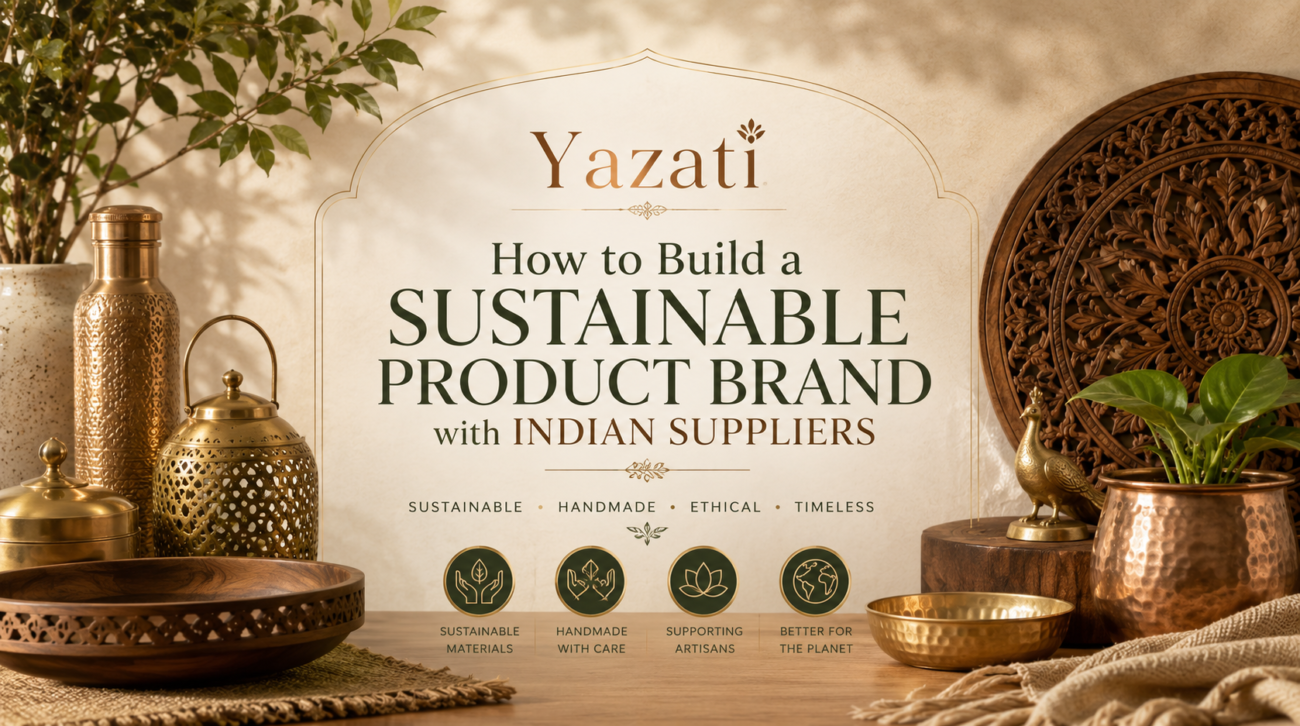
Consumers today are looking beyond attractive packaging and competitive pricing. They increasingly want products that are responsibly made, environmentally friendly, and ethically sourced. This shift presents a tremendous opportunity for entrepreneurs who want to learn How to Build a Sustainable Product Brand with Indian Suppliers.
India has become one of the world’s most attractive sourcing destinations because of its skilled artisans, growing manufacturing capabilities, renewable material availability, and expanding focus on sustainable production. From organic textiles and bamboo products to handcrafted home décor and natural personal care items, Indian suppliers offer exceptional opportunities for businesses committed to sustainability.
This guide explains every stage of building a sustainable brand—from choosing products and suppliers to creating a trustworthy brand that customers genuinely support.
Understanding Sustainable Product Branding
A sustainable brand is about much more than using recyclable packaging. It involves making responsible decisions throughout the entire product lifecycle.
This includes:
- Ethical sourcing
- Fair wages
- Responsible manufacturing
- Reduced environmental impact
- Long-lasting product quality
- Transparent communication
- Circular economy practices
Customers quickly recognize brands whose sustainability claims are backed by real actions.
Why India Is an Excellent Manufacturing Destination
India has become a global sourcing hub due to several unique advantages.
Abundant Natural Materials
Manufacturers produce products using:
- Organic cotton
- Jute
- Bamboo
- Cork
- Coconut shell
- Recycled metals
- Natural dyes
- Handmade paper
These renewable resources naturally align with eco-conscious brands.
Skilled Craftsmanship
Many Indian manufacturing communities have preserved traditional techniques for generations.
Examples include:
- Handloom weaving
- Wood carving
- Brass work
- Pottery
- Block printing
- Leather alternatives
- Natural fiber weaving
These techniques create distinctive products that stand out in competitive markets.
Growing Sustainable Manufacturing
Many Indian factories now invest in:
- Solar energy
- Rainwater harvesting
- Wastewater recycling
- Energy-efficient machinery
- Plastic reduction
- Green certifications
As global demand for sustainable products increases, manufacturers continue adopting environmentally responsible practices.
Benefits of Working with Indian Suppliers
Partnering with Indian suppliers provides several strategic advantages.
Competitive Manufacturing Costs
India offers high-quality manufacturing at competitive prices while maintaining strong craftsmanship.
Large Product Variety
Businesses can source:
- Clothing
- Home décor
- Kitchenware
- Beauty products
- Wellness items
- Stationery
- Furniture
- Gift products
Customization
Many suppliers offer:
- Private labeling
- Custom packaging
- Logo printing
- Product customization
- Small production runs
This flexibility benefits startups launching new brands.
Identifying Your Sustainable Product Niche
Before contacting suppliers, define your niche carefully.
Examples include:
- Zero-waste kitchen products
- Organic clothing
- Sustainable yoga accessories
- Eco-friendly stationery
- Handmade home décor
- Natural skincare
- Reusable travel products
- Children’s eco products
A focused niche helps establish authority and simplifies marketing.
Finding Reliable Indian Suppliers
Finding the right supplier is one of the most important decisions you’ll make.
Online Supplier Directories
Explore reputable B2B marketplaces, supplier directories, and manufacturer databases. Review company profiles, certifications, export experience, and customer feedback before initiating contact.
Trade Shows and Industry Events
Attending trade fairs allows you to:
- Meet manufacturers directly
- Inspect product quality
- Compare suppliers
- Discuss customization
- Build trust through face-to-face conversations
These events often reveal innovative suppliers not widely known online.
Government Export Councils
Indian export promotion organizations maintain directories of verified exporters and often provide resources that can help international buyers identify manufacturers with experience in global markets.
Evaluating Supplier Sustainability
Do not rely solely on marketing claims.
Evaluate suppliers using measurable standards.
Certifications to Look For
Depending on your product category, relevant certifications may include:
- Organic certifications
- Fair trade certifications
- Environmental management certifications
- Textile sustainability standards
- Social compliance audits
Always request current documentation and verify its validity.
Ethical Labor Practices
Ask questions about:
- Working hours
- Employee safety
- Fair wages
- Child labor policies
- Employee benefits
Responsible suppliers should be transparent about their practices.
Environmental Responsibility
Ask whether the factory:
- Uses renewable energy
- Recycles water
- Minimizes waste
- Reduces plastic usage
- Uses environmentally friendly dyes or chemicals
- Recycles production scraps
Factories willing to discuss these practices openly often demonstrate stronger sustainability commitments.
Building Strong Supplier Relationships
Long-term partnerships usually outperform constant supplier switching.
Maintain healthy relationships by:
- Communicating clearly
- Paying invoices on time
- Forecasting demand accurately
- Providing constructive feedback
- Visiting facilities when possible
- Respecting cultural differences
Suppliers often prioritize reliable customers with better pricing, faster production, and access to new product ideas.
Creating Eco-Friendly Packaging
Packaging plays a major role in sustainability.
Consider:
- Recycled cardboard
- Compostable mailers
- Soy-based inks
- Minimal packaging
- Paper tape
- Recyclable labels
- Reusable cloth bags
Clear disposal instructions can further improve the customer experience.
Quality Control and Compliance
Sustainability loses value if products fail quickly.
Implement quality control through:
- Pre-production samples
- Production inspections
- Random batch testing
- Final shipment inspections
- Compliance checks for destination markets
Well-made products last longer, reducing waste and strengthening your brand’s reputation.
Branding Your Sustainable Products
Your brand should communicate purpose as well as quality.
Focus on:
- A memorable brand name
- Consistent visual identity
- Honest storytelling
- Transparent sourcing information
- Educational content
- High-quality photography
Rather than making vague claims, explain how your sourcing and manufacturing choices reduce environmental impact.
Marketing Sustainability Authentically
Avoid exaggerating environmental claims.
Instead:
- Share supplier stories
- Highlight artisan craftsmanship
- Explain your materials
- Publish behind-the-scenes content
- Show certifications where applicable
- Discuss continuous improvements
Authenticity builds stronger customer trust than perfection.
For additional guidance on sustainable business practices, resources from organizations such as the United Nations Global Compact (https://unglobalcompact.org/) can provide valuable frameworks.
Common Challenges and Solutions
| Challenge | Solution |
|---|---|
| Finding trustworthy suppliers | Request samples, references, and certifications |
| Maintaining consistent quality | Conduct regular inspections and establish quality standards |
| Longer shipping times | Plan inventory earlier and maintain safety stock |
| Communicating expectations | Use detailed specifications and regular meetings |
| Verifying sustainability claims | Request documentation and consider third-party audits |
| Balancing cost and sustainability | Prioritize long-term value over the lowest price |
Frequently Asked Questions
1. Is India a good place for sustainable manufacturing?
Yes. India offers renewable materials, skilled craftsmanship, competitive production costs, and a growing number of manufacturers investing in sustainable practices.
2. How do I verify if an Indian supplier is genuinely sustainable?
Request certifications, ask detailed questions about labor and environmental practices, review audit reports where available, and consider independent inspections.
3. Can startups work with Indian suppliers?
Absolutely. Many manufacturers support startups through low minimum order quantities, customization, and private-label services.
4. Which products are most popular for sustainable brands?
Organic textiles, reusable household products, natural personal care items, handmade décor, eco-friendly stationery, and bamboo-based goods are all strong categories.
5. Should I visit suppliers before placing large orders?
If possible, yes. Visiting facilities—or arranging a trusted third-party inspection—helps verify production capabilities, quality systems, and working conditions.
6. How important is packaging for a sustainable brand?
Very important. Thoughtfully designed, recyclable, reusable, or compostable packaging reinforces your sustainability message and reduces environmental impact.
Conclusion
Learning How to Build a Sustainable Product Brand with Indian Suppliers requires more than selecting eco-friendly materials. Success comes from combining responsible sourcing, ethical manufacturing, rigorous quality control, transparent communication, and authentic branding.
India offers a compelling ecosystem for entrepreneurs who want to create products that are both commercially successful and socially responsible. By choosing suppliers carefully, investing in long-term partnerships, and communicating your sustainability journey honestly, you can build a brand that earns customer loyalty while contributing to a more sustainable future.
✨ Discover Global Sourcing Excellence with Netyex ✨
Netyex is your trusted B2B sourcing partner, connecting international buyers with India’s finest manufacturers and curated product lines—from handicrafts and home décor to kitchenware, textiles, hospitality essentials, and more. With verified suppliers and end-to-end support, we make global procurement seamless, reliable, and efficient.
👉 Elevate your sourcing experience—explore Netyex today.
📦 Bulk orders & customisation | 🌍 Worldwide delivery | 🤝 Trusted by global buyers
Visit Netyex to source premium Indian products with confidence.