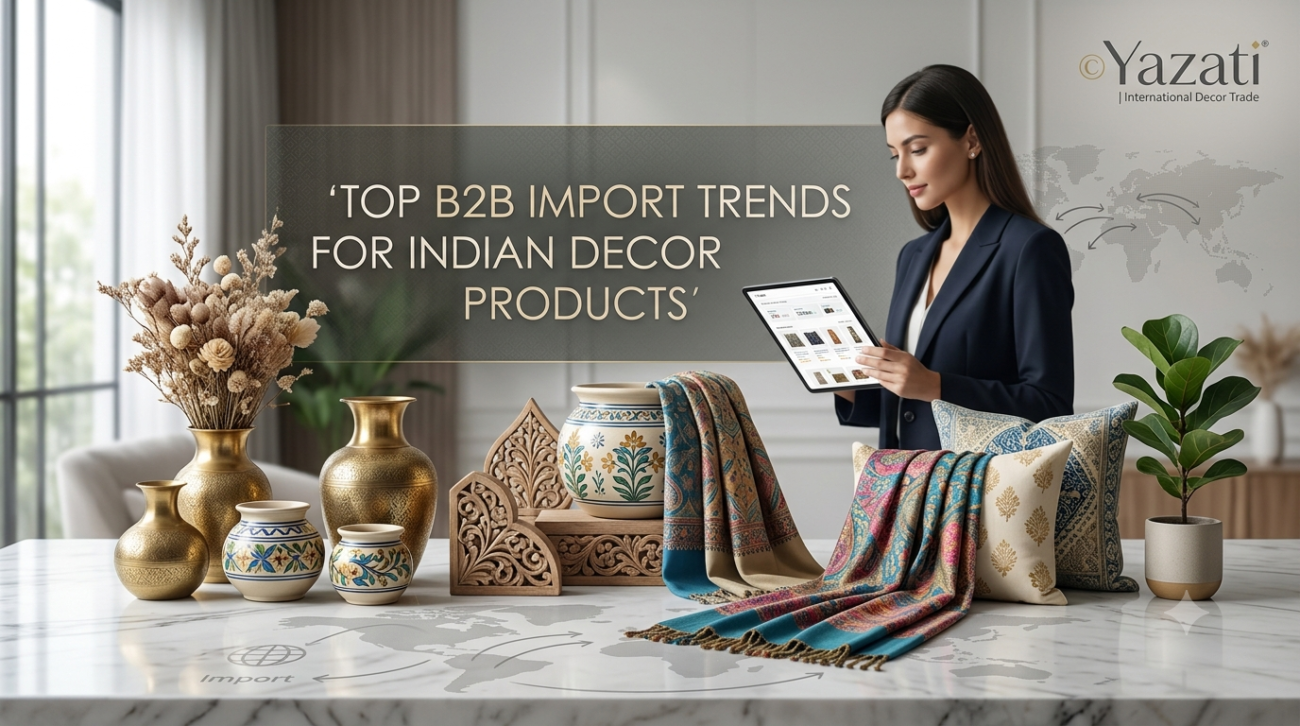
The global home décor industry is evolving rapidly, and Top B2B Import Trends for Indian Decor Products highlight why India has become one of the world’s leading sourcing destinations. Buyers from North America, Europe, the Middle East, and Asia increasingly choose Indian décor because it combines traditional craftsmanship with modern design, competitive pricing, and sustainable production practices.
Indian manufacturers continue to expand their product offerings while adopting international quality standards, making the country an attractive sourcing hub for wholesalers, retailers, hospitality businesses, and interior design companies.
Introduction to India’s Home Decor Export Industry
India has long been recognized for its rich heritage in handicrafts and decorative arts. Today, the industry combines centuries-old craftsmanship with advanced manufacturing technologies to meet global demand.
Key strengths include:
- Large skilled artisan workforce
- Diverse product portfolio
- Strong export infrastructure
- Competitive pricing
- Government support for exporters
The home décor export sector contributes significantly to India’s handicraft exports, serving thousands of international buyers annually.
Why Global Buyers Prefer Indian Decor Products
Handmade Craftsmanship
Indian artisans are renowned for their attention to detail. Products often feature hand carving, embroidery, brass work, block printing, weaving, and intricate finishing that machines cannot easily replicate.
Buyers appreciate:
- Authentic designs
- High perceived value
- Cultural uniqueness
- Premium quality
These qualities allow retailers to differentiate themselves in competitive markets.
Competitive Manufacturing Costs
Compared to many sourcing destinations, India offers excellent value for money. Lower production costs combined with skilled labor allow importers to achieve attractive profit margins without compromising quality.
Benefits include:
- Lower production expenses
- Flexible minimum order quantities
- Customized manufacturing
- Private label opportunities
Rising Demand for Sustainable Decor
Sustainability is no longer optional—it’s becoming a key purchasing criterion for businesses worldwide.
Eco-Friendly Materials
Importers increasingly seek products made from:
- Reclaimed wood
- Bamboo
- Jute
- Cotton
- Cane
- Rattan
- Recycled metals
- Natural stone
These materials align with growing consumer interest in environmentally responsible home décor.
Ethical Manufacturing
Many Indian exporters now emphasize:
- Fair labor practices
- Responsible sourcing
- Waste reduction
- Eco-friendly packaging
- Renewable energy initiatives
Such practices enhance supplier credibility and strengthen long-term buyer relationships.
Popular Indian Decor Categories
Wooden Home Decor
Wood remains one of India’s strongest export categories.
Popular products include:
- Wall art
- Decorative trays
- Shelves
- Candle holders
- Carved mirrors
- Furniture accents
Metal Handicrafts
Indian metal craftsmanship continues to enjoy global demand.
Examples include:
- Brass décor
- Iron wall hangings
- Lanterns
- Sculptures
- Decorative bowls
- Candle stands
Textile-Based Decor
India is a global leader in textile manufacturing.
Top-selling products include:
- Cushion covers
- Throws
- Rugs
- Curtains
- Table runners
- Quilts
Natural fibers remain particularly popular.
Ceramic & Stone Products
These premium décor products appeal to luxury retailers.
Examples include:
- Marble accessories
- Ceramic vases
- Decorative planters
- Soap dispensers
- Stone sculptures
Technology Transforming B2B Imports
Technology is reshaping international sourcing.
AI-Powered Product Discovery
Artificial intelligence helps buyers:
- Find trending products
- Compare suppliers
- Analyze pricing
- Forecast demand
- Reduce sourcing time
Digital B2B Marketplaces
Online platforms now simplify procurement by offering:
- Verified supplier profiles
- Product catalogs
- Digital negotiations
- Secure payments
- Shipment tracking
This has reduced barriers for small and medium-sized importers entering the global market.
Emerging Markets for Indian Decor Exports
While the United States and Europe remain major destinations, demand is expanding in:
- United Arab Emirates
- Saudi Arabia
- Australia
- Japan
- South Korea
- Singapore
- South Africa
- Latin America
Rapid urbanization and growing interest in premium interiors are driving this expansion.
Challenges Facing Importers
Despite strong opportunities, buyers should prepare for:
- Shipping delays
- Seasonal production fluctuations
- Currency exchange risks
- Product compliance requirements
- Quality consistency across suppliers
Building long-term partnerships with reliable manufacturers helps reduce these risks.
Future Opportunities
Several trends are expected to shape the coming years:
- Smart home accessories with decorative appeal
- Luxury handcrafted collections
- Sustainable packaging innovations
- Personalized décor products
- Hotel and hospitality sourcing growth
- Small-batch premium manufacturing
- Digital showroom experiences
Importers who embrace these trends can gain a competitive advantage.
Best Practices for Importers
To maximize success:
- Vet suppliers thoroughly.
- Request product samples.
- Conduct factory audits when possible.
- Establish clear quality standards.
- Diversify sourcing partners.
- Monitor global design trends.
- Plan inventory around seasonal demand.
- Stay informed about import regulations in your target market.
For official export guidance and market information, visit the Export Promotion Council for Handicrafts and the Directorate General of Foreign Trade websites.
Frequently Asked Questions
1. Why are Indian decor products popular among B2B buyers?
They combine skilled craftsmanship, diverse designs, competitive pricing, and increasing compliance with international quality standards.
2. Which Indian décor products are imported the most?
Wooden décor, metal handicrafts, textiles, ceramics, marble accessories, and eco-friendly decorative items are among the most popular.
3. Are sustainable products becoming more important?
Yes. Businesses increasingly prioritize décor made from recycled, renewable, and responsibly sourced materials to meet consumer demand.
4. What should importers verify before placing large orders?
Check supplier certifications, production capacity, quality control processes, product samples, and shipping capabilities.
5. Which markets show the fastest growth?
In addition to established markets in North America and Europe, demand is rising in the Middle East, Asia-Pacific, and parts of Latin America.
6. How can businesses reduce sourcing risks?
Develop long-term supplier relationships, perform due diligence, maintain clear specifications, and diversify sourcing to avoid disruptions.
Conclusion
The Top B2B Import Trends for Indian Decor Products demonstrate India’s growing influence in the global home décor market. With a strong foundation in craftsmanship, expanding sustainable manufacturing, and increasing digital capabilities, Indian suppliers are well positioned to serve the evolving needs of international wholesalers, retailers, and hospitality businesses.
Importers who focus on trusted supplier relationships, quality assurance, and emerging consumer preferences will be best placed to capitalize on the continued growth of Indian décor exports.
✨ Discover Global Sourcing Excellence with Netyex ✨
Netyex is your trusted B2B sourcing partner, connecting international buyers with India’s finest manufacturers and curated product lines—from handicrafts and home décor to kitchenware, textiles, hospitality essentials, and more. With verified suppliers and end-to-end support, we make global procurement seamless, reliable, and efficient.
👉 Elevate your sourcing experience—explore Netyex today.
📦 Bulk orders & customisation | 🌍 Worldwide delivery | 🤝 Trusted by global buyers
Visit Netyex to source premium Indian products with confidence.