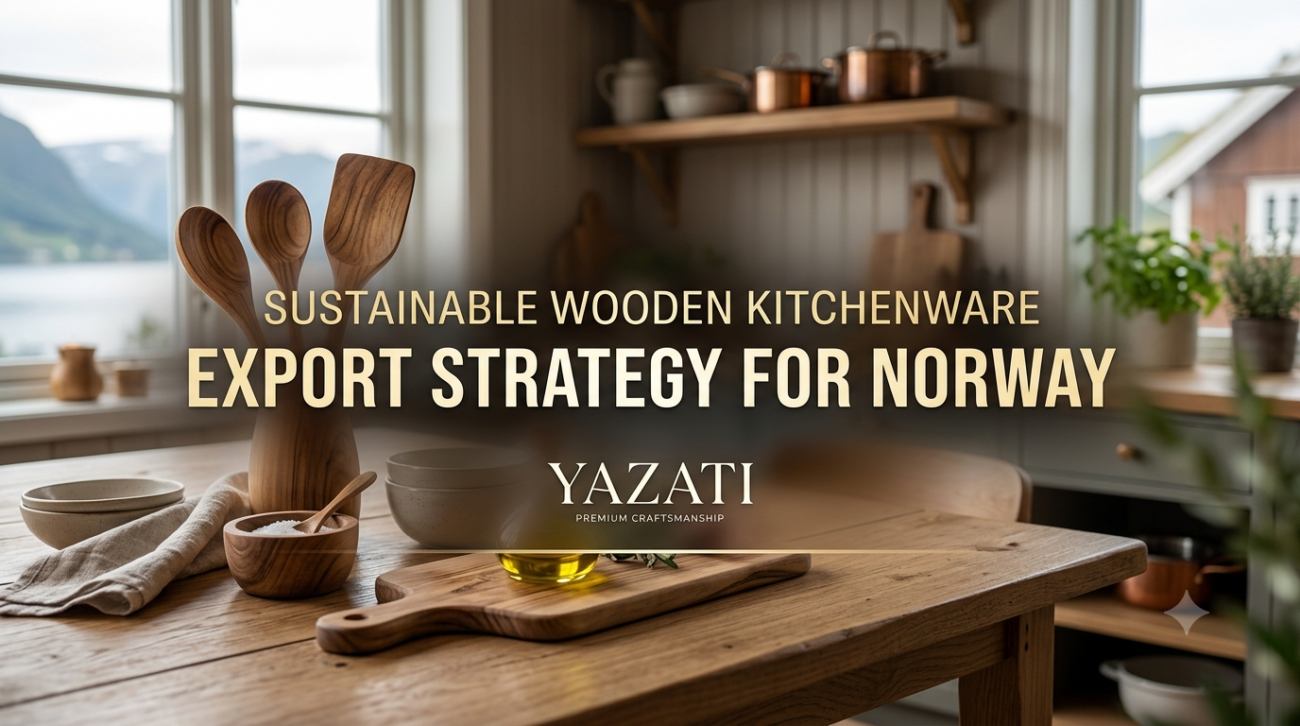
Introduction to the Norwegian Market
Norway has become one of Europe’s strongest markets for environmentally friendly household products. Consumers actively seek products made from renewable resources, responsibly sourced materials, and ethical manufacturing processes. This makes sustainable wooden kitchenware an excellent export opportunity.
The country’s high purchasing power, environmental awareness, and appreciation for Scandinavian design create favorable conditions for exporters offering premium-quality wooden kitchen utensils.
Why Norway is Attractive for Sustainable Kitchenware
Several factors make Norway an ideal export destination:
- High disposable income
- Strong environmental awareness
- Preference for minimalist Scandinavian design
- Growing demand for plastic alternatives
- Well-developed e-commerce market
Wooden products such as cutting boards, serving trays, spatulas, bowls, salad servers, rolling pins, and spoons align perfectly with Norwegian consumer values.
Understanding Norwegian Consumer Preferences
Eco-conscious Buying Behavior
Norwegian buyers frequently evaluate products based on:
- Sustainable sourcing
- Carbon footprint
- Ethical production
- Recyclable packaging
- Long product lifespan
Consumers are willing to pay premium prices for products that clearly demonstrate environmental responsibility.
Premium Product Expectations
Quality expectations include:
- Smooth finishing
- Food-safe oils
- Natural appearance
- Durable hardwood construction
- Elegant packaging
- Authentic craftsmanship
Handcrafted wooden kitchenware often commands higher retail prices than mass-produced alternatives.
Market Research and Competitor Analysis
Before entering Norway, exporters should analyze:
- Existing Scandinavian brands
- Imported wooden kitchenware
- Pricing trends
- Popular wood species
- Consumer reviews
- Retail positioning
Key competitors often focus heavily on sustainability storytelling rather than simply selling products.
Product Selection Strategy
Best-Selling Wooden Kitchenware Products
Products with strong export potential include:
- Cutting boards
- Wooden spoons
- Serving boards
- Cheese boards
- Salad bowls
- Salad servers
- Rolling pins
- Spice containers
- Cooking spatulas
- Wooden tongs
Gift sets also perform particularly well during holiday seasons.
Sustainable Materials
Preferred wood species include:
- Acacia
- Beech
- Oak
- Ash
- Bamboo
- Rubberwood
- Olive wood
Materials should come from responsibly managed forests.
Sustainability Certifications
Certification significantly improves buyer confidence.
FSC Certification
The Forest Stewardship Council (FSC) certification demonstrates responsible forest management and is widely recognized by European buyers.
PEFC Certification
The Programme for the Endorsement of Forest Certification (PEFC) provides another trusted certification option accepted throughout Europe.
Food Safety Compliance
Kitchenware should also comply with:
- EU food-contact material regulations
- Chemical safety standards
- Migration testing requirements
- Packaging regulations
Norwegian Import Regulations
Exporters should prepare:
- Commercial invoice
- Packing list
- Certificate of origin (when applicable)
- Shipping documents
- Product specifications
- Customs declarations
Accurate documentation helps minimize customs delays.
Pricing Strategy
Successful pricing considers:
- Manufacturing costs
- Export expenses
- Shipping
- Customs duties
- Distributor margins
- Retail margins
- Currency fluctuations
Norwegian consumers generally prioritize quality over the lowest price.
Branding for Norway
A successful brand should communicate:
- Sustainability
- Natural materials
- Craftsmanship
- Scandinavian-inspired aesthetics
- Ethical sourcing
- Minimalist packaging
Packaging should avoid unnecessary plastic and clearly explain environmental benefits.
Distribution Channels
Retail Chains
Potential channels include:
- Kitchen specialty stores
- Home décor retailers
- Eco-product stores
- Department stores
- Gift shops
Online Marketplaces
Digital sales channels continue to grow rapidly:
- Brand-owned website
- Scandinavian e-commerce platforms
- B2B wholesale portals
- International marketplaces
Strong product photography and detailed sustainability information improve conversion rates.
Marketing Strategy
Effective marketing should focus on storytelling.
Recommended approaches include:
- Sustainability-focused content marketing
- Social media campaigns
- Interior design collaborations
- Food bloggers
- Scandinavian lifestyle influencers
- Trade exhibitions
- B2B outreach
Highlight the journey of the wood—from responsibly managed forests to finished kitchenware—to build trust and differentiate your brand.
Logistics and Shipping
Efficient logistics are critical for maintaining profitability.
Best practices include:
- Use moisture-resistant packaging.
- Protect products from scratches during transit.
- Consolidate shipments to reduce freight costs.
- Partner with experienced freight forwarders.
- Track shipments in real time.
Sea freight is typically the most economical option for bulk orders, while air freight may be suitable for urgent or high-value shipments.
Risk Management
Potential risks include:
- Currency exchange fluctuations
- Shipping delays
- Regulatory changes
- Rising freight costs
- Competition from established European brands
Mitigation strategies include:
- Diversifying customers
- Using trade insurance
- Hedging currency exposure
- Maintaining inventory buffers
- Building long-term distributor relationships
Financial Planning
Estimate costs across the entire export process:
| Expense Category | Typical Cost Consideration |
|---|---|
| Manufacturing | Raw materials, labor |
| Certification | FSC/PEFC audits |
| Packaging | Eco-friendly materials |
| Freight | Ocean or air shipping |
| Customs | Duties and clearance |
| Marketing | Digital campaigns, trade fairs |
| Distribution | Warehousing and retailer margins |
A detailed financial model helps determine pricing, profitability, and return on investment.
Frequently Asked Questions
1. Why is Norway a good market for sustainable wooden kitchenware?
Norwegian consumers value environmentally responsible products, premium quality, and Scandinavian design, making the market well-suited for sustainable wooden kitchenware.
2. Which wooden kitchenware products sell best?
Cutting boards, serving trays, wooden spoons, salad bowls, spatulas, rolling pins, and gift sets are among the most popular.
3. Is certification important for exports to Norway?
Yes. Certifications such as FSC or PEFC strengthen credibility and demonstrate responsible sourcing, while compliance with food-contact regulations is essential for kitchenware.
4. What packaging works best?
Minimalist, recyclable packaging with clear sustainability messaging is generally preferred.
5. What is the biggest challenge when entering Norway?
Standing out from established European brands requires strong product quality, authentic sustainability credentials, and a compelling brand story.
6. Should exporters sell through distributors or directly online?
A hybrid approach is often effective: work with local distributors to gain market access while building a direct-to-consumer online presence to strengthen brand recognition.
Conclusion
Norway offers a promising opportunity for exporters of sustainable wooden kitchenware due to its environmentally conscious consumers, strong purchasing power, and appreciation for premium design. Success depends on combining responsibly sourced materials, recognized sustainability certifications, compliance with European food-safety standards, competitive pricing, efficient logistics, and a compelling brand narrative. By focusing on quality, transparency, and long-term relationships with distributors and retailers, exporters can establish a strong and profitable presence in the Norwegian market.
For further guidance on exporting to Europe, consult the European Commission’s trade resources: https://trade.ec.europa.eu/.
✨ Discover Global Sourcing Excellence with Netyex ✨
Netyex is your trusted B2B sourcing partner, connecting international buyers with India’s finest manufacturers and curated product lines—from handicrafts and home décor to kitchenware, textiles, hospitality essentials, and more. With verified suppliers and end-to-end support, we make global procurement seamless, reliable, and efficient.
👉 Elevate your sourcing experience—explore Netyex today.
📦 Bulk orders & customisation | 🌍 Worldwide delivery | 🤝 Trusted by global buyers
Visit Netyex to source premium Indian products with confidence.