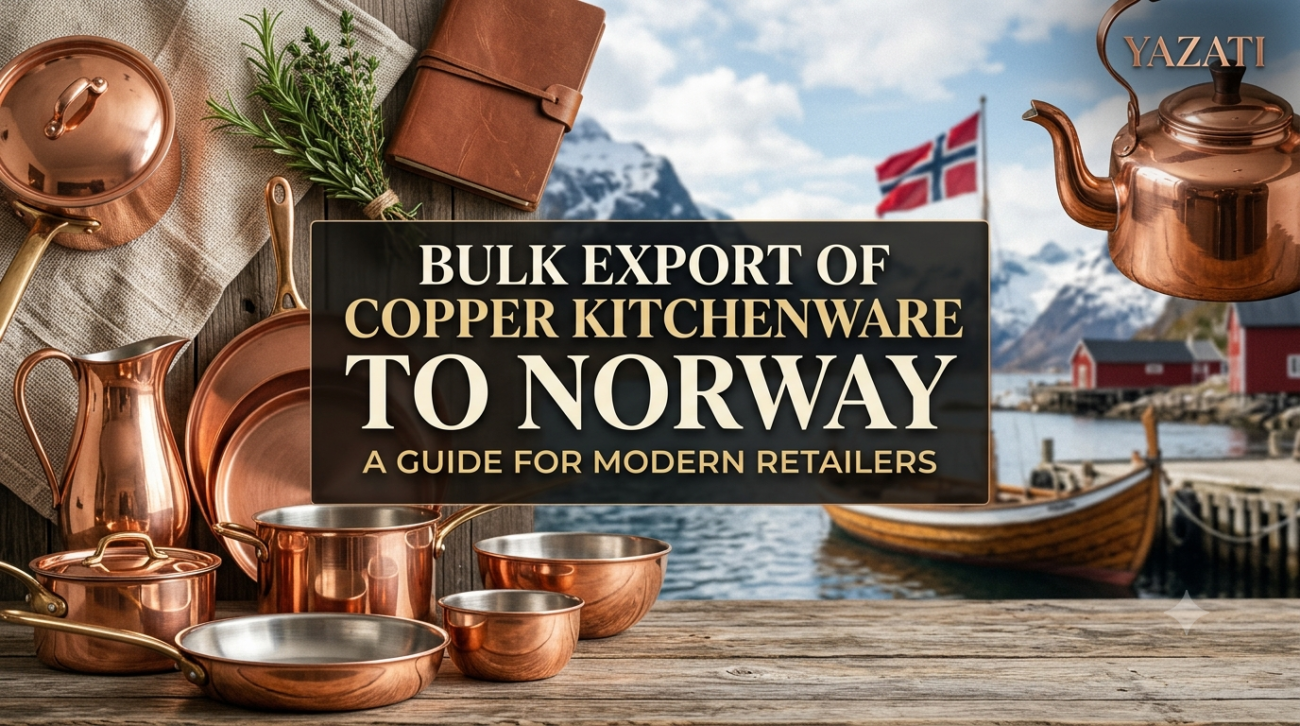
Introduction to the Norwegian Copper Kitchenware Market
The Bulk Export of Copper Kitchenware to Norway has become increasingly attractive for manufacturers and exporters seeking opportunities in premium European markets. Norway’s consumers appreciate high-quality kitchen products that combine functionality with elegant design. Copper cookware, serving utensils, and decorative kitchen accessories fit well within this preference.
The country’s high purchasing power, growing interest in gourmet cooking, and appreciation for sustainable products create favorable conditions for exporters. Norwegian households often prioritize durability over low prices, making handcrafted and premium copper kitchenware especially appealing.
Exporters who understand Norwegian consumer expectations, comply with European regulations, and maintain consistent product quality can establish long-term relationships with importers and distributors.
Why Norway is an Attractive Export Destination
Norway offers several advantages for exporters of copper kitchenware.
High Disposable Income
Norwegian consumers have one of the world’s highest purchasing powers, allowing them to invest in premium kitchen products.
Preference for Premium Products
Many Norwegian buyers value craftsmanship, sustainability, and long-lasting kitchen equipment rather than inexpensive alternatives.
Growing Interest in Home Cooking
The popularity of gourmet cooking, food blogging, and premium kitchens has increased demand for stylish cookware and serving products.
Stable Business Environment
Norway provides a transparent legal framework, reliable payment systems, and efficient customs procedures for international trade.
Understanding Demand for Copper Kitchenware
Consumer Preferences
Modern Norwegian households seek products that combine beauty with performance.
Popular characteristics include:
- Handmade craftsmanship
- Hammered copper finishes
- Eco-friendly production
- Premium gift packaging
- Traditional yet modern designs
Copper cookware is especially popular among cooking enthusiasts who appreciate excellent heat conductivity.
Hospitality Industry Demand
Luxury hotels, boutique restaurants, culinary schools, and catering companies also purchase copper cookware in bulk.
These commercial buyers often require:
- Large order quantities
- Customized branding
- Consistent quality
- Reliable delivery schedules
Types of Copper Kitchenware Suitable for Export
Cookware
Popular export products include:
- Copper frying pans
- Saucepans
- Stock pots
- Tea kettles
- Cooking pots
- Copper-bottom cookware
Serveware
Demand is also strong for:
- Serving trays
- Bowls
- Platters
- Water jugs
- Beverage dispensers
Decorative Kitchen Accessories
Additional products include:
- Copper mugs
- Spice containers
- Storage jars
- Fruit baskets
- Wall décor
- Hanging utensils
Diversifying product offerings can help exporters meet the needs of retailers and wholesalers alike.
Product Quality Standards
Norwegian buyers expect exceptional quality.
Key quality requirements include:
- Smooth finishing
- Uniform thickness
- Food-safe lining where required
- Durable handles
- Scratch-resistant surfaces
- Consistent polishing
Quality control should include inspections before packaging and shipment to minimize returns and build buyer confidence.
European and Norwegian Import Regulations
Compliance is essential when exporting kitchenware to Norway.
Food Contact Material Compliance
Copper kitchenware intended for food use must comply with relevant European food-contact material regulations. Manufacturers should ensure that coatings, linings, and materials are suitable for contact with food and supported by appropriate documentation.
Product Labeling Requirements
Labels should generally include:
- Country of origin
- Product description
- Material composition
- Manufacturer or exporter details
- Care instructions
- Safety information where applicable
Providing instructions in English—and where requested by buyers, Norwegian—can improve customer satisfaction.
Documentation Required for Export
Common export documents include:
- Commercial Invoice
- Packing List
- Bill of Lading or Air Waybill
- Certificate of Origin (if requested)
- Insurance Certificate
- Product compliance documentation
- Customs declarations
Maintaining complete documentation helps avoid customs delays.
Shipping and Logistics
Sea Freight
Sea freight is generally the most economical option for bulk shipments.
Advantages include:
- Lower shipping costs
- Suitable for large consignments
- Containerized transportation
- Better cost efficiency
Air Freight
Air freight is preferable when:
- Delivery is urgent
- Shipment volumes are small
- High-value products require faster delivery
Packaging Best Practices
Copper products require protective packaging to prevent scratches, oxidation, and dents.
Recommended practices include:
- Bubble wrapping
- Foam protection
- Moisture-resistant materials
- Individual cartons
- Strong export cartons
- Wooden pallets for container shipments
Proper packaging minimizes transit damage and enhances buyer satisfaction.
Pricing Strategy
Competitive pricing should consider:
- Manufacturing costs
- Packaging expenses
- Inland transportation
- Ocean or air freight
- Customs-related costs
- Insurance
- Profit margins
Offering volume discounts for wholesalers can encourage repeat business.
Finding Buyers in Norway
Potential customers include:
- Kitchenware distributors
- Retail chains
- Interior design stores
- Hotel suppliers
- Restaurant equipment dealers
- Online retailers
Participation in international trade fairs and B2B marketplaces can also help identify qualified buyers.
Digital Marketing for Exporters
An effective online presence can increase international visibility.
Useful strategies include:
- Professional export website
- Product catalogs
- Search engine optimization (SEO)
- LinkedIn networking
- B2B marketplace listings
- Email outreach campaigns
For trade information and market resources, exporters can also explore organizations such as the International Trade Centre: https://www.intracen.org
Risks and Challenges
Exporters should prepare for:
- Exchange-rate fluctuations
- Shipping delays
- Regulatory changes
- Competitive pricing
- Supply chain disruptions
- Seasonal demand variations
Developing contingency plans and maintaining strong relationships with logistics providers can reduce these risks.
Future Market Opportunities
The outlook for copper kitchenware in Norway remains positive due to:
- Rising demand for premium cookware
- Growth in sustainable consumer products
- Expansion of luxury hospitality
- Increased online retail sales
- Consumer interest in artisanal craftsmanship
Manufacturers that invest in quality, innovation, and environmentally responsible production are well positioned for long-term success.
Frequently Asked Questions
1. Is Norway a good market for copper kitchenware exports?
Yes. Norway’s high purchasing power and preference for premium household products make it an attractive market.
2. What shipping method is best for bulk exports?
Sea freight is generally the most cost-effective option for large shipments, while air freight is suitable for urgent or smaller consignments.
3. Do copper kitchenware products need food-safety compliance?
Yes. Products intended for food contact should comply with applicable European food-contact material requirements and any buyer-specific standards.
4. Who are the main buyers in Norway?
Importers, wholesalers, retailers, hospitality suppliers, restaurants, hotels, and e-commerce businesses.
5. How can exporters find Norwegian buyers?
Through international trade fairs, B2B marketplaces, export promotion agencies, LinkedIn, and direct outreach to distributors and retailers.
6. What factors are most important for Norwegian customers?
Quality, durability, attractive design, sustainability, reliable delivery, and transparent business practices.
Conclusion
The Bulk Export of Copper Kitchenware to Norway presents promising opportunities for manufacturers capable of delivering premium-quality products that meet European standards. Success depends on understanding market demand, complying with regulatory requirements, implementing efficient logistics, and building lasting relationships with importers and distributors. By focusing on craftsmanship, quality assurance, and effective market outreach, exporters can establish a strong presence in Norway’s growing premium kitchenware sector.
✨ Discover Global Sourcing Excellence with Netyex ✨
Netyex is your trusted B2B sourcing partner, connecting international buyers with India’s finest manufacturers and curated product lines—from handicrafts and home décor to kitchenware, textiles, hospitality essentials, and more. With verified suppliers and end-to-end support, we make global procurement seamless, reliable, and efficient.
👉 Elevate your sourcing experience—explore Netyex today.
📦 Bulk orders & customisation | 🌍 Worldwide delivery | 🤝 Trusted by global buyers
Visit Netyex to source premium Indian products with confidence.