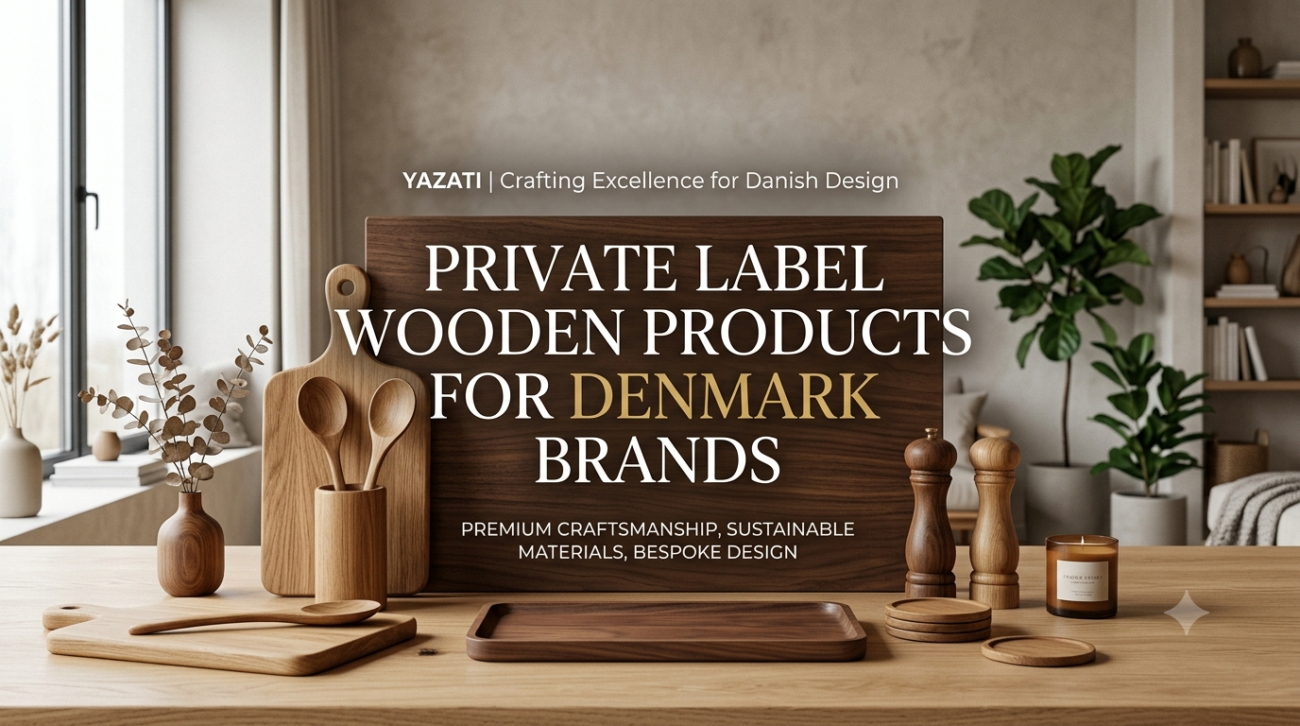
Introduction to Private Label Wooden Products
The market for Private Label Wooden Products for Denmark Brands has grown rapidly over the past decade. Danish consumers are increasingly choosing products that combine elegant Scandinavian aesthetics with environmentally responsible manufacturing. As sustainability becomes a central purchasing factor, wooden products have become an attractive option for retailers seeking to differentiate themselves.
Private labeling allows businesses to market products under their own brand while outsourcing manufacturing to experienced producers. This business model enables companies to focus on branding, customer relationships, and market expansion instead of investing in expensive production facilities.
For Denmark-based brands, private label wooden products represent an opportunity to align with consumer expectations for quality craftsmanship, minimalist design, and sustainable sourcing. Whether the products are kitchen accessories, home décor, furniture, toys, or office essentials, private labeling provides flexibility and scalability for businesses of all sizes.
Why Denmark Brands Prefer Private Label Wooden Products
Danish brands have built a global reputation for simplicity, quality, and timeless design. Private label manufacturing supports these values by allowing companies to create distinctive product lines while maintaining control over branding and customer experience.
Several factors have contributed to the increasing popularity of private label wooden products in Denmark:
- Rising demand for eco-friendly alternatives
- Preference for natural materials
- Growth of online retail
- Expansion of sustainable home décor
- Increased consumer awareness of environmental issues
Instead of competing solely on price, Denmark brands are increasingly competing through quality, sustainability, and unique design.
Growing Consumer Demand for Sustainable Products
Modern consumers are paying closer attention to where products come from and how they are made. Wooden products manufactured from responsibly managed forests often have a lower environmental impact than plastic alternatives.
Many shoppers actively look for products made using:
- Renewable materials
- Non-toxic finishes
- Sustainable harvesting methods
- Recyclable packaging
- Ethical manufacturing practices
These purchasing preferences make wooden private label products particularly attractive in Denmark’s environmentally conscious marketplace.
Businesses that emphasize sustainability not only appeal to eco-conscious consumers but also strengthen long-term customer loyalty.
Scandinavian Design Philosophy
Scandinavian design has become one of the world’s most recognizable design styles. Its emphasis on clean lines, functional beauty, and natural materials makes wooden products a perfect fit.
Characteristics include:
- Minimalist appearance
- Neutral color palettes
- Practical functionality
- High-quality craftsmanship
- Long-lasting durability
Private label manufacturers often work closely with Danish brands to create products that reflect these timeless design principles while maintaining manufacturing efficiency.
Popular Private Label Wooden Products
One of the greatest advantages of private labeling is the wide variety of products that brands can develop.
Popular categories include:
Kitchen Accessories
Wood remains one of the preferred materials for premium kitchen products.
Examples include:
- Cutting boards
- Serving trays
- Wooden spoons
- Spice racks
- Knife holders
- Salad bowls
- Coasters
- Utensil organizers
Consumers appreciate both the durability and natural appearance of wooden kitchen accessories.
Home Decor
Wooden home décor continues to perform exceptionally well in Scandinavian markets.
Common products include:
- Picture frames
- Decorative shelves
- Wall clocks
- Candle holders
- Plant stands
- Storage boxes
- Wooden mirrors
- Decorative trays
These items complement minimalist interiors while providing warmth and texture.
Furniture
Private label furniture is another growing segment.
Popular options include:
- Coffee tables
- Side tables
- Dining chairs
- Bookshelves
- Shoe racks
- TV units
- Bedside tables
- Entryway benches
Many Denmark brands collaborate with manufacturers to produce flat-pack furniture that reduces shipping costs and improves logistics.
Children’s Wooden Toys
Parents increasingly prefer wooden toys because they are durable, educational, and free from many synthetic materials found in plastic alternatives.
Examples include:
- Building blocks
- Puzzle boards
- Shape sorters
- Doll houses
- Balance toys
- Learning games
- Pull-along toys
- Stacking toys
Safety certifications are particularly important in this category, making quality assurance a top priority.
Office and Lifestyle Products
Remote work has created new opportunities for premium wooden office accessories.
Popular products include:
- Laptop stands
- Phone holders
- Desk organizers
- Pen holders
- Wireless charging stations with wooden finishes
- Monitor risers
- Business card holders
- Notebook covers
These products combine functionality with elegant Scandinavian styling.
Benefits of Private Label Manufacturing
Private labeling offers significant advantages for Denmark brands seeking to establish or expand their presence in competitive markets.
Brand Identity
Private labeling allows companies to build recognition through exclusive branding.
Businesses can customize:
- Product appearance
- Packaging
- Logos
- Colors
- Marketing materials
- User manuals
- Product names
This creates a consistent customer experience that strengthens brand loyalty.
Better Profit Margins
Compared to reselling generic products, private label manufacturing often provides better long-term profitability.
Benefits include:
- Greater pricing flexibility
- Reduced competition
- Stronger customer retention
- Higher perceived value
- Premium positioning
As a result, brands can invest more confidently in marketing and product innovation.
Exclusive Product Collections
Exclusive designs help businesses stand out in crowded retail markets.
Manufacturers frequently offer customization options such as:
- Unique dimensions
- Custom engravings
- Personalized finishes
- Special wood species
- Exclusive packaging
- Seasonal collections
These exclusive features make products more appealing to customers seeking distinctive, high-quality items.
Choosing the Right Wood Materials
Selecting the appropriate material is essential for ensuring product quality, durability, and customer satisfaction. Different wood species offer unique characteristics in terms of appearance, strength, sustainability, and cost. Denmark brands often choose materials that balance aesthetics with environmental responsibility, reinforcing their commitment to premium craftsmanship.
Choosing the Right Wood Materials
The choice of wood influences not only the appearance of a product but also its durability, maintenance requirements, and environmental impact. Brands targeting the Danish market often prioritize certified, responsibly sourced wood that aligns with Scandinavian design values and consumer expectations.
Below are some of the most popular wood species used in private label manufacturing.
Bamboo
Although technically a grass, bamboo is widely used as a sustainable material for wooden products due to its rapid growth and renewable nature.
Advantages of bamboo include:
- Fast-growing and highly renewable
- Lightweight yet durable
- Naturally attractive grain
- Moisture-resistant
- Suitable for kitchen and home products
Common bamboo products include cutting boards, serving trays, utensil holders, and storage organizers.
Beech
Beech wood is one of Europe’s most commonly used hardwoods and is valued for its strength and smooth finish.
Benefits include:
- Excellent durability
- Fine, even texture
- Easy to machine and polish
- Affordable compared to premium hardwoods
- Ideal for furniture and toys
Beech is frequently selected for children’s products because it offers both strength and an attractive appearance.
Oak
Oak remains one of the premium choices for luxury wooden collections.
Its characteristics include:
- Exceptional strength
- Beautiful natural grain
- Long lifespan
- High resistance to wear
- Premium appearance
Oak is commonly used in dining furniture, shelving, decorative accessories, and high-end kitchen products.
Rubberwood
Rubberwood has become increasingly popular because it utilizes trees that have completed their latex-producing lifecycle.
Its advantages include:
- Sustainable utilization of existing plantations
- Stable structure
- Smooth finish
- Cost-effective
- Good machining properties
Many manufacturers recommend rubberwood for furniture and household products intended for daily use.
The Private Label Manufacturing Process
A successful private label project depends on close collaboration between the brand and the manufacturing partner. Every stage should be carefully planned to ensure the finished product reflects the brand’s identity and quality expectations.
Product Design
The process begins with product development. Brands define the desired specifications, target audience, and functional requirements.
Design considerations often include:
- Product dimensions
- Material selection
- Surface finish
- Color options
- Ergonomic features
- Branding placement
- Packaging concepts
Computer-aided design (CAD) software is commonly used to create detailed technical drawings before production begins.
Prototype Development
Before full-scale production, manufacturers typically produce one or more prototypes.
Prototype evaluation allows brands to assess:
- Appearance
- Functionality
- Product weight
- User experience
- Packaging compatibility
- Branding visibility
Feedback gathered during this stage helps refine the design and reduce the risk of costly production errors.
Mass Production
Once the prototype receives approval, manufacturing moves into full production.
A modern production facility may include:
- Wood selection
- Cutting and shaping
- CNC machining
- Sanding
- Assembly
- Surface finishing
- Laser engraving or logo printing
- Packaging
Automation improves consistency, while skilled craftspeople handle detailed finishing work to maintain premium quality.
Quality Control
Quality assurance is one of the most important aspects of private label manufacturing.
Manufacturers generally inspect products for:
- Dimensional accuracy
- Surface smoothness
- Structural integrity
- Moisture content
- Finish consistency
- Packaging quality
- Label accuracy
Many factories conduct inspections at multiple stages rather than waiting until production is complete. This proactive approach minimizes waste and helps ensure consistent product quality.
Sustainability Standards
Sustainability is a defining factor for many Denmark brands. Customers increasingly expect companies to demonstrate environmental responsibility throughout the product lifecycle.
Leading manufacturers support sustainability by:
- Using responsibly sourced timber
- Reducing production waste
- Recycling wood offcuts
- Implementing energy-efficient manufacturing
- Using water-based coatings
- Minimizing plastic packaging
- Offering recyclable or biodegradable packaging materials
These initiatives can strengthen a brand’s reputation and appeal to environmentally conscious consumers.
Important Certifications
Certifications provide confidence that products meet recognized environmental, safety, and quality standards.
Common certifications include:
| Certification | Purpose |
|---|---|
| FSC® | Confirms wood comes from responsibly managed forests |
| PEFC | Promotes sustainable forest management |
| CE Marking | Indicates compliance with applicable European requirements for certain products |
| EN 71 | Safety standard for children’s toys |
| BSCI | Supports ethical social compliance in manufacturing |
| ISO 9001 | Quality management systems |
| ISO 14001 | Environmental management systems |
Depending on the product category and destination market, additional testing or certifications may also be required.
Packaging and Branding
Packaging plays a critical role in shaping the customer’s first impression. Premium packaging can reinforce a brand’s values while protecting products during shipping.
Eco-Friendly Packaging Options
Popular sustainable packaging choices include:
- Recycled cardboard boxes
- Kraft paper wrapping
- Molded pulp inserts
- Paper tape
- Soy-based inks
- Compostable protective materials
Reducing unnecessary packaging can also lower shipping costs and environmental impact.
Private Label Branding Opportunities
Customization extends beyond the product itself. Manufacturers often offer branding options such as:
- Laser-engraved logos
- Custom product labels
- Branded gift boxes
- Instruction manuals
- Hang tags
- QR codes linking to product information
- Personalized thank-you cards
A consistent visual identity across products and packaging helps build customer recognition and trust.
Supply Chain Considerations
Reliable supply chain management is essential for delivering products on time and maintaining customer satisfaction.
Key considerations include:
- Production lead times
- Inventory planning
- Shipping methods
- Customs documentation
- Warehouse coordination
- Seasonal demand forecasting
Building a long-term partnership with a dependable manufacturer can improve communication, reduce delays, and support future product expansion.
Common Challenges and Practical Solutions
While private label manufacturing offers many advantages, businesses may encounter challenges during the sourcing and production process.
| Challenge | Practical Solution |
|---|---|
| Inconsistent product quality | Implement regular inspections and clear quality standards |
| Long production times | Plan orders well in advance and maintain open communication |
| Rising material costs | Diversify sourcing and negotiate long-term agreements |
| Shipping delays | Use multiple logistics partners and build safety stock |
| Branding inconsistencies | Develop comprehensive brand guidelines for suppliers |
| Regulatory compliance | Stay informed about applicable EU regulations and testing requirements |
Proactive planning and transparent communication can significantly reduce these risks.
How to Choose the Right Private Label Manufacturer
Selecting the right manufacturing partner is one of the most important decisions for any business entering the private label market. A reliable supplier does more than produce goods—they become a long-term partner in maintaining quality, supporting innovation, and helping your brand grow.
When evaluating manufacturers, consider the following criteria:
Experience and Expertise
Look for manufacturers with a proven track record in producing wooden products for international markets. Experienced suppliers are more likely to understand quality expectations, export requirements, and efficient production practices.
Questions to ask include:
- How many years have they been manufacturing wooden products?
- Which countries do they currently export to?
- What product categories do they specialize in?
- Can they provide references or case studies?
Production Capacity
Ensure the manufacturer can support both your current needs and future growth.
Important considerations include:
- Monthly production volume
- Minimum order quantity (MOQ)
- Ability to handle seasonal demand
- Lead times for repeat orders
- Expansion capabilities
Choosing a supplier with scalable operations helps prevent supply shortages as your business grows.
Customization Capabilities
Private labeling is about creating products that reflect your brand identity.
A capable manufacturer should offer options such as:
- Custom dimensions
- Exclusive designs
- Engraved logos
- Unique finishes
- Custom packaging
- Product bundles
- Color variations
The more customization options available, the easier it is to differentiate your products in a competitive marketplace.
Communication and Transparency
Clear communication reduces misunderstandings and helps projects stay on schedule.
A dependable manufacturing partner should provide:
- Prompt responses
- Regular production updates
- Transparent pricing
- Quality inspection reports
- Shipment tracking information
- Dedicated account management
Strong communication builds trust and contributes to long-term success.
Marketing Private Label Wooden Products in Denmark
Even the highest-quality products require effective marketing to reach their target audience. Danish consumers often value authenticity, sustainability, and functional design, making storytelling an important part of any marketing strategy.
Build a Strong Brand Story
Consumers are more likely to connect with brands that communicate their values.
Your brand story can highlight:
- Sustainable sourcing
- Craftsmanship
- Scandinavian-inspired design
- Responsible manufacturing
- Commitment to quality
- Long-lasting products
A compelling narrative helps differentiate your products from generic alternatives.
Leverage Digital Marketing
Digital channels provide cost-effective ways to reach customers and build brand awareness.
Consider using:
- Search engine optimization (SEO)
- Content marketing
- Email newsletters
- Social media campaigns
- Influencer partnerships
- Video demonstrations
- Customer testimonials
Publishing helpful content—such as care guides or design inspiration—can improve search visibility while providing value to potential buyers.
Focus on Customer Experience
Exceptional customer service encourages repeat purchases and positive reviews.
Best practices include:
- Clear product descriptions
- Fast shipping
- Responsive customer support
- Easy returns
- Attractive packaging
- After-sales communication
A positive customer experience strengthens brand loyalty and encourages word-of-mouth recommendations.
Future Trends in Private Label Wooden Products
The market for wooden products continues to evolve as consumer preferences and technologies change.
Increased Demand for Sustainable Living
Environmental awareness is expected to remain a major purchasing factor. Consumers are likely to continue choosing products that are responsibly sourced, durable, and recyclable.
Smart Functional Designs
Wooden products are increasingly being combined with modern technology.
Examples include:
- Wireless charging stations with wooden housings
- Modular desk organizers
- Adjustable laptop stands
- Multi-functional furniture
This combination of natural materials and modern functionality appeals to both home and office users.
Personalization
Customers appreciate products that feel unique.
Growing personalization trends include:
- Custom engravings
- Monograms
- Corporate branding
- Gift packaging
- Limited-edition collections
These options can increase perceived value and customer satisfaction.
Circular Economy Practices
More brands are embracing circular business models by designing products for repair, reuse, and recycling. Offering replacement parts, repair services, or take-back programs can extend product life and reduce waste, aligning with Denmark’s strong sustainability culture.
Frequently Asked Questions
1. What are private label wooden products?
Private label wooden products are items manufactured by a third-party producer and sold under another company’s brand name. Businesses control branding, packaging, and marketing while outsourcing production.
2. Why are wooden products popular in Denmark?
Wooden products complement Scandinavian design principles, offer durability, and appeal to environmentally conscious consumers who value natural and sustainable materials.
3. Which wooden products sell best under private labels?
Popular categories include kitchen accessories, home décor, furniture, office organizers, storage solutions, children’s toys, and lifestyle products.
4. How can I ensure product quality?
Work with experienced manufacturers, request product samples, define clear quality standards, conduct inspections during production, and verify relevant certifications before shipment.
5. Are sustainable certifications important?
Yes. Certifications related to responsible forestry, quality management, and environmental practices can increase consumer confidence and support compliance with retailer and market expectations.
6. Can small businesses launch private label wooden products?
Absolutely. Many manufacturers offer flexible production options that make it possible for startups and small businesses to introduce branded wooden product collections without investing in their own factories.
Conclusion
The market for Private Label Wooden Products for Denmark Brands presents a compelling opportunity for businesses seeking to combine premium design, sustainability, and strong brand differentiation. As consumer demand for eco-friendly, high-quality products continues to grow, private labeling enables companies to create exclusive collections without the significant investment required for in-house manufacturing.
Success in this market depends on choosing reliable manufacturing partners, selecting appropriate materials, maintaining consistent quality, and communicating a clear brand story that resonates with Danish consumers. Attention to responsible sourcing, thoughtful packaging, and excellent customer service can further strengthen brand reputation and foster long-term customer loyalty.
Whether your focus is kitchenware, furniture, home décor, office accessories, or children’s products, a well-executed private label strategy can help your business stand out in an increasingly competitive marketplace. By investing in quality, sustainability, and innovation, brands can build lasting relationships with customers while positioning themselves for continued growth in Denmark and beyond.
Key Takeaways
- Private label manufacturing enables businesses to launch branded wooden products without owning production facilities.
- Sustainability and Scandinavian-inspired design are key drivers of consumer demand in Denmark.
- Selecting certified materials and experienced manufacturing partners supports quality and long-term brand credibility.
- Customization, premium packaging, and consistent branding help products stand out in competitive markets.
- Strong marketing, excellent customer experience, and ongoing innovation are essential for sustained success.
Further Reading
To learn more about responsible forestry and sustainable wood sourcing, visit the Forest Stewardship Council (FSC): https://fsc.org
✨ Discover Global Sourcing Excellence with Netyex ✨
Netyex is your trusted B2B sourcing partner, connecting international buyers with India’s finest manufacturers and curated product lines—from handicrafts and home décor to kitchenware, textiles, hospitality essentials, and more. With verified suppliers and end-to-end support, we make global procurement seamless, reliable, and efficient.
👉 Elevate your sourcing experience—explore Netyex today.
📦 Bulk orders & customisation | 🌍 Worldwide delivery | 🤝 Trusted by global buyers
Visit Netyex to source premium Indian products with confidence.