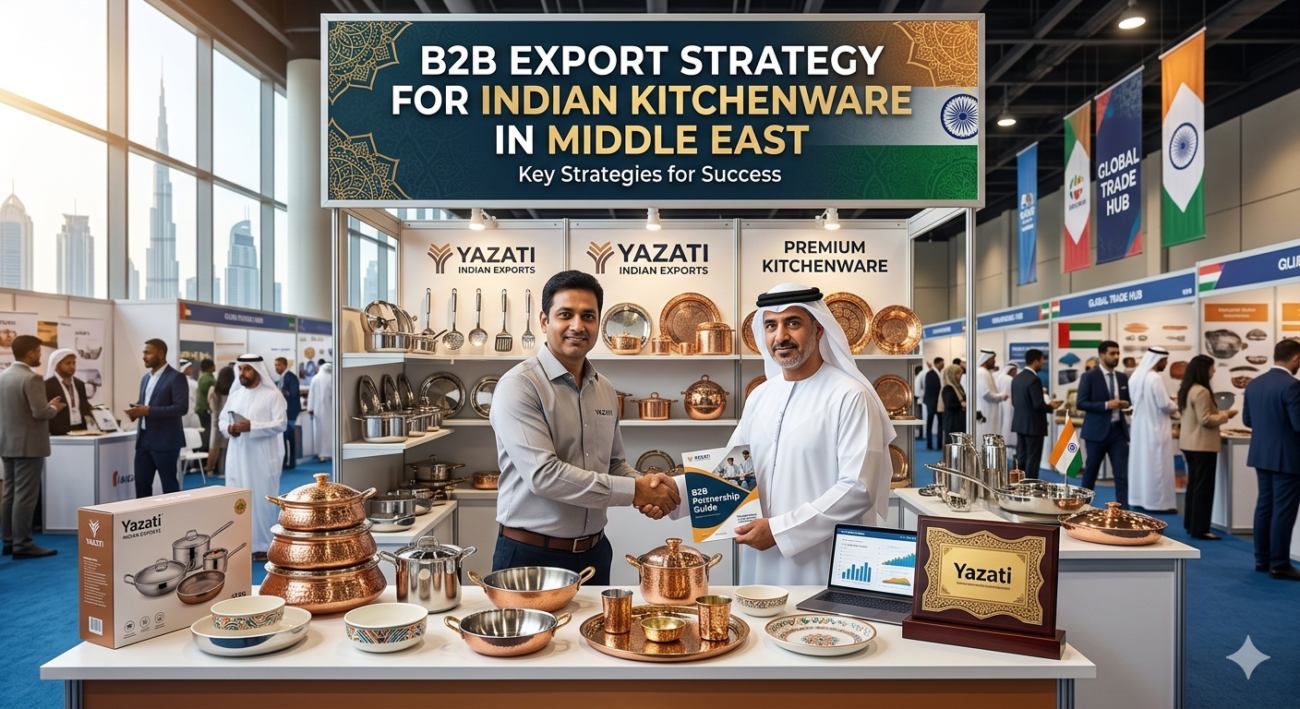
The Middle East has become one of the most promising international markets for Indian kitchenware manufacturers. Rising urbanization, rapid hospitality growth, increasing disposable income, and strong retail expansion are driving massive demand for affordable and premium kitchen products across Gulf countries.
A successful B2B Export Strategy for Indian Kitchenware in Middle East requires more than simply shipping products overseas. Exporters must understand buyer preferences, pricing strategies, regulations, logistics, and distributor partnerships to compete effectively in countries like the UAE, Saudi Arabia, Qatar, Kuwait, Bahrain, and Oman.
Indian manufacturers already hold strong advantages in stainless steel production, cookware manufacturing, eco-friendly kitchen products, and private-label solutions. However, businesses that combine quality manufacturing with smart export planning will dominate the market in 2026 and beyond.
Understanding the Middle East Kitchenware Market
Growth Trends in GCC Countries
The Gulf Cooperation Council (GCC) region is witnessing rapid infrastructure and retail development. New hotels, restaurants, catering businesses, and residential projects are increasing demand for kitchenware products at every level.
Countries like the UAE and Saudi Arabia are investing heavily in hospitality and tourism. Mega-events, luxury housing, and restaurant chains require large volumes of cookware, utensils, serving products, and food storage solutions.
The market is also influenced by changing lifestyles. Consumers are spending more on modern kitchens, stylish cookware, and durable stainless steel products.
Rising Demand for Indian Kitchenware
Indian kitchenware products are highly popular because they offer:
- Competitive pricing
- Reliable quality
- Large product variety
- Bulk manufacturing capabilities
- Flexible customization options
Indian exporters are especially strong in:
- Stainless steel utensils
- Pressure cookers
- Copper and brass products
- Hotel kitchen supplies
- Plastic storage containers
- Non-stick cookware
The Middle East also has a large South Asian population, which naturally creates strong demand for Indian-style kitchen products.
Why Indian Kitchenware Products Are Competitive
Cost Advantages
India offers lower manufacturing costs compared to Europe and many Asian competitors. This allows exporters to provide attractive wholesale pricing while maintaining good profit margins.
Affordable labor, large-scale steel production, and established industrial clusters in cities like Moradabad, Rajkot, Delhi, and Mumbai strengthen India’s export position.
Product Diversity and Manufacturing Strength
Indian manufacturers can produce:
- Traditional cookware
- Modern kitchen accessories
- Luxury hotel kitchenware
- Eco-friendly products
- OEM and private-label goods
This flexibility helps exporters meet the needs of supermarkets, distributors, restaurants, and online retailers.
Stainless Steel and Eco-Friendly Demand
The Middle East market increasingly prefers:
- BPA-free products
- Food-grade stainless steel
- Recyclable kitchenware
- Sustainable packaging
Indian exporters who focus on eco-conscious manufacturing gain stronger market trust and better long-term partnerships.
Key Middle East Countries for Export Opportunities
UAE as a Regional Trading Hub
The United Arab Emirates serves as the gateway to the Middle East. Dubai, in particular, acts as a major re-export center.
Many distributors import products into Dubai and then supply neighboring GCC countries.
Advantages of targeting UAE include:
- Easy business setup
- Strong logistics infrastructure
- Global trade exhibitions
- High purchasing power
Saudi Arabia’s Hospitality Expansion
Saudi Arabia is experiencing huge growth due to Vision 2030 initiatives. Hotels, restaurants, and housing projects are driving strong demand for imported kitchenware.
The food service industry especially requires:
- Commercial cookware
- Buffet serving equipment
- Storage containers
- Hotel-grade utensils
Qatar and Kuwait Premium Market Demand
Consumers in Qatar and Kuwait often prefer premium-quality products with elegant designs and branded packaging.
Exporters targeting these markets should focus on:
- Premium stainless steel
- Luxury gifting sets
- Modern kitchen aesthetics
- Durable imported finishes
Market Research for a Successful Export Strategy
Understanding Consumer Preferences
Every Middle Eastern market has unique customer preferences.
For example:
| Country | Preferred Products |
| UAE | Modern and premium kitchenware |
| Saudi Arabia | Bulk hospitality supplies |
| Kuwait | Luxury cookware |
| Oman | Affordable household products |
| Qatar | Designer kitchen products |
Understanding local demand helps exporters avoid unnecessary inventory risks.
Studying Competitor Pricing
Exporters should carefully compare:
- Chinese pricing
- Turkish suppliers
- European premium brands
- Local GCC distributors
Competitive intelligence helps businesses create realistic pricing structures.
Identifying Distribution Channels
Successful exporters usually work through:
- Importers
- Wholesalers
- Hotel suppliers
- Retail chains
- Online marketplaces
A diversified distribution strategy reduces dependency on a single buyer.
Choosing the Right Kitchenware Products for Export
Cookware
Non-stick cookware, induction-compatible pans, and aluminum cooking sets are highly demanded across GCC countries.
Products with modern designs and heat-resistant coatings perform especially well.
Stainless Steel Utensils
Indian stainless steel products are extremely competitive due to their durability and affordability.
Popular exports include:
- Serving spoons
- Dinner sets
- Water bottles
- Storage containers
- Tiffin boxes
Storage Containers
Consumers increasingly prefer airtight and modular kitchen storage systems.
Food safety certifications significantly improve product acceptance.
Hotel and Restaurant Supplies
The hospitality sector offers massive bulk-order opportunities.
Popular products include:
- Buffet trays
- Chafing dishes
- Serving bowls
- Commercial cookware
- Catering equipment
Building a Strong Brand Position in the Middle East
Arabic-Friendly Packaging
Packaging should include:
- Arabic translations
- Clear instructions
- Food-grade labeling
- Import compliance information
Bilingual packaging improves customer trust and retail acceptance.
Certifications and Quality Assurance
Middle Eastern buyers value certifications such as:
- ISO certification
- Food-grade testing
- SGS inspections
- BPA-free certifications
Quality assurance reduces import barriers and builds credibility.
Premium vs Budget Branding
Exporters should decide whether they want to position themselves as:
- Affordable mass-market suppliers
- Mid-range quality brands
- Premium luxury kitchenware manufacturers
A clear brand identity helps improve long-term recognition.
Export Regulations and Compliance Requirements
GCC Standards Organization Rules
Kitchenware products entering GCC markets must comply with regional safety standards.
Exporters should understand:
- Material regulations
- Food-contact safety rules
- Packaging standards
- Product testing requirements
Halal and Food-Grade Certifications
While kitchenware itself may not require Halal certification in all cases, food-grade safety approvals are critical.
Products must demonstrate safe usage for cooking and food storage.
Labeling and Documentation
Required export documents often include:
- Commercial invoice
- Packing list
- Certificate of origin
- Bill of lading
- Product certifications
Incorrect paperwork can delay shipments and increase costs.
Pricing Strategy for B2B Export Success
FOB vs CIF Pricing Models
Exporters commonly use:
- FOB (Free on Board) – Buyer handles shipping
- CIF (Cost, Insurance, Freight) – Seller includes shipping costs
Many Middle Eastern buyers prefer CIF pricing for convenience.
Bulk Discount Structures
Distributors expect quantity-based pricing incentives.
Common strategies include:
- Tiered discounts
- Seasonal offers
- Container-load pricing
- Exclusive distributor pricing
Currency and Payment Risk Management
Exporters should reduce financial risk by:
- Using Letters of Credit (LC)
- Securing advance payments
- Working with export insurance
- Hedging currency fluctuations
Finding Reliable Distributors and Importers
Trade Shows and Business Events
Trade exhibitions remain one of the best lead-generation methods.
Important events include:
- Gulfood Dubai
- The Hotel Show Dubai
- Saudi Horeca
- INDEX Saudi Arabia
These exhibitions help businesses connect directly with decision-makers.
B2B Marketplaces
Online B2B platforms can generate qualified leads quickly.
Popular platforms include:
- Alibaba
- IndiaMART
- TradeIndia
- Global Sources
Maintaining a professional product catalog improves conversion rates.
Building Long-Term Relationships
Middle Eastern business culture strongly values trust and consistency.
Successful exporters focus on:
- Fast communication
- Reliable delivery
- Flexible negotiations
- Long-term partnerships
Relationship-building often matters more than aggressive pricing.
Digital Marketing for Kitchenware Exporters
SEO and Content Marketing
A professional website optimized for export-related keywords helps generate inbound leads.
Useful content includes:
- Product catalogs
- Industry blogs
- Market reports
- Case studies
An optimized digital presence increases credibility.
For export guidance and compliance resources, exporters can visit Federation of Indian Export Organisations (FIEO).
LinkedIn Outreach for B2B Leads
LinkedIn is highly effective for:
- Connecting with distributors
- Reaching procurement managers
- Finding hospitality buyers
- Building brand authority
Regular posting improves visibility among industry professionals.
Email Marketing Campaigns
Targeted email campaigns help nurture importer relationships.
Effective emails include:
- Product launches
- Wholesale pricing updates
- Trade show invitations
- Market trend insights
Consistency is key for lead conversion.
Logistics and Supply Chain Optimization
Shipping Methods
Sea freight remains the most cost-effective shipping method for bulk kitchenware exports.
Air freight may be used for:
- Urgent orders
- Product samples
- Premium clients
Warehousing in Dubai
Many exporters establish regional warehouses in Dubai to:
- Reduce delivery time
- Improve inventory management
- Serve multiple GCC markets efficiently
Reducing Delivery Costs
Cost optimization strategies include:
- Full container load shipments
- Strategic packaging design
- Freight consolidation
- Long-term logistics contracts
Efficient logistics improve profitability significantly.
Challenges Indian Exporters Face in Middle East
Intense Global Competition
Chinese and Turkish suppliers dominate many price-sensitive segments.
Indian exporters must compete through:
- Better quality
- Faster communication
- Reliable delivery
- Product innovation
Cultural and Language Differences
Understanding regional customs is essential.
Businesses should respect:
- Arabic communication preferences
- Islamic holidays
- Negotiation etiquette
- Business relationship norms
Delayed Payments
Payment delays can impact cash flow.
Exporters should establish:
- Clear payment terms
- Legal contracts
- Credit insurance
- Buyer verification procedures
Future Trends in Middle East Kitchenware Imports
Smart Kitchen Products
Technology-driven kitchenware demand is increasing rapidly.
Popular emerging categories include:
- Smart cookware
- Sensor-enabled appliances
- Multi-functional kitchen tools
Sustainable Kitchenware Demand
Consumers increasingly prefer eco-friendly alternatives such as:
- Bamboo kitchen tools
- Reusable containers
- Plastic-free packaging
Indian exporters can gain a competitive advantage by investing in sustainability.
Growth of E-Commerce Wholesale
Online wholesale platforms are transforming B2B trade.
Buyers now expect:
- Digital catalogs
- Fast quotations
- Online order tracking
- Virtual product demonstrations
Exporters who adopt digital systems will grow faster.
FAQs
What is the best Middle East market for Indian kitchenware exports?
The UAE is often considered the best entry market because of its strong logistics infrastructure and regional distribution network.
Which kitchenware products are most profitable for export?
Stainless steel utensils, non-stick cookware, hotel supplies, and food storage containers are among the most profitable categories.
Do Indian exporters need certifications for GCC countries?
Yes. Food-grade safety certifications, ISO standards, and proper labeling are highly important for smooth import approval.
How can exporters find Middle East distributors?
Businesses can connect with distributors through trade fairs, B2B marketplaces, LinkedIn outreach, and export promotion councils.
Is Dubai good for warehouse operations?
Yes. Dubai is a major regional logistics hub and helps exporters serve multiple GCC countries efficiently.
What is the biggest challenge in exporting kitchenware to the Middle East?
Strong competition from Chinese suppliers remains one of the biggest challenges, especially in price-sensitive segments.
Conclusion
The future of the B2B Export Strategy for Indian Kitchenware in Middle East looks highly promising. Rising urbanization, booming hospitality industries, increasing retail demand, and strong consumer spending continue to create major opportunities for Indian manufacturers.
However, long-term export success depends on more than low pricing. Businesses must focus on market research, compliance, branding, digital marketing, distributor relationships, and logistics optimization.
Indian exporters who invest in quality products, sustainable manufacturing, and strong B2B partnerships will be well-positioned to dominate the Middle East kitchenware market in 2026 and beyond.
✨ Discover Global Sourcing Excellence with Netyex ✨
Netyex is your trusted B2B sourcing partner, connecting international buyers with India’s finest manufacturers and curated product lines—from handicrafts and home décor to kitchenware, textiles, hospitality essentials, and more. With verified suppliers and end-to-end support, we make global procurement seamless, reliable, and efficient.
👉 Elevate your sourcing experience—explore Netyex today.
📦 Bulk orders & customisation | 🌍 Worldwide delivery | 🤝 Trusted by global buyers
Visit Netyex to source premium Indian products with confidence.