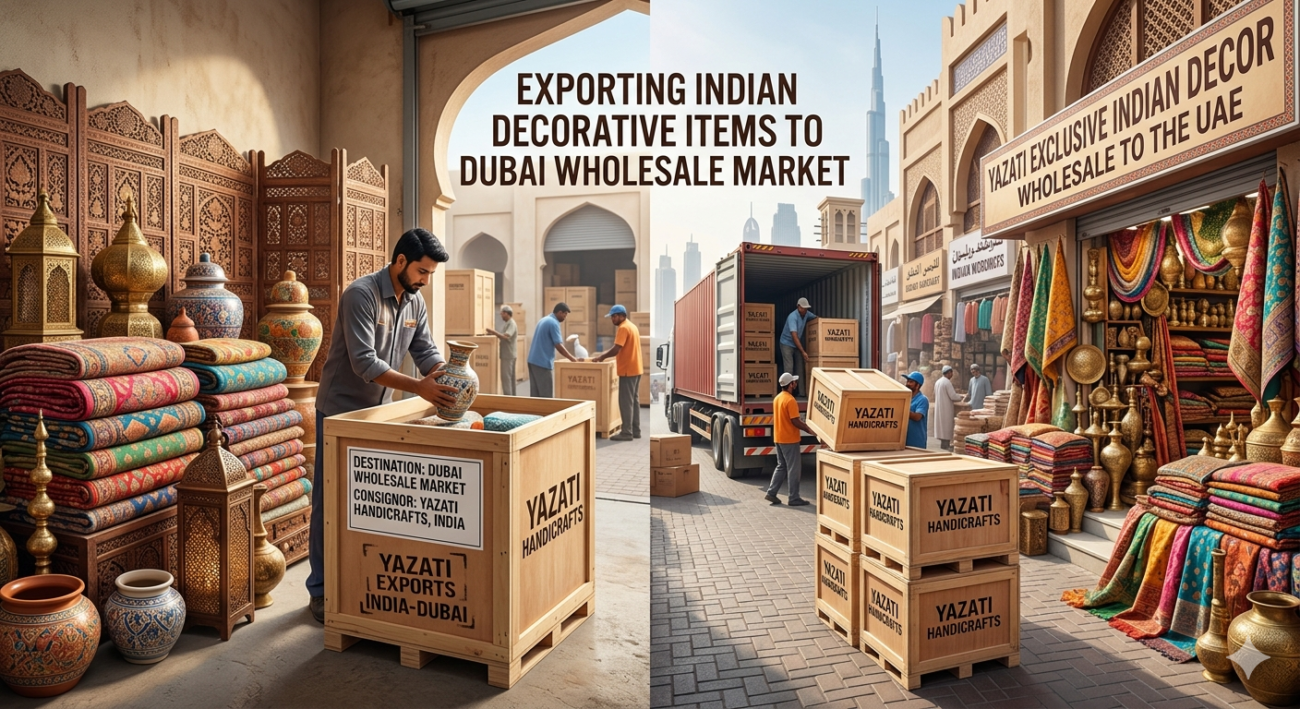
The business of Exporting Indian Decorative Items to Dubai Wholesale Market has become one of the most profitable export opportunities for Indian entrepreneurs. Dubai is known worldwide for luxury shopping, interior décor trends, hotels, resorts, and premium lifestyle products. Because of this growing demand, Indian decorative items have found a strong and loyal customer base in the UAE market.
Indian handicrafts, wooden décor, brass artifacts, marble products, and spiritual decorative items are especially popular among wholesalers and retailers in Dubai. Indian products are admired for their craftsmanship, affordability, cultural value, and artistic beauty. From luxury villas to traditional Arabic homes, Indian decorative items fit beautifully into Dubai’s modern and traditional interior designs.
In this detailed guide, you will learn everything about Exporting Indian Decorative Items to Dubai Wholesale Market, including legal requirements, shipping, packaging, pricing, buyer acquisition, and future trends.
Introduction to the Dubai Decorative Wholesale Industry
Dubai has become a global trade center connecting Asia, Europe, and Africa. Its strategic location and business-friendly environment make it an ideal destination for international trade.
The decorative products industry in Dubai is growing rapidly because of:
- Rising tourism
- Expansion of luxury hotels
- Real estate growth
- Increasing demand for home décor
- High-income consumers
- Growth of online shopping
Dubai wholesalers regularly import decorative products from India because Indian goods provide excellent quality at competitive prices.
Why Indian Decorative Products Are Popular in Dubai
Indian handicrafts and decorative products are deeply appreciated in Dubai due to their cultural richness and handcrafted excellence.
Cultural Similarities Between India and UAE
India and the UAE share strong cultural and business ties. Many residents in Dubai are of Indian origin, which creates continuous demand for Indian décor products.
Traditional Indian decorative items like:
- Brass lamps
- Marble statues
- Wooden carvings
- Textile wall hangings
- Handcrafted furniture
are highly preferred in Dubai homes and commercial spaces.
Growing Demand for Handmade Décor
Modern buyers in Dubai increasingly value handmade and eco-friendly products. Machine-made products often lack uniqueness, while handcrafted Indian décor items offer authenticity and artistic value.
Consumers are willing to pay premium prices for:
- Handmade lanterns
- Hand-painted vases
- Ethnic wall décor
- Sustainable bamboo products
- Artisan-crafted sculptures
Best Indian Decorative Items to Export
Choosing the right products is critical for success in Exporting Indian Decorative Items to Dubai Wholesale Market.
Brass Handicrafts
Brass handicrafts remain among the top-selling Indian exports to Dubai. Popular products include:
- Brass candle holders
- Decorative trays
- Brass statues
- Antique-finish décor
- Traditional Indian lamps
These items are widely used in luxury hotels, restaurants, and villas.
Wooden Decorative Products
Wooden décor products from Rajasthan, Saharanpur, and Jodhpur are highly demanded.
Popular wooden exports include:
- Carved wall panels
- Wooden boxes
- Decorative mirrors
- Rustic furniture accents
- Wooden candle stands
Marble and Stone Artifacts
Indian marble products are admired for elegance and durability.
Best-selling items include:
- Marble tabletops
- Stone sculptures
- Inlay decorative plates
- Marble vases
Incense Holders and Spiritual Décor
Spiritual décor has a stable market in Dubai, especially among yoga centers and wellness businesses.
High-demand products include:
- Incense holders
- Buddha statues
- Meditation décor
- Aroma diffusers
Textile-Based Decorative Items
India’s textile industry offers beautiful decorative items such as:
- Cushion covers
- Tapestries
- Embroidered wall art
- Decorative rugs
These products are affordable and profitable for wholesale exports.
Understanding the Dubai Wholesale Market
Understanding buyer behavior is essential before entering the Dubai market.
Major Wholesale Markets in Dubai
Some of the major wholesale markets include:
- Dragon Mart
- Deira Market
- Al Fahidi district
- Dubai Wholesale City
These markets attract retailers from across the Middle East and Africa.
Buyer Preferences in UAE
Dubai buyers usually prefer:
- Premium packaging
- Consistent quality
- Fast delivery
- Competitive pricing
- Customized products
Luxury presentation matters greatly in Dubai’s premium market.
Legal Requirements for Exporting from India
To start Exporting Indian Decorative Items to Dubai Wholesale Market, you must complete legal formalities.
IEC Code
An Import Export Code (IEC) issued by the Directorate General of Foreign Trade (DGFT) is mandatory.
Without an IEC code, international exports cannot legally happen.
GST Registration
GST registration is necessary for export businesses in India. Exporters may also claim GST refunds under export schemes.
Export Documentation
Important export documents include:
- Commercial invoice
- Packing list
- Bill of lading
- Certificate of origin
- Shipping bill
- Insurance documents
Proper documentation helps avoid customs delays.
UAE Import Rules and Regulations
Dubai has strict import regulations to ensure product quality and safety.
Customs Duties
The UAE generally imposes a 5% customs duty on imported goods. However, free-zone businesses may enjoy special exemptions.
Product Labeling Standards
Labels should clearly mention:
- Country of origin
- Product material
- Quantity
- Manufacturer details
Arabic labeling may also be required for certain products.
For official UAE customs updates, visit the Dubai Customs Official Website.
Finding Wholesale Buyers in Dubai
Finding reliable buyers is one of the biggest challenges in export business.
Trade Shows and Exhibitions
Trade exhibitions are excellent for networking and sales.
Popular Dubai trade fairs include:
- INDEX Dubai
- Dubai International Furniture Fair
- Gifts & Lifestyle Middle East
These events connect exporters directly with wholesalers and retailers.
B2B Marketplaces
You can find Dubai buyers on platforms like:
- Alibaba
- IndiaMART
- TradeIndia
- Global Sources
A professional product catalog improves buyer trust.
Social Media Marketing
Instagram and Facebook work extremely well for decorative products because visuals attract buyers quickly.
Use:
- High-quality photos
- Product videos
- Behind-the-scenes manufacturing content
- Customer testimonials
Packaging and Branding for Decorative Products
Packaging plays a major role in Dubai’s luxury market.
Safe Packaging Techniques
Decorative items can easily break during transit.
Use:
- Bubble wrap
- Foam sheets
- Corrugated boxes
- Wooden crates for fragile items
Strong packaging reduces losses and improves customer satisfaction.
Luxury Branding Ideas
Premium branding can increase profits significantly.
Effective branding techniques include:
- Gold foil logos
- Elegant product tags
- Premium gift packaging
- Arabic-inspired design themes
Luxury packaging helps products stand out in Dubai’s competitive market.
Shipping and Logistics
Efficient logistics are essential for smooth export operations.
Air Freight vs Sea Freight
| Shipping Type | Advantages | Disadvantages |
| Air Freight | Fast delivery | Expensive |
| Sea Freight | Cost-effective | Slower transit |
Sea freight is usually preferred for bulk wholesale shipments.
Choosing the Right Freight Forwarder
A reliable freight forwarder helps with:
- Customs clearance
- Documentation
- Cargo insurance
- Shipment tracking
Choose experienced logistics companies specializing in UAE exports.
Pricing Strategy for Wholesale Export
Pricing can determine whether buyers choose your products over competitors.
Calculating Export Costs
Your pricing should include:
- Manufacturing cost
- Packaging
- Shipping
- Insurance
- Customs duty
- Profit margin
Ignoring hidden costs can reduce profitability.
Competitive Pricing Techniques
To remain competitive:
- Offer bulk discounts
- Provide flexible MOQ (Minimum Order Quantity)
- Introduce seasonal promotions
Dubai buyers often compare multiple suppliers before finalizing deals.
Payment Methods and Risk Management
Safe payment systems protect exporters from fraud and losses.
Letter of Credit
A Letter of Credit (LC) provides payment security because banks guarantee the transaction.
Advance Payments
New exporters often prefer:
- 50% advance payment
- Remaining payment before shipment
This reduces financial risk.
Digital Marketing for Export Businesses
Digital marketing is essential for modern export growth.
SEO for Export Websites
An SEO-optimized website helps international buyers discover your business online.
Important SEO practices include:
- Product-focused keywords
- Fast website speed
- Mobile-friendly design
- Product descriptions
- Export-related blog articles
LinkedIn and Email Outreach
LinkedIn is excellent for B2B networking.
You can connect with:
- Importers
- Retailers
- Hotel procurement managers
- Interior designers
Professional email outreach also generates wholesale leads.
Common Challenges in Exporting Decorative Items
Every export business faces operational challenges.
Damage During Shipping
Fragile products can break during transport.
Solutions include:
- Strong packaging
- Cargo insurance
- Shockproof materials
Currency Fluctuations
Exchange rates can affect profits.
Many exporters reduce risk by:
- Pricing in USD
- Using forward contracts
- Working with international banks
Future Trends in Decorative Product Exports
The future of Exporting Indian Decorative Items to Dubai Wholesale Market looks highly promising.
Key trends include:
- Eco-friendly décor products
- Smart luxury interiors
- Sustainable packaging
- Handmade artisan products
- Customized décor solutions
Consumers increasingly prefer ethical and sustainable products with authentic craftsmanship.
FAQs
1. Is exporting decorative items to Dubai profitable?
Yes, exporting decorative items to Dubai is highly profitable due to strong demand for luxury and handmade products.
2. Which Indian decorative products sell best in Dubai?
Brass handicrafts, wooden décor, marble artifacts, and textile decorative products are among the best sellers.
3. Do I need an IEC code for exporting?
Yes, an IEC code is mandatory for legal exports from India.
4. What is the best shipping method for decorative products?
Sea freight is usually best for bulk wholesale shipments because it is cost-effective.
5. How can I find buyers in Dubai?
You can find buyers through trade fairs, B2B platforms, LinkedIn, and export marketplaces.
6. What are the biggest risks in export business?
Common risks include shipping damage, payment delays, customs issues, and currency fluctuations.
Conclusion
The opportunity for Exporting Indian Decorative Items to Dubai Wholesale Market is stronger than ever in 2026. Dubai’s growing luxury market, booming hospitality industry, and increasing appreciation for handcrafted products create huge opportunities for Indian exporters.
Success in this business depends on:
- Product quality
- Professional branding
- Competitive pricing
- Reliable logistics
- Strong buyer relationships
Indian decorative products have a unique cultural charm that continues to attract buyers in Dubai. By following proper export procedures and smart marketing strategies, exporters can build a highly profitable international business.
✨ Discover Global Sourcing Excellence with Netyex ✨
Netyex is your trusted B2B sourcing partner, connecting international buyers with India’s finest manufacturers and curated product lines—from handicrafts and home décor to kitchenware, textiles, hospitality essentials, and more. With verified suppliers and end-to-end support, we make global procurement seamless, reliable, and efficient.
👉 Elevate your sourcing experience—explore Netyex today.
📦 Bulk orders & customisation | 🌍 Worldwide delivery | 🤝 Trusted by global buyers
Visit Netyex to source premium Indian products with confidence.