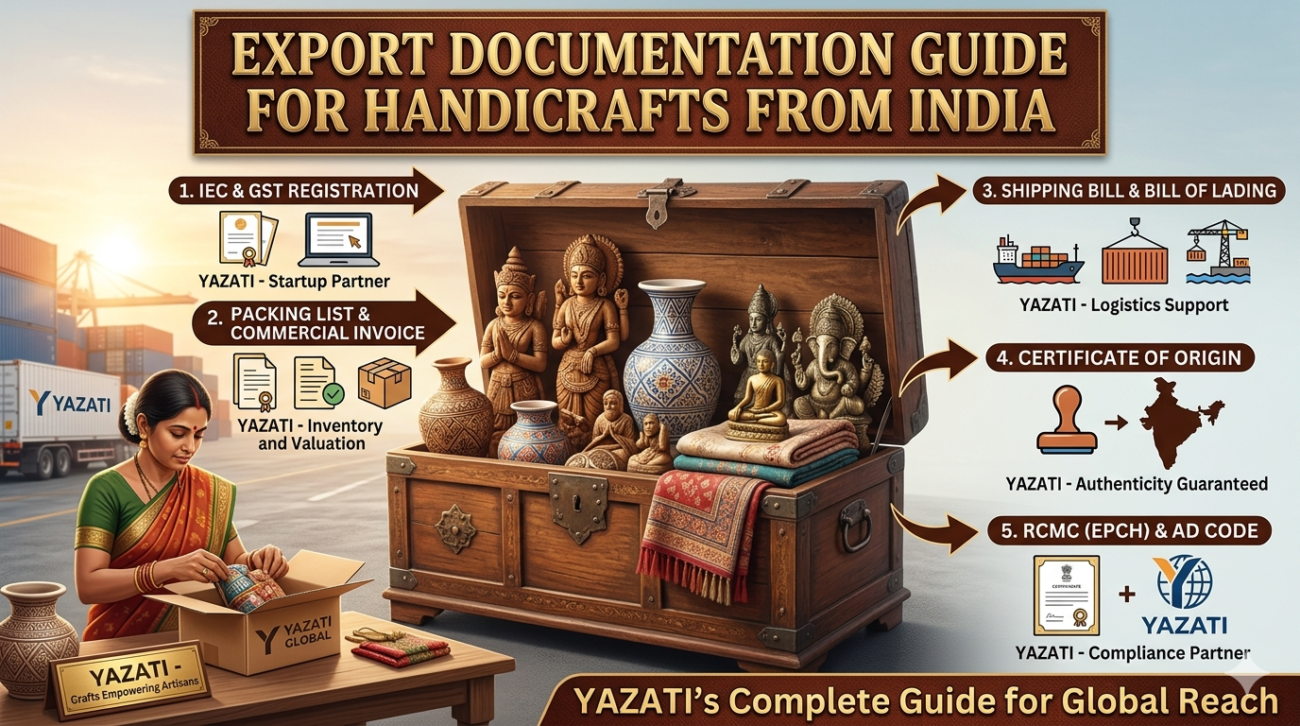
Introduction to Handicraft Exports
India’s handicraft sector is a vibrant blend of tradition, culture, and skilled craftsmanship. From handwoven textiles to wooden carvings and metal artifacts, Indian handicrafts are admired worldwide. The Export Documentation Guide for Handicrafts from India is essential for artisans, exporters, and businesses aiming to tap into global markets.
Handicraft exports contribute significantly to India’s economy. With increasing international demand, especially from countries like the USA, UK, and Germany, exporters must understand documentation procedures to avoid delays and ensure compliance.
Exporting handicrafts is not just about selling products abroad—it’s about presenting India’s heritage to the world. However, without proper documentation, even the most beautiful products may never reach their destination.
Understanding Export Documentation
Export documentation refers to the set of official papers required to facilitate international trade. These documents serve as proof of shipment, ownership, compliance, and financial transactions.
Proper documentation ensures:
- Smooth customs clearance
- Legal compliance
- Timely payments
- Reduced risk of disputes
In the context of handicrafts, documentation becomes even more critical due to the uniqueness and cultural value of products.
Key Regulatory Authorities
Role of DGFT (Directorate General of Foreign Trade)
The Directorate General of Foreign Trade (DGFT) regulates export and import activities in India. Exporters must obtain an Import Export Code (IEC) from DGFT to start exporting.
Role of Customs Authorities
Customs officials oversee the clearance of goods at ports. They verify documents, inspect shipments, and ensure compliance with regulations.
Export Promotion Councils
Organizations like the Export Promotion Council for Handicrafts (EPCH) support exporters with guidance, training, and market access.
Mandatory Export Documents
Commercial Invoice
This is the most important document in export transactions. It includes:
- Buyer and seller details
- Description of goods
- Quantity and price
- Payment terms
Packing List
A packing list provides detailed information about the contents of each package. It helps customs officials verify shipments easily.
Bill of Lading
Issued by the shipping company, this document acts as:
- Proof of shipment
- Contract of carriage
- Title of goods
Certificate of Origin
This document certifies that the handicrafts originate from India. It is often required to avail trade benefits under international agreements.
Registration and Licensing
Before exporting handicrafts, businesses must complete essential registrations:
- Import Export Code (IEC) – Mandatory for all exporters
- Registration Cum Membership Certificate (RCMC) – Issued by EPCH
These registrations validate your business and enable access to export benefits.
Pre-Shipment Documentation
Pre-shipment processes ensure that goods meet quality standards before dispatch.
Key documents include:
- Inspection Certificate
- Quality Assurance Reports
- Purchase Order
This stage is crucial for maintaining product quality and buyer satisfaction.
Shipping Documentation
Shipping documents are required during the transportation of goods. These include:
- Shipping Bill
- Bill of Lading / Airway Bill
- Export Declaration Form
Accurate shipping documentation ensures smooth transit and avoids delays.
Post-Shipment Documentation
After shipment, exporters must submit documents to banks for payment processing.
Key documents include:
- Bank Realization Certificate (BRC)
- Export Invoice
- Bill of Exchange
These documents help in receiving payments and claiming export incentives.
Export Incentives and Schemes
The Indian government offers several incentives to promote exports:
- RoDTEP Scheme – Refund of duties and taxes
- Duty Drawback Scheme
- Export Promotion Capital Goods (EPCG)
These schemes reduce costs and increase profitability for handicraft exporters.
Common Challenges in Export Documentation
Exporters often face issues such as:
- Incorrect documentation
- Delays in customs clearance
- Lack of knowledge about regulations
Even minor errors can lead to shipment delays or financial losses.
Tips for Smooth Documentation
To streamline the export process:
- Double-check all documents
- Use digital tools for accuracy
- Stay updated with regulations
- Work with experienced freight forwarders
Consistency and accuracy are key to successful exports.
Digitalization in Export Documentation
India is rapidly adopting digital systems like:
- ICEGATE portal
- e-Sanchit platform
These platforms simplify document submission and reduce paperwork.
Cost Involved in Export Documentation
Export documentation involves various costs, including:
- Registration fees
- Certification charges
- Logistics documentation costs
Understanding these expenses helps in better financial planning.
Legal Compliance and Regulations
Exporters must comply with:
- Foreign Trade Policy
- Customs Act
- GST regulations
Non-compliance can lead to penalties or shipment rejection.
Future of Handicraft Exports
The future looks promising due to:
- Rising global demand
- E-commerce expansion
- Government support
Sustainability and eco-friendly products are becoming key trends in the global market.
FAQs
1. What is the most important document for exporting handicrafts?
The commercial invoice is the most crucial document as it contains all transaction details.
2. Is IEC mandatory for handicraft exports?
Yes, obtaining an Import Export Code (IEC) is mandatory.
3. What is the role of a Certificate of Origin?
It certifies that goods are manufactured in India and helps in availing trade benefits.
4. How long does export documentation take?
It depends on the shipment and compliance but typically takes a few days to weeks.
5. Can documentation be done online?
Yes, platforms like ICEGATE enable digital documentation.
6. What are common mistakes in export documentation?
Errors in invoices, missing documents, and incorrect details are common issues.
Conclusion
The Export Documentation Guide for Handicrafts from India provides a clear roadmap for exporters to navigate the complexities of international trade. From obtaining licenses to managing shipping and post-shipment paperwork, every step plays a vital role in ensuring successful exports.
By understanding documentation requirements, staying compliant with regulations, and leveraging government schemes, exporters can unlock immense opportunities in the global handicraft market.
With the right approach, Indian handicrafts can continue to shine on the world stage—bringing culture, creativity, and craftsmanship to every corner of the globe.
✨ Discover Global Sourcing Excellence with Netyex ✨
Netyex is your trusted B2B sourcing partner, connecting international buyers with India’s finest manufacturers and curated product lines—from handicrafts and home décor to kitchenware, textiles, hospitality essentials, and more. With verified suppliers and end-to-end support, we make global procurement seamless, reliable, and efficient.
👉 Elevate your sourcing experience—explore Netyex today.
📦 Bulk orders & customisation | 🌍 Worldwide delivery | 🤝 Trusted by global buyers
Visit Netyex to source premium Indian products with confidence.