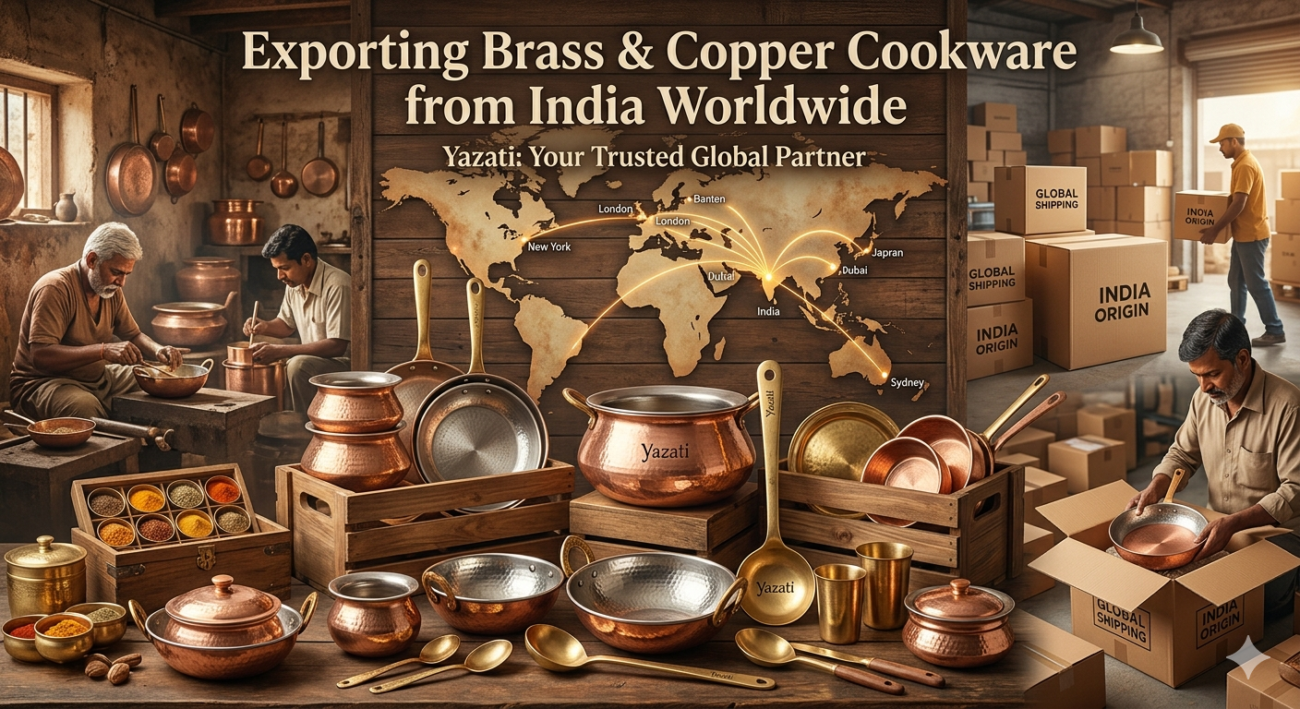
Introduction to Brass & Copper Cookware Export
India has long been a global leader in handcrafted metal goods, and Exporting Brass & Copper Cookware from India Worldwide is gaining massive traction. These traditional cookware items are not just utensils—they represent heritage, craftsmanship, and health-conscious living. With increasing awareness about non-toxic cooking materials, global demand for brass and copper cookware is booming.
From artisanal kitchens in rural regions to large-scale exporters in cities, India’s cookware industry combines tradition with modern export practices. This blend gives Indian exporters a competitive edge in international markets.
Why India Leads in Metal Cookware Manufacturing
Historical Significance of Brass & Copper in India
India’s connection with brass and copper dates back thousands of years. Ancient civilizations used these metals for cooking, storing water, and religious rituals. Regions like Moradabad—often called the “Brass City”—have preserved this craftsmanship for generations.
Strong Artisan Network
India benefits from a vast network of skilled artisans. These craftsmen create high-quality cookware with intricate detailing, making products unique compared to mass-produced alternatives.
Additionally, government support through organizations like Export Promotion Council for Handicrafts helps promote Indian metalware globally.
Global Demand for Brass & Copper Cookware
Key International Markets
The demand for Indian cookware is especially strong in:
- United States
- United Kingdom
- Germany
- Australia
- Middle Eastern countries
Consumers in these regions are increasingly shifting toward sustainable and traditional cooking materials.
Trends Driving Demand
Several global trends are fueling this demand:
- Rise in eco-conscious living
- Preference for chemical-free cookware
- Popularity of Ayurveda-inspired lifestyles
- Growth of premium kitchenware markets
Benefits of Brass & Copper Cookware
Health Benefits
Brass and copper cookware offer natural health advantages:
- Copper helps in digestion and boosts immunity
- Brass retains nutrients in food
- Both metals have antimicrobial properties
Durability and Aesthetic Appeal
These cookware items are:
- Long-lasting
- Corrosion-resistant
- Visually appealing with a vintage touch
This combination of function and beauty makes them highly desirable worldwide.
Exporting Brass & Copper Cookware from India Worldwide
Step-by-Step Export Process
Exporting involves several structured steps:
- Business registration
- Obtaining Import Export Code (IEC)
- Selecting target markets
- Partnering with manufacturers
- Pricing and product catalog creation
- Finding buyers
- Shipping and delivery
Required Documentation
Key documents include:
- Commercial invoice
- Packing list
- Bill of lading
- Certificate of origin
- Export license
Proper documentation ensures smooth customs clearance and builds trust with buyers.
Government Regulations and Compliance
Export Licensing
To legally export, businesses must register with Directorate General of Foreign Trade and obtain an IEC.
Quality Certifications
Global markets demand strict quality standards. Certifications may include:
- ISO standards
- Food safety compliance
- Metal purity verification
Adhering to these ensures long-term export success.
Choosing the Right Manufacturing Partners
Key Manufacturing Hubs
Top production areas in India include:
- Moradabad
- Jaipur
- Delhi
- Mumbai
These cities are known for high-quality brass and copper products.
Evaluating Suppliers
When selecting manufacturers:
- Check product quality
- Verify certifications
- Assess production capacity
- Review export experience
Strong partnerships ensure consistency and reliability.
Packaging and Logistics
Safe Packaging Techniques
Proper packaging is crucial to avoid damage:
- Bubble wrapping
- Corrugated boxes
- Anti-tarnish coatings
Shipping Methods
Exporters typically use:
- Sea freight (cost-effective)
- Air freight (faster delivery)
Choosing the right method depends on urgency and budget.
Pricing Strategy for Global Markets
Cost Components
Pricing includes:
- Raw material costs
- Labor
- Packaging
- Shipping
- Taxes and duties
Competitive Pricing Tips
To stay competitive:
- Optimize supply chain
- Bulk production
- Offer flexible pricing for large orders
Marketing Strategies for International Buyers
Online Platforms
Exporters can use platforms like Alibaba and IndiaMART to connect with global buyers.
Trade Shows and Exhibitions
Participating in international trade fairs helps:
- Build brand visibility
- Establish direct buyer relationships
- Showcase product quality
Challenges in Exporting Metal Cookware
Common Issues
- Fluctuating metal prices
- Shipping delays
- Compliance complexities
- Competition from other countries
Solutions and Best Practices
- Maintain supplier contracts
- Use reliable logistics partners
- Stay updated with regulations
- Focus on branding and quality
Role of Digital Platforms in Export Growth
E-commerce Expansion
Online marketplaces have made exporting easier than ever. Businesses can now reach global customers without physical presence.
Branding and Visibility
Strong branding includes:
- Professional websites
- Product photography
- Customer reviews
Digital presence significantly boosts export opportunities.
Sustainability and Ethical Sourcing
Eco-Friendly Production
Brass and copper are recyclable materials, making them environmentally friendly. Many exporters are adopting sustainable production methods.
Global Consumer Preferences
Modern consumers prefer:
- Eco-friendly products
- Ethical sourcing
- Handmade craftsmanship
This aligns perfectly with Indian cookware exports.
Future Trends in Cookware Export
Innovation in Design
Manufacturers are blending tradition with modern aesthetics to attract younger audiences.
Emerging Markets
New markets in Africa and Southeast Asia are showing increasing demand for Indian cookware products.
FAQs
1. Is exporting brass and copper cookware profitable?
Yes, due to high global demand and premium pricing, it can be very profitable.
2. What is the minimum investment required?
It varies but can start from a small-scale setup depending on sourcing and logistics.
3. Do I need special licenses?
Yes, an Import Export Code (IEC) is mandatory.
4. Which countries import the most cookware from India?
The US, UK, and Middle Eastern countries are major importers.
5. How do I find international buyers?
Through B2B platforms, trade fairs, and networking.
6. Are there risks in exporting cookware?
Yes, including logistics delays and compliance issues, but they can be managed.
Conclusion
Exporting Brass & Copper Cookware from India Worldwide offers immense opportunities for businesses looking to enter the global market. With rich heritage, skilled craftsmanship, and rising international demand, India is perfectly positioned to dominate this niche.
By understanding export procedures, maintaining quality standards, and leveraging digital platforms, exporters can build a successful and sustainable business. The future of Indian metal cookware exports looks bright, driven by global trends toward health, sustainability, and tradition.
✨ Discover Global Sourcing Excellence with Netyex ✨
Netyex is your trusted B2B sourcing partner, connecting international buyers with India’s finest manufacturers and curated product lines—from handicrafts and home décor to kitchenware, textiles, hospitality essentials, and more. With verified suppliers and end-to-end support, we make global procurement seamless, reliable, and efficient.
👉 Elevate your sourcing experience—explore Netyex today.
📦 Bulk orders & customisation | 🌍 Worldwide delivery | 🤝 Trusted by global buyers
Visit Netyex to source premium Indian products with confidence.