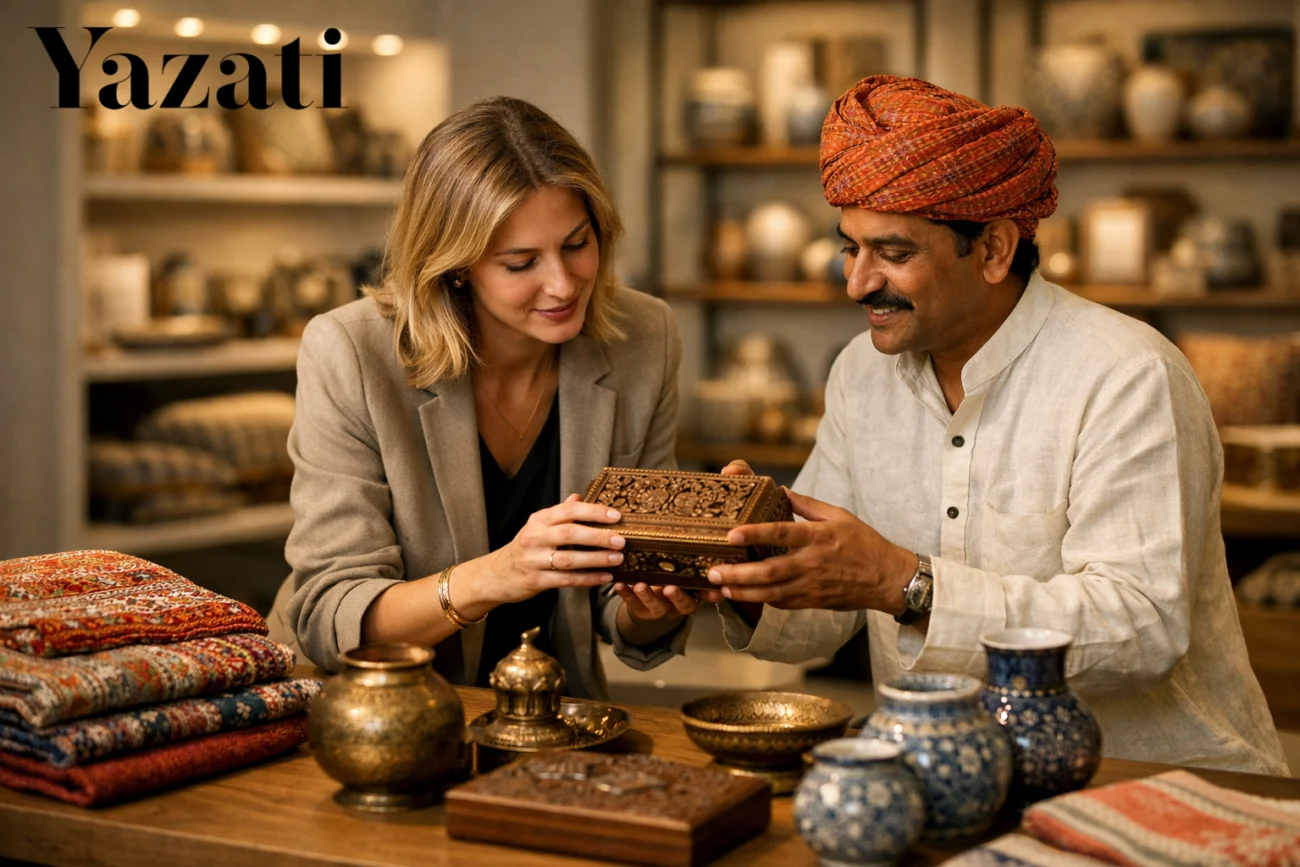
Introduction to Indian Handicrafts in Global Retail
Indian handicrafts have long been admired for their beauty, detail, and cultural richness. Today, global retailers are embracing these crafts not just as products but as powerful tools for branding. The phrase How Global Retailers Use Indian Handicrafts to Build Heritage Brands reflects a growing shift in the retail industry toward authenticity and storytelling.
Historical Significance of Indian Craft Traditions
India has a rich tradition of handicrafts dating back thousands of years. From intricate handwoven textiles to finely crafted metalwork, each region has its own unique style. These crafts were once integral to everyday life and royal patronage.
Over time, they became symbols of cultural identity. Global retailers now recognize that these traditions carry stories that modern consumers find meaningful.
Rise of Heritage Branding in Retail
Heritage branding focuses on history, authenticity, and legacy. In a world filled with mass-produced goods, consumers are increasingly drawn to products that feel real and meaningful.
Retailers use Indian handicrafts to create this sense of heritage. These items are not just products—they represent culture, craftsmanship, and history.
Why Indian Handicrafts Appeal to Global Retailers
Authenticity and Cultural Depth
Indian handicrafts offer something that machine-made goods cannot: authenticity. Each item tells a story of the artisan who made it, the region it comes from, and the tradition it represents.
This cultural depth helps brands stand out in a crowded market.
Handmade vs Mass Production Value
Handmade products are often seen as more valuable because they require time, skill, and effort. Consumers today are willing to pay more for items that feel personal and unique.
Global retailers leverage this perception to position their products as premium and meaningful.
The Concept of Heritage Branding
What Defines a Heritage Brand
A heritage brand is built on history, tradition, and authenticity. It often highlights its origins and values.
By incorporating Indian handicrafts, retailers can quickly create a sense of legacy—even if the brand itself is relatively new.
Emotional Connection with Consumers
Heritage branding creates emotional connections. When customers buy handcrafted items, they feel connected to the culture and people behind them.
This emotional bond increases brand loyalty and trust.
Key Strategies Used by Global Retailers
Storytelling Through Craft Origins
One of the most powerful strategies is storytelling. Retailers share the journey of the product—from the artisan’s workshop to the store shelf.
Artisan Narratives and Provenance
Brands often highlight:
- The artisan’s background
- The region of origin
- The traditional techniques used
This adds depth and meaning to the product.
Collaborations with Indian Artisans
Retailers collaborate directly with artisans to create unique collections.
Ethical Partnerships and Fair Trade
These collaborations often focus on:
- Fair wages
- Safe working conditions
- Long-term partnerships
This not only benefits artisans but also enhances the brand’s ethical image.
Sustainable and Eco-Friendly Positioning
Indian handicrafts are often made using natural materials and traditional methods. This aligns perfectly with the growing demand for sustainable products.
Retailers promote these items as eco-friendly alternatives to mass-produced goods.
Limited Edition and Exclusivity Marketing
Handcrafted items are naturally limited in quantity. Retailers use this to create exclusivity.
Limited edition collections:
- Increase demand
- Create urgency
- Enhance perceived value
Popular Indian Handicrafts in Global Markets
Textiles (Handloom, Block Printing)
Indian textiles are among the most popular handicrafts worldwide. Techniques like handloom weaving and block printing are highly valued.
These textiles are used in:
- Clothing
- Home décor
- Accessories
Pottery and Ceramics
Handmade pottery and ceramics are appreciated for their uniqueness. Each piece is slightly different, adding to its charm.
Jewelry and Metal Crafts
Indian jewelry and metal crafts are known for their intricate designs. These items often reflect cultural motifs and traditional techniques.
Case Examples of Global Retailers Leveraging Indian Crafts
Luxury Brands and Craft Integration
Luxury brands often use Indian handicrafts to add exclusivity and cultural richness to their collections.
They focus on:
- High-quality materials
- Detailed craftsmanship
- Limited production
Fast Fashion and Craft Adaptation
Even fast fashion brands are incorporating elements of Indian crafts. While they may not use traditional methods entirely, they draw inspiration from patterns and designs.
Challenges in Using Indian Handicrafts
Supply Chain Complexity
Working with artisans across different regions can be challenging. Issues include:
- Logistics
- Quality control
- Timely delivery
Maintaining Authenticity
As demand grows, there is a risk of losing authenticity. Retailers must ensure that products remain true to their origins.
Economic and Social Impact on Indian Artisans
Empowerment and Employment
Global demand for handicrafts creates jobs and supports local communities. It helps artisans earn a stable income.
Preservation of Traditional Skills
By promoting handicrafts, retailers help preserve traditional skills that might otherwise disappear.
Future Trends in Heritage Branding
Digital Craft Storytelling
Brands are using digital platforms to tell stories about artisans and their work. Videos, social media, and virtual tours bring these stories to life.
Rise of Conscious Consumerism
Consumers are becoming more aware of where their products come from. They prefer brands that are ethical and sustainable.
This trend will continue to drive the use of Indian handicrafts in global retail.
FAQs
1. Why do global retailers prefer Indian handicrafts?
Because they offer authenticity, cultural richness, and uniqueness that mass-produced items lack.
2. What is heritage branding?
It is a strategy that focuses on history, tradition, and authenticity to build a strong brand identity.
3. How do handicrafts help in branding?
They create emotional connections and add value through storytelling and uniqueness.
4. Are Indian handicrafts sustainable?
Yes, many are made using natural materials and eco-friendly processes.
5. What challenges do retailers face?
Supply chain issues and maintaining authenticity are the main challenges.
6. How do artisans benefit from global retail?
They gain employment, fair wages, and opportunities to preserve their craft.
Conclusion
The growing interest in How Global Retailers Use Indian Handicrafts to Build Heritage Brands highlights a major shift in consumer behavior. People no longer want just products—they want stories, authenticity, and meaning.
Indian handicrafts provide all of this and more. By integrating these crafts into their offerings, global retailers are not only building strong heritage brands but also supporting artisans and preserving cultural traditions.
As conscious consumerism continues to rise, the role of Indian handicrafts in global retail will only become more important. This is not just a trend—it is the future of meaningful branding.
✨ Discover Global Sourcing Excellence with Netyex ✨
Netyex is your trusted B2B sourcing partner, connecting international buyers with India’s finest manufacturers and curated product lines—from handicrafts and home décor to kitchenware, textiles, hospitality essentials, and more. With verified suppliers and end-to-end support, we make global procurement seamless, reliable, and efficient.
👉 Elevate your sourcing experience—explore Netyex today.
📦 Bulk orders & customisation | 🌍 Worldwide delivery | 🤝 Trusted by global buyers
Visit Netyex to source premium Indian products with confidence.