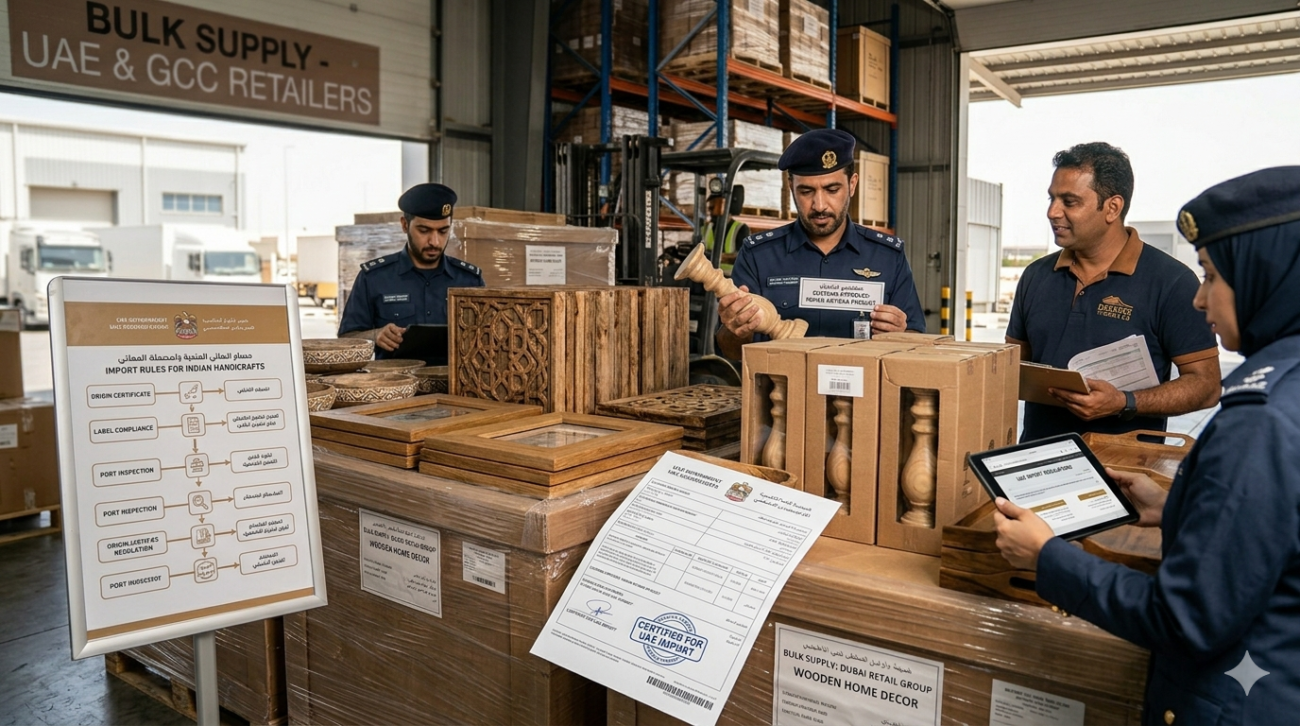
Introduction to UAE Import Regulations
The UAE Import Rules for Indian Handicrafts and Decor Products play a crucial role for exporters aiming to enter one of the most dynamic markets in the Middle East. The United Arab Emirates (UAE) is known for its luxury lifestyle, booming real estate, and strong demand for unique home décor—making it an ideal destination for Indian handicrafts.
Why UAE is a Key Market for Indian Handicrafts
India has a rich tradition of handmade goods—wood carvings, brass artifacts, textiles, and pottery. These products align perfectly with UAE consumers who value artisanal and culturally rich décor. Additionally, strong trade relations and geographic proximity make logistics easier and cost-effective.
Growing Demand for Decor Products in UAE
The rise of interior design trends, hospitality projects, and luxury housing has fueled demand for decorative items. From hotels in Dubai to villas in Abu Dhabi, handcrafted décor is widely used to create elegant spaces.
Understanding UAE Customs Laws
To successfully export, understanding UAE customs regulations is essential. These rules ensure safety, quality, and compliance of imported goods.
Federal Customs Authority Overview
The Federal Customs Authority regulates imports across all emirates. It sets policies, ensures compliance, and monitors trade activities.
Role of Dubai Customs
Dubai Customs is one of the most advanced customs systems globally. It facilitates smooth trade operations through digital clearance systems.
UAE Import Rules for Indian Handicrafts and Decor Products Explained
Understanding the UAE Import Rules for Indian Handicrafts and Decor Products requires attention to classification, restrictions, and compliance.
Product Classification and HS Codes
Each product must be classified under the correct Harmonized System (HS) code. This determines:
- Applicable duty rates
- Documentation requirements
- Import restrictions
Incorrect classification can lead to delays or penalties.
Restricted and Prohibited Items
Some handicrafts may face restrictions if they include:
- Animal products (ivory, shells)
- Religious-sensitive symbols
- Hazardous materials
Always verify product compliance before shipping.
Required Documentation for Export
Proper documentation ensures smooth customs clearance and avoids unnecessary delays.
Commercial Invoice Details
A commercial invoice must include:
- Product description
- Quantity and value
- Country of origin
- Buyer and seller details
Certificate of Origin Requirements
This document confirms that the goods are manufactured in India. It is essential for availing benefits under trade agreements.
Packing List Essentials
The packing list should clearly outline:
- Number of packages
- Weight and dimensions
- Contents of each package
Bill of Lading and Airway Bill
These documents act as proof of shipment and are required for customs clearance.
Import Duties and Taxes in UAE
Understanding the cost structure is key for pricing strategy.
Standard Duty Rates
Most handicrafts attract a standard customs duty of 5% in the UAE.
VAT Implications
The UAE imposes a 5% Value Added Tax (VAT) on most imported goods. Businesses must register for VAT if applicable.
Packaging and Labeling Requirements
Packaging plays a major role in product acceptance and compliance.
Labeling in Arabic
Products must include:
- Arabic labeling
- Product description
- Country of origin
Eco-Friendly Packaging Trends
Sustainable packaging is gaining popularity in the UAE market. Using recyclable materials can improve brand perception.
Quality Standards and Compliance
Ensuring product quality is essential for long-term success.
Product Safety Standards
Items must meet safety standards, especially if they include:
- Electrical components
- Chemicals or finishes
Certification Requirements
Some products may require certification before entering the UAE market.
Logistics and Shipping Considerations
Efficient logistics ensures timely delivery and cost control.
Sea Freight vs Air Freight
- Sea Freight: Cost-effective for bulk shipments
- Air Freight: Faster but more expensive
Choosing the Right Logistics Partner
Selecting a reliable logistics company ensures:
- Timely delivery
- Proper documentation
- Reduced risk of damage
Trade Agreements Between India and UAE
Trade agreements provide significant benefits to exporters.
CEPA Agreement Benefits
The India-UAE CEPA reduces tariffs and simplifies trade procedures.
Tariff Reductions
Many handicraft products now enjoy reduced or zero customs duty under CEPA.
Challenges in Exporting Handicrafts
Despite opportunities, exporters face several challenges.
Cultural Sensitivities
Products must respect Islamic values and cultural norms.
Market Competition
Competition from countries like China and Turkey can be intense.
Tips for Successful Export to UAE
A strategic approach can significantly improve success rates.
Market Research
Understand customer preferences, pricing trends, and competitors.
Pricing Strategies
Consider:
- Shipping costs
- Duties and taxes
- Market positioning
Digital Platforms and E-commerce Opportunities
Online platforms are transforming the UAE retail landscape.
Selling on UAE Marketplaces
Platforms like Amazon and Noon offer great opportunities for sellers.
Social Media Marketing
Platforms like Instagram help showcase handicrafts visually and attract customers.
Future Trends in UAE Decor Market
Sustainable Products Demand
Eco-conscious consumers are driving demand for sustainable décor.
Luxury Home Decor Growth
Luxury and bespoke décor items are gaining popularity among high-income buyers.
FAQs on UAE Import Rules for Indian Handicrafts and Decor Products
1. What is the import duty on handicrafts in UAE?
Most handicrafts attract a 5% customs duty.
2. Is Arabic labeling mandatory?
Yes, labeling in Arabic is required for most imported products.
3. Do Indian exporters benefit from CEPA?
Yes, CEPA offers reduced or zero tariffs on many products.
4. Are there restricted handicraft items?
Yes, items made from endangered species or culturally sensitive materials are restricted.
5. What documents are essential for export?
Commercial invoice, packing list, certificate of origin, and bill of lading.
6. Which shipping method is better?
Sea freight is cost-effective; air freight is faster.
Conclusion
The UAE Import Rules for Indian Handicrafts and Decor Products are designed to ensure quality, safety, and smooth trade operations. With proper documentation, compliance, and market understanding, Indian exporters can tap into a highly profitable market.
By leveraging trade agreements, maintaining high-quality standards, and adapting to consumer trends, businesses can build a strong presence in the UAE. The demand for unique, handcrafted décor continues to rise—making this the perfect time to expand into this thriving market.
✨ Discover Global Sourcing Excellence with Netyex ✨
Netyex is your trusted B2B sourcing partner, connecting international buyers with India’s finest manufacturers and curated product lines—from handicrafts and home décor to kitchenware, textiles, hospitality essentials, and more. With verified suppliers and end-to-end support, we make global procurement seamless, reliable, and efficient.
👉 Elevate your sourcing experience—explore Netyex today.
📦 Bulk orders & customisation | 🌍 Worldwide delivery | 🤝 Trusted by global buyers
Visit Netyex to source premium Indian products with confidence.