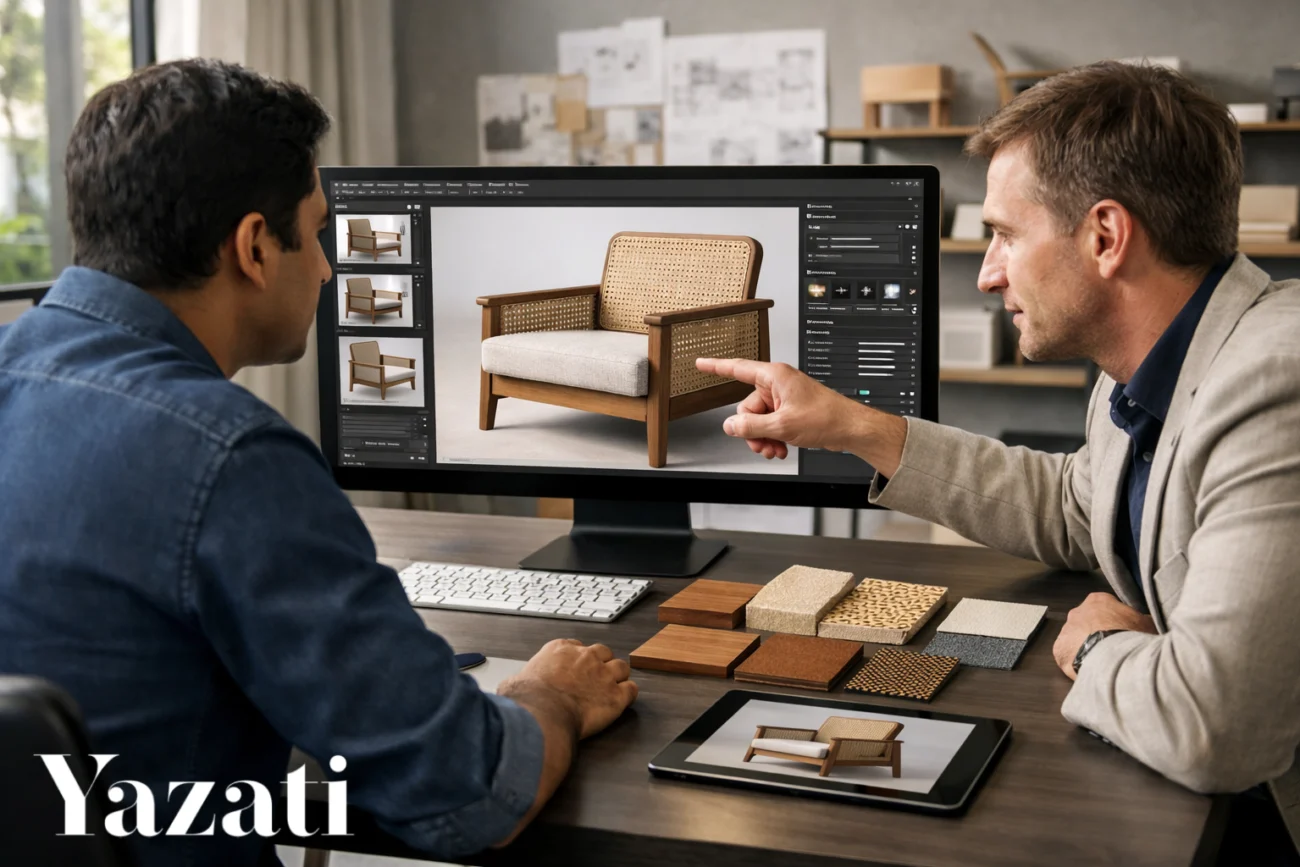
Introduction to Yazati’s 3D Mockup Technology
When ordering custom furniture, customers often struggle to imagine how the final product will look in their space. Measurements, materials, and colors may sound perfect on paper, but the real appearance can still feel uncertain. This is where Yazati provides 3D mockups for custom furniture orders, making the process easier and more transparent for customers.
3D mockups allow customers to see a realistic digital version of their furniture before it is manufactured. Instead of relying only on sketches or verbal descriptions, buyers can view detailed digital models that represent size, material, and design elements accurately.
Yazati’s approach combines modern design software, skilled designers, and customer collaboration to create detailed 3D previews. These visual models help clients confirm their ideas, request modifications, and make confident decisions before production begins.
The use of 3D mockups has become an important part of the custom furniture industry because it reduces errors, improves communication, and enhances customer satisfaction. By offering this service, Yazati ensures that every custom order meets the client’s expectations and fits perfectly within the intended space.
Understanding the Importance of 3D Mockups in Custom Furniture
Custom furniture is different from ready-made products. Each order is designed according to the customer’s specific needs, including size, material, color, and style.
Without visualization tools, customers might find it difficult to picture how the furniture will look in their home or office. 3D mockups solve this problem by showing a realistic representation of the final design.
Key benefits include:
- Clear visualization of the final product
- Better communication between designers and customers
- Reduced manufacturing errors
- Improved decision-making before production
Because of these advantages, many modern furniture companies now rely on digital modeling before manufacturing begins.
How Yazati Provides 3D Mockups for Custom Furniture Orders
The process used by Yazati is designed to make customization simple, accurate, and customer-friendly. Below is a step-by-step explanation of how the company delivers detailed 3D mockups for each order.
1. Gathering Customer Requirements
The process begins with understanding the customer’s needs.
Customers provide information such as:
- Furniture type (sofa, table, wardrobe, cabinet, etc.)
- Dimensions and measurements
- Preferred materials
- Color choices
- Design inspiration or references
This information helps designers understand the customer’s expectations and create a design that matches their vision.
Sometimes customers also share photos of their room or floor plan. This helps the designers create a mockup that fits perfectly into the intended space.
2. Initial Concept Development
After collecting the necessary details, the design team begins developing the first concept.
During this stage, designers:
- Analyze the measurements and layout
- Choose suitable materials and finishes
- Plan structural elements
- Create the basic design concept
The goal of this step is to transform the customer’s idea into a workable design that can be visualized digitally.
The design team ensures that the furniture is both functional and aesthetically pleasing.
3. Creating the 3D Digital Model
Once the concept is finalized, designers begin building the digital model using professional 3D design software.
This is the stage where Yazati provides 3D mockups for custom furniture orders, turning simple ideas into realistic digital visuals.
The digital model includes:
- Accurate dimensions
- Material textures
- Color selections
- Structural components
- Design details such as handles, legs, and patterns
The model closely resembles the final product, allowing customers to understand exactly how the furniture will look.
4. Applying Realistic Materials and Textures
A simple digital shape is not enough to show the true appearance of furniture. To make the mockup realistic, designers apply materials and textures.
These include:
- Wood grain patterns
- Fabric textures
- Metal finishes
- Glass surfaces
- Leather or upholstery materials
By adding these details, the 3D mockup becomes much more realistic and visually appealing.
Customers can clearly see how the furniture will look once manufactured.
5. Rendering High-Quality Visual Previews
After completing the 3D model, the next step is rendering.
Rendering converts the digital model into high-quality images that simulate lighting, shadows, and reflections.
This process allows customers to view the furniture from multiple angles, such as:
- Front view
- Side view
- Top view
- Perspective view
These previews help customers understand the full design and appearance of the furniture.
6. Customer Review and Feedback
Once the 3D mockups are ready, they are shared with the customer for review.
Customers can carefully examine the design and provide feedback.
Common feedback includes:
- Adjusting the size or proportions
- Changing colors or materials
- Modifying design elements
- Adding storage or decorative features
Because the design is still digital, these changes can be made easily before production begins.
This step ensures that the final design matches the customer’s expectations.
7. Final Approval Before Production
After all revisions are completed, the customer approves the final mockup.
This approval confirms that:
- The design meets the customer’s requirements
- Dimensions are accurate
- Materials and colors are correct
- The furniture fits the intended space
Only after this approval does the manufacturing process begin.
This system reduces mistakes and ensures that the final product matches the approved design.
Key Advantages of Yazati’s 3D Mockup System
Using 3D mockups offers several benefits for both customers and furniture manufacturers.
Improved Design Accuracy
Because every detail is visualized beforehand, the chances of misunderstandings are significantly reduced.
Designers and customers share the same visual reference, making communication clearer.
Better Customer Confidence
Customers feel more confident when they can see exactly what they are ordering.
The realistic visualization helps them make decisions more easily.
Faster Design Revisions
Traditional design changes can be time-consuming. With digital models, designers can quickly modify elements such as colors, dimensions, or materials.
This flexibility speeds up the design process.
Reduced Production Errors
Since the final design is approved before manufacturing begins, mistakes are less likely to occur.
This saves time, materials, and production costs.
Enhanced Personalization
3D mockups allow customers to explore multiple design options.
They can experiment with different styles, materials, and layouts until they find the perfect design.
Types of Custom Furniture That Benefit from 3D Mockups
Many types of furniture can be designed using 3D visualization.
Some common examples include:
Custom Sofas and Seating
Customers can visualize upholstery fabrics, cushion shapes, and seating layouts.
Wardrobes and Storage Units
3D models show internal compartments, shelves, drawers, and door designs.
Dining Tables and Chairs
Designers can display table shapes, leg styles, and wood finishes.
Office Furniture
Desks, cabinets, and workstations can be customized for productivity and space efficiency.
Kitchen Cabinets
3D mockups help homeowners see how cabinets will look with appliances and countertops.
How 3D Mockups Improve the Customer Experience
Modern customers expect transparency and customization when ordering furniture.
3D mockups improve the experience by offering:
- Visual clarity before purchase
- Interactive design discussions
- Greater design control
- Higher satisfaction with the final product
Instead of imagining the design, customers can see it clearly and make informed choices.
Technology Behind Yazati’s 3D Visualization Process
Advanced design software plays an important role in creating accurate mockups.
These tools allow designers to:
- Build detailed digital models
- Simulate real materials
- Adjust lighting and shadows
- Render realistic images
The combination of skilled designers and powerful software ensures that every mockup looks professional and precise.
Future of 3D Visualization in Custom Furniture
3D visualization technology is continuously evolving.
In the future, custom furniture design may include:
- Augmented reality previews in customer homes
- Real-time design customization
- Interactive 3D design tools for customers
- Virtual showrooms
These technologies will make the design process even more immersive and user-friendly.
Companies that adopt advanced visualization tools will continue to improve customer satisfaction and design accuracy.
Frequently Asked Questions (FAQs)
1. What is a 3D mockup in furniture design?
A 3D mockup is a digital model that shows how a piece of furniture will look before it is manufactured. It includes accurate dimensions, materials, and colors.
2. Why are 3D mockups important for custom furniture orders?
They help customers visualize the final product, reduce design errors, and ensure that the furniture matches the customer’s expectations.
3. Can customers request changes after seeing the 3D mockup?
Yes. Customers can request modifications such as changing materials, colors, or dimensions before the design is approved for production.
4. Do 3D mockups show realistic materials and textures?
Yes. Designers apply realistic textures like wood grain, fabric, metal finishes, and leather to create accurate visual representations.
5. How long does it take to create a 3D mockup?
The time depends on the complexity of the furniture design, but most mockups can be created within a few days.
6. Are 3D mockups used for all types of custom furniture?
Yes. They can be used for sofas, tables, wardrobes, cabinets, office furniture, and many other custom pieces.
Conclusion
Custom furniture requires precision, clear communication, and careful planning. By using modern visualization techniques, Yazati provides 3D mockups for custom furniture orders, helping customers see exactly what they are getting before the furniture is manufactured.
The process involves gathering customer requirements, developing design concepts, creating detailed 3D models, applying realistic textures, and presenting high-quality visual previews. Customers can review these designs, request changes, and approve the final version before production begins.
This approach improves accuracy, reduces errors, and ensures that every custom piece of furniture meets the client’s expectations.
As technology continues to evolve, 3D visualization will become an even more important tool in the furniture industry, making the design process more interactive, efficient, and customer-focused.
✨ Discover Global Sourcing Excellence with Netyex ✨
Netyex is your trusted B2B sourcing partner, connecting international buyers with India’s finest manufacturers and curated product lines—from handicrafts and home décor to kitchenware, textiles, hospitality essentials, and more. With verified suppliers and end-to-end support, we make global procurement seamless, reliable, and efficient.
👉 Elevate your sourcing experience—explore Netyex today.
📦 Bulk orders & customisation | 🌍 Worldwide delivery | 🤝 Trusted by global buyers
Visit Netyex to source premium Indian products with confidence.