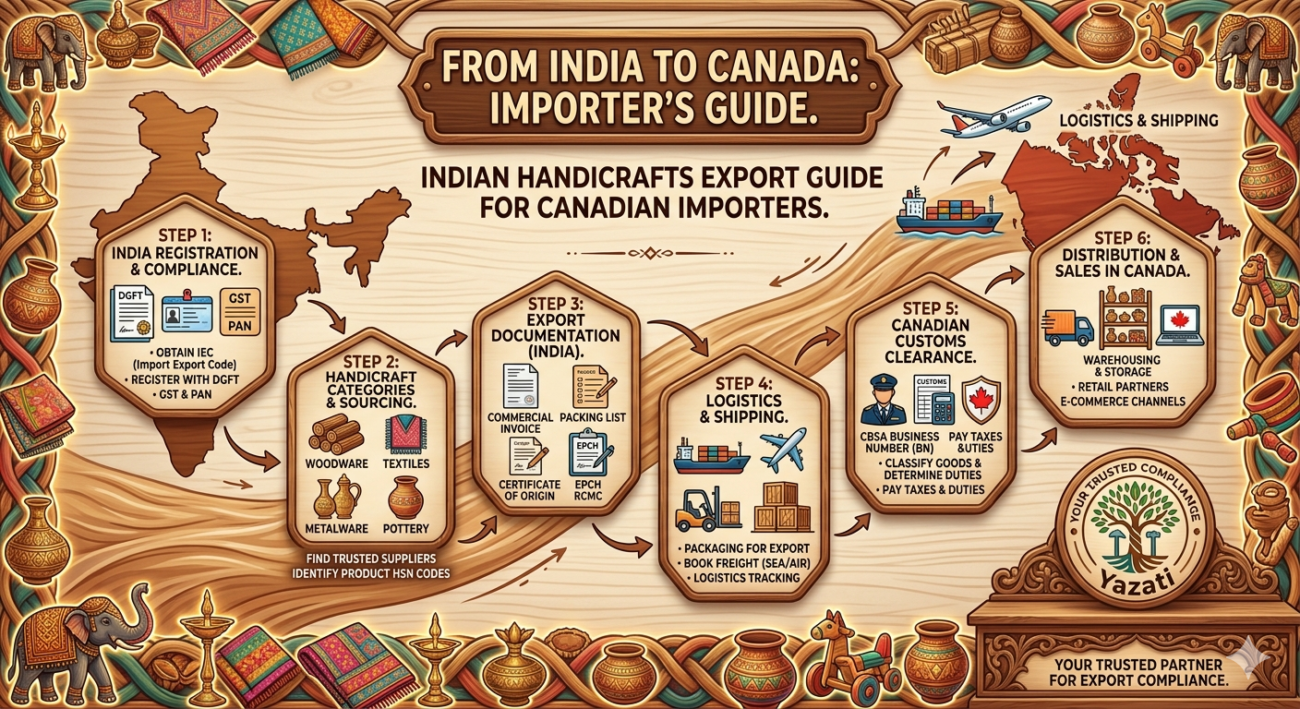
Introduction to Indian Handicrafts Export Market
The Indian Handicrafts Export Guide for Canadian Importers opens the door to a vibrant and culturally rich marketplace. India has long been known for its diverse handicrafts, from intricate textiles to beautifully carved woodwork. For Canadian importers, this sector offers a unique blend of affordability, artistry, and global appeal.
India is one of the largest exporters of handicrafts worldwide. With thousands of artisans and centuries-old traditions, the country produces items that are both decorative and functional. Canadian consumers, especially those interested in sustainable and handmade goods, are increasingly drawn to these products.
Why Indian Handicrafts Are Popular in Canada
Indian handicrafts stand out because they tell a story. Each item reflects regional traditions, cultural heritage, and skilled craftsmanship. In Canada, there is growing demand for:
- Handmade home décor
- Ethnic jewelry
- Eco-friendly textiles
This demand is fueled by a shift toward ethical consumption and appreciation for artisanal work.
Growth Trends in Global Artisan Trade
Globally, the handicrafts market is expanding rapidly. Online platforms and cross-border trade have made it easier for importers to connect with suppliers. Canada, with its multicultural population, is a strong market for culturally diverse products like Indian handicrafts.
Understanding Indian Handicrafts Categories
India’s handicraft industry is incredibly diverse. Understanding product categories helps importers choose the right niche.
Textile-Based Handicrafts
India is famous for its textiles, including:
- Handwoven fabrics
- Block-printed textiles
- Embroidered garments
Embroidery and Handloom Products
These include items like scarves, cushion covers, and sarees. Regions like Rajasthan and Gujarat are especially known for vibrant embroidery styles.
Wooden and Metal Crafts
Wood and metal crafts are widely exported and highly valued.
Brass, Copper, and Wood Carvings
Popular products include:
- Decorative statues
- Furniture
- Kitchenware
Jewelry and Decorative Items
Handmade jewelry and décor items are among the top exports. These include:
- Beaded necklaces
- Stone-studded accessories
- Wall hangings
Benefits of Importing Indian Handicrafts
Cost Advantages
Labor costs in India are relatively low, which allows importers to purchase high-quality products at competitive prices. This creates strong profit margins when selling in Canada.
Unique Designs and Cultural Value
Indian handicrafts are not mass-produced. Each item has a unique touch, making it more appealing to customers seeking originality.
Indian Handicrafts Export Guide for Canadian Importers: Legal Framework
Understanding legal requirements is essential for smooth operations.
Import Regulations in Canada
Canadian importers must comply with:
- Customs regulations
- Product safety standards
- Labeling requirements
Duties, Taxes, and Tariffs
Import duties vary depending on the product category. It’s important to check the Harmonized System (HS) codes to determine applicable tariffs.
Export Regulations in India
Indian exporters must follow guidelines set by the Export Promotion Council for Handicrafts.
Required Certifications and Documentation
Key documents include:
- Commercial invoice
- Packing list
- Certificate of origin
- Bill of lading
Finding Reliable Suppliers in India
Online B2B Platforms
Websites like IndiaMART and Alibaba help connect buyers with verified suppliers.
Trade Fairs and Exhibitions
Events such as the IHGF Delhi Fair are excellent for meeting suppliers and seeing products firsthand.
Pricing, Negotiation, and Payment Terms
FOB vs CIF Pricing
- FOB (Free on Board): Supplier covers costs until goods are loaded.
- CIF (Cost, Insurance, Freight): Includes shipping and insurance.
Payment Methods and Risk Mitigation
Common payment methods include:
- Letters of credit
- Bank transfers
- Escrow services
Logistics and Shipping Process
Choosing Shipping Methods
Options include:
- Sea freight (cost-effective for bulk)
- Air freight (faster but expensive)
Packaging and Labeling Requirements
Proper packaging ensures product safety. Labels must include:
- Country of origin
- Material details
- Care instructions
Quality Control and Compliance Standards
Inspection Procedures
Third-party inspections help ensure product quality before shipment.
Sustainability and Ethical Sourcing
Canadian consumers prefer eco-friendly and ethically sourced products. Certifications can enhance brand credibility.
Marketing Indian Handicrafts in Canada
Branding and Storytelling
Highlight the artisan’s story and cultural significance to create emotional connections with customers.
Online and Offline Sales Channels
- E-commerce platforms
- Retail stores
- Craft fairs
Common Challenges and How to Overcome Them
Supply Chain Delays
Plan ahead and maintain communication with suppliers to avoid disruptions.
Quality Inconsistencies
Work with trusted suppliers and conduct regular inspections.
Future Trends in Handicrafts Trade
Eco-Friendly Products Demand
Sustainable materials like bamboo and organic cotton are gaining popularity.
Digital Transformation in Export
Digital tools are making sourcing, payments, and logistics more efficient.
FAQs
1. What are the best Indian handicrafts to import into Canada?
Textiles, home décor, and jewelry are among the most popular categories.
2. Do I need a license to import handicrafts into Canada?
In most cases, a business number and import/export account are required.
3. How can I verify Indian suppliers?
Use B2B platforms, check certifications, and request samples.
4. What is the average shipping time from India to Canada?
Sea freight takes 3–6 weeks, while air freight takes 5–10 days.
5. Are Indian handicrafts sustainable?
Many are eco-friendly and made using traditional methods.
6. How do I handle customs clearance in Canada?
You can hire a customs broker to simplify the process.
Conclusion
The Indian Handicrafts Export Guide for Canadian Importers provides a roadmap for building a successful import business. With the right knowledge, reliable suppliers, and effective marketing strategies, Canadian importers can tap into a thriving market filled with unique and culturally rich products.
By understanding regulations, ensuring quality, and embracing sustainability, you can create a profitable and meaningful business that connects artisans in India with customers in Canada.
✨ Discover Global Sourcing Excellence with Netyex ✨
Netyex is your trusted B2B sourcing partner, connecting international buyers with India’s finest manufacturers and curated product lines—from handicrafts and home décor to kitchenware, textiles, hospitality essentials, and more. With verified suppliers and end-to-end support, we make global procurement seamless, reliable, and efficient.
👉 Elevate your sourcing experience—explore Netyex today.
📦 Bulk orders & customisation | 🌍 Worldwide delivery | 🤝 Trusted by global buyers
Visit Netyex to source premium Indian products with confidence.