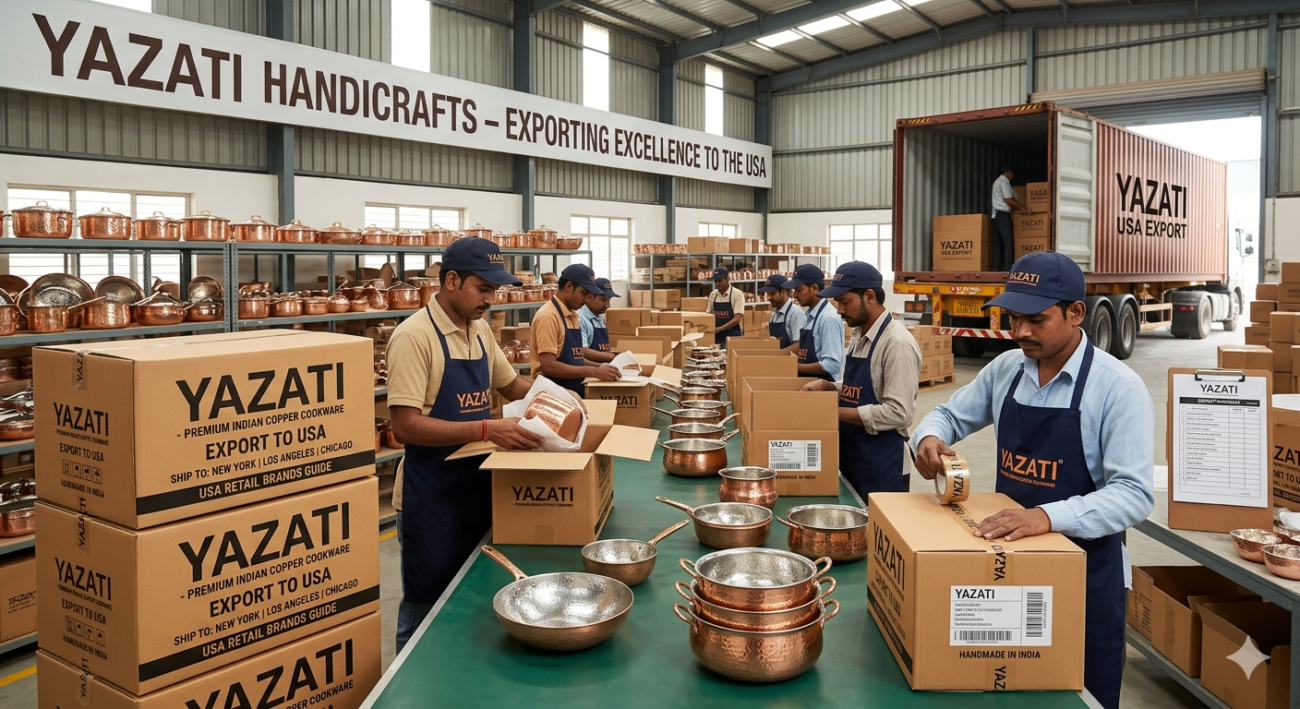
The global cookware market is changing rapidly, and premium handcrafted kitchenware is becoming more popular than ever. Among the fastest-growing categories is copper cookware sourced from India. This Indian Copper Cookware Export Guide for USA Retail Brands explains everything retailers, wholesalers, and eCommerce brands need to know before importing copper cookware from Indian manufacturers.
Indian artisans have produced copper cookware for centuries. Today, USA retail brands value Indian copper products because they combine craftsmanship, functionality, sustainability, and luxury appeal. From hammered copper pots to copper water bottles and premium serving ware, Indian exporters supply products that meet both traditional and modern kitchen trends.
For American retailers seeking high-margin kitchen products, importing from India offers competitive pricing and access to skilled manufacturing clusters. However, success requires understanding compliance standards, supplier selection, logistics, pricing, and branding strategies.
Why Indian Copper Cookware Is Popular in the USA
Rising Demand for Handmade Kitchenware
Consumers in the USA increasingly prefer handmade products over mass-produced alternatives. Copper cookware made by Indian artisans carries a unique handcrafted appearance that appeals to premium buyers.
Hammered textures, traditional finishing methods, and artisan detailing make these products stand out in luxury kitchenware markets. Buyers often associate handcrafted copper cookware with authenticity and superior quality.
In addition, platforms like Amazon, Etsy, and Shopify have made it easier for boutique cookware brands to market artisan kitchen products directly to consumers.
Luxury and Sustainable Cookware Trends
Copper cookware is widely viewed as a premium kitchen product. It provides excellent heat conductivity and adds elegance to kitchen décor. Many USA consumers now prefer sustainable products with long-lasting durability.
Indian manufacturers often use recyclable metals and traditional low-energy production techniques, which align with eco-conscious purchasing behavior.
These trends have encouraged many USA retail brands to expand into:
- Luxury cookware collections
- Sustainable kitchenware
- Heritage-inspired home décor
- Handmade gifting products
Understanding the Indian Copper Cookware Industry
Major Manufacturing Hubs in India
India has several well-known metalworking regions specializing in copper and brass cookware manufacturing.
Moradabad as the Brass and Copper Hub
Moradabad, located in Uttar Pradesh, is often called the “Brass City of India.” It is one of the largest exporters of metal handicrafts and cookware.
Factories in Moradabad manufacture:
- Hammered copper cookware
- Copper mugs
- Serving trays
- Decorative kitchenware
- Moscow mule mugs
The city has thousands of skilled artisans and export-focused factories.
Jaipur and Traditional Artisan Clusters
Jaipur is another important center for handcrafted metal products. Manufacturers in Rajasthan often specialize in decorative and luxury copper products.
These factories frequently work with:
- Boutique USA brands
- Luxury hospitality suppliers
- Restaurant décor companies
Types of Copper Cookware Exported to the USA
Copper Pots and Pans
Traditional copper cooking pots remain highly demanded in the USA premium cookware segment. These products are popular among professional chefs because copper heats evenly and responds quickly to temperature changes.
Popular exports include:
- Saucepans
- Frying pans
- Stock pots
- Sauté pans
Copper Water Bottles
Copper water bottles have grown rapidly in popularity due to wellness trends and Ayurvedic lifestyle marketing.
USA wellness retailers often import:
- Hammered copper bottles
- Engraved copper tumblers
- Gift sets
Hammered Copper Serving Ware
Serving ware is one of the strongest product categories for retail brands because of its decorative appeal.
Examples include:
- Serving bowls
- Beverage dispensers
- Ice buckets
- Copper trays
Copper Bottom Stainless Steel Cookware
Many modern cookware products combine stainless steel interiors with copper bottoms. This hybrid design offers durability and improved induction compatibility.
Materials and Construction Standards
Pure Copper vs Copper-Plated Products
Retail brands must clearly understand material composition before importing products.
Pure Copper
- Higher value
- Better heat conductivity
- Premium positioning
- More expensive
Copper-Plated
- Lower cost
- Decorative use
- Less durable
- Common in budget retail markets
Understanding the difference helps brands position products accurately.
Tin Lining vs Stainless Steel Lining
Traditional copper cookware usually requires interior lining because copper can react with acidic foods.
Tin Lining
Advantages:
- Traditional craftsmanship
- Excellent cooking performance
Disadvantages:
- Requires maintenance
- Needs periodic re-tinning
Stainless Steel Lining
Advantages:
- Durable
- Easy maintenance
- FDA-friendly
Disadvantages:
- Slightly reduced heat responsiveness
Most USA retailers prefer stainless steel-lined cookware because it requires less maintenance for consumers.
USA Import Regulations and Compliance
FDA Food Contact Safety Rules
Cookware imported into the USA must comply with food safety standards. Retail brands should ensure that products meet FDA requirements for food-contact materials.
Suppliers should provide:
- Material composition reports
- Heavy metal testing
- Food-grade certifications
Testing is especially important for lined copper cookware.
Proposition 65 Compliance
California’s Proposition 65 regulations can affect cookware imports. Products may require warning labels if they contain certain regulated chemicals or metals.
Retail brands should work with third-party testing agencies to ensure compliance before importing products into the USA market.
Customs and HTS Codes
Correct HTS classification is essential for smooth customs clearance.
Common categories may include:
- Copper tableware
- Kitchen utensils
- Household metal products
Importers should consult customs brokers to verify accurate tariff classifications.
Certifications USA Retail Brands Should Request
ISO Certifications
Professional Indian exporters often hold certifications such as:
- ISO 9001
- ISO 14001
- BSCI compliance
These certifications demonstrate organized manufacturing systems and quality management.
SGS and Third-Party Testing
Independent testing agencies help confirm:
- Food safety
- Material purity
- Coating compliance
- Lead-free standards
Third-party testing reduces import risks and builds retailer confidence.
How to Choose Reliable Indian Suppliers
Factory Audits
Before placing large orders, USA retail brands should conduct factory audits.
Audits help verify:
- Production capability
- Labor standards
- Quality systems
- Packaging operations
Virtual audits are increasingly common for overseas buyers.
MOQ and Production Capacity
Minimum Order Quantities (MOQs) vary widely among suppliers.
Small workshops may accept low MOQs for boutique brands, while large factories focus on container-scale production.
Retailers should evaluate:
- Scalability
- Lead times
- Inventory management
- Seasonal capacity
Private Label and OEM Manufacturing
Many Indian exporters offer:
- Custom branding
- Laser engraving
- Packaging customization
- OEM manufacturing
This allows USA brands to build exclusive product collections.
Pricing Structure and Cost Factors
Raw Copper Price Volatility
Copper prices fluctuate globally. This directly affects cookware manufacturing costs.
Retail brands should monitor:
- London Metal Exchange copper rates
- Currency exchange rates
- Freight trends
Long-term supplier agreements may help stabilize pricing.
Labor and Handmade Craftsmanship
Handmade production increases labor costs but also enhances product value.
Consumers often pay premium prices for:
- Hand-hammered finishes
- Artisan-made cookware
- Heritage craftsmanship
Packaging Costs
Premium cookware requires strong export packaging.
Packaging expenses may include:
- Foam inserts
- Protective wrapping
- Gift boxes
- Retail-ready branding
High-quality packaging also reduces shipping damage.
Shipping and Logistics from India to the USA
Sea Freight vs Air Freight
Sea Freight
Best for:
- Large orders
- Lower shipping costs
- Container shipments
Air Freight
Best for:
- Urgent shipments
- Small-volume orders
- Product samples
Most cookware importers rely on sea freight for profitability.
Packaging for International Shipping
Copper cookware can dent easily during transit.
Strong export packaging should include:
- Double-wall cartons
- Corner protection
- Bubble wrapping
- Palletization
Proper packaging reduces damage claims and customer complaints.
Lead Times and Seasonal Delays
Production lead times usually range from:
- 30–60 days for standard orders
- 60–90 days for customized products
Holiday seasons and monsoon disruptions can affect manufacturing schedules.
Branding Opportunities for USA Retail Brands
Luxury Kitchenware Positioning
Copper cookware works exceptionally well in luxury branding strategies.
Retail brands can market products around:
- Professional cooking
- Gourmet kitchens
- Artisan craftsmanship
- Heritage traditions
Storytelling significantly increases perceived value.
Eco-Friendly and Sustainable Branding
Modern consumers appreciate sustainable sourcing.
Brands can highlight:
- Handmade production
- Recyclable metals
- Ethical sourcing
- Reduced environmental impact
Sustainability messaging can improve customer trust and brand loyalty.
Common Challenges in Copper Cookware Imports
Quality Inconsistency
Handmade production naturally creates small variations.
Retailers should establish:
- Clear product specifications
- Approved samples
- Quality tolerance limits
Delayed Shipments
Shipping delays can result from:
- Port congestion
- Raw material shortages
- Seasonal labor fluctuations
Maintaining inventory buffers helps reduce supply chain disruptions.
Import Documentation Errors
Missing or inaccurate documentation may delay customs clearance.
Essential paperwork includes:
- Commercial invoice
- Packing list
- Bill of lading
- Country of origin certificate
Best Practices for Long-Term Supplier Relationships
Clear Contracts and Quality Agreements
Written agreements should define:
- Product specifications
- Payment terms
- Delivery schedules
- Defect policies
Clear communication minimizes misunderstandings.
Frequent Product Inspections
Routine inspections help maintain quality consistency.
Many USA brands hire:
- Third-party inspection agencies
- Local sourcing agents
- Quality control specialists
This approach reduces defective shipments.
Future Trends in Indian Copper Cookware Exports
Growth of Premium Kitchen Products
The premium cookware sector continues expanding as consumers invest more in home cooking experiences.
Luxury kitchenware categories are expected to grow steadily over the next decade.
Expansion of DTC Retail Brands
Direct-to-consumer brands increasingly source products directly from Indian factories.
This allows retailers to:
- Increase margins
- Control branding
- Launch exclusive collections
- Respond faster to market trends
FAQs
Is copper cookware from India safe for cooking?
Yes, when properly lined with tin or stainless steel and tested for food safety compliance, Indian copper cookware is safe for cooking.
What is the average MOQ for Indian copper cookware suppliers?
MOQs vary widely but often range from 100 to 1000 pieces depending on customization and supplier size.
How long does shipping from India to the USA take?
Sea freight generally takes 25–45 days, while air freight may take 5–10 days.
Can USA brands create private-label copper cookware collections?
Yes. Many Indian manufacturers offer OEM and private-label services including custom packaging and logo engraving.
Which Indian city is best known for copper cookware exports?
Moradabad is one of India’s largest metalware export hubs and is highly recognized for copper and brass cookware production.
Does copper cookware require FDA approval?
The FDA does not approve cookware products directly, but imported products must comply with food-contact material safety standards.
Conclusion
This Indian Copper Cookware Export Guide for USA Retail Brands highlights why India remains one of the world’s most important sourcing destinations for premium copper cookware.
Indian manufacturers offer a powerful combination of:
- Skilled craftsmanship
- Competitive pricing
- Private-label flexibility
- Sustainable production methods
However, successful importing requires careful supplier evaluation, compliance management, quality control, and logistics planning.
USA retail brands that invest in strong sourcing partnerships can build profitable cookware collections that appeal to modern consumers seeking luxury, authenticity, and sustainability.
For additional trade and export information, retailers can also explore resources from the Export Promotion Council for Handicrafts and the U.S. Customs and Border Protection.
✨ Discover Global Sourcing Excellence with Netyex ✨
Netyex is your trusted B2B sourcing partner, connecting international buyers with India’s finest manufacturers and curated product lines—from handicrafts and home décor to kitchenware, textiles, hospitality essentials, and more. With verified suppliers and end-to-end support, we make global procurement seamless, reliable, and efficient.
👉 Elevate your sourcing experience—explore Netyex today.
📦 Bulk orders & customisation | 🌍 Worldwide delivery | 🤝 Trusted by global buyers
Visit Netyex to source premium Indian products with confidence.