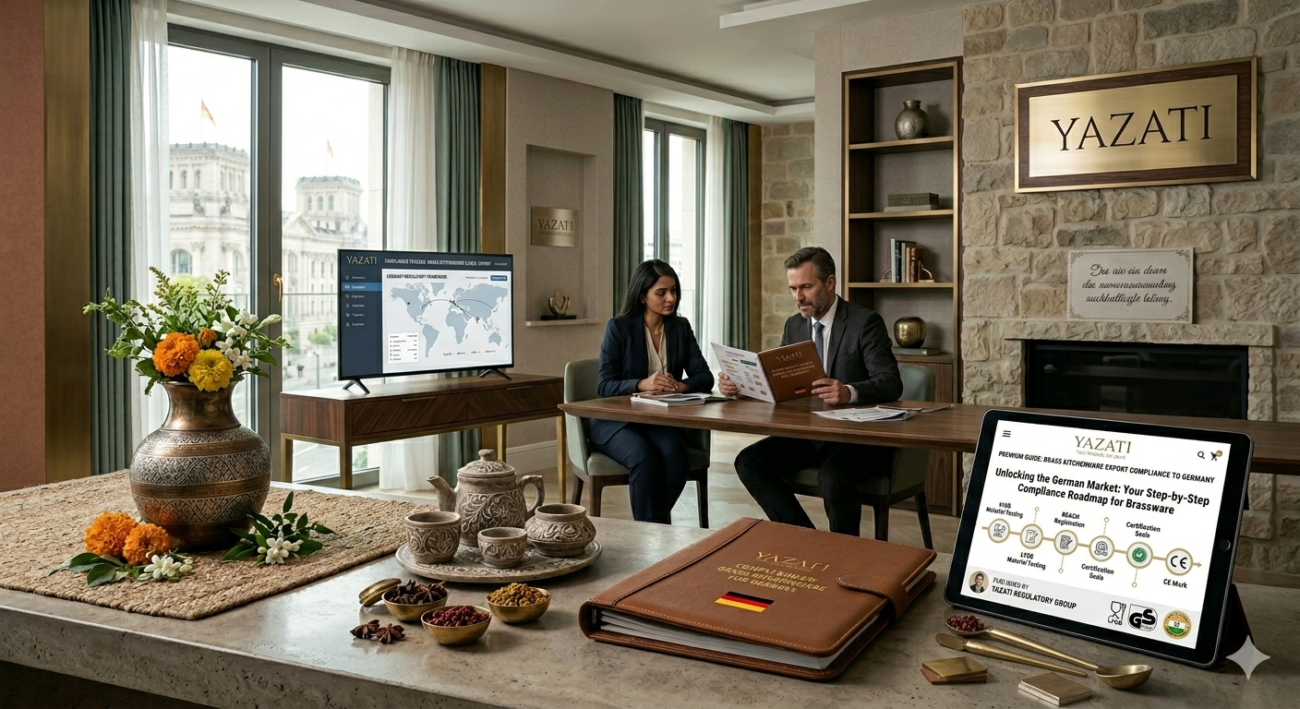
Germany is one of Europe’s largest importers of premium kitchenware products. The demand for durable, decorative, and traditional brass kitchenware continues to grow due to increasing consumer interest in sustainable and artisanal products. However, entering the German market requires more than quality craftsmanship. Exporters must meet strict European Union (EU) compliance standards, food safety regulations, and documentation requirements.
This Compliance Guide for Brass Kitchenware Export to Germany explains everything exporters need to know to legally and successfully sell brass kitchenware products in Germany. Whether you are exporting brass utensils, cookware, serving trays, or decorative kitchen items, understanding these regulations can help avoid shipment delays, fines, and rejected consignments.
Understanding the German Market for Brass Kitchenware
Germany values quality, safety, and environmental responsibility. Buyers and importers often prefer suppliers who demonstrate transparency and regulatory compliance. Brass kitchenware products are especially popular in premium home décor and ethnic cookware segments.
German consumers generally expect:
- High-quality finishing
- Food-safe materials
- Durable construction
- Sustainable packaging
- Clear labeling and documentation
Products that fail to meet EU standards can be blocked at customs or permanently banned from sale.
Why Compliance Matters in Germany and the EU
Compliance is not just a legal formality. It directly affects your ability to build trust with German importers and distributors.
Strict Consumer Protection Standards
Germany follows some of the toughest consumer protection laws in Europe. Authorities conduct random product inspections to ensure imported kitchenware is safe for public use.
Brass products that come into contact with food must not release harmful chemicals or heavy metals beyond permitted limits.
Risks of Non-Compliance
Failure to comply may result in:
- Shipment rejection
- Customs seizure
- Product recalls
- Financial penalties
- Damage to brand reputation
- Loss of importer relationships
Exporters who understand the Compliance Guide for Brass Kitchenware Export to Germany gain a major competitive advantage.
Key EU Regulations for Brass Kitchenware Export
Several EU laws apply to brass kitchenware products.
REACH Regulation
The EU’s REACH Regulation (Registration, Evaluation, Authorisation and Restriction of Chemicals) controls chemical substances used in products sold in Europe.
Exporters must ensure brass kitchenware does not contain restricted hazardous substances above allowed levels.
Key responsibilities include:
- Identifying chemicals used in manufacturing
- Maintaining safety data records
- Ensuring restricted substances remain below legal thresholds
You can learn more through the official EU REACH portal:
https://ec.europa.eu/environment/chemicals/reach/reach_en.htm
Food Contact Materials Regulation
Brass utensils and cookware intended for food contact must comply with EU food safety laws.
These regulations ensure that materials:
- Do not contaminate food
- Do not alter taste or odor
- Remain stable during normal use
Migration testing is commonly required to verify compliance.
General Product Safety Regulation
All consumer products sold in Germany must be safe under normal usage conditions.
Manufacturers and exporters must maintain technical documentation proving product safety.
Material Composition Requirements
Material quality is one of the most critical aspects of compliance.
Lead and Cadmium Restrictions
Brass naturally contains copper and zinc, but some alloys may also contain lead. Excessive lead levels are strictly prohibited in food-contact products.
Germany carefully monitors:
- Lead content
- Cadmium levels
- Toxic coatings
- Hazardous surface treatments
Using certified raw materials helps reduce compliance risks.
Nickel and Heavy Metal Testing
Heavy metal migration testing ensures the product does not release unsafe levels of substances into food.
Testing may involve:
- Acid simulation tests
- Heat resistance checks
- Corrosion testing
- Surface coating analysis
Independent accredited laboratories usually conduct these tests.
Food Safety Compliance for Brass Kitchenware
Food-contact safety is essential when exporting brass kitchenware.
Migration Testing Standards
Migration testing measures how much metal transfers from the brass product into food or liquid under specific conditions.
Common testing scenarios include:
| Test Type | Purpose |
| Acidic Food Simulation | Tests reaction with acidic foods |
| Heat Exposure Test | Evaluates high-temperature stability |
| Long-Term Contact Test | Measures prolonged food exposure |
| Surface Migration Test | Detects metal release from coatings |
Testing reports are often requested by German buyers before placing bulk orders.
Laboratory Testing and Certification
Choose internationally recognized laboratories such as:
- SGS
- TÜV Rheinland
- Intertek
- Bureau Veritas
Certified testing reports increase buyer confidence and simplify customs clearance.
Documentation Required for Export
Proper documentation is critical for smooth customs processing.
Commercial Invoice
The commercial invoice should include:
- Product description
- HS code
- Quantity
- Unit value
- Country of origin
- Buyer and seller details
Packing List
The packing list must clearly describe:
- Carton count
- Net and gross weight
- Dimensions
- Packaging method
Certificate of Origin
German importers may request a Certificate of Origin to verify manufacturing location.
Declaration of Conformity
A Declaration of Conformity confirms that the product meets applicable EU regulations.
This document should include:
- Manufacturer information
- Product identification
- Applicable regulations
- Testing references
- Authorized signature
Labeling and Packaging Rules in Germany
Packaging and labeling errors are common causes of customs delays.
Mandatory Product Information
Labels should include:
- Product name
- Material composition
- Country of origin
- Importer details
- Usage instructions
- Safety warnings
German Language Labeling Requirements
Important consumer information should be available in German.
This may include:
- Care instructions
- Food-contact warnings
- Cleaning guidelines
- Recycling instructions
Professional translation is strongly recommended.
Customs Clearance Process
Understanding customs procedures can help exporters avoid unnecessary delays.
HS Codes for Brass Kitchenware
Correct HS classification is essential for accurate duty assessment.
Common categories may include:
| Product Type | Example HS Code |
| Brass Tableware | 7418 |
| Brass Household Articles | 7418.10 |
| Decorative Kitchenware | Varies by product |
Always confirm classification with a customs broker.
Import Duties and VAT
Germany applies:
- EU Common Customs Tariff
- Import VAT
- Additional fees depending on product category
Duty rates may vary based on trade agreements and product specifications.
Sustainability and Environmental Compliance
Environmental responsibility is increasingly important in Germany.
Packaging Waste Regulations
Germany’s Packaging Act (VerpackG) requires businesses to participate in packaging recycling systems.
Importers often expect exporters to use:
- Recyclable packaging
- Reduced plastic materials
- Eco-friendly cushioning
Recycling Responsibilities
German distributors may require suppliers to support recycling compliance documentation.
Sustainable packaging can improve brand reputation and buyer acceptance.
Quality Standards Buyers Expect
German buyers prioritize consistency and durability.
Surface Finish and Durability
High-quality brass kitchenware should have:
- Smooth polishing
- Uniform coating
- Tarnish resistance
- Scratch resistance
Poor finishing can lead to rejected shipments.
Corrosion Resistance Standards
Kitchenware products must withstand moisture and cleaning conditions without corrosion.
Protective coatings should be tested for durability and food safety.
CE Marking: Is It Required?
Many exporters mistakenly assume all products sold in Europe require CE marking.
For most brass kitchenware products, CE marking is generally not mandatory unless the item includes electrical or specialized functional components.
However, compliance with food-contact and safety regulations remains mandatory.
Choosing the Right Testing Laboratory
Selecting the correct testing partner is crucial.
Look for laboratories that offer:
- ISO/IEC 17025 accreditation
- EU compliance expertise
- Heavy metal testing
- Food-contact migration analysis
- Fast reporting timelines
Reliable testing reduces long-term export risks.
Working With German Importers and Distributors
Strong business relationships matter in Germany.
German buyers often evaluate suppliers based on:
- Documentation quality
- Compliance readiness
- Communication speed
- Product consistency
- Ethical manufacturing standards
Providing complete compliance files before shipment can improve trust and increase repeat orders.
Common Export Challenges and Solutions
Exporters frequently face several operational challenges.
| Challenge | Solution |
| Customs Delays | Ensure accurate documentation |
| Failed Lab Tests | Use certified raw materials |
| Labeling Errors | Translate labels professionally |
| Product Corrosion | Improve coating quality |
| Buyer Trust Issues | Share certifications proactively |
Planning ahead minimizes expensive mistakes.
Best Practices for Long-Term Export Success
Successful exporters typically follow these strategies:
- Conduct regular product testing
- Maintain updated compliance records
- Use traceable raw materials
- Train staff on EU regulations
- Work with experienced customs brokers
- Build relationships with German distributors
- Invest in sustainable packaging
Following this Compliance Guide for Brass Kitchenware Export to Germany can significantly improve market acceptance and reduce operational risks.
Frequently Asked Questions
1. Is brass kitchenware allowed in Germany?
Yes, brass kitchenware can be legally imported into Germany if it complies with EU food safety and chemical regulations.
2. Does brass kitchenware require CE marking?
Most brass kitchenware products do not require CE marking unless they include electrical components or fall under specific EU directives.
3. What tests are required for brass kitchenware export?
Common tests include heavy metal testing, lead migration testing, cadmium analysis, and food-contact safety evaluations.
4. What documents are required for export to Germany?
Typical documents include:
- Commercial invoice
- Packing list
- Certificate of origin
- Declaration of conformity
- Laboratory testing reports
5. Can German customs reject brass kitchenware shipments?
Yes. Shipments may be rejected if products fail safety testing, contain restricted substances, or have incomplete documentation.
6. Are German-language labels mandatory?
Important consumer information should generally be provided in German for products sold in Germany.
7. What is the biggest compliance risk for brass kitchenware exporters?
Lead and heavy metal contamination remain among the most significant compliance risks for food-contact brass products.
Conclusion
Germany offers strong market opportunities for exporters of premium brass kitchenware, but compliance requirements are strict and detailed. Exporters must carefully follow EU chemical regulations, food-contact standards, documentation rules, and environmental requirements to succeed in this competitive market.
A proactive compliance strategy not only reduces legal risks but also improves buyer confidence and long-term business growth. By following this Compliance Guide for Brass Kitchenware Export to Germany, exporters can streamline customs clearance, build trusted partnerships, and establish a successful presence in the European market.
✨ Discover Global Sourcing Excellence with Netyex ✨
Netyex is your trusted B2B sourcing partner, connecting international buyers with India’s finest manufacturers and curated product lines—from handicrafts and home décor to kitchenware, textiles, hospitality essentials, and more. With verified suppliers and end-to-end support, we make global procurement seamless, reliable, and efficient.
👉 Elevate your sourcing experience—explore Netyex today.
📦 Bulk orders & customisation | 🌍 Worldwide delivery | 🤝 Trusted by global buyers
Visit Netyex to source premium Indian products with confidence.