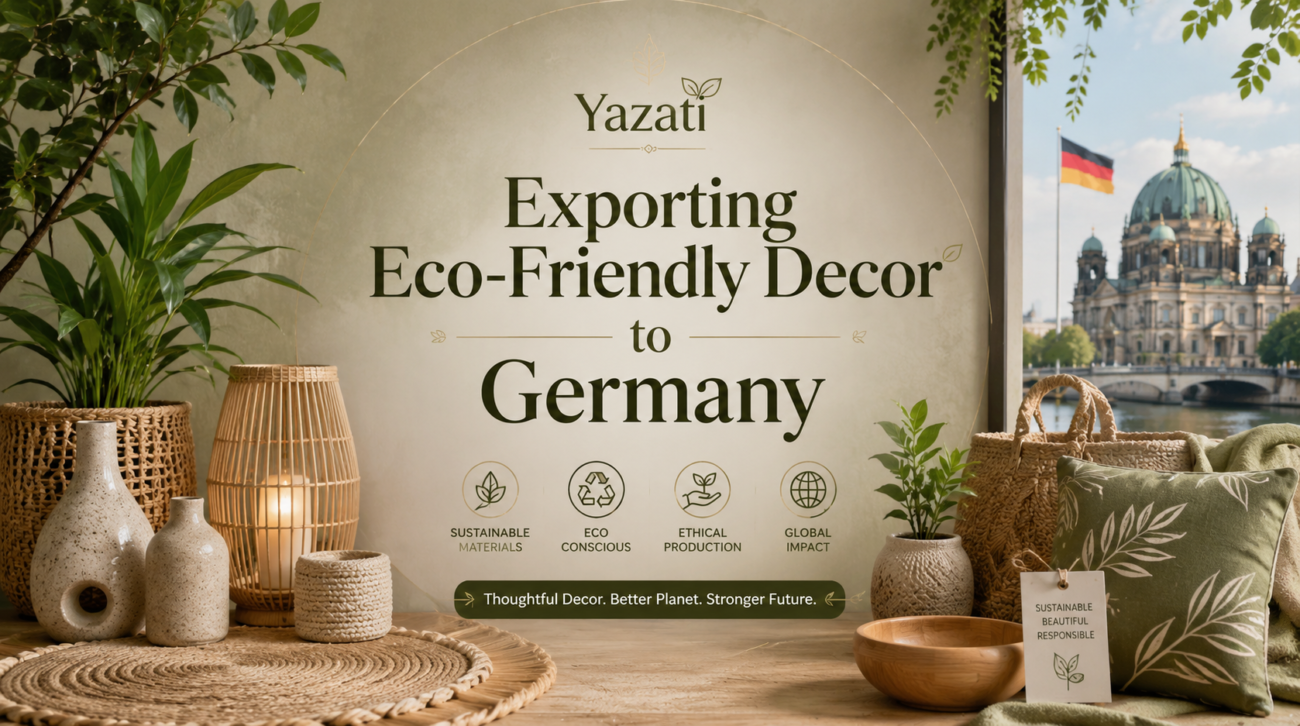
Germany has become one of the most attractive destinations for sustainable home products. As environmental awareness grows across Europe, eco-conscious consumers are actively seeking stylish, ethical, and environmentally responsible decor items. That’s why Exporting Eco-Friendly Decor to Germany is now a profitable and future-ready business opportunity.
From handmade bamboo lamps to recycled wooden furniture, German buyers appreciate products that combine sustainability with high-quality craftsmanship. Businesses that understand regulations, certifications, logistics, and branding can build long-term success in this growing market.
In this guide, you’ll learn how to enter the German market successfully, avoid common mistakes, and position your eco-friendly decor products for sustainable growth.
Why Germany Is a Prime Market for Sustainable Decor
Germany is Europe’s largest economy and one of the strongest supporters of environmental sustainability. Consumers are willing to spend more on products that align with their values.
Rising Demand for Eco-Conscious Home Products
German households are increasingly choosing products made from:
- Recycled materials
- Organic fibers
- Sustainable wood
- Biodegradable packaging
- Low-emission manufacturing methods
Minimalist interiors and natural aesthetics are especially popular in modern German homes.
Germany’s Green Consumer Culture
Sustainability is deeply embedded in German culture. Recycling systems, renewable energy adoption, and eco-certifications influence everyday purchasing decisions. Consumers often research:
- Product origin
- Material sourcing
- Manufacturing ethics
- Carbon footprint
Brands that provide transparency usually perform better.
Understanding the German Home Decor Market
Before entering the market, exporters must understand local design trends and buyer expectations.
Popular Eco-Friendly Decor Categories
The following products have strong demand:
- Bamboo furniture
- Handmade ceramic decor
- Organic cotton cushions
- Recycled glass vases
- Wooden wall art
- Natural jute rugs
- Eco-friendly candles
Scandinavian-inspired and minimalist styles are especially successful.
Seasonal Trends and Consumer Preferences
German buyers often refresh home decor during:
- Spring
- Christmas season
- Autumn interior updates
Neutral colors, earthy tones, and functional designs are preferred over flashy aesthetics.
Benefits of Exporting Eco-Friendly Decor to Germany
High Purchasing Power
German consumers are known for quality-focused buying habits. They may pay premium prices for:
- Durable craftsmanship
- Ethical production
- Authentic handmade products
This creates excellent opportunities for exporters.
Long-Term Sustainability Trends
Eco-friendly products are not a short-term trend in Germany. Government policies and public awareness continue driving sustainable consumption.
That means exporters can build stable, long-term businesses rather than temporary sales spikes.
Key Regulations for Exporting Eco-Friendly Decor to Germany
Compliance is critical when Exporting Eco-Friendly Decor to Germany. Ignoring regulations may lead to shipment delays or penalties.
EU Environmental Compliance
Products sold in Germany must meet EU safety and environmental standards. Depending on your product category, you may need:
- Material safety testing
- Chemical compliance
- Consumer safety documentation
The official EU trade portal offers detailed compliance guidance:
https://trade.ec.europa.eu/
Packaging and Recycling Laws
Germany has strict packaging waste regulations.
Germany’s VerpackG Requirements
The Verpackungsgesetz (Packaging Act) requires businesses to:
- Register packaging materials
- Participate in recycling systems
- Reduce unnecessary packaging waste
Eco-friendly packaging also improves customer perception.
Eco-Certifications That Build Trust
Certifications can significantly increase credibility.
FSC Certification
The Forest Stewardship Council (FSC) certification proves wood products come from responsibly managed forests.
This is highly valued by German consumers.
Fair Trade and Organic Labels
Ethical sourcing certifications help buyers trust your brand. These include:
- Fair Trade
- GOTS (Global Organic Textile Standard)
- OEKO-TEX
CE Marking Requirements
Some electrical decor products, such as sustainable lighting, may require CE marking before entering the EU market.
Best Eco-Friendly Decor Products to Export
Choosing the right product category is essential.
Bamboo Home Accessories
Bamboo is renewable, lightweight, and stylish. Popular products include:
- Storage baskets
- Lampshades
- Kitchen organizers
- Decorative trays
Recycled Wood Furniture
German buyers appreciate rustic and reclaimed wood furniture because it combines sustainability with timeless design.
Handmade Natural Fiber Decor
Products made from:
- Jute
- Hemp
- Seagrass
- Organic cotton
often attract eco-conscious buyers.
Sustainable Lighting Solutions
Energy-efficient lighting with natural materials is becoming increasingly popular in Germany’s green interior design movement.
How to Find German Buyers
Finding reliable buyers requires both online and offline strategies.
B2B Marketplaces
Popular platforms include:
- Alibaba
- Europages
- Faire
- Global Sources
Professional product photography and certifications improve visibility.
Trade Fairs and Exhibitions
Germany hosts some of the world’s largest home decor trade fairs.
Ambiente Frankfurt
Ambiente is one of the best events for meeting wholesalers and retailers interested in sustainable products.
Heimtextil Germany
Heimtextil focuses on home textiles and sustainable interior products.
These trade fairs help exporters:
- Build distributor relationships
- Study market trends
- Understand competitor pricing
Pricing Strategy for German Consumers
Premium vs Affordable Positioning
German consumers value quality more than extremely low prices.
A premium strategy often works better when your products offer:
- Handmade craftsmanship
- Sustainability certifications
- Ethical sourcing
Shipping Cost Optimization
Shipping costs can reduce profitability. Strategies include:
- Consolidated shipping
- Local warehousing
- Lightweight packaging
- Freight partnerships
Logistics and Shipping Considerations
Efficient logistics are essential for customer satisfaction.
Choosing the Right Shipping Method
Common options include:
- Sea freight for bulk shipments
- Air freight for premium fast delivery
- Rail freight for balanced cost efficiency
Sea freight is usually most economical for decor products.
Customs Documentation
Prepare:
- Commercial invoices
- Packing lists
- Certificates of origin
- Product compliance documents
Incorrect paperwork can delay customs clearance.
Marketing Strategies for Germany
Marketing must align with German values and communication styles.
SEO and German Language Content
German-language websites and product descriptions improve trust and search visibility.
Localized SEO strategies help attract:
- Retailers
- Interior designers
- Eco-conscious homeowners
Sustainability Storytelling
Consumers connect emotionally with authentic stories.
Share details about:
- Artisan craftsmanship
- Sustainable sourcing
- Community impact
- Environmental benefits
Transparency strengthens brand loyalty.
Common Challenges and How to Overcome Them
Cultural Differences
German buyers often prefer:
- Detailed information
- Clear communication
- Reliable timelines
Avoid exaggerated marketing claims.
Strict Quality Expectations
Germany has high standards for:
- Product durability
- Packaging quality
- Delivery consistency
Investing in quality control reduces returns and complaints.
Digital Platforms to Sell Eco Decor in Germany
Amazon Germany
Amazon Germany offers massive visibility but requires strong competition strategies.
Etsy Europe
Etsy works especially well for handmade and artisan eco decor products.
Shopify and Independent Stores
Shopify allows exporters to build independent eco-friendly brands with full control over branding and customer experience.
Building a Sustainable Brand for German Buyers
Ethical Sourcing Transparency
Consumers increasingly expect proof of ethical sourcing. Share:
- Supplier details
- Production methods
- Sustainability reports
Carbon-Neutral Packaging
Eco-packaging creates a strong first impression and supports brand credibility.
Popular options include:
- Recycled cardboard
- Compostable wrapping
- Plastic-free shipping materials
Financial Planning and Profit Margins
Import Duties and VAT
Understand:
- EU import duties
- German VAT requirements
- Customs brokerage fees
Working with a customs consultant can simplify the process.
Currency Exchange Considerations
Exchange rate fluctuations affect profitability. Many exporters use:
- Euro-based pricing
- Currency hedging
- International payment platforms
Future Trends in Germany’s Eco Decor Industry
Circular Economy Products
Products designed for:
- Reuse
- Repair
- Recycling
are becoming increasingly important.
Smart Sustainable Homes
Consumers are combining eco-friendly decor with:
- Smart lighting
- Energy-saving technology
- Sustainable living systems
This trend is expected to grow significantly through 2030.
Frequently Asked Questions
Is Germany a good market for eco-friendly decor?
Yes. Germany is one of Europe’s strongest markets for sustainable consumer products due to high environmental awareness and purchasing power.
What certifications are important for exporting eco decor to Germany?
FSC, Fair Trade, GOTS, OEKO-TEX, and CE marking are among the most valuable certifications.
What products sell best in Germany’s eco decor market?
Bamboo accessories, recycled wood furniture, organic textiles, and handmade natural-fiber products are highly popular.
Do I need German-language packaging?
In many cases, yes. German-language instructions and labels improve compliance and customer trust.
Which shipping method is best for decor exports?
Sea freight is typically the most cost-effective for large shipments, while air freight works for premium or urgent orders.
How can I find buyers in Germany?
You can use B2B marketplaces, attend trade fairs like Ambiente, and build relationships through LinkedIn and distributor networks.
Conclusion
Exporting Eco-Friendly Decor to Germany offers enormous opportunities for businesses ready to embrace sustainability, quality, and transparency. German consumers actively support ethical brands that provide durable, environmentally responsible products with authentic stories behind them.
Success in this market depends on:
- Meeting EU regulations
- Using eco-certifications
- Building trust through transparency
- Understanding German consumer preferences
- Investing in quality and branding
As sustainability becomes even more important across Europe, exporters who act now can establish strong long-term positions in one of the world’s most environmentally conscious markets.
✨ Discover Global Sourcing Excellence with Netyex ✨
Netyex is your trusted B2B sourcing partner, connecting international buyers with India’s finest manufacturers and curated product lines—from handicrafts and home décor to kitchenware, textiles, hospitality essentials, and more. With verified suppliers and end-to-end support, we make global procurement seamless, reliable, and efficient.
👉 Elevate your sourcing experience—explore Netyex today.
📦 Bulk orders & customisation | 🌍 Worldwide delivery | 🤝 Trusted by global buyers
Visit Netyex to source premium Indian products with confidence.