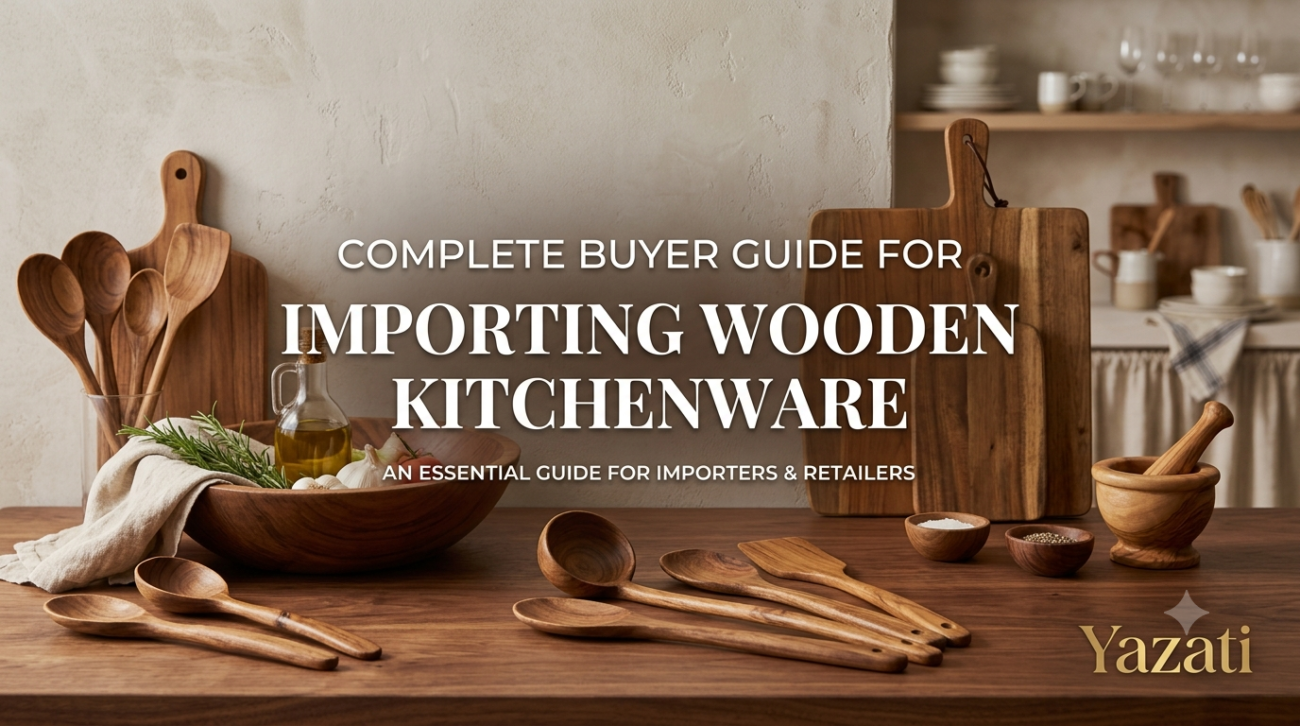
The global demand for eco-friendly kitchen products continues to grow as consumers seek sustainable alternatives to plastic. Wooden kitchenware—including cutting boards, spoons, spatulas, salad bowls, rolling pins, serving trays, and utensils—has become one of the fastest-growing product categories in the home and kitchen market.
This Complete Buyer Guide for Importing Wooden Kitchenware explains everything importers, wholesalers, retailers, eCommerce sellers, and private-label brands need to know before placing an order. Whether you’re importing for Amazon FBA, a retail store, or wholesale distribution, understanding supplier selection, wood species, certifications, quality control, and shipping can help you avoid costly mistakes.
Why Import Wooden Kitchenware?
Consumers increasingly value products that combine sustainability with durability and attractive design. Wooden kitchenware fits these expectations perfectly.
Some of the biggest market drivers include:
- Rising environmental awareness
- Growing demand for plastic-free kitchens
- Premium home décor trends
- Increasing popularity of handmade products
- Expansion of online kitchenware stores
Wooden utensils are reusable, biodegradable, and often handcrafted, making them appealing to environmentally conscious buyers.
Benefits of Importing Wooden Kitchenware
Importing directly from manufacturers provides several business advantages.
Lower Product Costs
Buying directly from factories eliminates multiple intermediaries, reducing procurement costs and improving profit margins.
Private Label Opportunities
Many manufacturers offer OEM and ODM services, allowing businesses to customize:
- Logo engraving
- Packaging
- Product dimensions
- Wood finish
- Gift boxes
Large Product Variety
Manufacturers often produce:
- Wooden spoons
- Spatulas
- Cutting boards
- Cheese boards
- Serving trays
- Salad bowls
- Rolling pins
- Mortar and pestles
- Chopsticks
- Cooking utensils
Popular Types of Wooden Kitchenware
| Product | Typical Buyers |
|---|---|
| Cutting Boards | Retailers |
| Wooden Spoons | Grocery Stores |
| Salad Bowls | Kitchen Brands |
| Serving Trays | Hotels |
| Rolling Pins | Bakeries |
| Cheese Boards | Gift Shops |
| Cooking Utensils | Amazon Sellers |
| Spice Spoons | Restaurants |
| Wooden Cups | Eco Stores |
| Serving Platters | Hospitality Industry |
Best Wood Species for Kitchenware
Choosing the right wood directly affects product quality and durability.
Acacia Wood
Advantages:
- Highly durable
- Water-resistant
- Attractive grain
- Affordable
Best for:
- Cutting boards
- Serving trays
- Bowls
Teak Wood
Advantages:
- Rich natural oils
- Excellent moisture resistance
- Premium appearance
Ideal for:
- Luxury kitchenware
- Serving platters
- Salad bowls
Beech Wood
Advantages:
- Smooth finish
- Strong structure
- Food-safe
Common products:
- Cooking spoons
- Rolling pins
- Utensils
Bamboo
Although technically a grass, bamboo remains extremely popular.
Benefits:
- Sustainable
- Lightweight
- Renewable
- Affordable
Rubberwood
Advantages:
- Cost-effective
- Eco-friendly
- Good machining properties
Widely used for:
- Cutting boards
- Serving boards
- Kitchen tools
Top Countries for Sourcing Wooden Kitchenware
China
Advantages:
- Massive manufacturing capacity
- Competitive pricing
- Advanced production facilities
- Extensive customization options
Best suited for:
- High-volume orders
- Private-label production
- Wide product variety
Vietnam
Known for:
- High-quality craftsmanship
- Acacia wood products
- Strong export industry
- Competitive pricing
India
Popular for:
- Handcrafted wooden products
- Mango wood
- Sheesham wood
- Artisan craftsmanship
Indonesia
Famous for:
- Teak wood
- Handmade serving products
- Premium furniture-grade kitchenware
Thailand
Offers:
- Rubberwood products
- Sustainable sourcing
- Export-quality manufacturing
How to Choose Reliable Suppliers
A dependable supplier reduces risks and ensures consistent product quality.
Evaluate suppliers based on:
- Years of manufacturing experience
- Factory certifications
- Export history
- Customer reviews
- Product quality
- Communication responsiveness
- Production capacity
Always request:
- Product catalog
- Factory audit reports
- Product samples
- Certification documents
- Export references
Important Certifications
Before importing, verify that products comply with your destination market’s requirements.
Common certifications and documentation include:
- FSC (Forest Stewardship Council) certification for responsibly sourced wood
- Food-contact safety compliance
- Phytosanitary certification (where applicable)
- Country of Origin documentation
- Fumigation certificates (when required)
- Packaging compliance documentation
Check the import regulations of your destination country, as requirements differ by market.
Quality Inspection Checklist
Never skip pre-shipment inspections.
Inspect for:
✔ Cracks
✔ Splits
✔ Sharp edges
✔ Moisture content
✔ Uniform finish
✔ Proper sanding
✔ Food-safe coating
✔ Accurate dimensions
✔ Logo quality
✔ Packaging quality
Professional third-party inspections before shipment can help identify defects before products leave the factory.
MOQ and Pricing Considerations
Minimum Order Quantities (MOQs) vary depending on the manufacturer and the level of customization.
Factors influencing pricing include:
- Wood species
- Product size
- Production complexity
- Custom branding
- Packaging type
- Order quantity
- Surface finish
- Shipping method
Larger orders typically reduce the per-unit cost, but balance inventory levels with your sales forecast.
Packaging Options
Packaging affects product protection and brand perception.
Popular options include:
- Kraft paper sleeves
- Gift boxes
- Recyclable cardboard boxes
- Cotton drawstring bags
- Shrink wrapping
- Hang tags
- Barcode labels
- Retail-ready packaging
Eco-friendly packaging can strengthen your brand’s sustainability message.
Shipping Methods
Sea Freight
Best for:
- Large shipments
- Lowest transportation cost
- Bulk imports
Air Freight
Suitable for:
- Urgent orders
- Samples
- Small shipments
Express Courier
Ideal for:
- Product samples
- Replacement items
- Small-volume deliveries
Choose the shipping method based on your budget, timeline, and shipment size.
Customs, Duties, and Import Regulations
Before importing, confirm:
- The correct product classification (HS code)
- Applicable import duties and taxes
- Required import licenses (if any)
- Packaging and labeling requirements
- Wood treatment or phytosanitary rules
- Food-contact regulations for your target market
Working with a customs broker or freight forwarder can simplify compliance and reduce delays.
Private Label Opportunities
Private labeling allows you to build a distinctive brand and improve customer loyalty.
Customization options may include:
- Laser-engraved logos
- Custom product dimensions
- Unique wood finishes
- Branded packaging
- QR codes
- Instruction cards
- Care guides
- Gift-ready presentation
A well-executed private-label strategy can help differentiate your products in competitive markets.
Frequently Asked Questions (FAQs)
1. Which wood is best for kitchenware?
Acacia, teak, beech, bamboo, and rubberwood are among the most popular choices due to their durability and suitability for kitchen use.
2. Is wooden kitchenware safe for food contact?
Yes, when manufactured with food-safe materials and finishes that meet the regulations of the destination market.
3. What is the best country to import wooden kitchenware from?
China, Vietnam, India, Indonesia, and Thailand are all leading sourcing destinations, each offering different strengths in pricing, craftsmanship, and wood species.
4. Should I inspect products before shipment?
Absolutely. Pre-shipment inspections help identify defects and reduce the risk of receiving substandard goods.
5. Can I create my own brand?
Yes. Many manufacturers offer OEM and private-label services, including logo engraving and custom packaging.
6. What is the most economical shipping method?
Sea freight is generally the most cost-effective option for large orders, while air freight and express couriers are better suited to smaller or time-sensitive shipments.
Conclusion
Importing wooden kitchenware can be a rewarding business opportunity when approached strategically. By selecting the right wood species, partnering with reliable manufacturers, verifying certifications, conducting quality inspections, and planning logistics carefully, you can build a resilient supply chain and deliver products that meet customer expectations.
Use this Complete Buyer Guide for Importing Wooden Kitchenware as a reference throughout your sourcing journey. Staying informed about quality standards, compliance requirements, and market trends will help you reduce risks, strengthen your brand, and position your business for long-term success.
For additional guidance on international trade regulations and market insights, consult your country’s customs authority and reputable trade organizations, and review resources from the International Trade Centre (ITC) at https://www.intracen.org.
✨ Discover Global Sourcing Excellence with Netyex ✨
Netyex is your trusted B2B sourcing partner, connecting international buyers with India’s finest manufacturers and curated product lines—from handicrafts and home décor to kitchenware, textiles, hospitality essentials, and more. With verified suppliers and end-to-end support, we make global procurement seamless, reliable, and efficient.
👉 Elevate your sourcing experience—explore Netyex today.
📦 Bulk orders & customisation | 🌍 Worldwide delivery | 🤝 Trusted by global buyers
Visit Netyex to source premium Indian products with confidence.