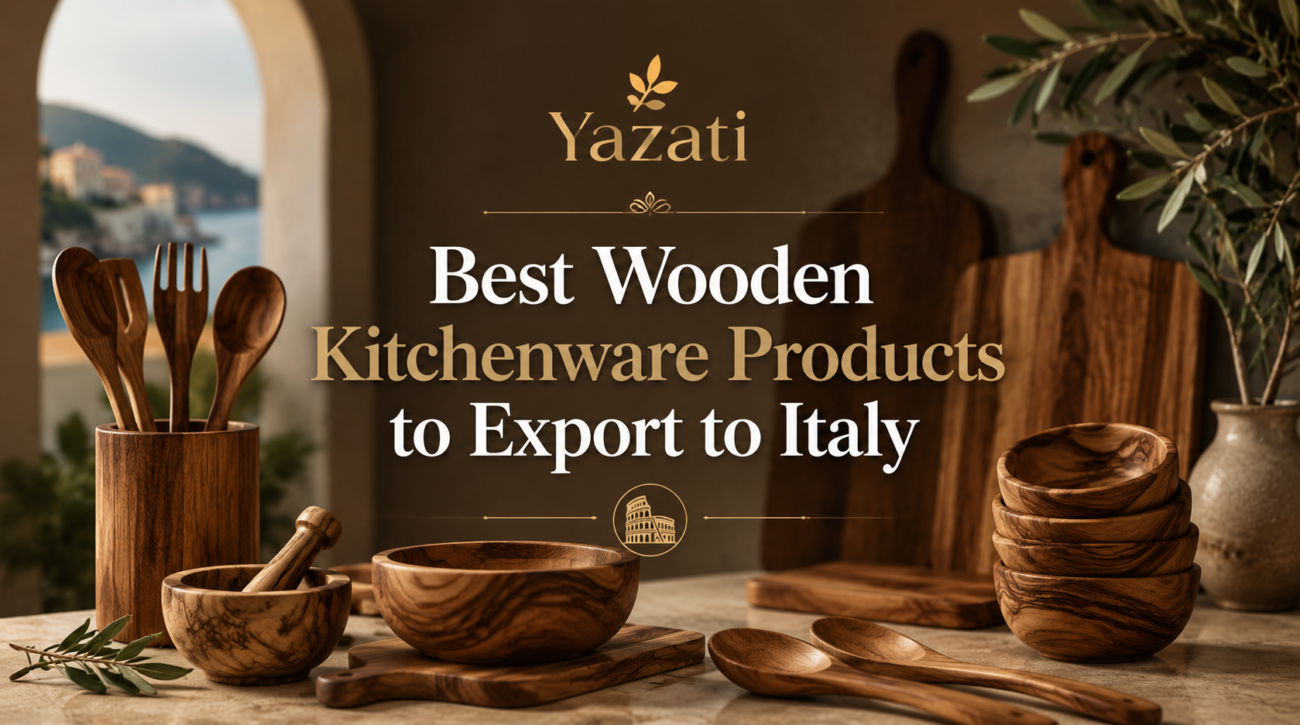
Italy is renowned for its rich culinary culture, elegant dining traditions, and appreciation for high-quality kitchen accessories. As sustainability becomes increasingly important across Europe, wooden kitchenware products have gained significant popularity among Italian consumers, retailers, restaurants, and hospitality businesses.
For exporters, the Italian market presents a lucrative opportunity. Consumers increasingly seek eco-friendly, durable, and aesthetically pleasing kitchen products that complement modern and traditional Italian kitchens. This guide explores the best wooden kitchenware products to export to Italy, market trends, profitability, and practical export strategies.
Introduction to the Italian Wooden Kitchenware Market
Italy is one of Europe’s largest importers of home and kitchen products. Growing environmental awareness has encouraged consumers to replace plastic kitchen utensils with natural alternatives.
Wooden kitchenware appeals to Italian buyers because it offers:
- Sustainability
- Durability
- Natural aesthetics
- Food safety benefits
- Compatibility with traditional cooking methods
Many Italian retailers are actively expanding their eco-friendly product portfolios, creating favorable conditions for international exporters.
Why Italy Imports Wooden Kitchenware
Several factors drive imports of wooden kitchenware into Italy:
| Factor | Impact |
|---|---|
| Sustainability Regulations | Increased demand for eco-friendly products |
| Premium Home Decor Trends | Consumers prefer natural materials |
| Growth of E-commerce | Wider product availability |
| Restaurant Industry Expansion | Demand for serving and cooking tools |
| Gift Market Growth | Wooden products are popular gift items |
Italian consumers often associate wooden products with craftsmanship, authenticity, and environmental responsibility.
Consumer Trends Driving Demand
Sustainability Preferences
Italian buyers increasingly favor products made from renewable materials. FSC-certified wood products are especially attractive because they demonstrate responsible forest management.
Handmade and Artisan Appeal
Handcrafted kitchenware often commands higher prices than mass-produced alternatives. Buyers appreciate unique grain patterns, artisanal finishes, and traditional craftsmanship.
Key Import Requirements for Italy
Before exporting wooden kitchenware to Italy, suppliers should ensure compliance with:
- European Union product safety standards
- Food-contact material regulations
- Packaging waste regulations
- Phytosanitary requirements for wooden products
- Proper labeling and documentation
Obtaining relevant certifications can significantly improve buyer confidence.
Best Wooden Kitchenware Products to Export to Italy
1. Wooden Cutting Boards
Cutting boards remain among the most demanded wooden kitchen products.
Popular varieties include:
- Bamboo cutting boards
- Acacia wood boards
- Walnut chopping boards
- Personalized cutting boards
Premium cutting boards are especially popular in specialty kitchen stores.
2. Wooden Cooking Spoons
Italian households frequently use wooden spoons for preparing sauces, soups, and pasta dishes.
Advantages include:
- Heat resistance
- Non-scratch surfaces
- Long-lasting durability
3. Wooden Spatulas
Wooden spatulas are essential tools in Italian kitchens. They are commonly used for:
- Risotto preparation
- Pasta sauces
- Pan cooking
Minimalist designs often perform best in the market.
4. Wooden Salad Bowls
Large wooden salad bowls combine functionality with attractive presentation.
Consumers favor:
- Acacia wood bowls
- Olive wood bowls
- Hand-carved serving bowls
5. Wooden Serving Trays
Serving trays are increasingly purchased for both home and hospitality use.
Popular styles include:
- Rustic farmhouse trays
- Modern minimalist trays
- Luxury serving boards
6. Wooden Rolling Pins
Italian baking traditions support strong demand for quality rolling pins.
These products are commonly purchased by:
- Home bakers
- Pastry shops
- Culinary schools
7. Wooden Mortar and Pestle Sets
Traditional Italian cuisine often incorporates freshly ground herbs and spices.
Wooden mortar and pestle sets offer:
- Rustic aesthetics
- Practical functionality
- Gift appeal
8. Wooden Utensil Holders
Kitchen organization products continue to grow in popularity.
Wooden utensil holders fit well within modern and traditional kitchens alike.
9. Wooden Cheese Boards
Italy’s famous cheese culture creates substantial demand for premium cheese boards.
Best-selling features include:
- Integrated knife slots
- Personalized engraving
- Luxury gift packaging
10. Wooden Pizza Serving Boards
Pizza boards remain one of the most Italian-specific opportunities.
Consumers often purchase them for:
- Home entertaining
- Restaurants
- Pizza delivery presentation
11. Wooden Coasters
Eco-friendly coasters are affordable, lightweight, and easy to export.
They are commonly sold in sets and gift collections.
12. Wooden Spice Racks
Wooden spice organizers are increasingly popular due to growing interest in home cooking.
13. Wooden Measuring Spoons
These products appeal to baking enthusiasts and environmentally conscious consumers.
14. Wooden Honey Dippers
Small specialty products like honey dippers offer attractive profit margins and make excellent gift items.
15. Wooden Chopsticks and Specialty Utensils
As international cuisine gains popularity in Italy, demand for specialty wooden utensils continues to expand.
Most Popular Wood Types for Italian Buyers
Italian importers often prefer premium wood species.
| Wood Type | Characteristics |
|---|---|
| Olive Wood | Luxury appearance |
| Acacia Wood | Durability and affordability |
| Bamboo | Sustainability |
| Walnut | Premium finish |
| Beech Wood | Traditional kitchen use |
| Teak | Moisture resistance |
Olive wood products are particularly attractive due to their Mediterranean aesthetic.
Pricing and Profit Margins
Profitability varies depending on product complexity.
| Product | Typical Margin Potential |
|---|---|
| Cutting Boards | High |
| Cheese Boards | Very High |
| Serving Trays | High |
| Wooden Spoons | Medium |
| Honey Dippers | High |
| Salad Bowls | Very High |
Customized and engraved products typically generate the highest margins.
Packaging and Branding Strategies
Successful exporters focus heavily on presentation.
Recommended approaches include:
- Kraft paper packaging
- Recyclable materials
- FSC certification logos
- Italian-language labels
- Premium gift boxes
A strong sustainability message can significantly improve sales performance.
How to Find Italian Buyers
Potential buyer channels include:
- Kitchenware distributors
- Home decor retailers
- Specialty gourmet stores
- Hospitality suppliers
- Online marketplaces
- Import wholesalers
Useful trade platforms include:
- Europages
- Alibaba
- Italian B2B directories
- Chamber of Commerce databases
You can also participate in international trade fairs such as Ambiente and HOMI Milano to meet European buyers.
Export Documentation and Compliance
Common export documents include:
- Commercial invoice
- Packing list
- Bill of lading
- Certificate of origin
- Phytosanitary certificate (when applicable)
- Product conformity declarations
Working with an experienced freight forwarder can simplify the process considerably.
Challenges and Solutions
| Challenge | Solution |
|---|---|
| Strong Competition | Focus on premium products |
| Compliance Requirements | Obtain certifications |
| Shipping Costs | Optimize packaging |
| Market Entry Barriers | Partner with local distributors |
| Buyer Trust | Offer product samples |
Future Market Opportunities
Several emerging trends suggest continued growth:
- Eco-conscious consumer behavior
- Handmade and artisan products
- Personalized kitchenware
- Premium gift items
- Sustainable hospitality supplies
Exporters who emphasize sustainability, craftsmanship, and product quality are likely to experience long-term success in Italy.
Frequently Asked Questions (FAQs)
1. Which wooden kitchenware product sells best in Italy?
Wooden cutting boards, cheese boards, pizza serving boards, and salad bowls are among the top-selling products.
2. What wood type is most preferred by Italian consumers?
Olive wood, acacia, walnut, and bamboo are highly favored due to their appearance and durability.
3. Is FSC certification important for exporting to Italy?
Yes. FSC certification enhances credibility and appeals to environmentally conscious buyers.
4. Are handmade wooden products popular in Italy?
Absolutely. Italian consumers often value artisanal craftsmanship and unique designs.
5. Can small exporters enter the Italian market?
Yes. Many niche retailers and online sellers actively seek unique, high-quality wooden kitchenware products.
6. What product category offers the highest profit margin?
Customized cheese boards, luxury serving trays, and premium salad bowls often provide the strongest margins.
Conclusion
The market for the Best Wooden Kitchenware Products to Export to Italy continues to expand as consumers embrace sustainable, stylish, and functional kitchen products. Wooden cutting boards, cheese boards, serving trays, salad bowls, and pizza boards represent some of the most promising opportunities for exporters.
By focusing on quality materials, eco-friendly certifications, attractive packaging, and strong relationships with Italian buyers, suppliers can successfully establish themselves in this growing market and build a profitable export business for years to come.
✨ Discover Global Sourcing Excellence with Netyex ✨
Netyex is your trusted B2B sourcing partner, connecting international buyers with India’s finest manufacturers and curated product lines—from handicrafts and home décor to kitchenware, textiles, hospitality essentials, and more. With verified suppliers and end-to-end support, we make global procurement seamless, reliable, and efficient.
👉 Elevate your sourcing experience—explore Netyex today.
📦 Bulk orders & customisation | 🌍 Worldwide delivery | 🤝 Trusted by global buyers
Visit Netyex to source premium Indian products with confidence.