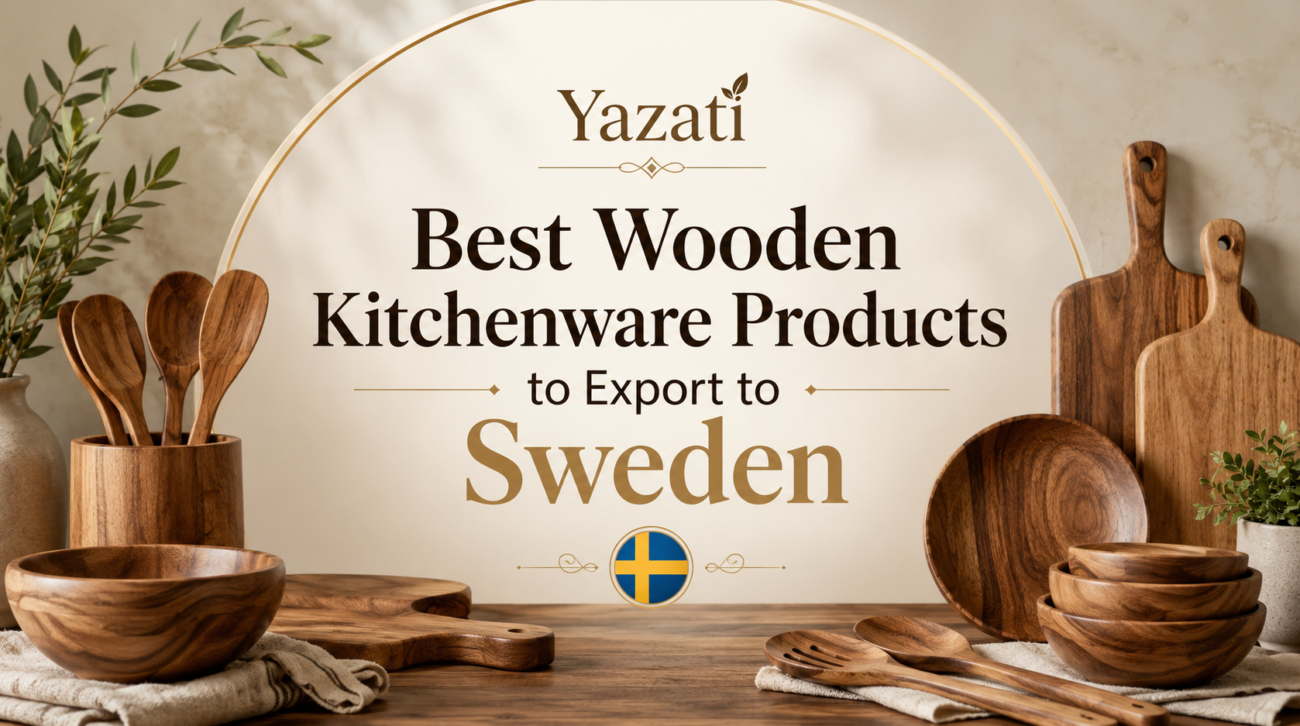
Sweden has become one of Europe’s fastest-growing markets for sustainable household products. As Swedish consumers increasingly prioritize eco-friendly living, minimalist home décor, and premium craftsmanship, the demand for wooden kitchenware continues to rise. Exporters from countries known for quality wood products—such as India, Vietnam, Indonesia, and Poland—have significant opportunities to supply beautifully crafted kitchen accessories that align with Scandinavian preferences.
This guide explores the Best Wooden Kitchenware Products to Export to Sweden, market expectations, compliance requirements, pricing strategies, and practical tips to help exporters succeed.
Why Sweden is an Attractive Export Market
Sweden is known for its environmentally conscious consumers. Buyers actively seek products made from renewable materials, responsibly sourced timber, and sustainable manufacturing practices.
Several factors make Sweden an ideal export destination:
- High purchasing power
- Strong preference for eco-friendly products
- Growing interest in handmade items
- Popularity of Scandinavian interior design
- Expanding online home décor market
Wooden kitchenware fits perfectly into these consumer preferences because it combines functionality with natural beauty.
Understanding Swedish Consumer Preferences
Swedish buyers generally value:
- Simple, elegant designs
- Natural finishes
- Durable products
- Sustainable materials
- Functional craftsmanship
- Minimal packaging
Unlike many markets where decorative products dominate, Swedish consumers prefer practical kitchenware that can be used daily while maintaining aesthetic appeal.
Why Wooden Kitchenware is Becoming More Popular
Several global trends have increased demand:
1. Sustainability
Consumers want alternatives to plastic.
Wooden utensils reduce plastic waste and are biodegradable.
2. Healthy Cooking
Wood doesn’t react with acidic foods.
It also doesn’t scratch non-stick cookware.
3. Scandinavian Interior Design
Natural wood perfectly complements Scandinavian kitchens.
Light-colored woods especially match Swedish homes.
4. Premium Lifestyle
Many buyers view handcrafted wooden products as luxury everyday items.
Best Types of Wood for Swedish Buyers
The choice of wood significantly impacts product quality.
Popular options include:
| Wood Type | Benefits |
|---|---|
| Acacia | Durable and attractive grain |
| Teak | Water resistant |
| Mango Wood | Sustainable and affordable |
| Beech | Smooth finish |
| Oak | Premium appearance |
| Bamboo | Eco-friendly and lightweight |
| Rubberwood | Sustainable plantation wood |
| Olive Wood | Luxury appearance |
Top 15 Best Wooden Kitchenware Products to Export to Sweden
1. Wooden Cutting Boards
One of the highest-selling wooden kitchen products.
Popular styles include:
- Live-edge boards
- Serving boards
- Cheese boards
- Personalized cutting boards
2. Wooden Cooking Spoons
Every Swedish kitchen uses wooden spoons.
Best-selling varieties include:
- Flat spatulas
- Slotted spoons
- Mixing spoons
3. Wooden Salad Bowls
Large handcrafted bowls are increasingly popular for entertaining.
Acacia and mango wood perform particularly well.
4. Wooden Serving Trays
Minimalist serving trays remain a favorite in Scandinavian homes.
Look for:
- Rectangular trays
- Round serving trays
- Breakfast trays
5. Wooden Spice Racks
Compact wooden spice organizers appeal to consumers with modern kitchens.
6. Wooden Mortar and Pestle
Traditional wooden grinding sets continue to attract buyers interested in natural cooking.
7. Wooden Rolling Pins
Essential baking tools that fit Sweden’s growing home baking trend.
8. Wooden Coasters
Simple yet profitable.
Many buyers purchase coaster sets alongside serving trays.
9. Wooden Napkin Holders
Minimalist Scandinavian designs sell particularly well.
10. Wooden Knife Blocks
Premium wooden knife storage solutions have strong demand.
11. Wooden Utensil Holders
Stylish countertop organizers are popular among homeowners.
12. Wooden Honey Dippers
Often sold together with honey jars and breakfast accessories.
13. Wooden Serving Platters
Perfect for cheese, bread, appetizers, and charcuterie.
14. Wooden Egg Holders
A niche but growing product category.
Minimalist designs appeal strongly to Swedish buyers.
15. Wooden Measuring Spoons
Reusable measuring spoons attract environmentally conscious consumers.
Sustainable Manufacturing Practices
Sustainability is often a deciding factor for Swedish buyers.
Recommended practices include:
- FSC-certified timber
- Water-based finishes
- Natural oils
- Plastic-free production
- Renewable energy
- Ethical labor standards
Manufacturers demonstrating responsible production often gain a competitive advantage.
Swedish Import Requirements
Before exporting, ensure compliance with applicable European Union regulations.
Important considerations include:
- Food-contact safety standards
- Proper labeling
- Phytosanitary requirements where applicable
- Documentation proving legal timber sourcing
- Packaging waste compliance
Working with an experienced customs broker or freight forwarder can simplify the import process.
Design Preferences in Sweden
Scandinavian design is characterized by:
- Clean lines
- Soft curves
- Neutral colors
- Functional simplicity
- Matte finishes
- Natural textures
Avoid excessive ornamentation or overly bright colors, as understated elegance is generally preferred.
Packaging That Appeals to Swedish Buyers
Eco-friendly packaging can enhance your brand image.
Recommended options:
- Recycled cardboard boxes
- Kraft paper wrapping
- Compostable protective materials
- Soy-based inks
- Minimal plastic use
Include clear care instructions and product origin information to build trust.
Pricing Strategy
Consider the following when setting export prices:
- Production costs
- Shipping expenses
- Import duties
- Retail markups
- Competitor pricing
Offering tiered pricing for bulk orders can help attract distributors and retailers.
Marketing Tips for Swedish Importers
Effective strategies include:
- Highlight sustainability credentials
- Showcase craftsmanship
- Provide high-quality product photography
- Offer customization options
- Share the story behind your products
- Participate in international trade fairs
Building long-term relationships with distributors can lead to repeat business.
Distribution Channels
Potential sales channels include:
- Home décor retailers
- Kitchenware stores
- Eco-friendly lifestyle shops
- Online marketplaces
- Hospitality suppliers
- Interior designers
Combining B2B partnerships with direct-to-consumer e-commerce can broaden market reach.
Challenges to Consider
Common obstacles include:
- Strong competition
- Shipping costs
- Meeting strict quality expectations
- Currency fluctuations
- Regulatory compliance
Careful planning and consistent quality control are essential for success.
Future Trends
The outlook for wooden kitchenware in Sweden remains positive.
Emerging trends include:
- Personalized engravings
- Multifunctional kitchen tools
- Modular storage solutions
- Carbon-neutral products
- Handmade artisanal collections
Exporters who innovate while maintaining sustainability are likely to benefit from growing demand.
Frequently Asked Questions (FAQs)
1. Which wooden kitchenware product is most profitable to export to Sweden?
Cutting boards, serving trays, and wooden salad bowls are among the most profitable due to their consistent demand and higher perceived value.
2. What type of wood is preferred by Swedish consumers?
Acacia, oak, beech, bamboo, teak, and mango wood are popular for their durability, appearance, and sustainability.
3. Is sustainable packaging important in Sweden?
Yes. Swedish consumers strongly prefer recyclable, compostable, or plastic-free packaging.
4. Do wooden kitchen products need special certifications?
Products intended for food contact should comply with relevant European Union food safety requirements, and responsibly sourced timber documentation can strengthen buyer confidence.
5. How can exporters stand out in the Swedish market?
Focus on premium craftsmanship, minimalist Scandinavian-inspired design, sustainability, and transparent sourcing.
6. Can small manufacturers successfully export to Sweden?
Yes. Many Swedish buyers value handcrafted, small-batch products that offer quality, authenticity, and environmentally responsible production.
Conclusion
The market for sustainable kitchen accessories in Sweden presents a compelling opportunity for exporters. By offering thoughtfully designed wooden kitchenware that aligns with Scandinavian aesthetics and environmental values, businesses can position themselves for long-term success. Prioritizing quality materials, responsible sourcing, eco-friendly packaging, and compliance with European standards will help build trust with Swedish importers and consumers alike.
Whether you specialize in cutting boards, serving trays, utensils, or premium handcrafted accessories, focusing on innovation and sustainability can set your products apart in this growing market.
For additional guidance on exporting to the European Union, consult the official European Commission Access2Markets portal: https://trade.ec.europa.eu/access-to-markets/
✨ Discover Global Sourcing Excellence with Netyex ✨
Netyex is your trusted B2B sourcing partner, connecting international buyers with India’s finest manufacturers and curated product lines—from handicrafts and home décor to kitchenware, textiles, hospitality essentials, and more. With verified suppliers and end-to-end support, we make global procurement seamless, reliable, and efficient.
👉 Elevate your sourcing experience—explore Netyex today.
📦 Bulk orders & customisation | 🌍 Worldwide delivery | 🤝 Trusted by global buyers
Visit Netyex to source premium Indian products with confidence.