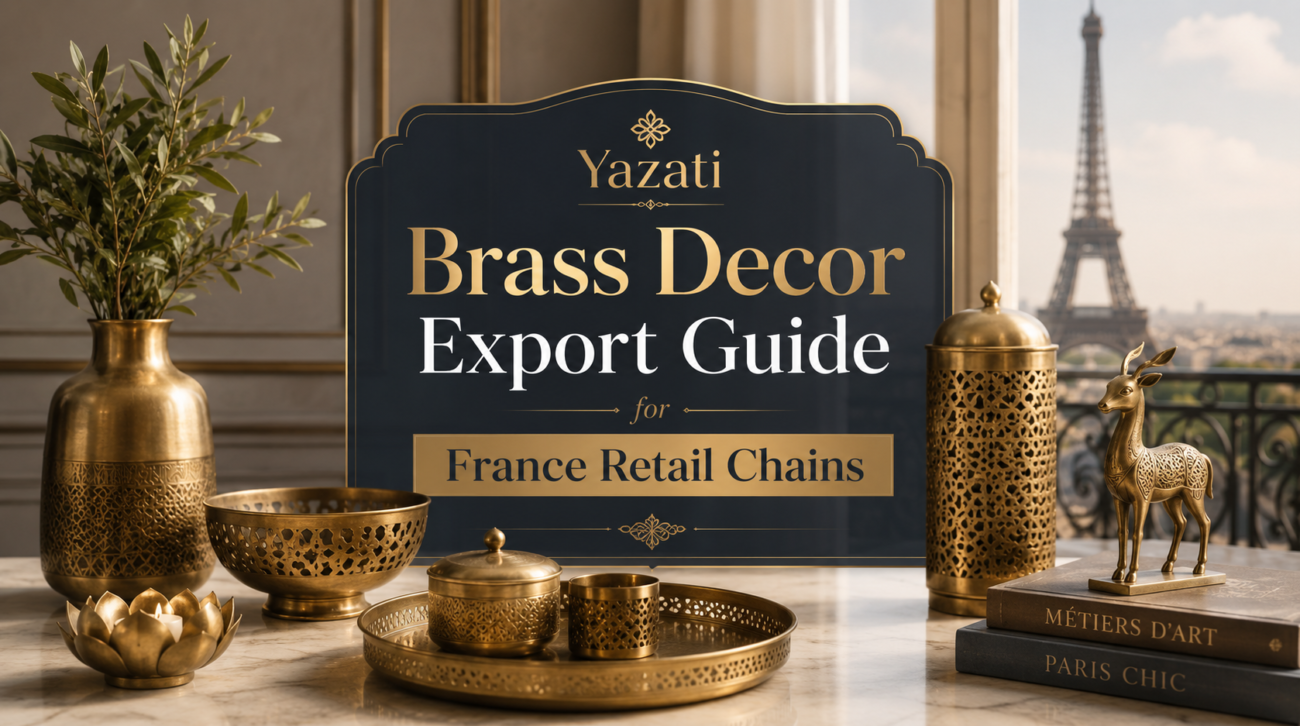
France has long been recognized as one of Europe’s most influential markets for home décor, luxury goods, and interior design. For manufacturers and exporters of brass decorative products, entering the French retail sector presents significant opportunities. This Brass Decor Export Guide for France Retail Chains explains everything exporters need to know, from market demand and compliance requirements to logistics and buyer engagement strategies.
Whether you are a manufacturer, artisan collective, trading company, or established exporter, understanding French retail expectations can dramatically improve your chances of securing profitable partnerships.
Introduction to the French Brass Decor Market
France has a strong appreciation for elegant interior décor. Brass decorative items have gained popularity because they blend traditional craftsmanship with contemporary design aesthetics.
French consumers often look for:
- Premium-quality materials
- Timeless designs
- Sustainable production methods
- Handmade craftsmanship
- Unique decorative pieces
The country’s robust retail ecosystem includes department stores, specialty home décor retailers, luxury boutiques, furniture chains, and online marketplaces.
As consumer spending on home improvement and interior decoration continues to grow, brass décor products remain highly attractive to French buyers.
Why France Is an Attractive Market for Brass Decor Exporters
France serves as one of Europe’s largest home décor markets. Retailers constantly seek new collections that combine quality, innovation, and artisan appeal.
Consumer Preferences in France
French consumers appreciate products that tell a story. Handmade brass décor often aligns perfectly with these expectations.
Popular attributes include:
- Artisanal craftsmanship
- Eco-conscious production
- Vintage-inspired finishes
- Minimalist luxury
- Authentic cultural influences
Products with strong design narratives tend to perform particularly well.
Growth of Premium Home Décor Segments
Several trends continue driving demand:
| Trend | Impact on Brass Décor |
|---|---|
| Luxury interiors | Increased demand for premium brass items |
| Sustainable living | Preference for durable materials |
| Boutique hotels | Growth in decorative installations |
| Renovation projects | Higher demand for statement pieces |
| Online home décor retail | Expanded market access |
These trends create favorable conditions for exporters targeting French retail chains.
Understanding France Retail Chains
Retail chains in France vary widely in size and purchasing structure.
Major Retail Categories
Common retail channels include:
- Home décor chains
- Furniture retailers
- Lifestyle stores
- Department stores
- Garden and outdoor retailers
- Boutique concept stores
- Online retail platforms
Each category has unique sourcing requirements and pricing expectations.
Buying Structures and Procurement Teams
Most retail chains operate through professional buying departments.
Typical procurement considerations include:
- Product uniqueness
- Pricing competitiveness
- Supplier reliability
- Production capacity
- Sustainability credentials
- Delivery performance
Understanding these priorities helps exporters tailor their sales approach.
Brass Decor Products with High Demand
Not every brass product performs equally well in France.
Decorative Accessories
Strong-performing categories include:
- Candle holders
- Decorative trays
- Sculptures
- Table accents
- Mirrors
- Wall art
- Vases
- Lanterns
These products appeal to both residential and commercial buyers.
Functional Brass Home Décor
French consumers increasingly prefer decorative products that also serve practical purposes.
Examples include:
- Brass shelving brackets
- Magazine holders
- Serving trays
- Storage baskets
- Decorative hooks
- Desk accessories
Combining aesthetics with functionality increases market appeal.
French Market Regulations and Compliance
Compliance is essential when exporting to France.
Product Safety Requirements
Exporters should ensure products meet applicable European standards regarding:
- Material safety
- Chemical content
- Surface coatings
- Product durability
- Consumer safety
Documentation should be available upon request.
Labeling and Documentation Standards
Retail chains often require:
- Product descriptions
- Country of origin information
- Material composition
- Packaging specifications
- Commercial invoices
- Shipping documentation
Accurate documentation reduces customs delays and strengthens buyer confidence.
Quality Standards Expected by French Buyers
French retailers maintain high expectations regarding quality.
Material Consistency
Buyers expect:
- Uniform brass composition
- Consistent color tones
- Stable finishing quality
- Durable construction
Inconsistent production batches can damage long-term supplier relationships.
Finishing and Craftsmanship Requirements
Attention to detail is critical.
Retailers carefully inspect:
- Weld quality
- Surface finishing
- Polishing consistency
- Protective coatings
- Packaging presentation
Premium craftsmanship often justifies higher pricing.
Product Design Trends in France
Keeping pace with design trends can significantly improve export performance.
Contemporary Brass Styles
Current trends include:
- Matte brass finishes
- Brushed textures
- Geometric designs
- Organic forms
- Minimalist styling
These aesthetics fit modern French interiors.
Sustainable and Handmade Décor Trends
Sustainability increasingly influences purchasing decisions.
Buyers often favor:
- Recycled materials
- Ethical production
- Handmade products
- Small-batch collections
- Reduced packaging waste
Exporters highlighting these strengths gain a competitive advantage.
Pricing Strategy for Retail Chains
Pricing is one of the most important factors in buyer negotiations.
Wholesale Pricing Models
Common pricing approaches include:
- FOB pricing
- CIF pricing
- Landed cost pricing
- Volume discount structures
Providing multiple pricing options helps buyers evaluate opportunities more effectively.
Margin Expectations
French retail chains typically seek sufficient margins to cover:
- Logistics costs
- Warehousing
- Marketing expenses
- Store operations
- Seasonal promotions
Exporters should understand retail economics before negotiating.
Packaging Requirements for French Retailers
Packaging often influences purchase decisions as much as the product itself.
Sustainable Packaging
French retailers increasingly prefer:
- Recyclable packaging
- Paper-based materials
- Reduced plastic usage
- Eco-friendly inks
Sustainability credentials can become a major selling point.
Retail-Ready Packaging Solutions
Effective retail packaging includes:
- Clear branding
- Product information
- Barcodes
- Protective inserts
- Attractive presentation
Retail-ready packaging minimizes retailer handling costs.
Logistics and Shipping Considerations
Reliable logistics help build trust with retail partners.
Freight Options
Exporters commonly use:
- Sea freight
- Air freight
- Rail freight (where available)
- Consolidated shipments
The best option depends on volume, cost, and delivery deadlines.
Customs Procedures
Preparation should include:
- Commercial invoices
- Packing lists
- Certificates of origin
- Freight documentation
- Product specifications
Working with experienced freight forwarders can simplify customs clearance.
Finding and Approaching Retail Chains
Securing buyer meetings requires a strategic approach.
Trade Shows and Exhibitions
Important opportunities include:
- Maison&Objet
- Ambiente
- Interior design exhibitions
- Home décor trade fairs
Trade shows allow exporters to showcase collections directly to decision-makers.
Direct Buyer Outreach
Successful outreach typically includes:
- Professional catalogs
- Product photography
- Pricing sheets
- Company profiles
- Production capabilities
Personalized communication often generates stronger responses.
Building Long-Term Relationships with French Buyers
French retail chains value consistency.
Successful suppliers typically provide:
- Reliable lead times
- Transparent communication
- Consistent quality
- Product innovation
- Competitive pricing
Long-term partnerships often lead to repeat orders and expanded product placements.
Marketing and Brand Positioning
A strong brand can differentiate your products from competitors.
Key positioning elements include:
- Heritage craftsmanship
- Sustainability
- Design excellence
- Ethical sourcing
- Premium quality
Storytelling plays a major role in French consumer engagement.
For market insights and trade resources, exporters can also explore organizations such as Business France: https://www.businessfrance.fr
Common Challenges and Solutions
| Challenge | Solution |
|---|---|
| High competition | Differentiate through design |
| Price pressure | Improve efficiency and value proposition |
| Compliance complexity | Work with regulatory experts |
| Delivery delays | Strengthen logistics planning |
| Design mismatch | Conduct ongoing market research |
Proactive planning reduces export risks significantly.
Future Opportunities in the French Brass Décor Market
Several emerging opportunities are worth monitoring:
- Sustainable luxury décor
- Boutique hotel projects
- Premium e-commerce platforms
- Customized collections
- Designer collaborations
- Eco-friendly packaging innovations
Exporters who adapt quickly to evolving consumer preferences will be best positioned for growth.
FAQs
1. What brass décor products sell best in France?
Candle holders, mirrors, decorative trays, lanterns, wall décor, and premium tabletop accessories are among the strongest-selling categories.
2. Do French retail chains prefer handmade brass décor?
Yes. Handmade and artisan-crafted products often appeal strongly to French consumers seeking authenticity and uniqueness.
3. Is sustainable packaging important for French buyers?
Absolutely. Many retailers actively seek environmentally responsible packaging solutions.
4. What certifications are commonly requested?
Requirements vary by product category, but buyers frequently request documentation related to safety, material composition, and compliance.
5. How can exporters meet French design expectations?
Regular market research, trend analysis, and collaboration with designers help ensure product relevance.
6. What is the best way to find French retail buyers?
Trade fairs, industry associations, sourcing platforms, LinkedIn outreach, and direct introductions remain highly effective methods.
Conclusion
This Brass Decor Export Guide for France Retail Chains demonstrates that France offers significant opportunities for exporters willing to meet demanding standards for quality, design, sustainability, and reliability. Success depends on understanding buyer expectations, complying with regulations, maintaining exceptional craftsmanship, and building long-term relationships.
Exporters who invest in market research, product innovation, sustainable practices, and professional buyer engagement can establish a strong position within France’s competitive but rewarding retail environment.
✨ Discover Global Sourcing Excellence with Netyex ✨
Netyex is your trusted B2B sourcing partner, connecting international buyers with India’s finest manufacturers and curated product lines—from handicrafts and home décor to kitchenware, textiles, hospitality essentials, and more. With verified suppliers and end-to-end support, we make global procurement seamless, reliable, and efficient.
👉 Elevate your sourcing experience—explore Netyex today.
📦 Bulk orders & customisation | 🌍 Worldwide delivery | 🤝 Trusted by global buyers
Visit Netyex to source premium Indian products with confidence.