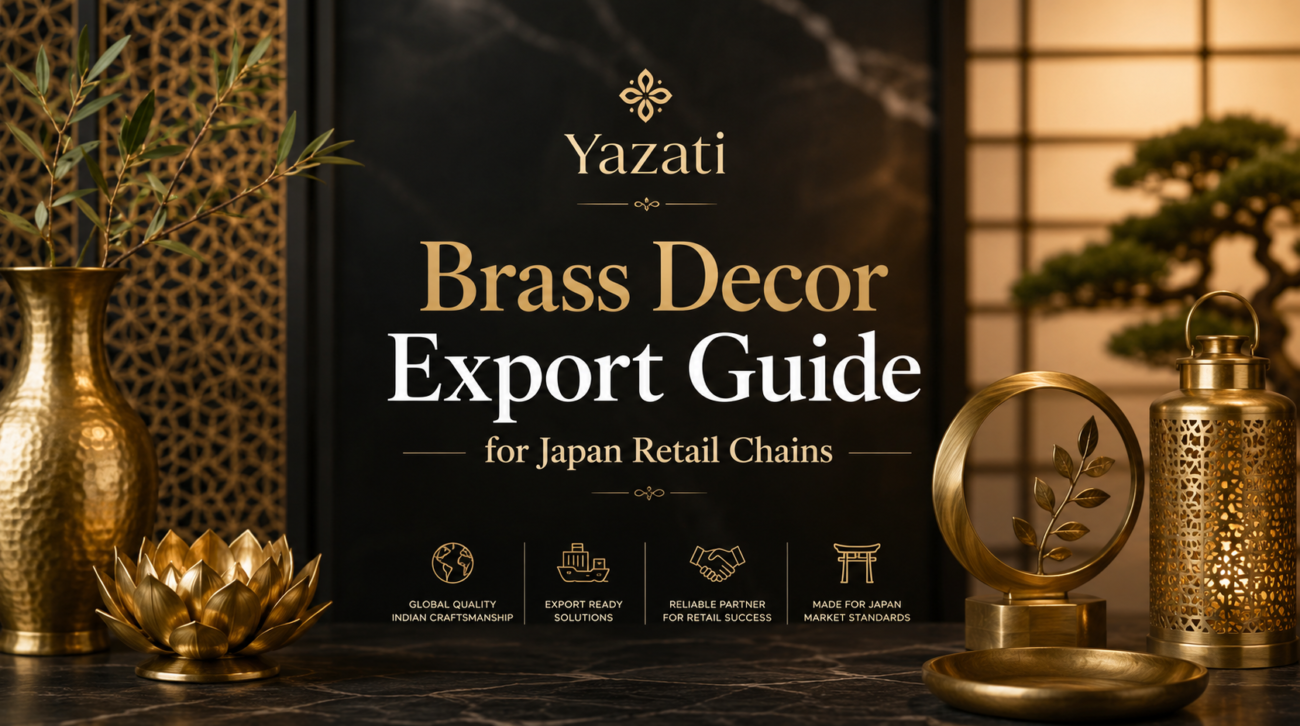
Introduction to Brass Decor Export Guide for Japan Retail Chains
The Japanese retail market offers significant opportunities for brass décor exporters worldwide. As Japanese consumers increasingly appreciate craftsmanship, premium materials, and elegant home accessories, brass décor products have gained attention among retailers and buyers. This Brass Decor Export Guide for Japan Retail Chains provides exporters with practical insights into entering and succeeding in one of the world’s most quality-conscious markets.
Japan is known for its attention to detail, appreciation of aesthetics, and preference for long-lasting products. For exporters of brass decorative items, understanding these preferences can make the difference between a successful partnership and a missed opportunity.
Understanding the Japanese Home Décor Market
Japan’s home décor sector reflects a unique blend of traditional values and modern design preferences. Consumers seek products that offer both functionality and visual appeal.
Consumer Preferences in Japan
Japanese customers often prioritize:
- High-quality craftsmanship
- Minimalist design
- Functional beauty
- Durability
- Sustainability
- Premium packaging
Unlike some markets where size and extravagance dominate, Japanese consumers frequently prefer subtle elegance and refined details.
Popular Brass Décor Categories
Several brass décor categories perform particularly well in Japan:
| Product Category | Demand Level | Key Buyer Segment |
|---|---|---|
| Brass Vases | High | Home Décor Retailers |
| Candle Holders | High | Gift Shops |
| Decorative Trays | Medium-High | Lifestyle Stores |
| Wall Art | Medium | Interior Designers |
| Sculptures | High | Premium Retail Chains |
| Table Accessories | High | Department Stores |
Why Japan Is an Attractive Market for Brass Décor Exporters
Market Size and Growth Trends
Japan remains one of Asia’s largest consumer markets. Even during economic fluctuations, premium home décor products maintain steady demand due to consumers’ preference for quality over quantity.
The country’s mature retail infrastructure provides exporters with access to:
- National retail chains
- Department stores
- Boutique lifestyle stores
- E-commerce platforms
- Specialty gift retailers
Demand for Premium Handcrafted Products
Handcrafted brass décor aligns well with Japanese appreciation for artisanal products. Stories about craftsmanship, heritage, and traditional manufacturing methods often enhance product appeal.
Buyers increasingly seek products that demonstrate authenticity and unique design characteristics.
Key Japan Retail Chains for Brass Décor Distribution
Successful market entry often depends on selecting the right retail partners.
Department Stores
Large department stores frequently stock premium décor collections. These retailers often require:
- Consistent quality
- Reliable delivery schedules
- Professional packaging
- Strong product documentation
Lifestyle and Home Décor Retailers
Lifestyle retailers target design-conscious consumers looking for modern decorative accessories. Brass products that combine traditional craftsmanship with contemporary design tend to perform well.
Specialty Gift Shops
Gift retailers represent an important distribution channel because Japanese consumers frequently purchase premium home accessories as gifts.
Product Adaptation for Japanese Consumers
Design Preferences
Product adaptation is essential when exporting to Japan.
Minimalist Aesthetics
Clean lines, balanced proportions, and understated elegance often outperform overly ornate designs.
Popular characteristics include:
- Matte brass finishes
- Geometric shapes
- Nature-inspired designs
- Compact dimensions
Functional Elegance
Products serving practical purposes while maintaining decorative appeal receive strong consumer interest.
Examples include:
- Brass desk organizers
- Decorative storage solutions
- Multipurpose trays
- Functional sculptures
Packaging Requirements
Packaging significantly influences purchasing decisions.
Recommended packaging features include:
- Premium presentation
- Protective materials
- Clear labeling
- Eco-friendly components
- Gift-ready appearance
Quality Standards and Compliance Requirements
Japanese retailers maintain some of the highest quality expectations globally.
Product Safety Expectations
Exporters should ensure:
- Material consistency
- Safe surface treatments
- Absence of harmful substances
- Stable product construction
Regular quality inspections can help reduce rejection rates.
Labeling and Documentation
Retail chains typically request:
- Product specifications
- Material descriptions
- Country-of-origin information
- Care instructions
- Packing lists
- Commercial invoices
Maintaining accurate documentation helps streamline customs clearance and retailer onboarding.
Pricing Strategy for Japan Retail Chains
Pricing must balance profitability with market competitiveness.
Cost Calculations
Consider the following factors:
- Manufacturing cost
- Packaging cost
- Inland transportation
- Export documentation
- Freight charges
- Import duties
- Distributor margins
Wholesale Margin Expectations
Retail chains often require significant margins to cover operational costs.
A typical pricing structure may include:
| Stage | Margin Range |
|---|---|
| Distributor | 20%–40% |
| Retailer | 40%–60% |
| Premium Retailer | 60%–100% |
Proper cost modeling is essential before approaching buyers.
Logistics and Shipping Considerations
Efficient logistics contribute significantly to long-term success.
Sea Freight vs. Air Freight
Sea Freight Advantages
- Lower cost
- Suitable for large orders
- Better profitability
Air Freight Advantages
- Faster delivery
- Ideal for samples
- Useful for urgent replenishment
Customs Clearance Process
Essential export documents generally include:
- Commercial invoice
- Packing list
- Bill of lading
- Certificate of origin (when required)
- Product specifications
Working with experienced freight forwarders can reduce delays and unexpected costs.
Building Relationships with Japanese Buyers
Long-term relationships are fundamental in Japanese business culture.
Business Etiquette
Key practices include:
- Punctuality
- Professional presentation
- Respectful communication
- Attention to detail
- Consistent follow-up
Trust often develops gradually and may require multiple interactions before substantial orders are placed.
Communication Best Practices
Japanese buyers appreciate:
- Clear responses
- Accurate information
- Prompt communication
- Detailed quotations
- Professional product catalogs
Consistency is often valued more than aggressive sales tactics.
Marketing Brass Décor Products in Japan
Trade Shows and Exhibitions
Industry exhibitions remain effective channels for meeting buyers and showcasing products.
Benefits include:
- Face-to-face networking
- Product demonstrations
- Market feedback
- Competitive analysis
Useful industry information can often be found through organizations such as the Japan External Trade Organization.
Digital Marketing Opportunities
Digital strategies may include:
- Japanese-language product catalogs
- Localized websites
- B2B marketplaces
- Social media promotion
- Email outreach campaigns
Localized content significantly improves buyer engagement.
Negotiation Strategies with Retail Chains
Preparing Product Catalogs
An effective catalog should include:
- Professional photography
- Product dimensions
- Material specifications
- Packaging details
- MOQ requirements
- Pricing structure
Managing Long-Term Contracts
Retail chains generally favor suppliers who can provide:
- Stable production capacity
- Consistent quality
- Reliable delivery schedules
- Product development support
Long-term contracts often emerge after successful initial orders.
Common Challenges and Solutions
Cultural Differences
Challenges may include:
- Different communication styles
- Longer decision-making processes
- Extensive quality reviews
Solutions include patience, preparation, and cultural awareness training.
Competition from Local Suppliers
To compete effectively:
- Highlight craftsmanship
- Offer exclusive designs
- Maintain competitive pricing
- Ensure superior service levels
Differentiation is often more important than price competition alone.
Future Trends in the Japanese Brass Décor Market
Sustainable Décor Demand
Consumers increasingly favor products that:
- Use recyclable materials
- Feature sustainable packaging
- Demonstrate responsible production practices
Brass’s durability and recyclability support these trends.
Premium Handmade Collections
Luxury handmade décor continues gaining popularity among consumers seeking unique and meaningful purchases.
Exporters who emphasize craftsmanship and authenticity are likely to benefit from this shift.
FAQs
1. Is Japan a good market for brass décor exports?
Yes. Japan values quality, craftsmanship, and premium home décor products, making it a promising market for brass décor exporters.
2. What brass décor products sell best in Japan?
Brass vases, candle holders, sculptures, trays, and decorative table accessories often perform strongly.
3. Do Japanese buyers require product customization?
Many buyers prefer products adapted to Japanese design preferences, including minimalist aesthetics and functional designs.
4. What is the most important factor when selling to Japanese retail chains?
Consistent product quality is usually the most critical factor.
5. How should exporters approach Japanese buyers?
Professional catalogs, clear communication, patience, and relationship-building are essential.
6. Are trade shows effective for finding Japanese retail partners?
Yes. Trade shows remain one of the most effective ways to meet buyers and establish business relationships.
7. What packaging standards are expected in Japan?
High-quality, protective, and visually appealing packaging is strongly preferred.
8. How long does it take to secure retail partnerships in Japan?
The process can take several months because buyers often conduct detailed supplier evaluations before making commitments.
Conclusion
This Brass Decor Export Guide for Japan Retail Chains demonstrates that Japan offers substantial opportunities for exporters willing to meet its demanding standards. Success requires more than attractive products; it depends on exceptional quality, thoughtful design adaptation, reliable logistics, strong documentation, and long-term relationship building.
Exporters who understand Japanese consumer preferences, invest in premium packaging, maintain consistent quality standards, and develop trust with retail partners can establish profitable and sustainable business relationships. As demand for handcrafted, premium, and sustainable home décor continues to grow, brass décor manufacturers are well-positioned to capitalize on opportunities within Japan’s sophisticated retail landscape.
✨ Discover Global Sourcing Excellence with Netyex ✨
Netyex is your trusted B2B sourcing partner, connecting international buyers with India’s finest manufacturers and curated product lines—from handicrafts and home décor to kitchenware, textiles, hospitality essentials, and more. With verified suppliers and end-to-end support, we make global procurement seamless, reliable, and efficient.
👉 Elevate your sourcing experience—explore Netyex today.
📦 Bulk orders & customisation | 🌍 Worldwide delivery | 🤝 Trusted by global buyers
Visit Netyex to source premium Indian products with confidence.