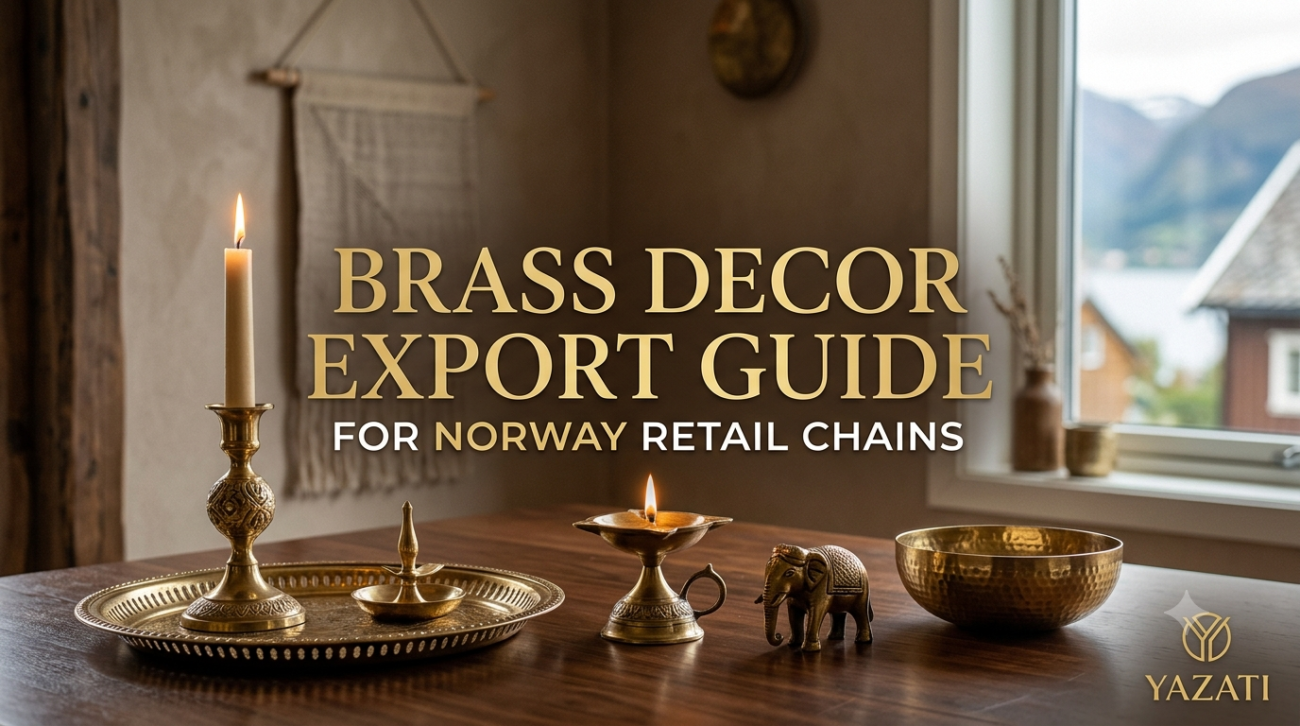
Norway has become one of Europe’s most attractive markets for premium home décor products. With consumers increasingly seeking sustainable, handcrafted, and timeless interior accessories, brass décor has found a strong niche among Norwegian retailers. For exporters, understanding the unique expectations of Norway’s retail chains is essential for long-term success.
This Brass Decor Export Guide for Norway Retail Chains explains the Norwegian market, purchasing preferences, legal requirements, logistics, pricing strategies, and practical tips for building profitable partnerships.
Understanding Norway’s Home Décor Market
Norway has one of Europe’s highest purchasing powers. Consumers appreciate products that combine elegance, simplicity, and durability.
Several trends drive demand:
- Sustainable living
- Minimalist Scandinavian interiors
- Premium handmade products
- Natural materials
- Long-lasting décor
Brass décor fits these preferences exceptionally well because it offers durability while maintaining a luxurious appearance.
Why Norwegian Retail Chains Buy Brass Décor
Retail chains continuously refresh seasonal collections.
Popular buying reasons include:
- Premium appearance
- Long lifespan
- Handmade craftsmanship
- Eco-friendly image
- High gift value
Retailers often seek collections rather than single products, allowing customers to create coordinated interior designs.
Most Popular Brass Décor Products
Norwegian buyers commonly source:
Decorative Items
- Candle holders
- Lanterns
- Wall décor
- Sculptures
- Mirrors
- Decorative bowls
Kitchen Accessories
- Serving trays
- Fruit baskets
- Wine holders
- Napkin holders
Living Room Products
- Coffee table accessories
- Vases
- Planters
- Magazine holders
Bathroom Accessories
- Soap dispensers
- Towel holders
- Storage containers
Seasonal collections also perform particularly well during Christmas and autumn.
Understanding Scandinavian Design Preferences
Norwegian consumers generally prefer:
- Neutral colors
- Matte finishes
- Minimal ornamentation
- Functional design
- High craftsmanship
Instead of excessive decoration, subtle elegance is preferred.
Designs inspired by nature often perform better than highly ornate traditional styles.
Product Quality Expectations
Retail chains typically expect:
- Uniform finishing
- Scratch-free surfaces
- Durable coating
- Stable construction
- Safe edges
- Consistent sizing
Quality control should include inspections before packaging to minimize returns.
Sustainability Matters
Norway places significant importance on environmental responsibility.
Exporters can strengthen their position by:
- Using recyclable packaging
- Reducing plastic usage
- Offering responsibly sourced brass
- Demonstrating ethical manufacturing practices
- Providing transparency about production
Sustainability is increasingly becoming a purchasing criterion rather than just a marketing advantage.
Export Documentation
Typical export documentation includes:
| Document | Purpose |
|---|---|
| Commercial Invoice | Product details |
| Packing List | Shipment contents |
| Certificate of Origin | Product origin |
| Bill of Lading | Transport document |
| HS Codes | Customs classification |
| Insurance Documents | Cargo protection |
Always verify current customs and import requirements before shipment.
Packaging for Norwegian Retail Chains
Packaging significantly influences buyer perception.
Recommended packaging features:
- Strong corrugated cartons
- Moisture protection
- Individual product wrapping
- Barcode labels
- Retail-ready presentation
- English product information
Many chains also appreciate minimalist packaging that reflects Scandinavian aesthetics.
Shipping and Logistics
Common shipping methods include:
Sea Freight
Ideal for:
- Large orders
- Lower transportation costs
- Container shipments
Air Freight
Suitable for:
- Samples
- Urgent replenishment
- High-value items
Planning shipments well ahead of peak retail seasons helps avoid delays and additional costs.
Pricing Strategy
Pricing should account for:
- Manufacturing costs
- Packaging
- Inland transportation
- Export fees
- Freight
- Insurance
- Import duties
- Retail margins
Competitive pricing should not compromise product quality.
Norwegian buyers generally prioritize reliability and craftsmanship over the lowest price.
How to Approach Norwegian Retail Chains
Professional preparation improves your chances of success.
Prepare:
- Digital product catalog
- Price list
- Product specifications
- Certifications
- Company profile
- Production capacity details
Buyers appreciate clear communication and timely responses.
Marketing Tips
Effective marketing includes:
- Professional product photography
- Lifestyle images
- Sustainability messaging
- Consistent branding
- Social media presence
- Participation in international trade fairs
Highlighting handmade craftsmanship often resonates strongly with Scandinavian buyers.
For export guidance and market information, resources from the International Trade Centre can be valuable: https://www.intracen.org
Common Export Challenges
Challenges may include:
- Currency fluctuations
- Freight cost increases
- Seasonal demand variations
- Strict quality expectations
- Longer lead times
Risk can be reduced through careful planning, quality assurance, and maintaining open communication with buyers.
Future Opportunities
Growing trends likely to influence demand include:
- Sustainable luxury
- Handmade collections
- Mixed-material décor
- Small-batch exclusive products
- Designer collaborations
Exporters who invest in innovation and responsible production are well-positioned for long-term growth.
Frequently Asked Questions (FAQs)
1. Is Norway a good market for brass décor exports?
Yes. Norway has strong purchasing power and a growing demand for premium, sustainable home décor products.
2. Which brass products sell best?
Candle holders, trays, mirrors, vases, lanterns, bowls, and decorative accessories are among the most popular.
3. Do Norwegian buyers value sustainability?
Absolutely. Eco-friendly materials, recyclable packaging, and ethical production practices are increasingly important purchasing factors.
4. What packaging is preferred?
Minimalist, durable, retail-ready packaging with clear labeling and strong protection during transit.
5. How should exporters price their products?
Include all production, logistics, insurance, customs, and distribution costs while maintaining competitive margins and consistent quality.
6. What helps build long-term relationships with retail chains?
Reliable delivery, consistent quality, transparent communication, flexible product development, and responsiveness to market trends.
Conclusion
Norway presents an attractive opportunity for exporters of brass décor products. Retail chains are looking for suppliers who can deliver premium craftsmanship, sustainable practices, reliable logistics, and collections that align with Scandinavian design preferences. By focusing on product quality, compliance, thoughtful packaging, and strong buyer relationships, exporters can position themselves for lasting success in this high-value market.
✨ Discover Global Sourcing Excellence with Netyex ✨
Netyex is your trusted B2B sourcing partner, connecting international buyers with India’s finest manufacturers and curated product lines—from handicrafts and home décor to kitchenware, textiles, hospitality essentials, and more. With verified suppliers and end-to-end support, we make global procurement seamless, reliable, and efficient.
👉 Elevate your sourcing experience—explore Netyex today.
📦 Bulk orders & customisation | 🌍 Worldwide delivery | 🤝 Trusted by global buyers
Visit Netyex to source premium Indian products with confidence.