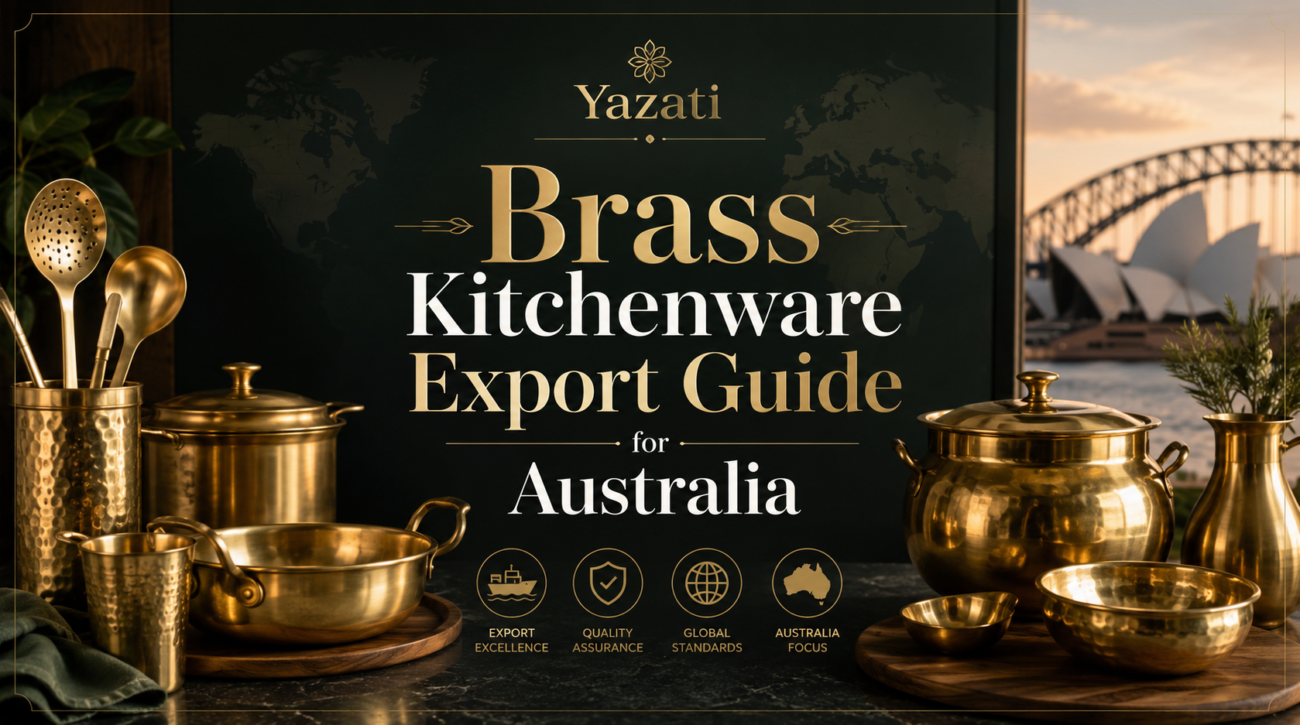
Exporting brass kitchenware to Australia is becoming a profitable opportunity for manufacturers and exporters worldwide. Australian consumers are increasingly attracted to premium, handcrafted, sustainable, and traditional kitchen products. This growing interest has created strong demand for brass utensils, cookware, serving dishes, and decorative kitchen items.
This Brass Kitchenware Export Guide for Australia explains everything exporters need to know, including regulations, certifications, packaging, logistics, pricing, and marketing strategies. Whether you are a new exporter or an established manufacturer, understanding Australia’s import standards can help you build a successful international business.
Understanding the Australian Brass Kitchenware Market
Australia is known for its high purchasing power and preference for quality household products. Brass kitchenware fits perfectly into the country’s growing trend toward eco-friendly and artisanal home goods.
Why Brass Kitchenware Is Popular in Australia
Brass products are valued for their durability, timeless appearance, and traditional appeal. Many Australian buyers prefer handcrafted kitchenware because it combines beauty with functionality.
Brass kitchenware is also associated with:
- Sustainable living
- Long-lasting quality
- Elegant home décor
- Cultural and handmade craftsmanship
Restaurants, boutique hotels, and luxury home décor stores in Australia often seek premium brass serving items and utensils.
Current Market Trends and Consumer Preferences
Australian consumers are increasingly buying:
- Eco-friendly cookware
- Handmade serving trays
- Vintage-style kitchenware
- Decorative brass utensils
- Traditional dining accessories
Minimalist and rustic kitchen themes are also driving demand for brass products.
Benefits of Exporting Brass Kitchenware to Australia
Exporters can enjoy several advantages when targeting the Australian market.
Rising Demand for Sustainable Kitchen Products
Sustainability has become a major purchasing factor in Australia. Brass is recyclable and environmentally friendly, making it attractive to eco-conscious consumers.
Premium Pricing Opportunities
Australian buyers are often willing to pay higher prices for:
- Handmade craftsmanship
- Authentic materials
- Food-safe products
- Premium packaging
This allows exporters to achieve strong profit margins.
Types of Brass Kitchenware Exported to Australia
There are multiple categories of brass kitchenware products with strong demand.
Brass Utensils
Popular brass utensils include:
- Spoons
- Forks
- Ladles
- Serving spatulas
- Traditional cutlery
These products are often sold in premium gift sets.
Brass Cookware
Cookware products may include:
- Pots
- Pans
- Bowls
- Storage containers
- Tea kettles
Food-grade coating and safety standards are extremely important for cookware exports.
Decorative and Serving Items
Serving products are among the best-selling brass kitchenware exports:
- Serving trays
- Decorative bowls
- Cake stands
- Drinkware
- Dining accessories
These products are commonly used in luxury dining setups.
Australian Import Regulations for Brass Kitchenware
Understanding Australian import laws is critical for successful exporting.
Customs Requirements
Exporters must comply with Australian Border Force regulations. Imported goods require:
- Accurate customs declarations
- Proper HS codes
- Commercial invoices
- Country-of-origin documentation
Incorrect paperwork can delay shipments.
Product Safety Standards
Kitchenware intended for food contact must meet food safety requirements. Brass products should be free from harmful lead levels and toxic coatings.
Testing from recognized laboratories is strongly recommended.
Biosecurity and Packaging Rules
Australia has strict biosecurity regulations. Wooden packaging materials must comply with ISPM-15 standards.
Packaging should be:
- Clean
- Pest-free
- Properly labeled
- Environmentally compliant
For official Australian import guidance, exporters can refer to the .
Essential Certifications for Export
Certifications improve buyer trust and simplify customs clearance.
Food-Grade Compliance
Food-contact brass kitchenware should undergo testing for:
- Lead content
- Cadmium levels
- Food safety compliance
Laboratory certifications can increase credibility with Australian importers.
Quality Assurance Certifications
Useful certifications may include:
- ISO 9001
- SGS inspection reports
- Material testing certificates
These documents help reassure buyers about product quality.
Brass Kitchenware Manufacturing Standards
High manufacturing standards are necessary for export success.
Material Composition Requirements
The brass composition should meet international safety standards. Exporters must avoid excessive lead content in products used for cooking or serving food.
Finishing and Coating Standards
Proper polishing and food-safe coatings improve:
- Product appearance
- Corrosion resistance
- Customer satisfaction
Poor finishing can lead to complaints and rejected shipments.
Packaging Guidelines for Australian Exports
Packaging plays a major role in protecting products during long-distance shipping.
Eco-Friendly Packaging Solutions
Australian buyers appreciate sustainable packaging such as:
- Recyclable cardboard
- Paper wrapping
- Biodegradable cushioning
Plastic-heavy packaging may reduce customer appeal.
Labeling Requirements
Labels should clearly mention:
- Product name
- Country of origin
- Manufacturer details
- Care instructions
- Material composition
Clear labeling improves compliance and customer confidence.
Shipping and Logistics for Australia
Efficient logistics are essential for timely delivery.
Sea Freight vs Air Freight
| Shipping Method | Advantages | Disadvantages |
|---|---|---|
| Sea Freight | Lower cost for bulk orders | Longer transit time |
| Air Freight | Faster delivery | Higher shipping costs |
Sea freight is usually preferred for large brass kitchenware shipments.
Choosing Reliable Freight Forwarders
A trusted freight forwarder can help with:
- Customs clearance
- Documentation
- Insurance
- Warehousing
- Tracking
Experienced logistics partners reduce shipping risks.
Export Documentation Checklist
Accurate documentation is essential for smooth customs processing.
Commercial Invoice
The invoice should include:
- Product descriptions
- Quantity
- Pricing
- Buyer and seller details
Packing List
This document specifies:
- Box dimensions
- Weight
- Packaging details
Bill of Lading
The bill of lading serves as:
- Shipment proof
- Ownership document
- Transportation agreement
Certificate of Origin
Some Australian buyers may request origin certificates for customs purposes.
Pricing Strategy for Australian Buyers
Pricing significantly affects competitiveness.
Calculating Export Costs
Exporters should consider:
- Manufacturing costs
- Packaging
- Freight charges
- Insurance
- Duties
- Marketing expenses
Ignoring hidden costs can reduce profitability.
Competitive Pricing Techniques
Successful exporters often:
- Offer bulk discounts
- Provide flexible MOQs
- Use premium branding
- Include attractive packaging
Value-added services can justify higher prices.
Finding Buyers in Australia
Buyer acquisition is one of the most important parts of exporting.
Online B2B Platforms
Popular B2B platforms include:
- Alibaba
- IndiaMART
- TradeIndia
- Global Sources
Professional product listings improve visibility.
Trade Shows and Exhibitions
International trade fairs help exporters:
- Meet distributors
- Understand market trends
- Showcase craftsmanship
- Build partnerships
Australian homeware exhibitions can generate valuable leads.
Marketing Brass Kitchenware in Australia
Strong marketing helps brands stand out in a competitive market.
Digital Marketing Strategies
Effective digital marketing methods include:
- SEO optimization
- Social media promotion
- Influencer collaborations
- Email marketing
- Product videos
Visual storytelling works especially well for handcrafted brass products.
Building Distributor Relationships
Long-term partnerships with local distributors improve:
- Market reach
- Brand visibility
- Repeat orders
- Customer trust
Consistent communication is essential.
Common Challenges in Brass Kitchenware Export
Exporters should prepare for common industry challenges.
Compliance Issues
Failure to meet safety standards can lead to:
- Shipment rejection
- Financial losses
- Legal penalties
Regular product testing helps avoid these problems.
Shipping Delays
Global shipping disruptions may affect delivery schedules. Proper planning and inventory management reduce delays.
Tips to Build Long-Term Export Success
Long-term success depends on reliability and product quality.
Quality Consistency
Maintaining consistent product quality helps build a strong reputation in Australia.
Customer Support and Communication
Prompt communication improves buyer satisfaction and encourages repeat business.
Key practices include:
- Fast response times
- Clear shipping updates
- After-sales support
- Professional documentation
Frequently Asked Questions
Is brass kitchenware legal to export to Australia?
Yes, brass kitchenware can be legally exported to Australia if it complies with food safety and import regulations.
Do brass utensils require food-grade certification?
Food-contact products should ideally have food-grade testing certifications to ensure safety.
What is the best shipping method for brass kitchenware?
Sea freight is usually more cost-effective for large shipments, while air freight is suitable for urgent deliveries.
What documents are required for exporting brass kitchenware?
Common documents include commercial invoices, packing lists, bills of lading, and certificates of origin.
Are eco-friendly packaging materials important in Australia?
Yes, sustainable packaging is highly preferred by Australian consumers and businesses.
How can exporters find Australian buyers?
Exporters can use B2B platforms, trade exhibitions, import directories, and digital marketing strategies.
Conclusion
The Australian market offers excellent opportunities for brass kitchenware exporters willing to meet quality and compliance standards. Rising consumer interest in sustainable, handcrafted, and premium kitchen products makes Australia an attractive destination for exporters worldwide.
This Brass Kitchenware Export Guide for Australia highlights the importance of product quality, certifications, proper packaging, effective logistics, and smart marketing strategies. Businesses that focus on consistency, customer relationships, and compliance can build a profitable and long-lasting export operation.
By understanding market expectations and maintaining international standards, exporters can successfully establish their brass kitchenware brands in Australia’s growing home and lifestyle market.
✨ Discover Global Sourcing Excellence with Netyex ✨
Netyex is your trusted B2B sourcing partner, connecting international buyers with India’s finest manufacturers and curated product lines—from handicrafts and home décor to kitchenware, textiles, hospitality essentials, and more. With verified suppliers and end-to-end support, we make global procurement seamless, reliable, and efficient.
👉 Elevate your sourcing experience—explore Netyex today.
📦 Bulk orders & customisation | 🌍 Worldwide delivery | 🤝 Trusted by global buyers
Visit Netyex to source premium Indian products with confidence.