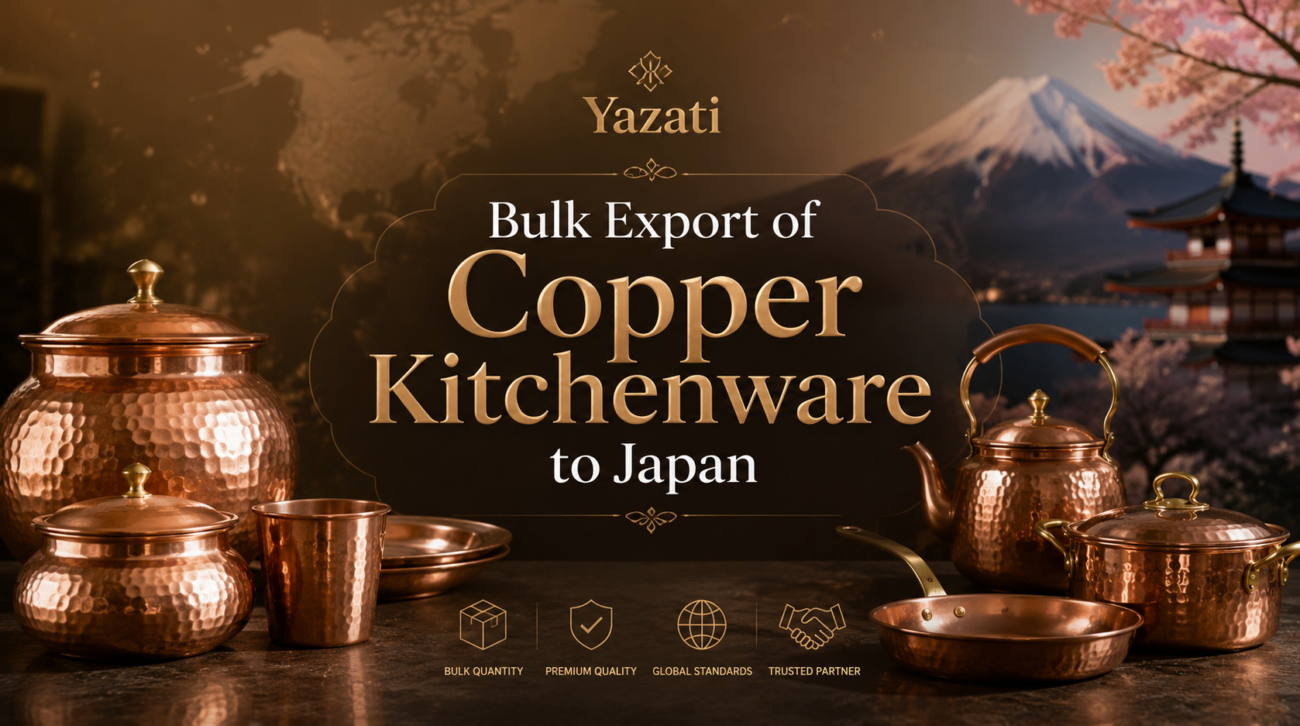
Introduction to Bulk Export of Copper Kitchenware to Japan
The Bulk Export of Copper Kitchenware to Japan presents a significant opportunity for manufacturers and exporters seeking access to one of the world’s most quality-conscious consumer markets. Japan has a longstanding appreciation for craftsmanship, premium materials, and aesthetically pleasing household products. Copper kitchenware aligns perfectly with these preferences due to its durability, heat conductivity, and elegant appearance.
As Japanese consumers increasingly invest in premium cooking tools, the demand for high-quality imported copper cookware and utensils continues to grow. Exporters who understand market requirements, regulatory standards, and consumer expectations can establish profitable long-term business relationships in Japan.
Why Japan Is a Promising Market for Copper Kitchenware
Consumer Preferences in Japan
Japanese consumers place exceptional importance on:
- Product quality
- Durability
- Safety
- Craftsmanship
- Elegant design
Copper kitchenware naturally meets these expectations because it combines functionality with aesthetic appeal.
Growing Demand for Premium Kitchen Products
Home cooking trends have increased demand for premium cookware. Many Japanese households are willing to pay higher prices for products that offer:
- Better cooking performance
- Longer lifespan
- Attractive presentation
- Traditional craftsmanship
This creates favorable conditions for exporters specializing in handcrafted or premium copper kitchenware.
Understanding the Japanese Copper Kitchenware Market
Popular Copper Kitchenware Products
Copper Pots and Pans
Professional chefs and culinary enthusiasts highly value copper cookware because of its superior heat distribution. Common products include:
- Saucepans
- Frying pans
- Stock pots
- Specialty cooking vessels
Copper Utensils and Serving Ware
Popular imported items include:
- Copper ladles
- Serving spoons
- Measuring cups
- Water bottles
- Drinking mugs
Decorative and Traditional Copper Items
Japanese consumers also purchase copper products for decorative purposes, such as:
- Tea accessories
- Decorative trays
- Handmade serving bowls
- Traditional dining pieces
Benefits of Exporting Copper Kitchenware to Japan
High Purchasing Power
Japan maintains one of the strongest consumer markets globally. Customers often prioritize quality over low pricing.
Appreciation for Craftsmanship and Quality
Handmade and artisan-produced kitchenware can command premium prices because Japanese consumers appreciate detailed workmanship.
Long-Term Business Opportunities
Building trust with Japanese distributors often leads to long-lasting partnerships and repeat orders.
Product Quality Standards and Compliance Requirements
Japanese Food Safety Regulations
Copper kitchenware intended for food contact must comply with Japanese food safety requirements. Exporters should verify that coatings, linings, and finishes meet applicable standards.
Product Labeling Requirements
Labels typically need information such as:
| Requirement | Description |
|---|---|
| Product Name | Clear identification |
| Material Composition | Copper percentage and lining details |
| Country of Origin | Manufacturing country |
| Usage Instructions | Safe usage guidelines |
| Care Instructions | Cleaning recommendations |
Packaging Standards for Export
Packaging should be:
- Durable
- Moisture-resistant
- Shock-resistant
- Environmentally friendly
Japanese buyers often favor minimal yet premium packaging designs.
Manufacturing Considerations for Exporters
Material Quality and Purity Standards
High-quality copper products should feature:
- Consistent thickness
- High copper purity
- Safe food-grade lining
- Smooth finishing
Quality inspections are essential before shipment.
Design Preferences for Japanese Consumers
Japanese buyers often prefer:
- Clean lines
- Functional elegance
- Compact designs
- Traditional craftsmanship blended with modern usability
Understanding local design trends can significantly improve sales performance.
Export Documentation and Legal Requirements
Proper documentation reduces customs delays and builds buyer confidence.
Commercial Invoice and Packing List
The commercial invoice should include:
- Product descriptions
- Quantity
- Unit value
- Total shipment value
Certificate of Origin
Many buyers request a certificate of origin to verify manufacturing location.
Customs Clearance Documentation
Typical export documentation includes:
- Bill of Lading
- Export Declaration
- Packing List
- Commercial Invoice
- Insurance Documents
Consult customs professionals for current requirements.
Shipping and Logistics for Bulk Export of Copper Kitchenware to Japan
Sea Freight vs Air Freight
| Method | Advantages | Disadvantages |
|---|---|---|
| Sea Freight | Cost-effective for bulk orders | Longer transit times |
| Air Freight | Faster delivery | Higher costs |
For large-scale exports, sea freight is generally preferred.
Choosing the Right Port
Major Japanese ports include:
- Port of Tokyo
- Port of Yokohama
- Port of Osaka
- Port of Kobe
Freight Cost Optimization
Reduce shipping costs by:
- Consolidating shipments
- Negotiating freight contracts
- Optimizing packaging dimensions
- Using experienced freight forwarders
Pricing Strategy and Profit Margins
Cost Calculation Framework
Include the following costs:
- Raw materials
- Manufacturing
- Packaging
- Inland transportation
- Export documentation
- Freight
- Insurance
Competitive Pricing Techniques
Successful exporters balance:
- Competitive pricing
- Product quality
- Brand positioning
- Distributor margins
Avoid competing solely on price.
Finding Japanese Buyers and Distributors
Trade Shows and Exhibitions
Participating in trade fairs helps establish direct connections with:
- Importers
- Retailers
- Distributors
- Hospitality buyers
Examples include major Japanese gift, homeware, and lifestyle exhibitions.
B2B Marketplaces
Useful platforms include:
- Alibaba
- Global Sources
- TradeKey
Direct Importers and Retail Chains
Target:
- Department stores
- Specialty kitchenware retailers
- Restaurant supply distributors
- Luxury home goods chains
Marketing Strategies for Copper Kitchenware in Japan
Branding and Product Positioning
Focus marketing messages on:
- Authentic craftsmanship
- Premium quality
- Traditional manufacturing techniques
- Sustainability
Digital Marketing and Online Presence
Develop:
- Japanese-language catalogs
- Product videos
- Professional website
- Social media content
A strong online presence increases buyer confidence.
For export guidance, exporters may also consult organizations such as .
Challenges in Bulk Export of Copper Kitchenware to Japan
Cultural and Language Barriers
Business success often depends on:
- Clear communication
- Professional documentation
- Understanding Japanese business etiquette
Quality Expectations
Japanese buyers maintain extremely high standards regarding:
- Finish quality
- Packaging
- Product consistency
Competition from Domestic Manufacturers
Local manufacturers have strong reputations. Exporters must differentiate through:
- Unique designs
- Competitive pricing
- Superior craftsmanship
Future Trends in the Japanese Kitchenware Industry
Sustainable and Handmade Products
Demand for sustainable products continues to grow. Handmade copper kitchenware can benefit from this trend.
Premium Home Cooking Trends
Consumers increasingly invest in premium cookware as cooking becomes both a hobby and lifestyle choice.
Key future drivers include:
- Luxury home dining
- Artisan products
- Eco-friendly packaging
- Functional aesthetics
FAQs
1. Is Japan a good market for copper kitchenware exports?
Yes. Japan values premium craftsmanship, quality materials, and durable kitchen products, making it an attractive market.
2. Which copper kitchenware products sell best in Japan?
Copper pots, pans, serving utensils, water vessels, and decorative dining accessories are among the most popular.
3. What certifications are required for exporting copper kitchenware to Japan?
Requirements vary depending on product type and food-contact usage. Compliance with Japanese food safety standards is essential.
4. What is the preferred shipping method for bulk exports?
Sea freight is generally the most economical choice for large-volume shipments.
5. How can exporters find Japanese buyers?
Through trade fairs, B2B marketplaces, distributors, importers, and direct outreach campaigns.
6. What factors influence pricing in Japan?
Quality, craftsmanship, shipping costs, branding, and market positioning significantly affect pricing.
Conclusion
The Bulk Export of Copper Kitchenware to Japan offers substantial opportunities for manufacturers capable of delivering exceptional quality, consistent production standards, and reliable logistics. Japan’s appreciation for craftsmanship, premium materials, and functional design creates favorable conditions for exporters seeking long-term growth.
Success depends on understanding consumer preferences, meeting regulatory requirements, maintaining rigorous quality control, and building trusted relationships with distributors and retailers. By focusing on premium positioning and customer satisfaction, exporters can establish a strong presence in Japan’s lucrative kitchenware market.
✨ Discover Global Sourcing Excellence with Netyex ✨
Netyex is your trusted B2B sourcing partner, connecting international buyers with India’s finest manufacturers and curated product lines—from handicrafts and home décor to kitchenware, textiles, hospitality essentials, and more. With verified suppliers and end-to-end support, we make global procurement seamless, reliable, and efficient.
👉 Elevate your sourcing experience—explore Netyex today.
📦 Bulk orders & customisation | 🌍 Worldwide delivery | 🤝 Trusted by global buyers
Visit Netyex to source premium Indian products with confidence.