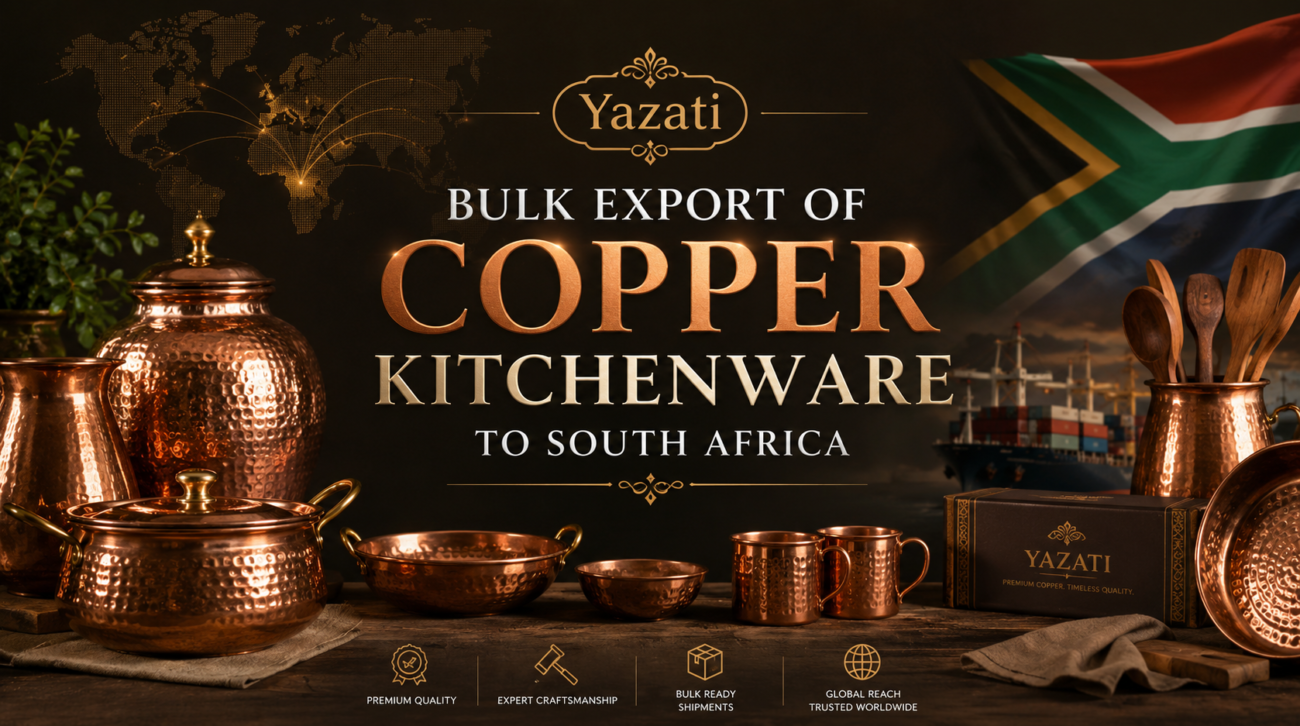
Introduction to Copper Kitchenware Export Business
The Bulk Export of Copper Kitchenware to South Africa presents an exciting opportunity for manufacturers, wholesalers, and exporters looking to expand into international markets. Copper kitchenware has long been valued for its durability, attractive appearance, and excellent heat conductivity. From copper pots and pans to serving trays and decorative kitchen accessories, these products continue to attract consumers seeking premium kitchen solutions.
South Africa has emerged as a promising destination for imported kitchenware due to its growing middle class, expanding hospitality sector, and increasing demand for luxury home products. Exporters who understand market dynamics and regulatory requirements can build a sustainable and profitable business.
Why South Africa Is an Attractive Market
South Africa is one of Africa’s largest and most developed economies. Its retail sector includes modern supermarkets, specialty kitchenware stores, online marketplaces, hotels, restaurants, and hospitality businesses that actively source imported products.
Growth of Premium Kitchenware Demand
Consumers are increasingly investing in high-quality cookware and dining products. The popularity of home cooking, gourmet food culture, and interior decoration trends has contributed to demand for aesthetically appealing kitchenware.
Copper products stand out because they offer:
- Elegant appearance
- Excellent heat distribution
- Long product lifespan
- Premium market positioning
- Strong gift appeal
Consumer Preferences in South Africa
South African buyers often prefer:
- High-quality imported products
- Durable cookware
- Eco-friendly materials
- Luxury kitchen accessories
- Traditional handcrafted items
Copper kitchenware aligns well with these preferences, especially among affluent households and hospitality businesses.
Understanding Copper Kitchenware Products
Before entering the export market, businesses must understand the product categories that generate the highest demand.
Popular Copper Kitchenware Categories
The most commonly exported products include:
| Product Category | Market Demand |
|---|---|
| Copper Pots | High |
| Copper Pans | High |
| Copper Water Bottles | Very High |
| Copper Serving Trays | Medium |
| Copper Bowls | High |
| Copper Mugs | High |
| Copper Utensils | Medium |
| Decorative Kitchen Items | Growing |
Handmade vs. Machine-Made Products
Handcrafted copper kitchenware often commands higher prices because of its uniqueness and artisan appeal. Machine-made products, on the other hand, offer consistency and lower production costs.
Exporters may choose either category depending on their target customer segment.
Market Research Before Exporting
Conducting thorough market research helps reduce risks and improve profitability.
Identifying Target Buyers
Potential buyers include:
- Importers
- Wholesalers
- Retail chains
- Online retailers
- Hotels
- Restaurants
- Catering businesses
- Interior decor stores
Understanding buyer needs allows exporters to customize product offerings effectively.
Competitor Analysis
Study competitors already supplying copper kitchenware to South Africa. Evaluate:
- Product range
- Pricing
- Packaging quality
- Marketing approach
- Distribution channels
This analysis helps identify market gaps and opportunities.
Export Regulations and Compliance
Compliance with import regulations is critical for successful international trade.
Product Standards and Certifications
Depending on product use, buyers may request:
- Food-safe material certification
- Heavy metal testing reports
- Manufacturing quality certificates
- Product origin certificates
Providing documentation increases buyer confidence and facilitates customs clearance.
Customs Documentation Requirements
Common export documents include:
- Commercial invoice
- Packing list
- Bill of lading
- Certificate of origin
- Export declaration
- Insurance documents
Accurate documentation helps avoid shipment delays.
Pricing Strategy for Bulk Export
Pricing plays a major role in competitiveness and profitability.
Cost Components
Export pricing generally includes:
- Raw material cost
- Manufacturing cost
- Packaging cost
- Inland transportation
- Freight charges
- Insurance
- Customs expenses
- Distributor margins
Profit Margin Optimization
Successful exporters often achieve higher margins by:
- Purchasing copper in bulk
- Streamlining production
- Optimizing packaging
- Negotiating freight contracts
- Building long-term buyer relationships
Packaging and Labeling Requirements
Proper packaging protects products during transit and enhances brand perception.
Safe Packaging Methods
Recommended packaging solutions include:
- Bubble wrapping
- Foam protection
- Corrugated cartons
- Wooden crates for large shipments
- Moisture-resistant materials
Labeling Guidelines
Labels should typically include:
- Product name
- Country of origin
- Material composition
- Care instructions
- Manufacturer details
Clear labeling supports customs compliance and customer satisfaction.
Shipping and Logistics Management
Efficient logistics are essential for international trade success.
Sea Freight Options
Sea freight remains the most economical solution for bulk shipments.
Benefits include:
- Lower cost per unit
- Large shipment capacity
- Suitable for heavy products
- Reliable international routes
Air Freight Considerations
Air freight offers:
- Faster delivery
- Reduced inventory holding time
- Better for urgent orders
However, it is generally more expensive than sea freight.
Finding Buyers and Distributors
Building a strong distribution network is crucial.
B2B Marketplaces
Popular sourcing platforms include:
- Alibaba
- Global Sources
- TradeIndia
- ExportHub
- Made-in-China
These platforms connect exporters with international buyers.
Trade Shows and Networking
Participation in trade fairs can generate valuable leads. Industry exhibitions allow exporters to:
- Showcase products
- Meet importers
- Understand market trends
- Build long-term relationships
For additional export guidance, exporters can consult resources from the International Trade Centre and visit their official website at https://www.intracen.org.
Marketing Copper Kitchenware in South Africa
Digital Marketing Strategies
Effective online marketing methods include:
- Search engine optimization (SEO)
- Social media advertising
- Product videos
- Influencer partnerships
- Email marketing campaigns
Professional product photography significantly improves buyer engagement.
Wholesale Promotion Techniques
To attract distributors:
- Offer bulk discounts
- Provide sample kits
- Develop product catalogs
- Create private-label options
- Maintain responsive customer service
Common Challenges and Solutions
| Challenge | Solution |
|---|---|
| Freight Cost Fluctuation | Negotiate long-term contracts |
| Customs Delays | Maintain accurate documentation |
| Currency Volatility | Use hedging strategies |
| Market Competition | Focus on quality and branding |
| Product Damage | Improve packaging standards |
By anticipating these challenges, exporters can minimize disruptions and maintain profitability.
Future Opportunities in the South African Market
Several trends indicate continued growth potential:
- Expansion of e-commerce
- Rising demand for luxury home goods
- Growth in hospitality and tourism
- Increasing appreciation for handcrafted products
- Interest in sustainable and durable kitchenware
Exporters who position themselves as reliable suppliers can capitalize on these emerging opportunities.
Frequently Asked Questions
1. Is South Africa a good market for copper kitchenware exports?
Yes. Growing consumer spending, hospitality expansion, and demand for premium kitchen products make South Africa an attractive market.
2. Which copper kitchenware products sell best?
Copper water bottles, cookware sets, serving trays, mugs, and decorative kitchen accessories are among the most popular products.
3. What is the preferred shipping method for bulk orders?
Sea freight is generally the most cost-effective option for large-volume shipments.
4. Do copper kitchenware products require certification?
Many buyers prefer food-safety certifications and quality assurance documentation, especially for cookware and drinkware.
5. How can exporters find buyers in South Africa?
B2B marketplaces, trade exhibitions, import-export directories, and direct outreach to distributors are effective methods.
6. What are the biggest challenges when exporting to South Africa?
Common challenges include logistics costs, customs procedures, exchange rate fluctuations, and competition from established suppliers.
Conclusion
The Bulk Export of Copper Kitchenware to South Africa offers substantial opportunities for manufacturers and exporters seeking international growth. With increasing demand for premium cookware, decorative kitchen products, and sustainable household goods, South Africa represents a valuable market for expansion. Success depends on conducting thorough market research, complying with regulations, implementing effective pricing strategies, maintaining high product quality, and building strong relationships with distributors and retailers. Businesses that focus on these fundamentals can establish a profitable and sustainable export operation in this growing market.
✨ Discover Global Sourcing Excellence with Netyex ✨
Netyex is your trusted B2B sourcing partner, connecting international buyers with India’s finest manufacturers and curated product lines—from handicrafts and home décor to kitchenware, textiles, hospitality essentials, and more. With verified suppliers and end-to-end support, we make global procurement seamless, reliable, and efficient.
👉 Elevate your sourcing experience—explore Netyex today.
📦 Bulk orders & customisation | 🌍 Worldwide delivery | 🤝 Trusted by global buyers
Visit Netyex to source premium Indian products with confidence.