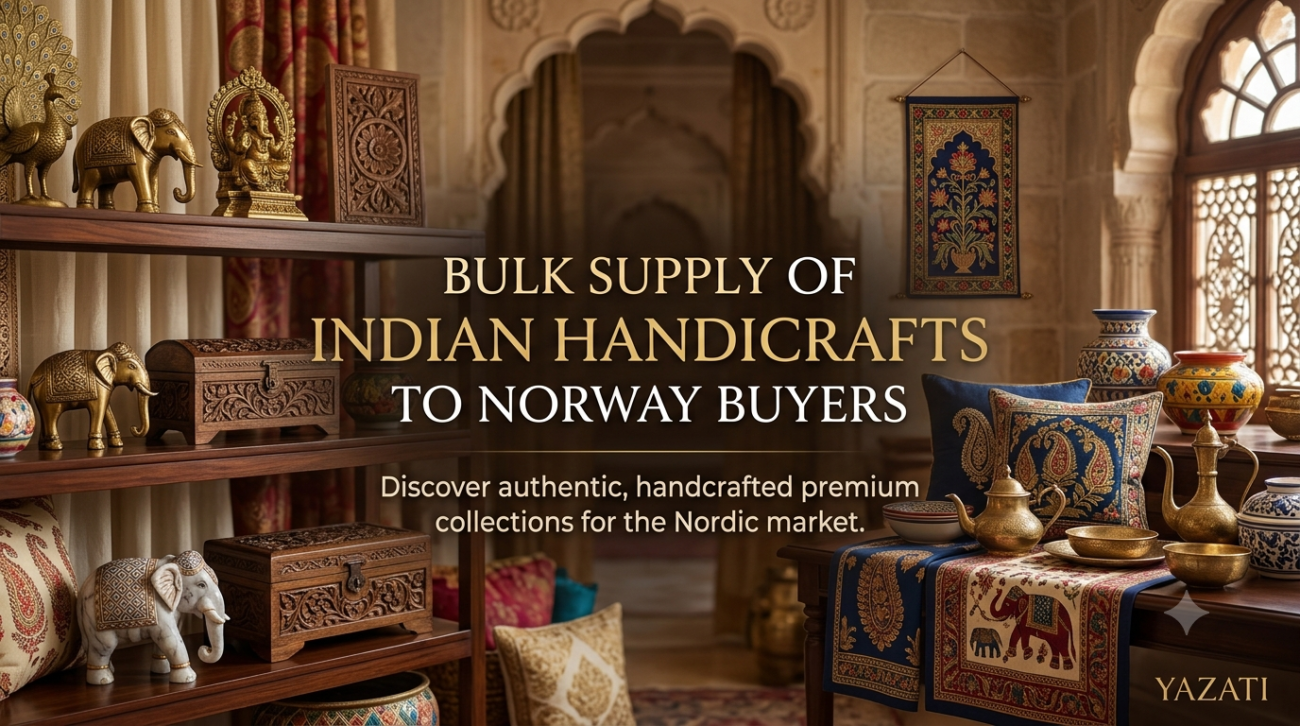
India has earned a global reputation for producing beautiful handcrafted products that combine traditional artistry with modern functionality. Today, the Bulk Supply of Indian Handicrafts to Norway Buyers represents one of the fastest-growing export opportunities for manufacturers and wholesalers alike.
Norwegian consumers increasingly appreciate sustainable, eco-friendly, and handmade products that add warmth and authenticity to homes and commercial spaces. Indian handicrafts perfectly match these preferences, making India a preferred sourcing destination for importers in Norway.
Whether you are a wholesaler, retailer, interior designer, or online marketplace seller, importing Indian handicrafts in bulk offers excellent profit margins, product diversity, and long-term business opportunities.
Introduction to India’s Handicraft Export Industry
India is among the world’s largest producers and exporters of handcrafted products. Thousands of artisans across states such as Rajasthan, Uttar Pradesh, Gujarat, Karnataka, and West Bengal create products using centuries-old techniques passed through generations.
The handicraft sector contributes significantly to India’s export economy and supports millions of skilled artisans.
Major export categories include:
- Wooden handicrafts
- Brass handicrafts
- Iron crafts
- Marble products
- Glass handicrafts
- Handwoven textiles
- Ceramic décor
- Cane and bamboo products
- Leather handicrafts
- Eco-friendly gift items
These products are exported to Europe, North America, Australia, and Scandinavia, including Norway.
Why Norway Imports Indian Handicrafts
Norwegian buyers increasingly seek products that are:
- Handmade
- Sustainable
- Eco-friendly
- Ethically produced
- Unique
- Premium quality
Mass-produced décor is gradually being replaced by artisan-made products that offer authenticity and craftsmanship.
Growing Demand for Sustainable Decor
Norway has one of Europe’s strongest markets for environmentally responsible products.
Indian handicrafts often use:
- Recycled wood
- Natural fibers
- Organic cotton
- Bamboo
- Jute
- Reclaimed metal
These materials align well with Norwegian sustainability values.
Rising Interest in Handmade Products
Consumers appreciate handcrafted products because every piece carries a unique artistic identity.
Unlike factory-made goods, handmade items showcase:
- Traditional carving
- Hand painting
- Natural textures
- Artisan finishing
- Cultural heritage
Popular Indian Handicrafts Exported to Norway
Wooden Handicrafts
Wooden handicrafts remain among the highest-selling export categories.
Popular products include:
- Decorative trays
- Wall panels
- Coffee tables
- Shelves
- Candle holders
- Wooden bowls
- Sculptures
- Storage boxes
Common wood types include:
- Mango wood
- Sheesham wood
- Acacia wood
Brass & Metal Crafts
Metal handicrafts are widely used in:
- Hotels
- Restaurants
- Home décor
- Luxury retail
Examples include:
- Lanterns
- Decorative bowls
- Candle stands
- Wall art
- Sculptures
- Religious artifacts
Marble Handicrafts
India is famous for marble craftsmanship.
Popular exports include:
- Marble tabletops
- Decorative plates
- Inlay boxes
- Candle holders
- Coasters
- Figurines
Home Décor Products
Norwegian buyers frequently import:
- Mirrors
- Photo frames
- Wall hangings
- Decorative clocks
- Vases
- Console décor
- Planters
Minimalist Scandinavian interiors pair well with handcrafted Indian accents.
Textiles & Handmade Rugs
Indian textile exports include:
Natural fabrics remain highly popular in Scandinavian homes.
Eco-Friendly Products
Eco-conscious consumers increasingly purchase:
- Bamboo baskets
- Jute bags
- Cane furniture
- Coconut shell products
- Palm leaf décor
- Recycled wood gifts
Advantages of Bulk Supply from India
Bulk purchasing provides numerous advantages.
Competitive Pricing
Lower manufacturing costs allow Indian suppliers to offer attractive wholesale prices without compromising craftsmanship.
Wide Product Variety
Importers can source multiple product categories from a single supplier, simplifying procurement.
Skilled Craftsmanship
India’s artisans possess generations of expertise in woodworking, metalworking, weaving, stone carving, and painting.
Flexible Order Quantities
Many exporters accommodate varying order sizes, making it easier for both established businesses and growing retailers to manage inventory.
Manufacturing Process and Quality Assurance
Reputable exporters implement quality control throughout production:
- Raw material inspection
- Handcraft production
- Surface finishing
- Painting or polishing
- Quality inspection
- Secure packaging
- Final export checks
Many exporters also comply with international quality and social responsibility standards, helping build confidence among overseas buyers.
Packaging Standards for International Shipping
Proper packaging is essential to minimize transit damage.
Common methods include:
- Bubble wrapping
- Foam protection
- Corrugated export cartons
- Wooden pallets
- Moisture-resistant materials
- Barcode labeling
- Export markings
Good packaging reduces breakage and improves customer satisfaction.
Shipping and Logistics to Norway
Common shipping methods include:
Sea Freight
Ideal for large-volume orders due to lower transportation costs.
Air Freight
Suitable for urgent shipments or smaller consignments.
Container Options
- Full Container Load (FCL)
- Less than Container Load (LCL)
Working with experienced freight forwarders helps ensure efficient customs clearance and timely delivery.
Pricing Factors for Bulk Orders
Several factors influence pricing:
| Factor | Impact |
|---|---|
| Material | High |
| Craftsmanship | High |
| Product Size | Medium |
| Packaging | Medium |
| Quantity Ordered | High |
| Shipping Method | High |
| Custom Design | Medium |
Larger orders often result in better unit pricing.
Customization and Private Label Services
Many Indian manufacturers offer:
- Custom sizes
- Exclusive designs
- Logo engraving
- Brand packaging
- Product labeling
- Custom colors
- Retail-ready packaging
These services enable Norwegian brands to differentiate themselves in the marketplace.
Import Regulations in Norway
Importers should verify:
- Applicable customs duties
- VAT requirements
- Product safety regulations
- Packaging and labeling standards
- Documentation such as commercial invoices and certificates of origin
Consulting a customs broker or reviewing official Norwegian import guidance before placing large orders can help avoid delays.
How to Choose the Right Indian Supplier
Consider the following when selecting a supplier:
- Export experience
- Verified certifications
- Product quality
- Manufacturing capacity
- Transparent pricing
- Positive customer reviews
- Reliable communication
- Sample availability
- Timely delivery record
Requesting samples before committing to a large order is a prudent step.
Benefits for Norwegian Wholesalers
Importing Indian handicrafts in bulk can offer:
- Diverse product selection
- Attractive profit margins
- Access to handcrafted, sustainable goods
- Opportunities for private labeling
- Products that appeal to eco-conscious consumers
- Long-term supplier relationships
These advantages can help businesses expand their offerings and meet evolving customer preferences.
Future Market Trends
Demand for handcrafted products is expected to continue growing due to:
- Increased interest in sustainable living
- Growth of e-commerce
- Preference for artisan-made goods
- Rising demand for ethically sourced products
- Expansion of boutique home décor retailers
Suppliers who prioritize quality, innovation, and sustainability are well positioned to serve international markets.
Frequently Asked Questions
1. Why are Indian handicrafts popular in Norway?
They combine traditional craftsmanship, unique designs, and eco-friendly materials that align with Scandinavian preferences.
2. What is the minimum order quantity for bulk purchases?
Minimum order quantities vary by manufacturer and product category. Buyers should confirm requirements directly with the supplier.
3. Can products be customized?
Yes. Many exporters provide customization options such as sizing, colors, finishes, branding, and packaging.
4. Which shipping method is most economical?
Sea freight is generally the most cost-effective option for large-volume shipments.
5. Are Indian handicrafts environmentally friendly?
Many products are made from renewable, recycled, or natural materials, making them suitable for environmentally conscious markets.
6. How can buyers verify supplier reliability?
Review export experience, certifications, references, quality control processes, and request product samples before placing substantial orders.
Conclusion
The Bulk Supply of Indian Handicrafts to Norway Buyers presents a compelling opportunity for businesses seeking distinctive, high-quality, and sustainable products. India’s rich artisan heritage, broad product range, competitive pricing, and customization capabilities make it an attractive sourcing destination for Norwegian wholesalers and retailers.
By partnering with experienced exporters, maintaining clear quality expectations, and understanding shipping and import requirements, buyers can establish successful long-term supply relationships and meet the growing demand for authentic handcrafted goods in Norway.
For additional information on international trade and export guidance, you can explore resources from the World Trade Organization at https://www.wto.org.
✨ Discover Global Sourcing Excellence with Netyex ✨
Netyex is your trusted B2B sourcing partner, connecting international buyers with India’s finest manufacturers and curated product lines—from handicrafts and home décor to kitchenware, textiles, hospitality essentials, and more. With verified suppliers and end-to-end support, we make global procurement seamless, reliable, and efficient.
👉 Elevate your sourcing experience—explore Netyex today.
📦 Bulk orders & customisation | 🌍 Worldwide delivery | 🤝 Trusted by global buyers
Visit Netyex to source premium Indian products with confidence.