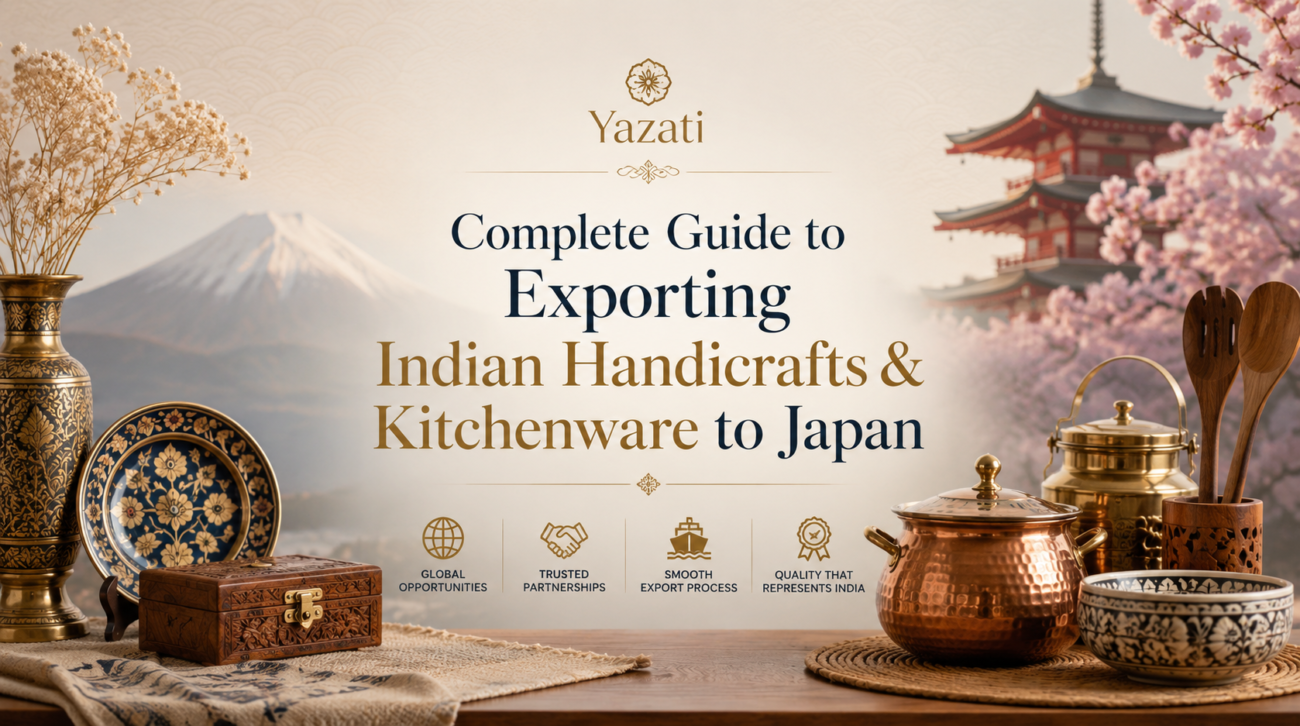
Exporting Indian handicrafts and kitchenware to Japan presents a valuable opportunity for Indian manufacturers, artisans, traders, and export houses. Japan is one of the world’s most sophisticated consumer markets, known for its appreciation of craftsmanship, quality, precision, and cultural heritage. Indian products, especially handmade décor items, eco-friendly kitchenware, brassware, copper utensils, wooden handicrafts, and artisanal home accessories, have gained increasing attention among Japanese consumers.
This Complete Guide to Exporting Indian Handicrafts & Kitchenware to Japan provides a comprehensive roadmap for businesses looking to enter and succeed in the Japanese market.
Introduction to Exporting Indian Handicrafts & Kitchenware to Japan
Japan imports a significant volume of consumer goods each year. With a population that values quality and unique craftsmanship, Indian exporters can capitalize on growing demand for handmade and sustainable products.
Indian handicrafts offer:
- Rich cultural heritage
- Handcrafted uniqueness
- Sustainable production methods
- Competitive pricing
- Skilled artisan craftsmanship
Similarly, Indian kitchenware products such as stainless steel utensils, copper bottles, brass cookware, and eco-friendly kitchen accessories align well with current Japanese consumer trends emphasizing wellness and sustainability.
Understanding the Japanese Import Market
Consumer Preferences in Japan
Japanese consumers are highly selective and prioritize:
- Product quality
- Elegant design
- Durability
- Functionality
- Safe materials
- Attractive packaging
Unlike some markets where low pricing drives purchasing decisions, Japanese buyers often pay premium prices for products that demonstrate superior quality and craftsmanship.
Demand Trends for Handicrafts and Kitchenware
Current trends include:
| Category | Demand Level |
|---|---|
| Sustainable Products | Very High |
| Handmade Décor | High |
| Eco-Friendly Kitchenware | High |
| Artisan Home Accessories | High |
| Wellness Products | Growing |
| Traditional Craft Products | Growing |
Products with authentic cultural stories tend to perform exceptionally well in Japan.
Why Japan is an Attractive Market for Indian Exporters
Market Size and Purchasing Power
Japan remains one of the world’s largest economies with strong consumer spending power. Buyers often seek unique imported goods that stand apart from mass-produced alternatives.
Appreciation for Artisanal and Sustainable Products
Japanese culture deeply respects craftsmanship. This cultural appreciation creates a natural fit for Indian handmade products.
Benefits for exporters include:
- Higher profit margins
- Long-term customer loyalty
- Stable business environment
- Premium market positioning
- Demand for authentic handcrafted goods
Popular Indian Handicrafts Exported to Japan
Wooden Handicrafts
Popular products include:
- Hand-carved figurines
- Decorative boxes
- Wooden trays
- Wall art
- Home décor items
Japanese consumers appreciate minimalist yet artistic wooden products.
Metal Artifacts and Decorative Items
Indian metal handicrafts continue to attract buyers due to their intricate designs.
Examples include:
- Brass statues
- Decorative lanterns
- Metal wall décor
- Traditional sculptures
- Religious and cultural artifacts
Handmade Textiles and Home Décor
Strong-selling categories include:
High-Demand Kitchenware Products in Japan
Stainless Steel Kitchenware
Japanese households value practical and durable kitchen products.
Popular exports include:
- Storage containers
- Mixing bowls
- Measuring tools
- Serving utensils
Copper and Brass Utensils
Health-conscious consumers increasingly purchase:
- Copper bottles
- Copper tumblers
- Brass serving ware
- Traditional cookware
Eco-Friendly Kitchen Products
Demand is growing for:
- Bamboo utensils
- Reusable kitchen products
- Sustainable storage solutions
- Natural-material kitchen accessories
Regulatory Requirements for Exporting to Japan
Product Standards and Compliance
Before exporting, ensure products meet Japanese standards relating to:
- Product safety
- Material composition
- Food-contact safety requirements
- Environmental regulations
Kitchenware products may require additional compliance verification depending on their intended use.
Labeling and Packaging Regulations
Labels should generally include:
- Product name
- Country of origin
- Material composition
- Manufacturer information
- Usage instructions where applicable
Japanese-language labeling often increases market acceptance.
Essential Export Documentation
Accurate documentation is critical.
Commercial Invoice
Must include:
- Product descriptions
- Quantity
- Unit value
- Total value
- Buyer and seller information
Packing List
Provides:
- Package details
- Weight specifications
- Dimensions
- Product breakdown
Certificate of Origin
Confirms that goods originate from India.
Bill of Lading and Shipping Documents
These facilitate transportation and customs clearance.
Export Registration and Licenses in India
IEC Registration
Every exporter must obtain an Import Export Code (IEC) from the Directorate General of Foreign Trade (DGFT).
RCMC and Export Promotion Councils
Membership with relevant export promotion councils provides:
- Market intelligence
- Trade fair opportunities
- Export assistance
- Industry networking
Relevant organizations may include handicraft and engineering export councils.
Product Quality Standards for Japanese Buyers
Quality Control Measures
Japanese buyers maintain exceptionally high expectations.
Implement:
- Final product inspections
- Material testing
- Batch consistency checks
- Packaging inspections
Testing and Certification Requirements
Depending on product category, buyers may request:
- Laboratory reports
- Material safety certifications
- Food-contact safety verification
- Sustainability certifications
Providing these documents can significantly improve buyer confidence.
Pricing Strategy for the Japanese Market
Cost Calculation and Margins
Include:
- Manufacturing costs
- Packaging costs
- Inland transportation
- Export documentation
- Shipping
- Insurance
- Import-related expenses
Currency Considerations
Monitor exchange rate fluctuations between:
- Indian Rupee (INR)
- Japanese Yen (JPY)
Currency risk management helps protect profitability.
Packaging and Presentation for Japanese Customers
Minimalist Design Preferences
Japanese consumers often prefer:
- Clean designs
- Elegant presentation
- Functional packaging
- High-quality finishes
Sustainable Packaging Solutions
Growing demand exists for:
- Recyclable materials
- Biodegradable packaging
- Minimal plastic usage
Premium packaging often enhances perceived product value.
Finding Buyers and Distributors in Japan
Trade Fairs and Exhibitions
Participating in international trade fairs can help identify serious buyers and distributors.
Benefits include:
- Direct buyer interaction
- Market feedback
- Product demonstrations
- Relationship building
B2B Marketplaces
Useful platforms allow exporters to:
- Showcase products
- Generate inquiries
- Connect with importers
Importers and Retail Chains
Target:
- Specialty home décor retailers
- Lifestyle stores
- Department stores
- Kitchenware distributors
- Online marketplaces
Building direct relationships often produces better long-term outcomes.
Shipping and Logistics Considerations
Sea Freight vs Air Freight
| Factor | Sea Freight | Air Freight |
|---|---|---|
| Cost | Lower | Higher |
| Transit Time | Longer | Faster |
| Large Shipments | Excellent | Limited |
| Urgent Orders | Less Suitable | Ideal |
Most handicraft and kitchenware shipments utilize sea freight for cost efficiency.
Customs Clearance Process
Successful customs clearance requires:
- Accurate documentation
- Correct HS classification
- Compliance verification
- Proper packaging standards
Working with experienced freight forwarders simplifies the process.
Marketing Indian Handicrafts & Kitchenware in Japan
Digital Marketing Strategies
Effective approaches include:
- Japanese-language websites
- SEO optimization
- Social media campaigns
- Content marketing
- Product storytelling
A strong online presence can significantly increase visibility.
For export resources and market research, exporters can also explore the official Japan External Trade Organization website: https://www.jetro.go.jp
Building Long-Term Business Relationships
Japanese business culture values:
- Trust
- Consistency
- Reliability
- Transparency
- Professional communication
Long-term relationships often yield repeat orders and referrals.
Common Challenges and How to Overcome Them
| Challenge | Solution |
|---|---|
| Strict Quality Expectations | Implement robust QC systems |
| Language Barriers | Use Japanese-speaking representatives |
| Complex Documentation | Work with export consultants |
| Cultural Differences | Study Japanese business etiquette |
| Market Entry Competition | Differentiate through craftsmanship |
| Logistics Management | Partner with experienced forwarders |
Preparation and professionalism significantly improve success rates.
FAQs
1. Is Japan a good market for Indian handicrafts?
Yes. Japanese consumers highly value craftsmanship, authenticity, quality, and unique cultural products, making it an attractive market for Indian handicrafts.
2. Which Indian kitchenware products sell best in Japan?
Stainless steel utensils, copper bottles, brass serving ware, eco-friendly kitchen accessories, and sustainable household products are among the strongest categories.
3. Do I need an IEC to export to Japan?
Yes. An Import Export Code (IEC) is mandatory for Indian businesses engaging in export activities.
4. Are Japanese buyers sensitive to product quality?
Absolutely. Japan is known for maintaining some of the highest quality standards globally.
5. What is the best way to find Japanese buyers?
Trade fairs, B2B marketplaces, industry associations, distributors, and direct outreach are effective methods.
6. Is Japanese-language packaging necessary?
While not always mandatory, Japanese-language labeling and instructions significantly improve acceptance and customer trust.
7. Which shipping method is preferred for handicrafts exports?
Sea freight is generally preferred for larger shipments due to lower transportation costs.
8. Can small manufacturers export directly to Japan?
Yes. Many small and medium-sized Indian manufacturers successfully export directly by partnering with distributors and importers.
Conclusion
The Complete Guide to Exporting Indian Handicrafts & Kitchenware to Japan demonstrates that Japan offers significant opportunities for Indian exporters willing to meet its high standards. The country’s appreciation for craftsmanship, sustainability, quality, and authenticity aligns perfectly with the strengths of Indian artisans and manufacturers.
Success in this market depends on understanding consumer preferences, ensuring regulatory compliance, maintaining exceptional product quality, investing in professional packaging, and building trusted business relationships. Exporters who consistently deliver value and reliability can establish a strong and profitable presence in Japan’s premium consumer market.
By combining careful planning, effective marketing, and world-class quality control, Indian handicraft and kitchenware exporters can successfully unlock long-term growth opportunities in one of Asia’s most rewarding import markets.
✨ Discover Global Sourcing Excellence with Netyex ✨
Netyex is your trusted B2B sourcing partner, connecting international buyers with India’s finest manufacturers and curated product lines—from handicrafts and home décor to kitchenware, textiles, hospitality essentials, and more. With verified suppliers and end-to-end support, we make global procurement seamless, reliable, and efficient.
👉 Elevate your sourcing experience—explore Netyex today.
📦 Bulk orders & customisation | 🌍 Worldwide delivery | 🤝 Trusted by global buyers
Visit Netyex to source premium Indian products with confidence.