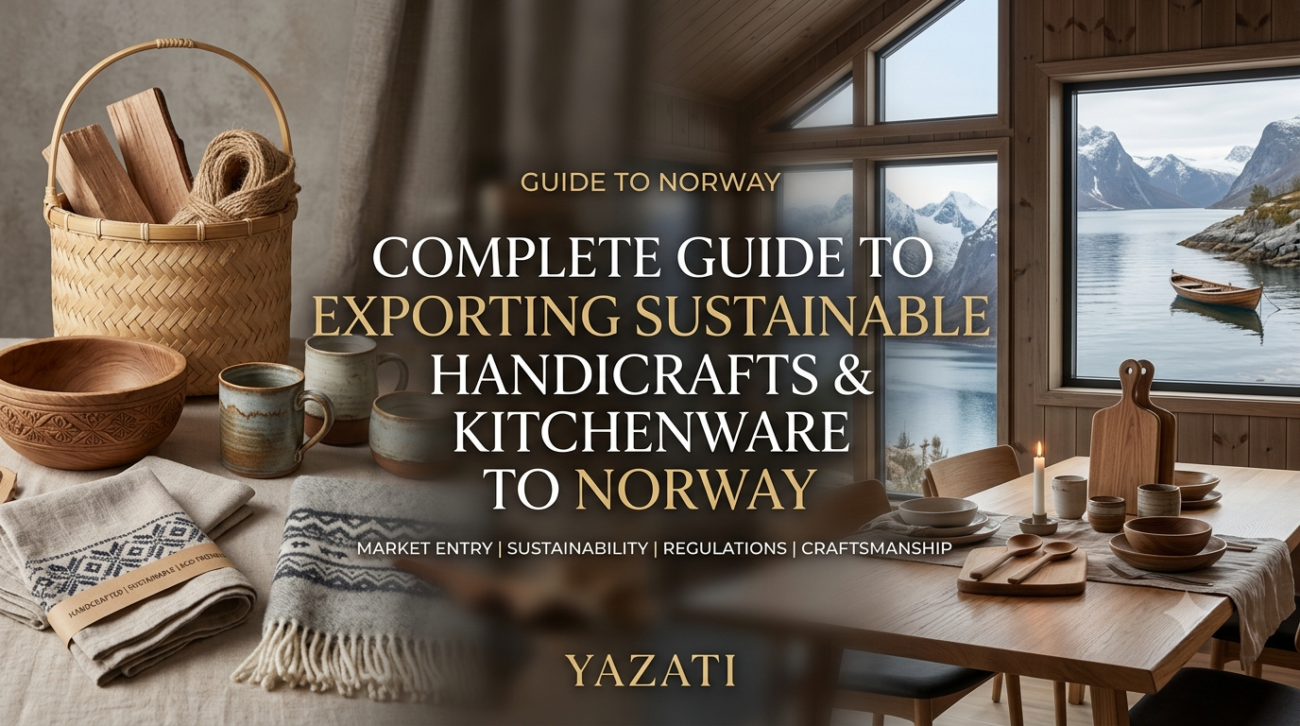
Norway has become one of Europe’s most attractive destinations for sustainable products. Consumers increasingly prioritize environmentally responsible purchasing decisions, making it an excellent opportunity for exporters of eco-friendly handicrafts and kitchenware.
If you’re planning to expand internationally, this Complete Guide to Exporting Sustainable Handicrafts & Kitchenware to Norway will help you understand everything from market research and compliance to logistics and marketing.
Why Norway is an Attractive Export Market
Norway consistently ranks among the world’s wealthiest countries, with consumers willing to pay premium prices for quality, craftsmanship, and sustainability.
Major reasons include:
- High purchasing power
- Strong environmental awareness
- Growing demand for handmade products
- Preference for ethical sourcing
- Interest in minimalist Scandinavian home décor
Consumers appreciate products with authentic stories, artisan craftsmanship, and sustainable production methods.
Understanding Norwegian Consumer Preferences
Norwegian buyers generally prefer products that combine:
- Minimalist aesthetics
- Natural materials
- High durability
- Functional design
- Sustainable production
Popular materials include:
- Bamboo
- Mango wood
- Acacia wood
- Cork
- Recycled glass
- Organic cotton
- Natural jute
Products with certifications demonstrating responsible sourcing often gain greater trust.
Market Demand for Sustainable Handicrafts
The Norwegian home décor market values handmade products that are both beautiful and environmentally friendly.
High-demand handicrafts include:
- Wooden decorative items
- Handwoven baskets
- Eco-friendly home décor
- Handmade candle holders
- Natural fiber storage solutions
- Recycled metal art
- Sustainable gift items
Consumers often purchase these items as gifts or interior decoration pieces.
Popular Kitchenware Products in Norway
Kitchenware remains one of the fastest-growing categories.
Popular export products include:
| Product | Demand |
|---|---|
| Wooden cutting boards | High |
| Serving trays | High |
| Salad bowls | High |
| Wooden spoons | High |
| Spice racks | Medium |
| Bamboo kitchen organizers | High |
| Eco-friendly storage containers | High |
| Handmade ceramic mugs | Medium |
| Wooden serving platters | High |
The Scandinavian preference for simple yet elegant kitchen designs aligns well with handcrafted wooden products.
Sustainability Trends Driving Imports
Norway actively promotes sustainable consumption.
Consumers increasingly seek:
- Plastic-free alternatives
- Recyclable packaging
- Carbon-conscious manufacturing
- Fair trade products
- Organic materials
- Renewable resources
- Long-lasting products
Companies that clearly communicate their sustainability story often enjoy stronger customer loyalty.
Export Regulations and Documentation
Proper documentation ensures smooth customs clearance.
Essential documents include:
- Commercial Invoice
- Packing List
- Certificate of Origin
- Bill of Lading or Airway Bill
- Insurance Certificate
- Export Declaration
- Purchase Order
- Product Specifications
Certain wooden products may require compliance with phytosanitary regulations depending on the material and treatment.
Required Export Certificates
Useful certifications include:
- FSC Certification (for responsibly sourced wood)
- Fair Trade Certification
- ISO 9001
- ISO 14001
- Organic Certification (where applicable)
While not always mandatory, certifications enhance buyer confidence.
Customs Procedures
Before shipping:
- Verify HS Codes
- Confirm applicable tariffs
- Ensure product labeling complies with Norwegian requirements
- Use accurate invoices
- Follow packaging standards
Working with an experienced freight forwarder can simplify the customs process.
Product Quality Standards
Norwegian buyers have high expectations regarding:
- Smooth finishing
- Uniform dimensions
- Durable construction
- Safe food-contact materials
- Moisture-resistant wood treatment
- Non-toxic finishes
Quality control before shipment minimizes returns and strengthens business relationships.
Eco-Friendly Packaging Requirements
Sustainable packaging is increasingly important.
Recommended materials include:
- Recycled cardboard
- Kraft paper
- Paper tape
- Compostable fillers
- Recyclable cartons
Avoid excessive plastic packaging whenever possible.
Simple, elegant packaging often aligns with Scandinavian design preferences.
Pricing Strategy for Norway
When pricing products, consider:
- Manufacturing costs
- Packaging expenses
- Shipping
- Customs duties
- Insurance
- Distributor margins
- Retail markup
- Currency fluctuations
Norwegian consumers generally prioritize value and quality over the lowest price.
Shipping and Logistics
Major shipping routes typically move through European ports before reaching Norway.
Common transport methods:
Sea Freight
Advantages:
- Lower cost
- Suitable for large orders
- Better for bulky kitchenware
Disadvantages:
- Longer transit time
Air Freight
Advantages:
- Faster delivery
- Ideal for urgent orders
- Lower inventory requirements
Disadvantages:
- Higher shipping costs
Delivery Timelines
Approximate transit times:
| Mode | Time |
|---|---|
| Sea Freight | 30–45 days |
| Air Freight | 5–10 days |
Actual timelines depend on origin, carrier, customs clearance, and destination.
Finding Norwegian Buyers
Potential buyers include:
- Home décor retailers
- Kitchenware stores
- Sustainable lifestyle shops
- Interior designers
- Online marketplaces
- Gift stores
- Import distributors
Trade fairs, B2B marketplaces, and professional networking platforms are valuable channels for identifying potential partners.
Digital Marketing Strategies
An effective online presence can significantly enhance export opportunities.
Best practices include:
- Maintain a professional website
- Share product stories through blogs
- Optimize content for search engines (SEO)
- Use high-quality product photography
- Engage with audiences on social media
- Highlight sustainability credentials
- Collect customer testimonials
Providing detailed product information and transparent sourcing practices helps build trust.
For additional export resources, visit the International Trade Centre (ITC) at https://www.intracen.org.
Common Challenges and Solutions
| Challenge | Solution |
|---|---|
| High logistics costs | Consolidate shipments |
| Strong competition | Focus on unique craftsmanship |
| Regulatory compliance | Work with export consultants |
| Currency fluctuations | Use forward contracts when appropriate |
| Market entry | Partner with local distributors |
Careful planning and adaptability are key to overcoming these challenges.
Tips for Long-Term Business Success
To build a lasting presence in Norway:
- Prioritize consistent product quality
- Invest in sustainable practices
- Understand local consumer preferences
- Maintain transparent communication with buyers
- Stay informed about regulatory changes
- Innovate based on market feedback
Long-term relationships and reliability often matter as much as competitive pricing.
Frequently Asked Questions
1. Why is Norway a good market for sustainable handicrafts and kitchenware?
Norway’s consumers have strong purchasing power and a growing preference for eco-friendly, ethically sourced, and high-quality products.
2. Which materials are most popular?
Wood, bamboo, natural fibers, recycled glass, cork, and organic cotton are among the most sought-after materials.
3. Do I need certifications to export?
While not always mandatory, certifications such as FSC, Fair Trade, or ISO standards can increase buyer confidence and improve marketability.
4. What is the preferred shipping method?
Sea freight is generally more economical for larger shipments, while air freight is suitable for urgent or smaller orders.
5. How important is sustainable packaging?
Very important. Norwegian consumers and retailers increasingly favor recyclable, biodegradable, and minimal packaging.
6. How can I find buyers in Norway?
You can connect with importers through trade fairs, B2B marketplaces, industry associations, and by building a strong online presence.
Conclusion
Exporting sustainable handicrafts and kitchenware to Norway presents a promising opportunity for businesses committed to quality, craftsmanship, and environmental responsibility. By understanding Norwegian consumer preferences, meeting regulatory requirements, adopting sustainable packaging, and implementing effective marketing strategies, exporters can establish strong relationships and build a successful presence in this growing market.
With thoughtful preparation and a focus on long-term value, your sustainable products can resonate with Norwegian buyers who appreciate authenticity, durability, and ethical production.
✨ Discover Global Sourcing Excellence with Netyex ✨
Netyex is your trusted B2B sourcing partner, connecting international buyers with India’s finest manufacturers and curated product lines—from handicrafts and home décor to kitchenware, textiles, hospitality essentials, and more. With verified suppliers and end-to-end support, we make global procurement seamless, reliable, and efficient.
👉 Elevate your sourcing experience—explore Netyex today.
📦 Bulk orders & customisation | 🌍 Worldwide delivery | 🤝 Trusted by global buyers
Visit Netyex to source premium Indian products with confidence.