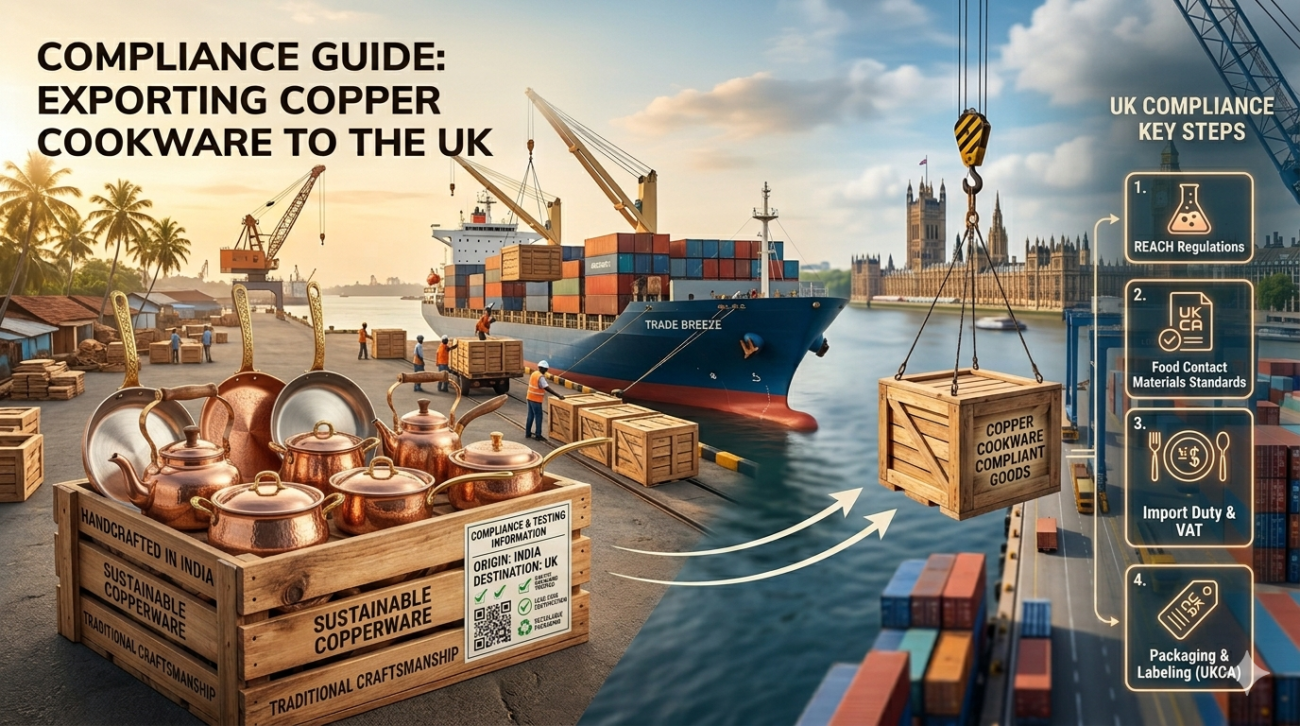
Introduction to Exporting Copper Cookware
Exporting copper cookware to the United Kingdom can be a highly profitable opportunity. The UK has a long-standing appreciation for premium kitchenware, especially artisanal and high-quality copper products. However, entering this market requires strict adherence to regulatory and compliance standards.
This Compliance Guide for Exporting Copper Cookware to the UK will walk you through everything—from safety regulations to labeling, logistics, and legal considerations—so you can export confidently and successfully.
Why the UK Market is Attractive for Copper Cookware
The UK offers a thriving market for copper cookware due to its culinary culture and consumer preference for durable, aesthetically pleasing kitchen tools.
Growing Demand for Premium Kitchenware
Consumers in the UK increasingly prefer high-end cookware that combines functionality with style. Copper cookware, known for excellent heat conductivity, fits perfectly into this niche.
Rise of Home Cooking Trends
Post-pandemic, home cooking has surged. This trend continues to drive demand for professional-grade cookware.
Key Challenges Exporters Face
Despite its potential, exporting to the UK isn’t without hurdles.
- Strict safety standards for food-contact materials
- Complex documentation requirements
- Post-Brexit regulatory changes
- Labeling and packaging compliance
Understanding these challenges early helps you avoid costly delays and penalties.
Understanding UK Import Regulations
Overview of UK Trade Laws Post-Brexit
Since leaving the European Union, the UK has established its own regulatory framework. While many EU laws still influence UK standards, exporters must now comply with UK-specific requirements.
Role of UK Border Authorities
Authorities such as HM Revenue & Customs (HMRC) oversee imports, ensuring goods meet legal standards and proper duties are paid.
Product Safety and Material Compliance
Ensuring your cookware is safe for food use is critical.
Food Contact Material Regulations
Copper cookware must comply with UK food safety laws that regulate materials in contact with food. These rules ensure no harmful substances leach into food during cooking.
For detailed guidance, refer to the official UK government resource:
👉 https://www.gov.uk/guidance/food-contact-materials-regulation
Heavy Metal Limits and Testing
Copper cookware must meet strict limits for heavy metals like lead and cadmium. Testing is mandatory to prove compliance.
- Conduct migration testing
- Use accredited laboratories
- Maintain documentation for inspections
REACH Compliance Requirements
The UK follows a version of REACH (Registration, Evaluation, Authorisation, and Restriction of Chemicals), ensuring chemicals used in products are safe.
Certification and Documentation
Declaration of Conformity
This document confirms that your product meets all relevant UK regulations. It must include:
- Manufacturer details
- Product specifications
- Applicable standards
Test Reports and Lab Certification
Testing reports validate product safety. These should be obtained from recognized labs.
Third-Party Testing Bodies
Independent labs provide credibility and help ensure compliance with UK standards.
Labeling and Packaging Requirements
Mandatory Product Labeling
Labels must clearly state:
- Product name
- Materials used
- Safety instructions
Country of Origin Marking
Clearly indicate where the cookware was manufactured. This is essential for customs and consumer transparency.
Language and Consumer Information
All labels must be in English and easy to understand.
Tariffs, Duties, and Taxes
HS Codes for Copper Cookware
Copper cookware typically falls under specific Harmonized System (HS) codes. Correct classification ensures accurate duty calculation.
VAT and Import Duty Considerations
Importers must pay VAT and possibly customs duties depending on trade agreements.
Logistics and Shipping Compliance
Packaging Standards
Packaging must protect the product during transit and comply with environmental rules.
Customs Clearance Process
Efficient customs clearance requires:
- Accurate documentation
- Proper labeling
- Compliance certificates
Working with experienced freight forwarders can simplify this process.
Environmental and Sustainability Standards
Waste Packaging Regulations
The UK enforces strict packaging waste rules. Exporters may need to register under packaging waste schemes.
Eco-Friendly Compliance Trends
Sustainable packaging is increasingly important. Using recyclable materials can improve brand perception and compliance.
Risk Management and Legal Considerations
Product Liability Laws
Exporters are responsible for product safety. Any defects can lead to legal claims.
Insurance Requirements
Product liability insurance is strongly recommended to mitigate risks.
Market Entry Strategy
Partnering with UK Distributors
Working with local distributors helps navigate regulations and reach customers faster.
E-commerce Compliance
If selling online, ensure compliance with UK consumer protection laws and digital sales regulations.
Common Mistakes to Avoid
- Ignoring UK-specific regulations post-Brexit
- Incomplete documentation
- Incorrect labeling
- عدم إجراء اختبارات السلامة (Skipping safety testing)
Avoiding these pitfalls can save time and money.
FAQs
1. Do I need certification to export copper cookware to the UK?
Yes, you need testing reports, a Declaration of Conformity, and compliance with food safety standards.
2. Are there restrictions on copper cookware materials?
Yes, heavy metal limits and food contact regulations must be followed.
3. What documents are required for customs clearance?
Invoices, packing lists, certificates, and shipping documents are essential.
4. Is REACH compliance mandatory?
Yes, UK REACH regulations apply to chemical safety in products.
5. Do I need to label products in English?
Yes, all product information must be in English for UK consumers.
6. How can I reduce import duties?
Using trade agreements and correct HS codes can help minimize duties.
Conclusion
Exporting copper cookware to the UK is a promising business opportunity—but only if you follow the rules. This Compliance Guide for Exporting Copper Cookware to the UK provides a clear roadmap to ensure your products meet safety, legal, and market requirements.
By focusing on compliance, proper documentation, and quality assurance, you can build a strong presence in the UK market and avoid costly setbacks.
✨ Discover Global Sourcing Excellence with Netyex ✨
Netyex is your trusted B2B sourcing partner, connecting international buyers with India’s finest manufacturers and curated product lines—from handicrafts and home décor to kitchenware, textiles, hospitality essentials, and more. With verified suppliers and end-to-end support, we make global procurement seamless, reliable, and efficient.
👉 Elevate your sourcing experience—explore Netyex today.
📦 Bulk orders & customisation | 🌍 Worldwide delivery | 🤝 Trusted by global buyers
Visit Netyex to source premium Indian products with confidence.