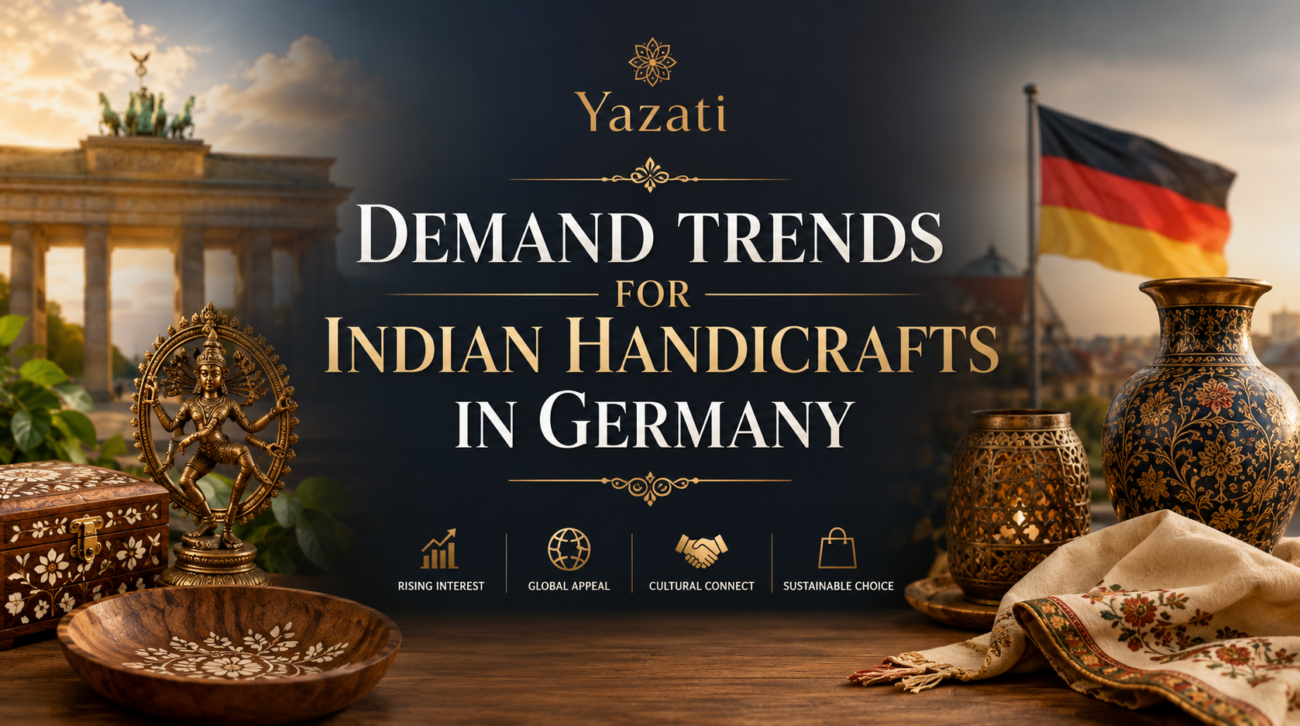
Germany has become one of the most promising European markets for Indian handicrafts. Over the last decade, German consumers have shown increasing interest in handmade, sustainable, and culturally rich products. From handwoven textiles to eco-friendly home décor, Indian artisans are gaining recognition in Germany’s premium lifestyle and ethical shopping markets.
The growing appreciation for craftsmanship, sustainability, and fair-trade practices has significantly influenced the Demand Trends for Indian Handicrafts in Germany. In 2026, this trend continues to grow as consumers prefer unique handmade products over factory-produced goods.
India’s handicraft sector, known for its rich cultural heritage and artistic diversity, is now benefiting from Germany’s demand for eco-conscious and ethically sourced products.
Introduction to the German Market for Indian Handicrafts
Germany is Europe’s largest economy and one of the biggest importers of handmade and decorative products. German buyers value quality, authenticity, and sustainability, making the country an ideal market for Indian handicrafts.
The demand comes from several industries, including:
- Home décor
- Fashion accessories
- Interior design
- Wellness and yoga products
- Gift items
- Sustainable lifestyle stores
Indian handicrafts fit naturally into these categories because they combine artistry with tradition.
Why Indian Handicrafts Are Popular in Germany
Cultural Appeal of Handmade Products
German consumers appreciate products that tell a story. Indian handicrafts often reflect centuries-old traditions, regional identities, and artisan skills. Products such as Madhubani paintings, Kashmiri shawls, and Rajasthani wooden carvings attract buyers who value artistic heritage.
Unlike mass-produced items, handcrafted goods feel personal and exclusive. This uniqueness increases their appeal among German shoppers.
Growing Interest in Ethical Shopping
Germany has one of the strongest ethical consumer markets in Europe. Buyers increasingly prefer products that are:
- Sustainably made
- Environmentally friendly
- Fair-trade certified
- Handmade by artisans
Indian handicraft businesses that highlight artisan welfare and eco-friendly production methods are seeing higher demand.
Major Demand Trends for Indian Handicrafts in Germany
Sustainable and Eco-Friendly Products
Sustainability is one of the strongest factors influencing the Demand Trends for Indian Handicrafts in Germany.
German consumers are actively reducing plastic usage and supporting eco-friendly alternatives. As a result, products made from natural materials are becoming extremely popular, including:
- Bamboo handicrafts
- Jute bags
- Recycled fabric items
- Cane furniture
- Coconut shell décor
Products with organic or recycled materials often sell faster in Germany’s ethical retail market.
Rising Demand for Home Décor Items
Home decoration products represent one of the fastest-growing handicraft categories in Germany.
Popular Indian home décor products include:
| Product Type | Demand Level |
|---|---|
| Handmade lamps | High |
| Wall hangings | High |
| Wooden carvings | Medium-High |
| Ceramic décor | Medium |
| Hand-painted furniture | Growing |
Minimalist homes in Germany increasingly use handcrafted ethnic accents for warmth and uniqueness.
Popularity of Handmade Textiles
Indian textiles have always held strong appeal internationally. In Germany, handwoven and naturally dyed fabrics are becoming highly fashionable.
Top-selling textile products include:
- Block-printed bed sheets
- Handloom scarves
- Embroidered cushion covers
- Organic cotton throws
- Kantha quilts
Consumers are especially attracted to textiles made with natural dyes and sustainable cotton.
Growth in Spiritual and Wellness Products
Germany has a growing wellness and yoga culture. This trend has boosted demand for:
- Meditation cushions
- Singing bowls
- Incense holders
- Yoga mats made from natural fibers
- Ayurvedic wellness accessories
Indian spirituality and wellness traditions strongly influence lifestyle purchases in Germany.
Demand for Customized Handicrafts
Personalization is becoming increasingly important. German consumers enjoy customized gifts and décor products.
Customized handicrafts include:
- Personalized wooden nameplates
- Handmade wedding gifts
- Engraved brass products
- Customized textile patterns
Small businesses offering made-to-order items often achieve higher profit margins.
Top Indian Handicraft Products Exported to Germany
Wooden Handicrafts
Indian wooden products are highly valued for their craftsmanship and durability. Sheesham wood furniture and carved decorative items perform particularly well.
Popular categories include:
- Coffee tables
- Hand-carved boxes
- Decorative panels
- Rustic furniture
Brass and Metal Artifacts
Traditional Indian brassware appeals to Germany’s luxury décor market.
Demand is growing for:
- Brass figurines
- Candle holders
- Decorative trays
- Vintage-style metal décor
Antique finishes are especially trendy.
Handwoven Carpets and Rugs
Indian rugs remain among the strongest export categories. German homeowners often choose handmade rugs for premium interior designs.
Popular styles include:
Embroidered and Printed Textiles
Hand embroidery from regions like Gujarat and Rajasthan is increasingly appreciated in Germany’s boutique fashion and home décor sectors.
Jewelry and Fashion Accessories
Handmade jewelry crafted with beads, silver, brass, and natural stones has strong demand among younger consumers seeking bohemian and sustainable fashion.
Consumer Preferences in Germany
Preference for Authentic Craftsmanship
German buyers value authenticity over mass production. Products with artisan stories and handmade details often receive better market response.
Businesses should emphasize:
- Artisan backgrounds
- Traditional production methods
- Cultural significance
Importance of Sustainability Certifications
Eco-conscious buyers often look for certifications such as:
- Fair Trade
- Organic Textile Standard (GOTS)
- FSC-certified wood
- Eco-friendly packaging
These certifications improve trust and increase product value.
Minimalist and Modern Designs
Although traditional Indian designs are admired, German consumers often prefer simpler color schemes and modern aesthetics.
Products that combine Indian craftsmanship with modern European design trends tend to perform best.
Role of E-Commerce in Expanding Demand
Online Marketplaces Supporting Indian Sellers
E-commerce has transformed handicraft exports. Platforms such as:
- Etsy
- Amazon Handmade
- eBay Germany
allow Indian artisans to directly reach German buyers.
German consumers are increasingly comfortable purchasing handcrafted goods online.
For more export guidance, visit the official Indian export promotion portal:
https://www.epch.in/
Social Media Influence on Handicraft Sales
Instagram and Pinterest strongly influence handicraft purchasing decisions. Beautiful storytelling and artisan-focused branding help increase product visibility.
Short videos showing handmade production processes perform especially well.
Challenges Faced by Indian Exporters
Competition from Other Countries
India competes with handicraft exporters from:
- Vietnam
- Indonesia
- Turkey
- Morocco
Maintaining quality and originality is essential for staying competitive.
Shipping and Logistics Costs
International shipping expenses can reduce profitability, especially for heavy handicraft items like furniture and metal décor.
Compliance with EU Standards
Germany follows strict European Union regulations regarding:
- Product safety
- Chemical usage
- Packaging materials
- Sustainability standards
Exporters must ensure compliance to avoid trade barriers.
Opportunities for Indian Handicraft Businesses
Fair Trade and Organic Markets
Germany has a large fair-trade consumer base. Shops specializing in ethical products are constantly seeking authentic handcrafted items.
Collaborations with German Retailers
Partnering with boutique stores and interior designers in Germany can help Indian brands establish long-term market presence.
Growth Through Trade Exhibitions
Trade fairs such as:
- Ambiente Frankfurt
- Heimtextil
- Tendence
offer valuable networking opportunities for Indian exporters.
Government Support for Indian Handicraft Exports
The Indian government actively supports handicraft exports through initiatives such as:
- Export promotion councils
- Skill development programs
- Financial assistance schemes
- International trade fair participation
Organizations like the Export Promotion Council for Handicrafts (EPCH) play a major role in connecting artisans with international buyers.
Future Outlook of Indian Handicrafts in Germany
The future looks highly promising for Indian handicrafts in Germany. Consumer demand is shifting toward:
- Sustainable living
- Handmade products
- Ethical sourcing
- Cultural authenticity
As German buyers continue moving away from mass-produced goods, Indian artisans have a strong opportunity to grow exports and build premium global brands.
Digital marketing, eco-friendly production, and modern product adaptation will remain key growth drivers in the coming years.
FAQs
Why are Indian handicrafts popular in Germany?
Indian handicrafts are popular because they are handmade, sustainable, culturally rich, and unique compared to mass-produced products.
Which Indian handicraft products sell the most in Germany?
Popular products include handmade textiles, wooden décor, brass artifacts, carpets, jewelry, and eco-friendly lifestyle products.
Is Germany a good market for Indian handicraft exports?
Yes, Germany is one of Europe’s strongest markets for ethical, sustainable, and handcrafted products.
What trends are shaping the Demand Trends for Indian Handicrafts in Germany?
Major trends include sustainability, minimalist home décor, wellness products, eco-friendly materials, and personalized handicrafts.
How can Indian artisans sell products in Germany?
Artisans can use e-commerce platforms, export partnerships, trade fairs, and social media marketing to reach German consumers.
What challenges do exporters face in Germany?
Challenges include EU regulations, shipping costs, strong competition, and changing consumer preferences.
Conclusion
The Demand Trends for Indian Handicrafts in Germany show strong and sustainable growth potential. German consumers increasingly value authenticity, sustainability, and artisan-made products, making Indian handicrafts an ideal fit for the market.
From eco-friendly décor to handmade textiles and wellness products, Indian exporters have significant opportunities to expand in Germany. Businesses that combine traditional craftsmanship with modern design, ethical production, and digital marketing strategies are likely to achieve long-term success.
As sustainability and conscious consumerism continue to rise globally, Indian handicrafts are expected to gain even greater recognition in Germany’s premium lifestyle market.
✨ Discover Global Sourcing Excellence with Netyex ✨
Netyex is your trusted B2B sourcing partner, connecting international buyers with India’s finest manufacturers and curated product lines—from handicrafts and home décor to kitchenware, textiles, hospitality essentials, and more. With verified suppliers and end-to-end support, we make global procurement seamless, reliable, and efficient.
👉 Elevate your sourcing experience—explore Netyex today.
📦 Bulk orders & customisation | 🌍 Worldwide delivery | 🤝 Trusted by global buyers
Visit Netyex to source premium Indian products with confidence.