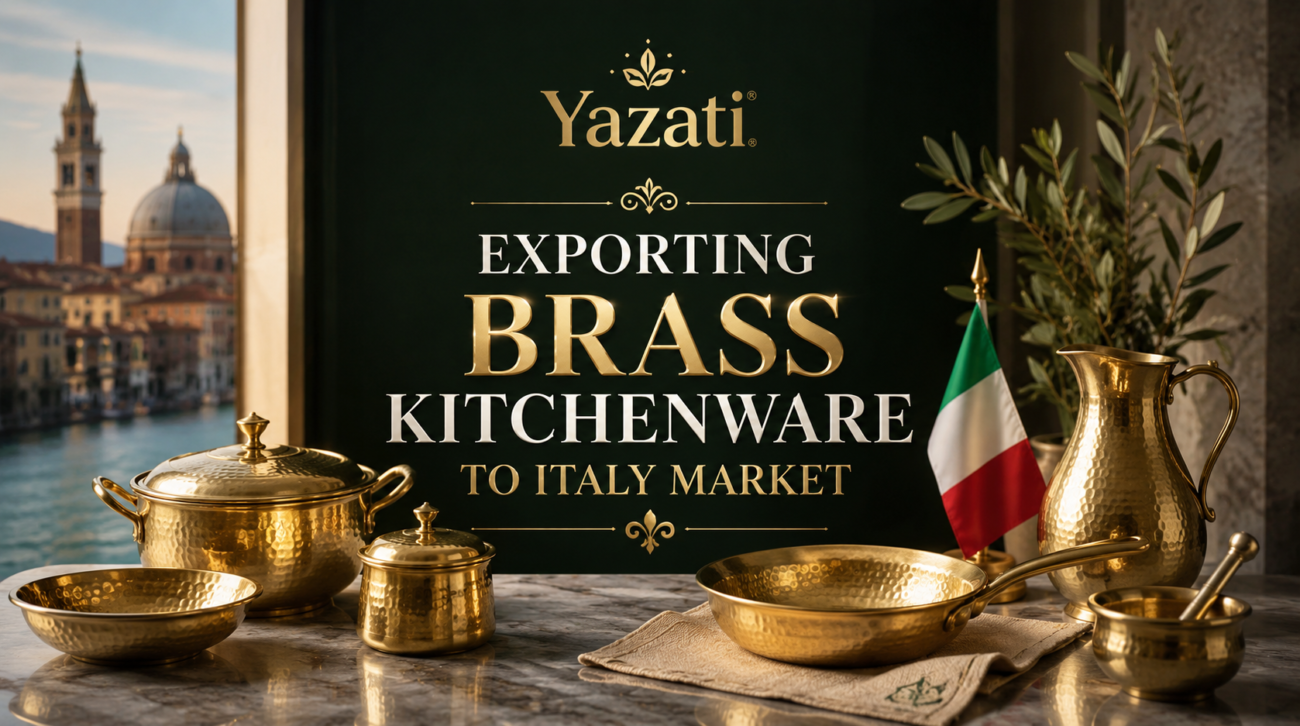
Introduction to Exporting Brass Kitchenware to Italy Market
Exporting Brass Kitchenware to Italy Market presents a valuable opportunity for manufacturers and exporters seeking access to one of Europe’s most sophisticated consumer markets. Italy is globally recognized for its appreciation of craftsmanship, premium home products, elegant dining culture, and artisanal kitchen accessories. These characteristics make brass kitchenware particularly attractive to Italian consumers who value aesthetics, durability, and heritage-inspired designs.
For exporters, entering the Italian market requires more than simply shipping products overseas. Success depends on understanding consumer preferences, complying with European regulations, establishing reliable distribution channels, and developing a strong branding strategy. This guide provides a comprehensive roadmap for businesses aiming to expand their brass kitchenware exports into Italy.
Understanding the Italian Kitchenware Industry
Current Market Size and Growth Trends
Italy has a mature home and kitchenware market supported by strong domestic demand and a thriving hospitality sector. The country’s consumers regularly invest in high-quality dining accessories, serving ware, and decorative kitchen items.
Several factors contribute to market growth:
- Increasing interest in premium home décor
- Rising demand for artisanal products
- Growth of luxury hospitality establishments
- Expansion of online retail channels
- Preference for sustainable and long-lasting products
These trends create favorable conditions for brass kitchenware exporters.
Consumer Preferences in Italy
Italian consumers typically prioritize:
- Elegant design
- Superior craftsmanship
- Product authenticity
- Sustainability
- Functionality combined with aesthetics
Products that reflect traditional artistry while offering practical utility tend to perform well.
Why Italy Is a Promising Destination for Brass Kitchenware
Demand for Premium and Artisan Products
Italy has a strong tradition of appreciating handcrafted goods. Brass kitchenware aligns naturally with this preference because many products feature detailed craftsmanship and unique finishing techniques.
Consumers often seek:
- Handmade serving trays
- Decorative bowls
- Luxury table accessories
- Gift items
- Boutique kitchen décor
Rising Interest in Sustainable Kitchenware
Many Italian buyers are moving away from disposable products and choosing durable alternatives.
Benefits of brass include:
| Feature | Benefit |
|---|---|
| Durability | Long lifespan |
| Recyclability | Environmentally friendly |
| Timeless Appearance | Reduced replacement needs |
| Craftsmanship | Supports artisan production |
This sustainability angle can be a powerful marketing advantage.
Popular Brass Kitchenware Products in Italy
Brass Serving Trays
Serving trays remain among the most popular imported brass products. Italian households frequently use decorative trays for entertaining guests and displaying food items.
Brass Bowls and Decorative Utensils
Decorative bowls are widely used in:
- Dining rooms
- Living rooms
- Luxury hotels
- Boutique restaurants
These products combine functionality with artistic appeal.
Brass Tableware Accessories
Growing categories include:
- Napkin holders
- Candle stands
- Cutlery organizers
- Coasters
- Decorative serving accessories
Such items appeal to both residential and commercial buyers.
Italy Import Regulations for Brass Kitchenware
Product Compliance Requirements
Before exporting brass kitchenware to Italy, products must comply with European Union regulations.
Key considerations include:
- Product safety requirements
- Material composition standards
- Consumer protection laws
- Food-contact regulations where applicable
Exporters should verify whether products intended for food use meet all applicable standards.
European Union Standards and Certifications
Common compliance areas include:
- REACH regulations
- Food-contact material requirements
- Packaging regulations
- Environmental standards
Official guidance can be found through the European Union’s trade resources:
https://trade.ec.europa.eu
Proper compliance helps avoid customs delays and penalties.
Documentation Required for Export
Accurate documentation is essential for smooth customs clearance.
Commercial Invoice
Must include:
- Product descriptions
- Unit values
- Total shipment value
- Buyer information
Packing List
The packing list should detail:
- Number of cartons
- Weight specifications
- Product quantities
- Packaging dimensions
Certificate of Origin
This document verifies the manufacturing origin of goods and may affect duty calculations.
Customs Documentation
Additional requirements may include:
- Bill of lading
- Insurance certificates
- Import declarations
- Compliance certificates
Identifying Target Customers in Italy
Importers and Distributors
Many exporters begin by partnering with established importers who already serve retailers and hospitality businesses.
Advantages include:
- Existing distribution networks
- Market knowledge
- Lower market-entry risk
Retail Chains
Potential retail channels include:
- Home décor stores
- Kitchenware retailers
- Luxury gift shops
- Department stores
Hospitality and Luxury Restaurants
Italy’s hospitality sector represents a major opportunity for premium brass kitchenware.
Potential buyers include:
- Boutique hotels
- Luxury resorts
- Fine-dining restaurants
- Event venues
Pricing Strategy for the Italian Market
Cost Calculation Methods
A proper export price should include:
- Manufacturing cost
- Packaging cost
- Inland transportation
- Export documentation
- Freight charges
- Insurance
- Import duties
Competitive Pricing Techniques
Effective approaches include:
- Value-based pricing
- Distributor pricing models
- Tiered volume discounts
- Premium positioning
Italian consumers often associate quality with value rather than simply choosing the cheapest option.
Packaging and Labeling Requirements
Eco-Friendly Packaging Trends
Sustainable packaging is increasingly important.
Recommended materials include:
- Recyclable cardboard
- Biodegradable fillers
- Paper-based wrapping
Italian Language Labeling Considerations
Labels should clearly communicate:
- Product information
- Care instructions
- Country of origin
- Material details
Providing information in Italian can improve customer trust and compliance.
Logistics and Shipping Solutions
Sea Freight Options
Sea freight offers:
- Lower shipping costs
- Better profitability
- Suitable transport for bulk orders
Major Italian ports include:
- Genoa
- Venice
- Naples
- Livorno
Air Freight for Premium Orders
Air freight may be preferred for:
- Small shipments
- Urgent orders
- Product samples
- Trade show deliveries
Marketing Exporting Brass Kitchenware to Italy Market
Digital Marketing Approaches
A successful marketing plan should include:
- Search engine optimization (SEO)
- Social media campaigns
- Product catalogs
- Email outreach
- LinkedIn networking
Professional photography is especially important because brass products rely heavily on visual appeal.
Trade Shows and B2B Exhibitions
Participating in industry exhibitions can generate direct buyer contacts.
Relevant trade events may include:
- Home décor exhibitions
- Hospitality trade fairs
- Giftware expos
- International kitchenware events
Face-to-face meetings often accelerate business relationships.
Finding Buyers and Business Partners
Online B2B Platforms
Popular channels include:
- Alibaba
- Global Sources
- Europages
- TradeKey
These platforms help exporters connect with Italian importers.
Chamber of Commerce Networks
Business associations and chambers of commerce can provide:
- Buyer databases
- Trade missions
- Market intelligence
- Networking opportunities
Challenges and Risk Management
Currency Fluctuations
Exchange-rate volatility can affect profitability.
Risk mitigation methods include:
- Forward contracts
- Pricing reviews
- Multi-currency agreements
Regulatory Compliance Risks
Failure to comply with EU regulations can result in:
- Shipment delays
- Product rejection
- Additional costs
- Damage to reputation
Regular compliance reviews are essential.
Future Opportunities in the Italian Market
The outlook for brass kitchenware exports remains positive due to:
- Growth in premium home décor
- Expansion of luxury hospitality
- Increased sustainability awareness
- Rising online purchasing behavior
- Demand for handcrafted products
Exporters that combine quality manufacturing with strong branding and compliance practices are well positioned for long-term success.
Frequently Asked Questions
1. Is Italy a good market for brass kitchenware exports?
Yes. Italy has strong demand for premium, decorative, and artisan kitchen products that align well with brass kitchenware offerings.
2. What certifications are required for exporting brass kitchenware to Italy?
Requirements depend on product usage, but exporters should ensure compliance with relevant EU regulations, including material safety and food-contact standards where applicable.
3. Which brass products sell best in Italy?
Serving trays, decorative bowls, table accessories, and luxury dining décor items are among the most popular categories.
4. How can exporters find Italian buyers?
Buyers can be sourced through trade fairs, importers, distributors, B2B marketplaces, and chamber of commerce networks.
5. What shipping method is most cost-effective?
Sea freight is generally the most economical solution for large commercial shipments.
6. How important is sustainable packaging in Italy?
Very important. Italian consumers increasingly favor environmentally responsible products and packaging solutions.
Conclusion
Exporting Brass Kitchenware to Italy Market offers significant opportunities for manufacturers willing to meet quality standards, understand consumer preferences, and build strong distribution partnerships. Italy’s appreciation for craftsmanship, elegant design, and sustainable products creates a favorable environment for premium brass kitchenware. By focusing on compliance, strategic pricing, effective marketing, and reliable logistics, exporters can establish a profitable and lasting presence in this attractive European market.
✨ Discover Global Sourcing Excellence with Netyex ✨
Netyex is your trusted B2B sourcing partner, connecting international buyers with India’s finest manufacturers and curated product lines—from handicrafts and home décor to kitchenware, textiles, hospitality essentials, and more. With verified suppliers and end-to-end support, we make global procurement seamless, reliable, and efficient.
👉 Elevate your sourcing experience—explore Netyex today.
📦 Bulk orders & customisation | 🌍 Worldwide delivery | 🤝 Trusted by global buyers
Visit Netyex to source premium Indian products with confidence.