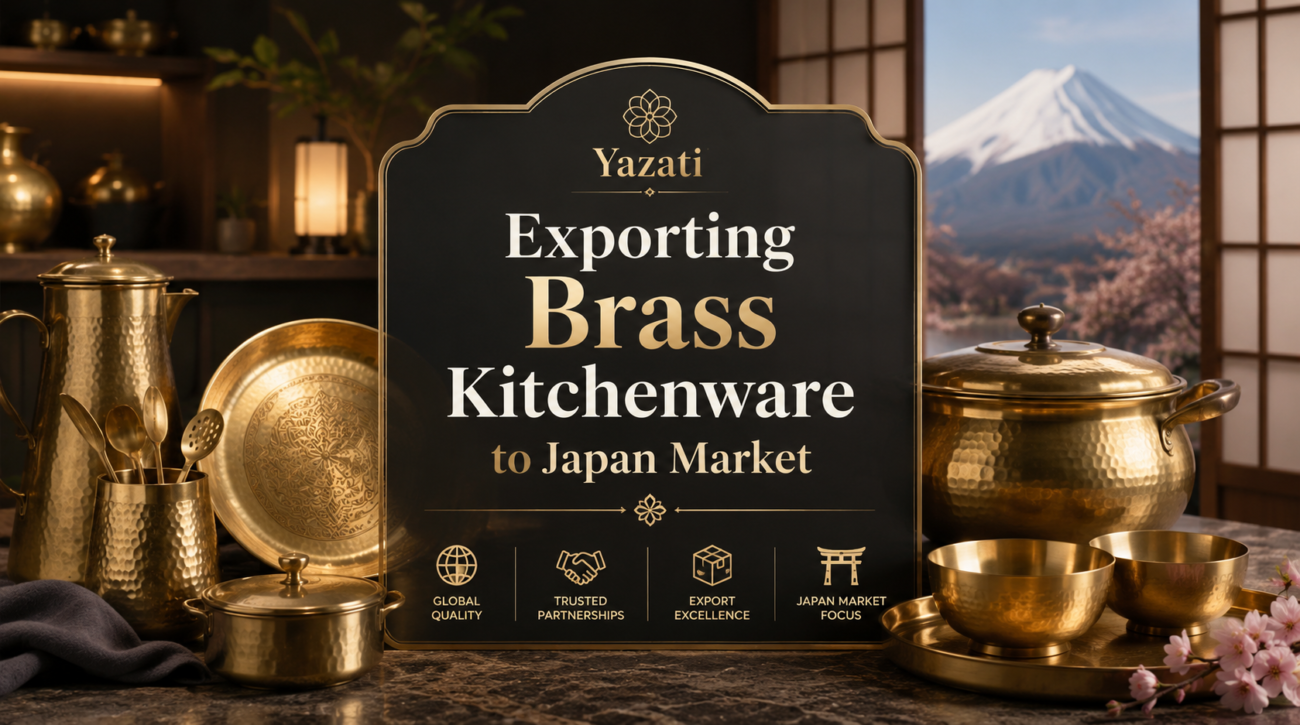
Introduction to the Japanese Brass Kitchenware Market
Exporting Brass Kitchenware to Japan Market presents a significant opportunity for manufacturers and exporters seeking access to one of the world’s most sophisticated consumer markets. Japan is known for its appreciation of craftsmanship, durability, aesthetics, and premium household products. Brass kitchenware, with its elegant appearance and long-lasting performance, aligns well with Japanese consumer values.
The Japanese kitchenware market includes traditional households, restaurants, luxury hospitality businesses, gift buyers, and collectors who appreciate finely crafted products. As consumers increasingly seek sustainable and artisanal alternatives to mass-produced items, brass kitchenware is gaining renewed interest.
For exporters, success requires more than simply shipping products. Understanding cultural preferences, quality expectations, legal requirements, and business practices is essential for establishing a long-term presence.
Why Japan Is an Attractive Market for Brass Kitchenware
Consumer Demand for Premium Kitchen Products
Japanese consumers are willing to pay higher prices for products that offer:
- Superior quality
- Long-term durability
- Elegant design
- Functional excellence
- Authentic craftsmanship
Brass kitchenware often meets these expectations, especially when handmade or artisan-produced.
Growth of Traditional and Artisan Products
Japan has a strong tradition of valuing handcrafted goods. Products that tell a story about their origin, manufacturing process, and cultural heritage often attract attention.
Artisan brass utensils, serving trays, bowls, kettles, and decorative kitchen accessories fit well within this growing niche market.
Understanding Japanese Consumer Preferences
Focus on Quality and Craftsmanship
Japanese buyers carefully evaluate:
- Material quality
- Finishing details
- Product consistency
- Durability
- Precision manufacturing
Even minor defects can affect purchasing decisions.
Manufacturers should implement rigorous quality control systems before entering the Japanese market.
Importance of Aesthetics and Packaging
Packaging is almost as important as the product itself.
Japanese consumers appreciate:
- Minimalist design
- Premium packaging
- Elegant presentation
- Eco-friendly materials
- Detailed product information
High-quality packaging can significantly improve market acceptance.
Market Research Before Exporting
Identifying Target Customer Segments
Potential customer groups include:
| Segment | Opportunity |
|---|---|
| Premium households | High demand for luxury kitchenware |
| Restaurants | Functional and decorative use |
| Hotels | Premium dining presentation |
| Gift buyers | Luxury gifting products |
| Interior designers | Decorative brass accessories |
Understanding each segment helps tailor products and marketing strategies.
Competitor Analysis
Analyze:
- Local Japanese brands
- Imported European kitchenware
- Premium artisan products
- Pricing structures
- Distribution methods
Competitor research helps identify market gaps and positioning opportunities.
Regulatory Requirements for Brass Kitchenware
Product Safety Standards
Products intended for food contact may need to comply with Japanese safety requirements.
Exporters should verify:
- Material composition
- Lead content restrictions
- Food-contact safety standards
- Manufacturing compliance
Consulting with local import partners can simplify compliance procedures.
Labeling and Documentation Requirements
Required documentation may include:
- Commercial invoices
- Packing lists
- Certificates of origin
- Material specifications
- Product descriptions
Labels should ideally include Japanese-language information.
Product Adaptation for Japanese Buyers
Design Considerations
Japanese consumers often prefer:
- Elegant simplicity
- Functional design
- Compact products
- Refined finishes
Avoid overly ornate designs unless targeting luxury decorative segments.
Size and Functionality Preferences
Many Japanese homes have smaller kitchens compared to Western households.
Products designed with:
- Space efficiency
- Multi-functionality
- Lightweight construction
can achieve stronger market acceptance.
Quality Control and Manufacturing Standards
Inspection Procedures
Quality inspections should cover:
- Surface finishing
- Dimensional accuracy
- Structural integrity
- Packaging quality
- Product consistency
Third-party inspections may increase buyer confidence.
Certifications and Compliance
While specific requirements vary by product category, certifications can demonstrate commitment to quality.
Useful certifications may include:
- ISO 9001
- Quality management certifications
- Sustainability certifications
These credentials strengthen credibility with Japanese buyers.
Pricing Strategies for the Japanese Market
Japanese consumers value quality over low prices.
Pricing should consider:
- Manufacturing costs
- Shipping expenses
- Import duties
- Distributor margins
- Retail positioning
Rather than competing solely on price, focus on:
- Craftsmanship
- Heritage
- Durability
- Unique design features
Premium positioning often delivers better results.
Logistics and Shipping Considerations
Freight Options
Common shipping methods include:
- Sea Freight
- Lower cost
- Suitable for bulk orders
- Air Freight
- Faster delivery
- Higher transportation costs
Sea freight remains the preferred choice for large kitchenware shipments.
Customs Clearance Process
Smooth customs clearance requires:
- Accurate documentation
- Proper HS codes
- Compliance certificates
- Product specifications
Working with experienced freight forwarders can reduce delays.
Distribution Channels in Japan
Importers and Wholesalers
Many exporters enter Japan through established importers.
Benefits include:
- Existing networks
- Market expertise
- Regulatory knowledge
- Customer relationships
This approach minimizes entry risks.
Retail Stores and E-commerce Platforms
Potential channels include:
- Department stores
- Specialty kitchenware retailers
- Home décor boutiques
- Online marketplaces
- Brand-owned websites
Japan’s e-commerce sector continues to expand, creating additional opportunities for international suppliers.
Branding and Marketing Techniques
Digital Marketing Approaches
Effective digital marketing strategies include:
- Japanese-language websites
- Social media marketing
- Influencer collaborations
- Search engine optimization
- Online advertising
Localized content significantly improves engagement.
Trade Shows and Exhibitions
Participation in trade fairs helps:
- Meet buyers
- Showcase products
- Build partnerships
- Understand market trends
Trade exhibitions remain one of the most effective methods for entering the Japanese market.
For market insights and export resources, visit the official Japan External Trade Organization (JETRO) website: https://www.jetro.go.jp
Building Relationships with Japanese Buyers
Business relationships in Japan are built on:
- Trust
- Consistency
- Reliability
- Long-term commitment
Important practices include:
- Prompt communication
- Respectful negotiations
- Meeting delivery deadlines
- Maintaining product quality
Patience often leads to stronger and more profitable partnerships.
Common Challenges and Solutions
| Challenge | Solution |
|---|---|
| High quality expectations | Implement strict quality control |
| Language barriers | Hire translators or local agents |
| Regulatory complexity | Work with import specialists |
| Strong competition | Differentiate through craftsmanship |
| Market entry costs | Partner with distributors |
Preparation significantly reduces market-entry risks.
Future Trends in the Brass Kitchenware Industry
Several trends are shaping future demand:
Sustainability
Consumers increasingly favor durable products that reduce waste.
Artisan Manufacturing
Handcrafted and limited-edition products continue gaining popularity.
Luxury Home Dining
Premium dining experiences at home are driving demand for elegant kitchenware.
Gift Market Expansion
High-end kitchenware is becoming a preferred gift category among affluent consumers.
Exporters who align with these trends can strengthen their competitive advantage.
Frequently Asked Questions
1. Is Japan a good market for brass kitchenware exports?
Yes. Japanese consumers appreciate premium craftsmanship, durability, and aesthetic appeal, making brass kitchenware an attractive product category.
2. Do brass kitchenware products require certification in Japan?
Requirements depend on product type and intended use. Food-contact items may need compliance with specific safety standards.
3. What distribution channel is best for new exporters?
Partnering with established importers and distributors is often the safest and most efficient entry strategy.
4. How important is packaging in Japan?
Extremely important. Premium packaging strongly influences consumer perception and purchase decisions.
5. What pricing strategy works best?
Value-based pricing focused on quality and craftsmanship generally performs better than competing on low prices.
6. How can exporters build trust with Japanese buyers?
Maintain consistent quality, communicate professionally, meet deadlines, and demonstrate long-term commitment.
Conclusion
Exporting Brass Kitchenware to Japan Market offers substantial opportunities for manufacturers capable of meeting Japan’s demanding standards. Success depends on understanding consumer preferences, complying with regulations, maintaining exceptional quality, and building strong business relationships.
Companies that emphasize craftsmanship, premium presentation, sustainability, and reliable service can position themselves effectively within Japan’s sophisticated kitchenware market. With careful planning and strategic execution, exporters can establish a profitable and sustainable presence in one of Asia’s most valuable consumer markets.
✨ Discover Global Sourcing Excellence with Netyex ✨
Netyex is your trusted B2B sourcing partner, connecting international buyers with India’s finest manufacturers and curated product lines—from handicrafts and home décor to kitchenware, textiles, hospitality essentials, and more. With verified suppliers and end-to-end support, we make global procurement seamless, reliable, and efficient.
👉 Elevate your sourcing experience—explore Netyex today.
📦 Bulk orders & customisation | 🌍 Worldwide delivery | 🤝 Trusted by global buyers
Visit Netyex to source premium Indian products with confidence.