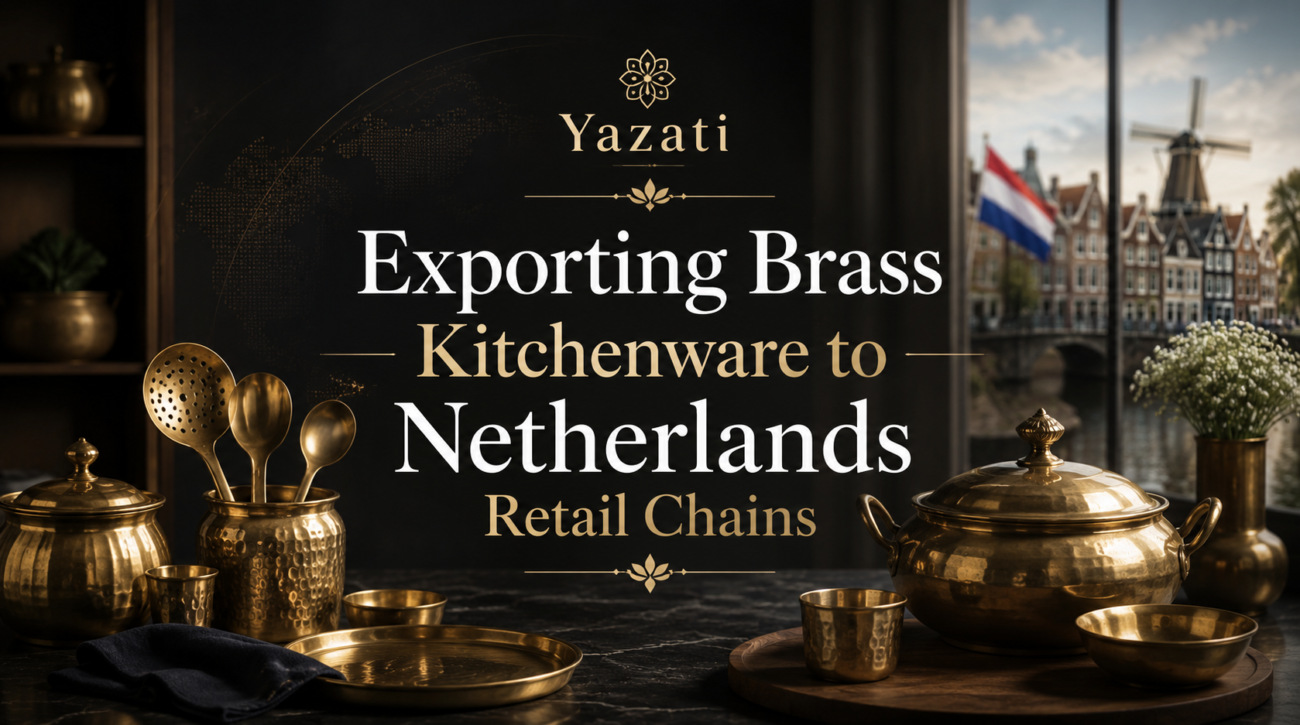
The business of Exporting Brass Kitchenware to Netherlands Retail Chains is growing rapidly as European consumers increasingly seek elegant, eco-friendly, and handcrafted kitchen products. The Netherlands is one of Europe’s strongest import hubs, making it an excellent gateway for Indian manufacturers and exporters.
Dutch consumers appreciate products that combine beauty, sustainability, and functionality. Brass kitchenware fits perfectly into this trend because it offers timeless appeal, durability, and artisanal craftsmanship. For exporters from India, especially from brass manufacturing hubs like Moradabad and Jaipur, this market presents significant opportunities.
In this detailed guide, you’ll learn how to enter the Dutch retail market successfully, meet European compliance requirements, build retailer relationships, and scale your export business efficiently.
Understanding the Netherlands Retail Market
The Netherlands has one of Europe’s most organized and modern retail ecosystems. Retailers focus heavily on sustainability, premium design, and ethical sourcing.
Why Dutch Consumers Prefer Premium Kitchenware
Consumers in the Netherlands are increasingly willing to pay more for quality kitchenware products that:
- Last longer
- Are environmentally friendly
- Have handcrafted value
- Offer unique designs
Brass kitchenware aligns with these preferences because it is reusable, recyclable, and aesthetically attractive.
Another reason for the popularity of brass products is the rise of modern rustic interior design trends. Dutch homeowners often prefer minimalist kitchens with warm metallic accents.
Trends in Sustainable Brass Products
Sustainability is a huge purchasing factor in Europe. Retail chains are prioritizing:
- Plastic-free products
- Recyclable packaging
- Handmade craftsmanship
- Ethical sourcing
This trend creates a competitive advantage for Indian brass exporters who can showcase traditional handmade production methods and sustainable manufacturing.
For additional EU trade information, exporters can review the official European Union trade portal:
Benefits of Exporting Brass Kitchenware to Netherlands Retail Chains
There are several reasons why exporters target Dutch retailers first when entering Europe.
Strong Demand for Handmade Products
The Netherlands has a thriving market for artisanal home décor and kitchenware. Handmade brass products often receive higher retail margins because consumers value uniqueness.
Retail buyers particularly look for:
- Hammered brass bowls
- Vintage-style cookware
- Decorative serving trays
- Luxury dining accessories
Opportunities in Eco-Friendly Retail
Many Dutch retailers actively market eco-conscious collections. Brass kitchenware naturally fits into:
- Sustainable living collections
- Zero-waste product categories
- Luxury handcrafted ranges
Retailers often prefer suppliers who can provide:
- Ethical sourcing proof
- Sustainable packaging
- Factory certifications
- Consistent quality control
Types of Brass Kitchenware Popular in the Netherlands
Understanding which products sell best helps exporters focus on profitable categories.
Brass Serving Bowls
Serving bowls remain one of the highest-demand brass items because they combine functionality with decorative appeal.
Popular features include:
- Matte finish
- Hammered texture
- Antique polish
- Minimalist European designs
Brass Cutlery and Utensils
Premium dining experiences have increased demand for brass spoons, forks, and serving utensils.
Restaurants and boutique retailers often seek:
- Gold-toned cutlery
- Handmade ladles
- Designer serving spoons
Decorative Kitchen Accessories
Decorative products are often easier to export because food-contact regulations may be less strict.
Examples include:
- Brass fruit baskets
- Decorative trays
- Candle holders
- Storage containers
Key Netherlands Retail Chains to Target
Choosing the right retailers is essential for successful market entry.
Department Stores
Large department stores often import kitchenware in bulk and prefer long-term supplier agreements.
Potential opportunities exist with:
- Premium home sections
- Seasonal collections
- Holiday décor lines
Specialty Home and Kitchen Retailers
Boutique retailers usually focus on craftsmanship and sustainability. These businesses may place smaller but higher-margin orders.
Such retailers value:
- Product storytelling
- Handmade authenticity
- Small-batch exclusivity
Online Retail Chains
E-commerce is booming in the Netherlands. Many retailers operate online-only platforms specializing in home décor and kitchen accessories.
Online retailers often prioritize:
- Fast shipping
- Professional photography
- Product customization
- Attractive packaging
Product Quality Standards and EU Regulations
Compliance is one of the most important aspects of exporting to Europe.
REACH Compliance
The European Union’s REACH regulation controls chemical substances in products. Exporters must ensure brass products do not contain harmful materials beyond permitted levels.
Important considerations include:
- Lead content limits
- Chemical safety documentation
- Supplier material declarations
Food Contact Material Standards
Kitchenware products intended for food use must comply with EU food-contact regulations.
Retailers may request:
- Laboratory testing reports
- Heavy metal migration tests
- Safety certifications
Failing to meet standards can result in shipment rejection.
Packaging and Labeling Rules
Packaging should include:
- Country of origin
- Product material details
- Care instructions
- Importer information
Eco-friendly packaging is increasingly preferred.
Pricing Strategies for Dutch Retailers
Pricing plays a major role in securing retail contracts.
Wholesale Pricing Models
Most retailers expect exporters to provide:
- FOB pricing
- MOQ flexibility
- Tiered pricing discounts
A typical pricing strategy includes:
- Manufacturing cost
- Packaging cost
- Freight cost
- Retail markup allowance
Retail Margin Expectations
Dutch retailers often expect margins between 2x and 3x wholesale prices.
For example:
| Product | Export Price | Retail Price |
|---|---|---|
| Brass Bowl | €8 | €24 |
| Brass Tray | €12 | €36 |
| Brass Spoon Set | €10 | €30 |
Understanding retailer expectations helps exporters negotiate effectively.
Finding Reliable Buyers and Distributors
Locating trustworthy buyers is critical for long-term success.
Trade Fairs and Exhibitions
Trade fairs remain one of the best ways to meet Dutch importers.
Popular European exhibitions include:
- Ambiente Frankfurt
- Maison & Objet Paris
- Dutch home décor expos
These events allow exporters to:
- Showcase samples
- Meet procurement teams
- Understand design trends
B2B Marketplaces
Online B2B platforms can also generate leads.
Useful platforms include:
- Alibaba
- IndiaMART
- Europages
LinkedIn outreach is also becoming highly effective for connecting with retail buyers.
Logistics and Shipping from India to the Netherlands
Efficient logistics improve retailer satisfaction and reduce costs.
Sea Freight vs Air Freight
| Shipping Method | Best For | Cost |
|---|---|---|
| Sea Freight | Bulk Orders | Lower |
| Air Freight | Samples/Urgent Orders | Higher |
Sea freight is usually the preferred method for large retail shipments.
Customs Clearance Process
Exporters should prepare:
- Commercial invoices
- Packing lists
- Bill of lading
- Certificates of origin
Working with experienced freight forwarders reduces delays significantly.
Building Long-Term Retail Partnerships
Strong relationships often matter more than one-time sales.
Communication Best Practices
Dutch buyers appreciate:
- Fast responses
- Transparent pricing
- Honest timelines
- Professional documentation
Consistency builds trust.
Private Label Opportunities
Many retail chains prefer private-label manufacturing.
Benefits include:
- Larger orders
- Long-term contracts
- Better production forecasting
Private labeling can significantly increase export revenue.
Marketing Brass Kitchenware in Europe
Effective branding helps products stand out in competitive markets.
Storytelling and Craftsmanship
European consumers enjoy knowing the story behind products.
Marketing should highlight:
- Handmade production
- Traditional Indian craftsmanship
- Artisan communities
Sustainability Branding
Sustainability messaging should include:
- Recyclable materials
- Ethical production
- Reduced plastic use
These elements resonate strongly with Dutch consumers.
Challenges in Exporting Brass Kitchenware to Netherlands Retail Chains
Despite strong opportunities, exporters face challenges.
Competition from Other Countries
Competitors include:
- Turkey
- China
- Vietnam
Indian exporters can compete through:
- Better craftsmanship
- Flexible customization
- Authentic handmade appeal
Currency and Shipping Risks
Currency fluctuations and freight costs can impact profitability.
Risk reduction strategies include:
- Forward contracts
- Flexible pricing clauses
- Multiple shipping partners
Digital Strategies for Export Growth
Digital marketing is becoming essential in international trade.
LinkedIn Outreach
LinkedIn allows exporters to directly contact:
- Import managers
- Retail buyers
- Purchasing departments
Professional outreach improves lead generation.
SEO and Product Catalog Optimization
Your website should include:
- High-quality product photos
- Detailed specifications
- Compliance certifications
- Easy inquiry forms
SEO helps international buyers discover suppliers organically.
Case Study: Indian Brass Exporters Entering Dutch Markets
Several Indian exporters successfully entered Dutch retail chains by focusing on:
- Sustainable packaging
- Modern product designs
- Smaller MOQ offerings
- Fast communication
Companies that adapted products to European tastes achieved faster market penetration than those using traditional-only designs.
Frequently Asked Questions
Is the Netherlands a good market for brass kitchenware exports?
Yes. Dutch consumers strongly prefer sustainable and premium handcrafted kitchenware products.
Do brass kitchenware products need EU certification?
Yes. Products intended for food contact must comply with EU food safety and REACH regulations.
What is the best shipping method for brass exports?
Sea freight is usually best for bulk shipments because it reduces costs.
How can exporters find Dutch retail buyers?
Trade fairs, LinkedIn, B2B marketplaces, and direct email outreach are effective methods.
Which Indian cities are famous for brass manufacturing?
Moradabad is the leading brass manufacturing hub in India.
Can exporters offer private labeling to Dutch retailers?
Yes. Many retailers prefer private-label partnerships for exclusive collections.
Conclusion
The market for Exporting Brass Kitchenware to Netherlands Retail Chains offers tremendous opportunities for Indian manufacturers and exporters willing to meet European quality standards and modern consumer expectations.
Success depends on:
- Compliance with EU regulations
- Strong product presentation
- Sustainable branding
- Competitive pricing
- Reliable logistics
Exporters who combine traditional craftsmanship with modern business practices can establish profitable long-term relationships with Dutch retail chains and expand throughout Europe.
✨ Discover Global Sourcing Excellence with Netyex ✨
Netyex is your trusted B2B sourcing partner, connecting international buyers with India’s finest manufacturers and curated product lines—from handicrafts and home décor to kitchenware, textiles, hospitality essentials, and more. With verified suppliers and end-to-end support, we make global procurement seamless, reliable, and efficient.
👉 Elevate your sourcing experience—explore Netyex today.
📦 Bulk orders & customisation | 🌍 Worldwide delivery | 🤝 Trusted by global buyers
Visit Netyex to source premium Indian products with confidence.