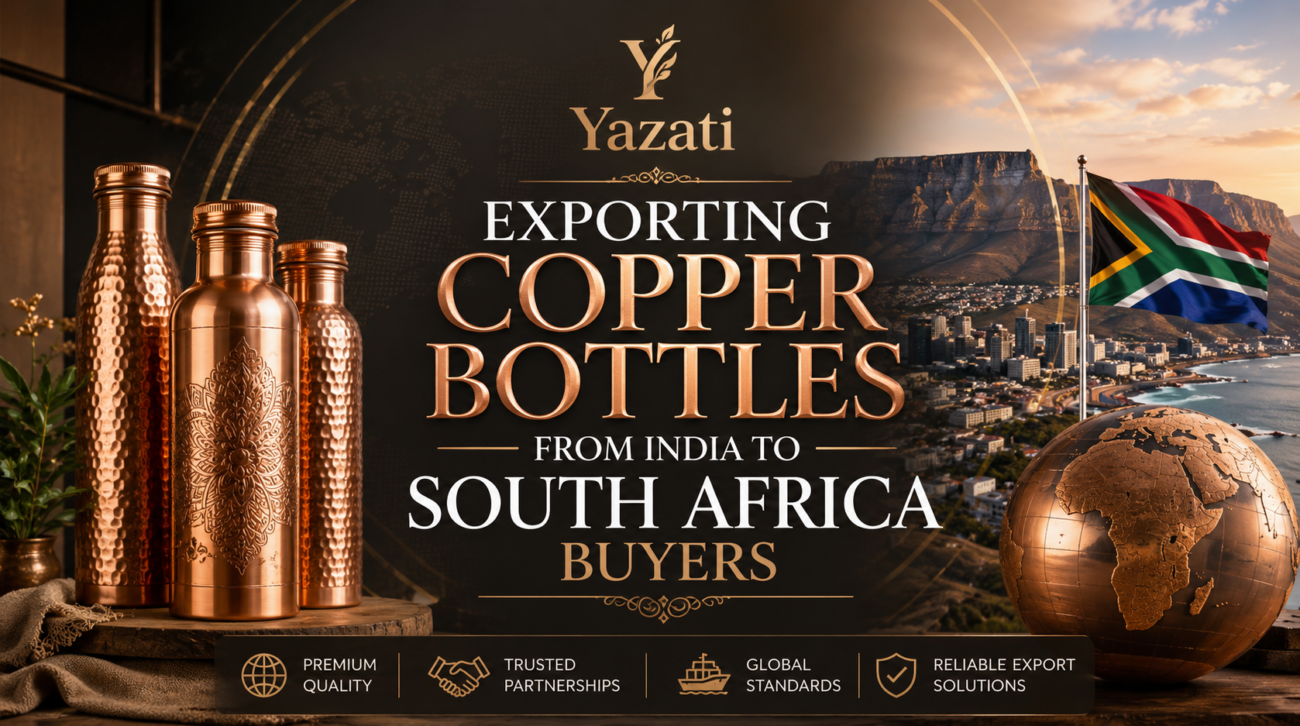
Introduction to the Copper Bottle Export Market
Exporting Copper Bottles from India to South Africa Buyers has become an attractive business opportunity due to the growing demand for wellness products and eco-friendly alternatives to plastic containers. India is one of the world’s leading producers of copper products, making it a preferred sourcing destination for international buyers.
As consumers increasingly focus on health, sustainability, and premium lifestyle products, copper bottles have gained popularity across multiple markets, including South Africa. Indian manufacturers are well-positioned to capitalize on this trend through competitive pricing, quality craftsmanship, and large-scale production capabilities.
Why Copper Bottles Are Popular in South Africa
Health and Wellness Trends
South African consumers are becoming increasingly health-conscious. Copper bottles are often associated with traditional wellness practices and natural living. Many consumers prefer reusable bottles that align with their healthy lifestyle goals.
The growing interest in holistic wellness has contributed significantly to the popularity of copper water bottles in urban and affluent markets.
Sustainable Lifestyle Movement
Environmental awareness continues to grow throughout South Africa. Consumers are actively seeking alternatives to single-use plastic products.
Copper bottles offer:
- Long-term durability
- Reusability
- Premium appearance
- Reduced environmental impact
These factors make them appealing to eco-conscious buyers.
India’s Competitive Advantage in Copper Bottle Manufacturing
Manufacturing Expertise
India has a long history of copper craftsmanship. Manufacturers combine traditional metalworking techniques with modern production processes to create high-quality products suitable for international markets.
Major manufacturing hubs include:
- Moradabad
- Delhi NCR
- Jaipur
- Mumbai
- Gujarat
These regions have developed strong export ecosystems that support global trade.
Cost Efficiency
Indian exporters benefit from:
- Lower manufacturing costs
- Skilled labor availability
- Established supplier networks
- Economies of scale
This allows Indian suppliers to offer competitive pricing while maintaining quality standards.
Understanding South African Market Demand
Consumer Preferences
South African consumers often favor products that offer both functionality and aesthetic appeal.
Popular features include:
- Leak-proof designs
- Hammered finishes
- Engraved patterns
- Matte and polished finishes
- Premium gift packaging
Retail and Wholesale Opportunities
Potential buyer segments include:
- Health stores
- Gift shops
- Wellness retailers
- Online marketplaces
- Corporate gifting companies
- Eco-friendly product distributors
Each segment offers unique opportunities for exporters looking to establish long-term partnerships.
Types of Copper Bottles in Demand
Pure Copper Bottles
Pure copper bottles remain the most sought-after products due to their authenticity and traditional appeal.
Common capacities include:
| Size | Market Demand |
|---|---|
| 500 ml | High |
| 750 ml | Very High |
| 900 ml | High |
| 1000 ml | Moderate |
Designer and Customized Bottles
Many South African buyers seek customized products featuring:
- Company logos
- Corporate branding
- Personalized engraving
- Special packaging
Customization often results in higher profit margins for exporters.
Export Regulations from India
IEC Registration
Before exporting, businesses must obtain an Import Export Code (IEC) from the relevant authorities in India.
The IEC serves as the primary authorization for conducting international trade activities.
Export Documentation
Essential export documents include:
- Commercial Invoice
- Packing List
- Bill of Lading
- Certificate of Origin
- Shipping Bill
- Insurance Certificate
Maintaining accurate documentation helps avoid customs delays and ensures smooth transactions.
South African Import Requirements
Customs Compliance
Exporters must ensure products comply with South African customs regulations. Importers typically handle local clearance, but exporters should provide complete and accurate documentation.
Product Labeling Standards
Labels should clearly include:
- Product description
- Country of origin
- Manufacturer details
- Material specifications
- Usage instructions
Proper labeling reduces compliance risks and enhances customer confidence.
Pricing Strategies for Export Success
FOB vs CIF Pricing
Two commonly used pricing methods include:
| Pricing Model | Description |
|---|---|
| FOB | Buyer assumes freight responsibility |
| CIF | Seller includes freight and insurance |
Choosing the right pricing structure depends on buyer preferences and negotiation terms.
Competitive Market Analysis
Before quoting prices, exporters should evaluate:
- Competitor pricing
- Freight costs
- Import duties
- Currency fluctuations
- Packaging expenses
A balanced pricing strategy helps secure orders while protecting profitability.
Finding South African Buyers
B2B Marketplaces
Several platforms can help exporters identify potential buyers:
- Alibaba
- TradeIndia
- IndiaMART
- Global Sources
- ExportHub
Creating detailed product listings increases visibility and buyer inquiries.
Trade Shows and Exhibitions
Participating in international trade exhibitions provides direct access to distributors, wholesalers, and retailers.
Benefits include:
- Face-to-face networking
- Product demonstrations
- Market intelligence
- Brand exposure
Digital Marketing for Exporters
LinkedIn Outreach
LinkedIn is highly effective for connecting with:
- Importers
- Retail chains
- Procurement managers
- Wholesale distributors
A professional company profile can significantly improve credibility.
Email Marketing Campaigns
Effective export email campaigns should include:
- Product catalogs
- Certifications
- Pricing details
- Company introduction
- Shipping capabilities
Personalized outreach generally produces better response rates than mass email campaigns.
Packaging and Shipping Considerations
Export-Grade Packaging
Copper bottles should be protected using:
- Bubble wrapping
- Individual cartons
- Corrugated export boxes
- Moisture-resistant materials
Proper packaging minimizes transit damage.
Logistics Planning
Popular shipping routes from India to South Africa generally involve sea freight due to cost efficiency.
Factors to evaluate include:
- Transit times
- Shipping schedules
- Port charges
- Freight forwarder reliability
Building Long-Term Buyer Relationships
Communication Best Practices
Successful exporters prioritize:
- Prompt responses
- Transparent pricing
- Regular updates
- Professional documentation
Trust remains a critical factor in international trade.
After-Sales Support
Providing support after shipment helps strengthen relationships and encourages repeat business.
Examples include:
- Order tracking
- Replacement policies
- Product guidance
- Future order planning
Common Challenges and Solutions
| Challenge | Solution |
|---|---|
| Finding genuine buyers | Use verified B2B platforms |
| Price competition | Focus on quality and customization |
| Shipping delays | Work with reliable logistics partners |
| Currency fluctuations | Use hedging strategies |
| Documentation errors | Implement standardized procedures |
Future Opportunities in the Copper Bottle Industry
The future outlook for Exporting Copper Bottles from India to South Africa Buyers remains promising. Increasing awareness of sustainability, wellness trends, and premium reusable products is expected to support continued market growth.
Emerging opportunities include:
- Corporate gifting programs
- E-commerce partnerships
- Private labeling
- Luxury wellness brands
- Hospitality sector supply contracts
Exporters who invest in branding, product innovation, and buyer relationships can gain a significant competitive advantage.
Frequently Asked Questions
1. Is South Africa a good market for copper bottle exports?
Yes. Growing interest in health, wellness, and sustainable products has created strong demand for copper bottles.
2. What documents are required to export copper bottles from India?
Typically, exporters need an IEC, commercial invoice, packing list, shipping bill, certificate of origin, and transport documents.
3. Which South African businesses buy copper bottles?
Health stores, gift retailers, online sellers, wellness brands, eco-friendly distributors, and corporate gifting companies frequently purchase copper bottles.
4. What bottle size sells best in South Africa?
The 750 ml size is generally the most popular due to its balance between portability and capacity.
5. Can Indian exporters offer customized copper bottles?
Yes. Many buyers request private labeling, logo printing, engraving, and custom packaging.
6. How can I find verified South African buyers?
Use B2B marketplaces, trade exhibitions, LinkedIn outreach, export promotion councils, and trade directories.
Conclusion
Exporting Copper Bottles from India to South Africa Buyers presents a valuable opportunity for Indian manufacturers and exporters. With rising demand for sustainable and wellness-oriented products, South Africa offers a promising market for quality copper bottles. By understanding market preferences, complying with regulations, implementing effective pricing strategies, and building strong buyer relationships, exporters can establish a profitable and sustainable international business.
✨ Discover Global Sourcing Excellence with Netyex ✨
Netyex is your trusted B2B sourcing partner, connecting international buyers with India’s finest manufacturers and curated product lines—from handicrafts and home décor to kitchenware, textiles, hospitality essentials, and more. With verified suppliers and end-to-end support, we make global procurement seamless, reliable, and efficient.
👉 Elevate your sourcing experience—explore Netyex today.
📦 Bulk orders & customisation | 🌍 Worldwide delivery | 🤝 Trusted by global buyers
Visit Netyex to source premium Indian products with confidence.