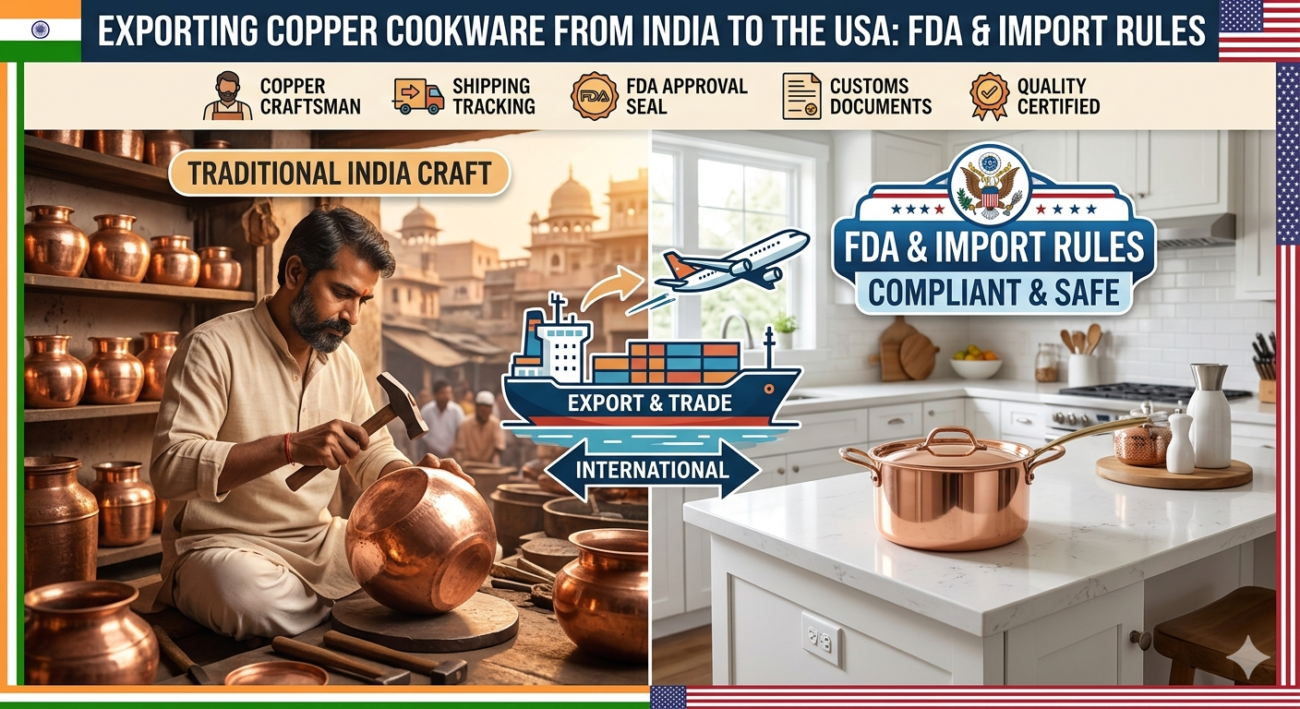
Exporting Copper Cookware from India to the USA: FDA & Import Rules is a crucial topic for manufacturers, exporters, and business owners aiming to enter the highly regulated U.S. market. Copper cookware is admired for its durability, heat conductivity, and aesthetic appeal—but when exporting to the United States, compliance with strict regulations is non-negotiable.
In this comprehensive guide, we’ll break down everything you need to know—from FDA requirements and import procedures to labeling standards and documentation. Whether you’re a beginner or an experienced exporter, this guide will help you avoid costly mistakes and ensure smooth market entry.
Introduction to Copper Cookware Export
Why Copper Cookware is Popular in the USA
Copper cookware has gained immense popularity in the U.S. due to its superior heat conductivity and elegant design. Professional chefs and home cooks alike prefer copper pots and pans because they allow precise temperature control. Additionally, copper cookware enhances kitchen aesthetics, making it both functional and decorative.
Growth of Indian Export Market
India has emerged as a major exporter of copper cookware due to its skilled craftsmanship and cost-effective production. Regions like Moradabad are globally recognized for producing high-quality copper utensils. With rising demand in the U.S., Indian exporters have a significant opportunity to expand their market presence.
Understanding U.S. Import Regulations
Role of the FDA
The U.S. Food and Drug Administration plays a central role in regulating products that come into contact with food. Since copper cookware directly interacts with food, it must comply with FDA safety standards to ensure it does not contaminate food.
Customs and Border Protection (CBP) Overview
U.S. Customs and Border Protection (CBP) oversees the entry of goods into the United States. They ensure that all imports comply with U.S. laws, including proper documentation, tariffs, and safety regulations.
FDA Requirements for Copper Cookware
Food Contact Material Compliance
Copper cookware must meet FDA standards for food contact materials. This ensures that the cookware does not release harmful substances into food during cooking.
Limits on Copper Leaching
Copper is reactive, especially with acidic foods. The FDA sets strict limits on copper leaching to prevent health risks. Excessive copper intake can lead to toxicity, making compliance essential.
FDA Guidelines for Metal Cookware
Manufacturers must ensure that:
- Copper surfaces are lined with non-reactive materials like stainless steel or tin
- Products undergo testing for safety compliance
- Materials used are food-grade approved
Material Safety Standards
Lead and Cadmium Restrictions
Copper cookware must not contain harmful levels of lead or cadmium. These substances are toxic and strictly regulated in the U.S. market.
Coating and Lining Requirements
Most copper cookware exported to the U.S. is lined with:
- Stainless steel
- Tin
These linings prevent direct contact between copper and food, ensuring safety and compliance.
Labeling Requirements
Country of Origin Label
Every product must clearly state “Made in India.” This is mandatory under U.S. import laws.
Product Safety Information
Labels should include:
- Usage instructions
- Safety warnings
- Manufacturer details
Proper labeling helps avoid delays and ensures transparency for consumers.
Documentation for Export
Commercial Invoice
This document includes:
- Product description
- Value of goods
- Buyer and seller information
Packing List
Details the contents of each shipment, including weight and dimensions.
Bill of Lading
Acts as a receipt and contract between the exporter and shipping company.
Import Duties and Tariffs
HS Code for Copper Cookware
Copper cookware typically falls under HS Code 7418. This classification determines applicable duties.
Duty Rates
Duty rates vary depending on trade agreements and product classification. Exporters should verify current rates before shipping.
Packaging and Shipping Standards
Safe Packaging Practices
Proper packaging prevents damage during transit. Use:
- Bubble wrap
- Corrugated boxes
- Protective padding
Shipping Methods
Common shipping methods include:
- Sea freight (cost-effective)
- Air freight (faster but expensive)
Certification and Testing
Third-Party Lab Testing
Independent testing ensures compliance with FDA standards. This builds trust with U.S. buyers.
Compliance Certificates
Certificates prove that your product meets safety and regulatory requirements.
Common Challenges and How to Avoid Them
Shipment Rejections
Non-compliance with FDA rules can result in rejected shipments. Always verify standards before export.
Documentation Errors
Incomplete or incorrect paperwork can delay shipments. Double-check all documents before dispatch.
Cost Factors in Exporting
Manufacturing Costs
Includes raw materials, labor, and production expenses.
Logistics Expenses
Covers shipping, insurance, and customs clearance fees.
Best Practices for Export Success
Partnering with Importers
Work with experienced U.S. importers who understand regulatory requirements.
Staying Updated on Regulations
Regulations can change frequently. Stay informed through official sources like the FDA website:
🔗 https://www.fda.gov
FAQs
1. Is copper cookware allowed in the USA?
Yes, but it must comply with FDA regulations, especially regarding food safety and metal leaching limits.
2. Do I need FDA approval to export copper cookware?
You don’t need direct approval, but your product must meet FDA standards.
3. What lining is required for copper cookware?
Non-reactive linings like stainless steel or tin are required.
4. What happens if my shipment fails FDA inspection?
It may be rejected, returned, or destroyed, leading to financial loss.
5. Are there import duties on copper cookware?
Yes, duties apply based on HS code and trade policies.
6. How can I ensure compliance?
Conduct third-party testing and follow FDA guidelines strictly.
Conclusion
Exporting Copper Cookware from India to the USA: FDA & Import Rules is a complex but rewarding process. By understanding FDA requirements, ensuring proper documentation, and maintaining high safety standards, exporters can successfully tap into the lucrative U.S. market.
Compliance isn’t just a legal necessity—it’s a competitive advantage. Businesses that prioritize quality, transparency, and regulatory adherence are more likely to build long-term success in international trade.
✨ Discover Global Sourcing Excellence with Netyex ✨
Netyex is your trusted B2B sourcing partner, connecting international buyers with India’s finest manufacturers and curated product lines—from handicrafts and home décor to kitchenware, textiles, hospitality essentials, and more. With verified suppliers and end-to-end support, we make global procurement seamless, reliable, and efficient.
👉 Elevate your sourcing experience—explore Netyex today.
📦 Bulk orders & customisation | 🌍 Worldwide delivery | 🤝 Trusted by global buyers
Visit Netyex to source premium Indian products with confidence.