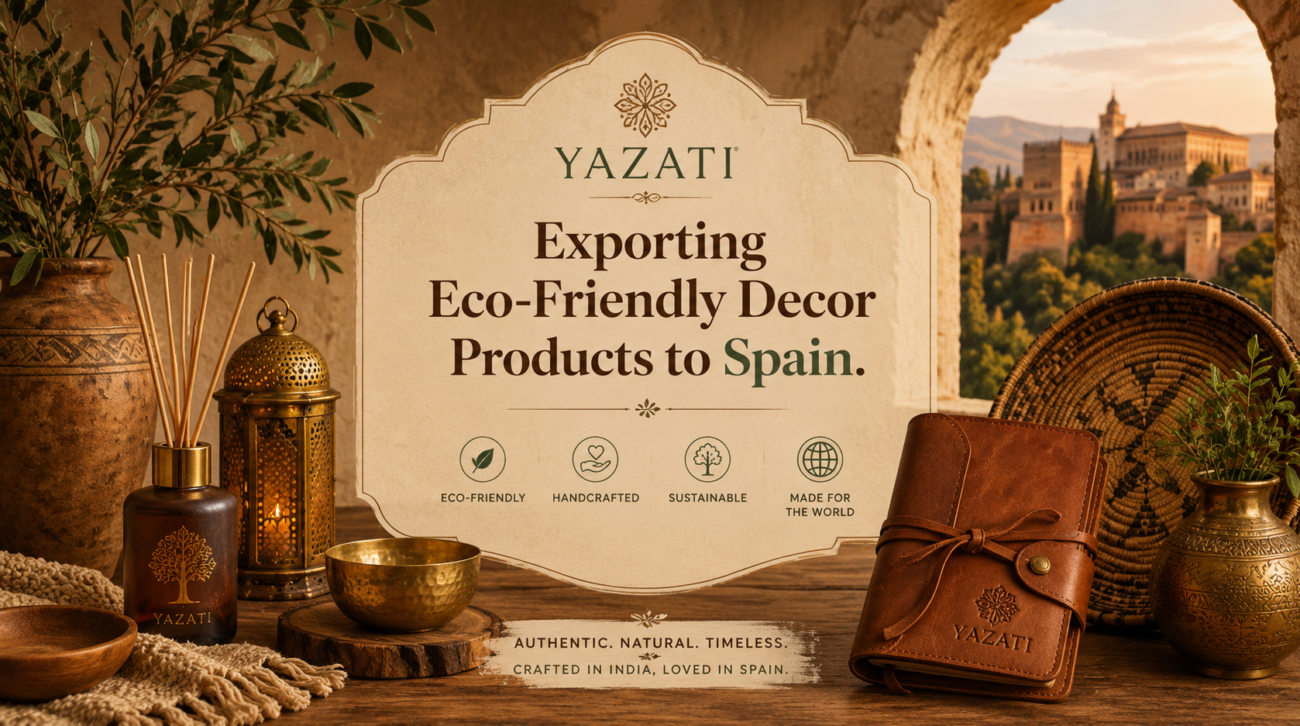
Spain has emerged as one of Europe’s most promising markets for sustainable consumer goods. As environmental awareness grows among Spanish households, demand for eco-conscious home furnishings and decorative products continues to increase. Businesses engaged in Exporting Eco-Friendly Decor Products to Spain can benefit from a market that values sustainability, quality craftsmanship, and innovative design.
From recycled-material wall art to bamboo furniture accessories and organic textile decorations, eco-friendly decor products are becoming mainstream in Spanish homes. This guide explores everything exporters need to know to successfully enter and thrive in this growing market.
Introduction to Spain’s Eco-Friendly Decor Market
Spain’s home decor industry has undergone significant transformation over the past decade. Consumers are increasingly prioritizing products that align with their environmental values.
The shift toward sustainability is driven by:
- Increased environmental awareness
- Government sustainability initiatives
- Growing interest in ethical consumption
- Demand for healthier indoor living environments
- Expansion of eco-friendly retail channels
As a result, sustainable decor products have become more than a niche category—they represent a growing segment of the mainstream home furnishing market.
Why Spain Is an Attractive Destination for Sustainable Decor
Growing Consumer Awareness
Spanish consumers are becoming more conscious about the environmental impact of their purchasing decisions. Many buyers actively seek products made from renewable, recycled, or responsibly sourced materials.
Popular sustainable decor categories include:
- Recycled glass decorations
- Bamboo accessories
- Organic cotton textiles
- Reclaimed wood furniture accents
- Handmade artisan products
Consumers often prefer brands that demonstrate transparency regarding sourcing and manufacturing processes.
Government Support for Sustainability
Spain actively supports environmental initiatives through various national and European Union programs. Businesses that align with sustainability goals often find favorable market conditions and strong consumer acceptance.
These policies encourage retailers and distributors to stock eco-friendly products, creating opportunities for international exporters.
Understanding Eco-Friendly Decor Products
Before entering the Spanish market, exporters should clearly define what qualifies as eco-friendly decor.
Popular Sustainable Materials
Products typically considered eco-friendly include those made from:
| Material | Sustainability Benefit |
|---|---|
| Bamboo | Rapidly renewable resource |
| Reclaimed Wood | Reduces deforestation |
| Recycled Glass | Minimizes waste |
| Cork | Renewable and biodegradable |
| Organic Cotton | Reduced chemical use |
| Recycled Metal | Conserves raw materials |
Consumer Preferences in Spain
Spanish consumers generally favor products that combine sustainability with aesthetics. They are less willing to compromise on design quality simply because a product is environmentally friendly.
Successful products often feature:
- Minimalist European designs
- Natural textures
- Earth-tone colors
- Handcrafted elements
- Durable construction
Market Research Before Exporting
Comprehensive market research significantly improves export success.
Competitor Analysis
Study both local and international competitors operating in Spain.
Evaluate:
- Product pricing
- Distribution channels
- Brand positioning
- Customer reviews
- Sustainability claims
This information helps identify market gaps and opportunities.
Identifying Target Buyers
Potential customer segments include:
- Eco-conscious homeowners
- Interior designers
- Boutique decor stores
- Sustainable lifestyle retailers
- Online marketplaces
- Hospitality businesses
Understanding buyer preferences allows exporters to tailor products and marketing messages effectively.
Legal Requirements for Exporting to Spain
Compliance is critical when Exporting Eco-Friendly Decor Products to Spain.
EU Product Compliance
Since Spain is a member of the European Union, products must meet relevant EU regulations.
Depending on product type, requirements may involve:
- Product safety standards
- Chemical restrictions
- Environmental regulations
- Consumer protection laws
Exporters should ensure all documentation is complete before shipment.
Labeling and Packaging Standards
Labels should clearly display:
- Product information
- Country of origin
- Material composition
- Safety instructions
- Recycling guidance where applicable
Spanish-language labeling may be necessary for certain products.
Certifications That Build Trust
Certifications can significantly enhance market credibility.
FSC Certification
The Forest Stewardship Council (FSC) certification verifies responsible sourcing of wood products.
Benefits include:
- Improved buyer confidence
- Easier market entry
- Enhanced sustainability credentials
Fair Trade and Eco Labels
Additional certifications may include:
- Fair Trade
- Global Organic Textile Standard (GOTS)
- EU Ecolabel
- Cradle to Cradle Certification
These labels help differentiate products in a competitive marketplace.
Choosing the Right Export Strategy
Selecting an appropriate export model is essential.
Direct Exporting
Advantages:
- Greater profit margins
- Stronger brand control
- Direct customer relationships
Challenges:
- Higher operational complexity
- Greater resource requirements
Distributors and Agents
Advantages:
- Local market expertise
- Established buyer networks
- Faster market entry
Challenges:
- Lower margins
- Reduced control over branding
Many businesses begin with distributors before transitioning to direct sales.
Pricing Strategies for the Spanish Market
Pricing must balance profitability with competitiveness.
Consider:
- Production costs
- Freight expenses
- Customs duties
- Distributor margins
- VAT implications
- Currency fluctuations
Eco-conscious consumers often accept premium pricing when products offer genuine environmental value and superior craftsmanship.
However, transparency remains essential. Buyers want to understand why sustainable products cost more.
Logistics and Shipping Considerations
Efficient logistics contribute significantly to customer satisfaction.
Freight Options
Common shipping methods include:
| Method | Best For |
|---|---|
| Sea Freight | Large shipments |
| Air Freight | Urgent deliveries |
| Rail Transport | Certain European routes |
| Multimodal Transport | Flexible logistics solutions |
Sea freight remains the most cost-effective option for bulk shipments.
Customs Procedures
Exporters should prepare:
- Commercial invoices
- Packing lists
- Certificates of origin
- Product certifications
- Shipping documentation
Accurate paperwork minimizes delays and customs complications.
Sustainable Packaging Solutions
Packaging plays a major role in the sustainability story.
Spanish consumers increasingly appreciate:
- Recyclable packaging
- Biodegradable materials
- Plastic-free solutions
- Minimal packaging waste
Examples include:
- Recycled cardboard boxes
- Paper-based protective materials
- Compostable fillers
- Soy-based printing inks
Packaging itself can become a powerful marketing tool.
Marketing Eco-Friendly Decor Products in Spain
Strong marketing is essential for successful export growth.
Digital Marketing
Effective digital channels include:
- Search engine optimization (SEO)
- Social media marketing
- Content marketing
- Influencer collaborations
- Email campaigns
Localized Spanish-language content improves engagement and trust.
A valuable resource for understanding international trade practices is the official European Union trade portal: https://trade.ec.europa.eu
Trade Shows and Events
Industry events provide opportunities to:
- Meet buyers
- Showcase products
- Understand market trends
- Build partnerships
Participation can significantly accelerate brand recognition.
E-Commerce Opportunities
Online retail continues expanding rapidly in Spain.
Popular channels include:
- Brand-owned websites
- Sustainable lifestyle marketplaces
- Home decor platforms
- Multi-vendor e-commerce sites
Key success factors include:
- Mobile-friendly websites
- Spanish-language content
- Transparent sustainability messaging
- Fast delivery options
Digital channels allow exporters to reach consumers without extensive physical infrastructure.
Building Relationships with Spanish Buyers
Business relationships remain highly important in Spain.
Successful exporters focus on:
- Consistent communication
- Reliable delivery performance
- Transparent pricing
- Product quality assurance
- Long-term partnerships
Trust often becomes a decisive factor in repeat purchasing decisions.
Building strong personal connections can significantly improve business outcomes.
Common Challenges and Solutions
Challenge: Regulatory Complexity
Solution: Work with experienced customs brokers and compliance consultants.
Challenge: Market Competition
Solution: Emphasize unique sustainability benefits and design innovation.
Challenge: Logistics Costs
Solution: Optimize shipment volumes and negotiate long-term freight contracts.
Challenge: Consumer Trust
Solution: Obtain recognized certifications and maintain transparency.
Challenge: Brand Recognition
Solution: Invest in digital marketing and strategic partnerships.
Future Trends in Sustainable Home Decor
Several emerging trends are shaping the future market:
Circular Economy Products
Consumers increasingly favor products designed for reuse, repair, and recycling.
Natural Materials
Demand continues growing for:
- Cork
- Bamboo
- Reclaimed wood
- Organic textiles
Handcrafted Decor
Authentic artisan products are gaining popularity as consumers seek unique and meaningful home accents.
Carbon-Neutral Products
Brands that measure and reduce carbon emissions are becoming increasingly attractive.
Smart Sustainable Living
Eco-friendly products integrated with smart-home concepts represent an exciting future opportunity.
Frequently Asked Questions (FAQs)
1. Is Spain a good market for eco-friendly decor products?
Yes. Spain’s growing sustainability awareness and expanding eco-conscious consumer base make it an attractive market.
2. What certifications are most valuable when exporting sustainable decor?
FSC, GOTS, Fair Trade, EU Ecolabel, and Cradle to Cradle certifications are widely respected.
3. Do eco-friendly decor products command premium pricing in Spain?
Generally, yes. Consumers often pay more for products that offer verified environmental benefits and quality craftsmanship.
4. Which shipping method is most cost-effective?
Sea freight is typically the most economical solution for large-volume shipments.
5. Is Spanish-language packaging necessary?
Depending on product type and regulations, Spanish-language labeling may be required or strongly recommended.
6. What marketing channels work best in Spain?
SEO, social media, content marketing, influencer partnerships, and participation in industry trade shows are highly effective.
7. What are the fastest-growing eco-friendly decor categories?
Recycled-material decor, sustainable textiles, handcrafted accessories, bamboo products, and reclaimed wood items show strong growth.
8. How can exporters build trust with Spanish buyers?
Consistent quality, transparent sustainability claims, recognized certifications, and reliable communication are key factors.
Conclusion
Exporting Eco-Friendly Decor Products to Spain presents substantial opportunities for businesses committed to sustainability, quality, and innovation. Spanish consumers increasingly seek environmentally responsible products that enhance their homes while supporting broader ecological goals.
Success depends on understanding market preferences, complying with EU regulations, obtaining relevant certifications, implementing effective logistics solutions, and building strong relationships with local buyers. Businesses that combine authentic sustainability practices with compelling design and strategic marketing are well-positioned to thrive in Spain’s evolving eco-friendly home decor sector.
By embracing these strategies, exporters can establish a competitive presence and contribute meaningfully to a greener future while achieving long-term commercial success.
✨ Discover Global Sourcing Excellence with Netyex ✨
Netyex is your trusted B2B sourcing partner, connecting international buyers with India’s finest manufacturers and curated product lines—from handicrafts and home décor to kitchenware, textiles, hospitality essentials, and more. With verified suppliers and end-to-end support, we make global procurement seamless, reliable, and efficient.
👉 Elevate your sourcing experience—explore Netyex today.
📦 Bulk orders & customisation | 🌍 Worldwide delivery | 🤝 Trusted by global buyers
Visit Netyex to source premium Indian products with confidence.